
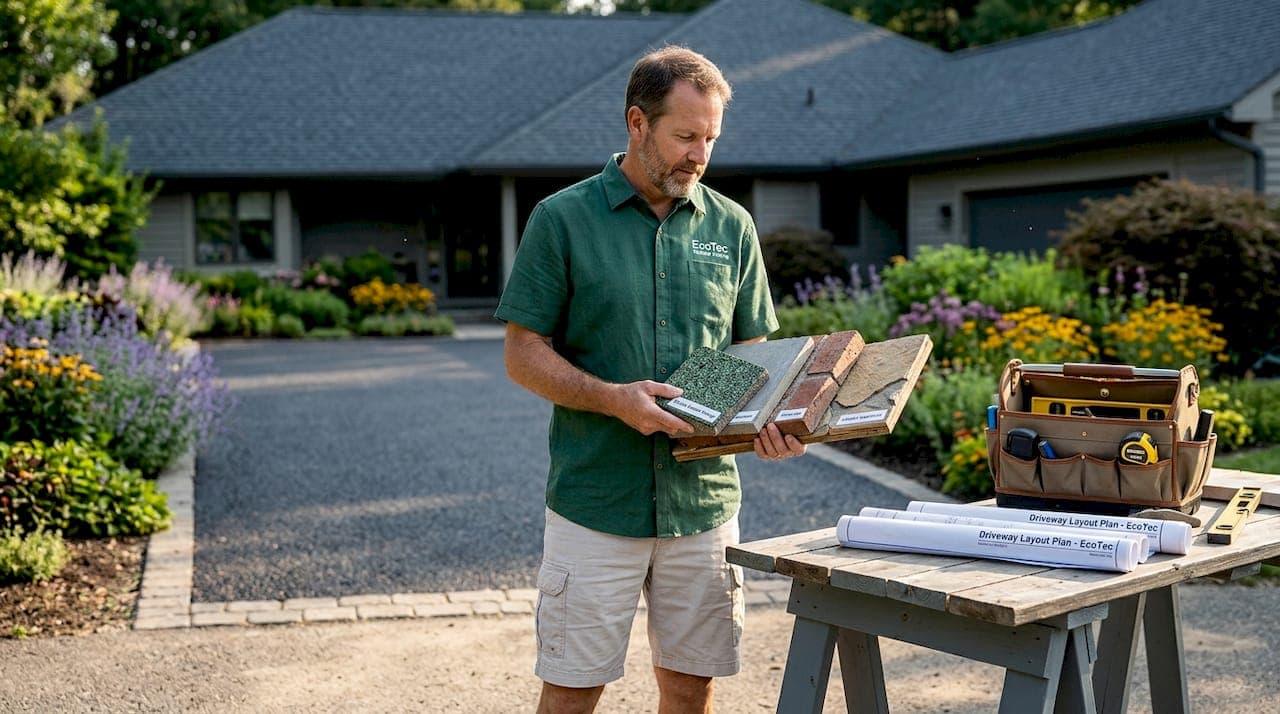
Paving surface materials are defined by their durability, permeability, installation method, and compliance with accessibility standards, and choosing the wrong one costs more than the price difference. When you compare paving surface material options for a driveway, walkway, plaza, or accessible route, the decision touches budget, climate performance, maintenance load, and ADA compliance simultaneously. The main paving categories include asphalt, poured concrete, concrete pavers, brick, natural stone, gravel, permeable pavers, and rubber. Each performs differently depending on freeze-thaw exposure, traffic load, drainage requirements, and who is walking on it.
What are the common paving surface material options?
The paving material comparison starts with understanding what each surface actually is and where it performs best. Common exterior paving options include asphalt, poured concrete slabs, concrete pavers, brick pavers, natural stone (flagstone, bluestone, granite), gravel, permeable pavers, and rubber paving systems like the Rubberway® system from Ecotecrubber.
Asphalt and poured concrete
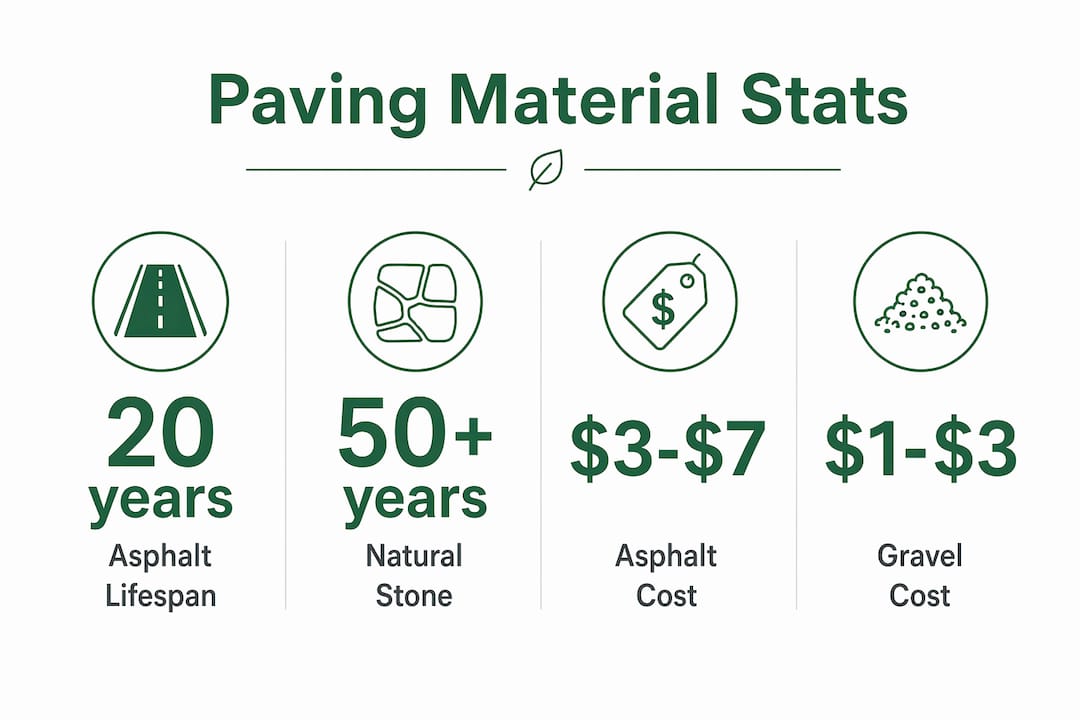
Asphalt is the lowest-cost rigid option for driveways and parking areas, typically installed at $3 to $7 per square foot. It handles heavy vehicle loads well but softens in extreme heat and requires seal coating every three to five years. Poured concrete costs $4 to $10 per square foot installed and lasts 25 to 50 years with proper base preparation. Its weakness is cracking under ground movement and freeze-thaw stress, and slab repairs often leave visible patches that affect appearance.
Modular pavers: concrete, brick, and natural stone
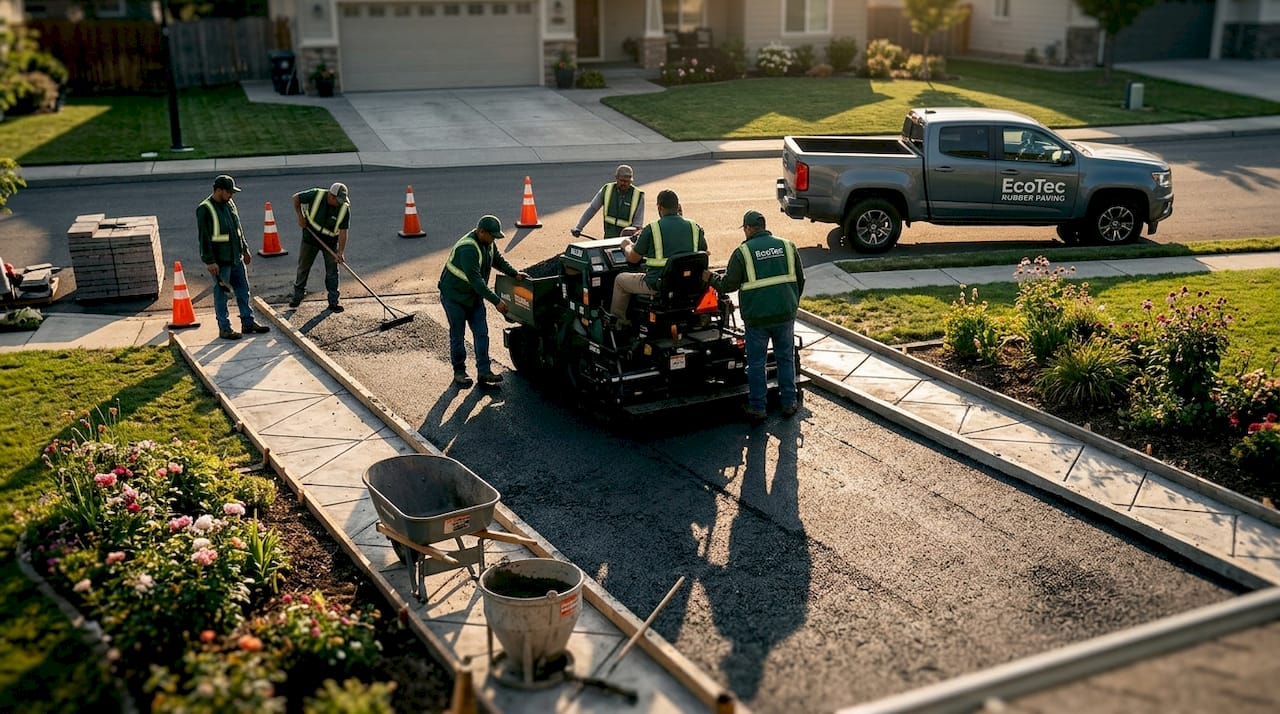
Concrete pavers, brick, and natural stone are modular systems. Interlocking paver systems accommodate ground movement better than rigid slabs, reducing cracking in freeze-thaw and moisture-exposed environments when installed with a proper compacted base. Brick pavers run $8 to $20 per square foot installed and offer a classic aesthetic with good longevity. Natural stone such as flagstone or bluestone costs $15 to $30 per square foot and delivers the longest service life, though irregular surfaces can create accessibility challenges. A key advantage of all modular systems is repairability: damaged units can be individually replaced without patching or color mismatch, preserving aesthetics and reducing long-term costs.
Gravel, permeable pavers, and rubber
Gravel has the lowest upfront cost at $1 to $3 per square foot but shifts underfoot, drains freely, and requires periodic regrading. Permeable concrete and permeable asphalt allow stormwater to pass through the surface into a reservoir base, addressing runoff regulations. Permeable asphalt lasts about 20 to 30 years, while permeable concrete reaches 25 to 40 years with proper maintenance. Rubber paving, used by Ecotecrubber through the Rubberway® system, is made from recycled materials, provides excellent drainage and crack resistance, and meets ADA surface requirements.
| Material | Installed Cost (per sq ft) | Typical Lifespan | Best Use |
|---|---|---|---|
| Asphalt | $3–$7 | 20–30 years | Driveways, parking |
| Poured concrete | $4–$10 | 25–50 years | Walkways, slabs |
| Concrete pavers | $8–$15 | 30–50 years | Patios, plazas |
| Brick pavers | $8–$20 | 25–50 years | Walkways, patios |
| Natural stone | $15–$30 | 50+ years | Feature areas |
| Gravel | $1–$3 | Ongoing | Low-traffic paths |
| Permeable concrete | $8–$16 | 25–40 years | Stormwater compliance |
| Rubber paving | $6–$14 | 20–30 years | ADA routes, pools |
How do durability and maintenance requirements compare?
Durability in paving materials depends on three forces: freeze-thaw cycling, abrasion from traffic, and moisture infiltration. Getting this comparison right separates a 10-year surface from a 40-year one.
Freeze-thaw performance is measurable. ASTM standards C1645 and C140 set freeze-thaw durability thresholds for interlocking concrete pavers, including absorption limits below 5%, which indicates resistance under cold climate conditions. This gives specifiers a concrete benchmark when comparing products rather than relying on manufacturer claims alone.
Maintenance demands vary significantly across paving surface types:
- Asphalt requires seal coating every three to five years and crack filling as needed. Neglected asphalt deteriorates rapidly once surface oxidation begins.
- Poured concrete needs joint sealing and occasional pressure washing. Cracks require saw-cutting and patching, which rarely matches the original surface color.
- Concrete and brick pavers need periodic joint sand replenishment and sealing every two to four years. Individual unit replacement is straightforward and cost-effective.
- Natural stone is low-maintenance but may need re-leveling over time as the base settles.
- Permeable pavers and concrete require vacuuming or pressure washing at $0.25 to $0.50 per square foot to prevent clogging. Clogging reduces permeable concrete service life by 1.7 to 2.1 years due to freeze-thaw accelerated deterioration, making maintenance non-negotiable.
- Rubber paving resists cracking, handles moisture well, and requires minimal upkeep beyond periodic cleaning.
For concrete surface repairs, following a structured preparation process matters as much as the patching material itself. A step-by-step concrete repair preparation guide can prevent bond failures that cause patches to delaminate within one to two seasons.
Pro Tip: Schedule permeable paving maintenance in early spring and late fall. Sediment from winter runoff and leaf debris from fall are the primary clogging agents. Catching them before they compact into the reservoir layer preserves both permeability and structural life.
What are the cost considerations when comparing paving surface material options?
Upfront installation price is the most visible cost, but it is rarely the most important one. Cost comparisons for paving materials must factor in total lifecycle value, including stormwater management incentives, maintenance frequency, lifespan, and repair costs, not just the installation price.
Permeable pavements illustrate this clearly. Their installed cost runs 20 to 40 percent higher than conventional asphalt or concrete. However, municipalities and commercial property owners in many jurisdictions pay stormwater utility fees based on impervious surface area. Installing permeable paving reduces that fee and can reach a break-even point within five to ten years depending on local rate structures. Permeable pavements may save stormwater fees and have longer replacement intervals, impacting total lifecycle cost favorably.
Hidden costs catch most buyers off guard. Poured concrete slabs require full removal and replacement when they fail structurally, adding $5 to $12 per square foot in demolition costs. Modular systems avoid this entirely since individual units are replaced. Gravel requires regrading every one to two years and weed management throughout the season. Asphalt needs resurfacing every 15 to 20 years at roughly 60 percent of the original installation cost.
Pro Tip: If you plan to own a property for fewer than seven years, prioritize lower upfront cost materials like asphalt or concrete. If you are a municipality or long-term commercial owner, calculate the 20-year total cost including maintenance, repairs, and stormwater fees before selecting a material.
For homeowners focused on resale value, concrete pavers and natural stone consistently return higher curb appeal scores than poured concrete or asphalt. The aesthetic premium translates to real dollars in competitive real estate markets.
How do accessibility and compliance requirements influence paving material choice?
Accessibility is not a feature you add after choosing a material. It is a constraint that eliminates certain options before the paving material comparison even begins.
Accessible paved surfaces must be firm, stable, and slip resistant, with a maximum running slope of 5 percent and a cross slope of 2 percent for accessible routes per ADA standards. Minimum clear route widths are 36 inches federally, with stricter state guidelines such as California's CBC requiring 48 inches in certain applications. These requirements immediately disqualify loose gravel and irregular flagstone for primary accessible routes.
Key compliance criteria to evaluate for any paving surface type:
- Surface firmness: Rubber, broom-finish concrete, and concrete pavers all meet firmness requirements. Loose gravel and soft decomposed granite do not.
- Slip resistance: Textured surfaces like brushed concrete or cleft stone provide better traction than polished options, which is critical near pools or wet areas. Broom finish concrete balances rollability and slip resistance per ADA recommendations.
- Joint tolerances: ADA surface joints above 1/2 inch create barriers. Contractor best practice limits joints to 6 to 8 mm to accommodate wheelchairs and mobility devices effectively.
- Detectable warnings: Curb ramps require tactile warning tiles with specific dome spacing and height. These are typically cast-in-place or surface-applied units compatible with concrete and paver systems.
Accessibility compliance is more than selecting the right material. Material choice must integrate with accessible route design including grading, slope control, and ongoing maintenance to prevent barriers from developing over time.
Base compaction is as critical as surface material. A perfectly compliant paver system installed over an inadequately compacted base will settle unevenly, creating cross slopes that exceed 2 percent and fail inspection within two to three years.
How to assess environmental and site-specific factors when choosing paving materials
Climate and site conditions determine whether a technically sound material choice succeeds or fails in practice. Florida's heat and rainfall create entirely different demands than a Minnesota freeze-thaw environment.
Heat accelerates asphalt softening and increases surface temperatures to levels that affect comfort and safety on pedestrian surfaces. Rubber paving from Ecotecrubber addresses this directly: the Rubberway® system uses recycled rubber that resists heat-induced cracking and remains flexible under Florida's thermal cycling. In cold climates, interlocking paver systems accommodate ground movement better than rigid slabs, reducing cracking under freeze-thaw stress.
Site-specific factors to evaluate before finalizing your paving options guide:
- Drainage and stormwater: Properties in regulated watersheds may require permeable surfaces to meet runoff reduction targets. Permeable paving effectiveness depends on the entire structural system, including an open-graded reservoir base and proactive maintenance, not just surface porosity.
- Soil and substrate: Expansive clay soils require deeper base preparation for any rigid system. Flexible systems like rubber or interlocking pavers tolerate minor movement better than poured slabs.
- Aesthetic integration: Combining materials, such as concrete pavers for the field with a natural stone border, creates visual interest while keeping costs manageable. Rubber paving installs over existing surfaces in many cases, reducing demolition costs.
Pro Tip: For permeable paving in Florida or other high-rainfall regions, specify a minimum 12-inch open-graded aggregate base. This reservoir depth handles intense rain events and gives the system enough buffer to function between maintenance cycles.
Municipal permeable paving selections must include maintenance regimes specifying sediment control and cleaning schedules, since neglect shortens service life significantly. A maintenance plan written into the project specification protects the investment from day one.
Key takeaways
The most durable and cost-effective paving choice combines material performance with site-specific climate demands, lifecycle cost analysis, and ADA compliance from the design stage forward.
| Point | Details |
|---|---|
| Lifecycle cost beats upfront price | Factor in maintenance, repairs, stormwater fees, and lifespan before comparing installed costs alone. |
| Modular systems offer repair advantages | Concrete, brick, and rubber pavers allow individual unit replacement, avoiding costly full-surface demolition. |
| ADA compliance starts with the base | Joint tolerances under 8 mm and proper base compaction matter as much as surface material selection. |
| Climate drives material performance | Freeze-thaw cycles favor interlocking systems; Florida heat and rain favor permeable and rubber paving. |
| Permeable paving has a maintenance cost | Vacuuming or pressure washing at $0.25 to $0.50 per square foot is required to preserve permeability and lifespan. |
What I've learned from watching paving decisions go wrong
Most paving mistakes I see come from treating the material decision as a product purchase rather than a system design. Someone picks concrete pavers because they look great in a showroom, then installs them over a poorly compacted base, and within two years the surface is uneven enough to fail ADA inspection. The material was fine. The system failed.
The second most common mistake is ignoring the 20-year cost picture. Asphalt at $5 per square foot looks like a bargain until you account for seal coating every four years, resurfacing at year 15, and the stormwater fees you are paying because the surface is fully impervious. A permeable or rubber system at $10 per square foot often wins that math over a 20-year horizon.
I have also watched municipalities specify materials without writing maintenance requirements into the contract. Permeable concrete that is never cleaned loses its infiltration capacity within three to five years and becomes an expensive conventional surface. The material specification is only half the job.
My honest recommendation for anyone comparing paving surface material options: get a lifecycle cost estimate, not just a bid. Ask your contractor what the surface will cost to maintain annually and what a repair looks like in year 10. If they cannot answer those questions, find someone who can. For accessible routes specifically, hire a contractor who understands ADA slope tolerances and joint specifications. The difference between a compliant and non-compliant installation is often invisible at first glance and very expensive to fix after the fact.
— Gm
Durable, accessible paving for Florida properties
Ecotecrubber specializes in rubber paving solutions built for Florida's heat, rainfall, and accessibility demands. The Rubberway® system uses recycled rubber to deliver surfaces that resist cracking, drain effectively, and meet ADA slip resistance and firmness requirements without the maintenance burden of permeable concrete. Whether you are a homeowner upgrading a pool deck, a business owner replacing a worn walkway, or a municipality specifying an accessible route, Ecotecrubber's professional rubber paving installations are licensed, insured, and focused exclusively on rubber paving. Explore the full range of Rubberway paving products to find the right specification for your project.
FAQ
What paving material lasts the longest?
Natural stone such as granite or bluestone has the longest service life, often exceeding 50 years with minimal maintenance. Concrete pavers and brick also reach 30 to 50 years when installed over a properly compacted base.
Which paving surface types meet ADA requirements?
Firm, stable, and slip-resistant surfaces including broom-finish concrete, concrete pavers with joints under 8 mm, and rubber paving systems meet ADA firmness and slip resistance standards. Loose gravel and polished stone do not qualify for primary accessible routes.
How do I choose between permeable and standard paving?
Choose permeable paving when your property is subject to stormwater utility fees or runoff regulations, and when you can commit to annual maintenance. Standard paving costs less upfront but may carry ongoing stormwater fees that erode the savings over time.
What is the most cost-effective paving option for a long-term owner?
For ownership periods exceeding 15 years, interlocking concrete pavers or rubber paving typically deliver the best lifecycle value. Their repairability, durability, and lower long-term maintenance costs outperform asphalt and poured concrete when total costs are calculated over two decades.
Does rubber paving work in Florida's climate?
Rubber paving is specifically suited to Florida's heat and heavy rainfall. The Rubberway® system from Ecotecrubber resists heat-induced cracking, drains effectively during intense rain events, and maintains ADA-compliant surface characteristics without the freeze-thaw concerns that affect other regions.