
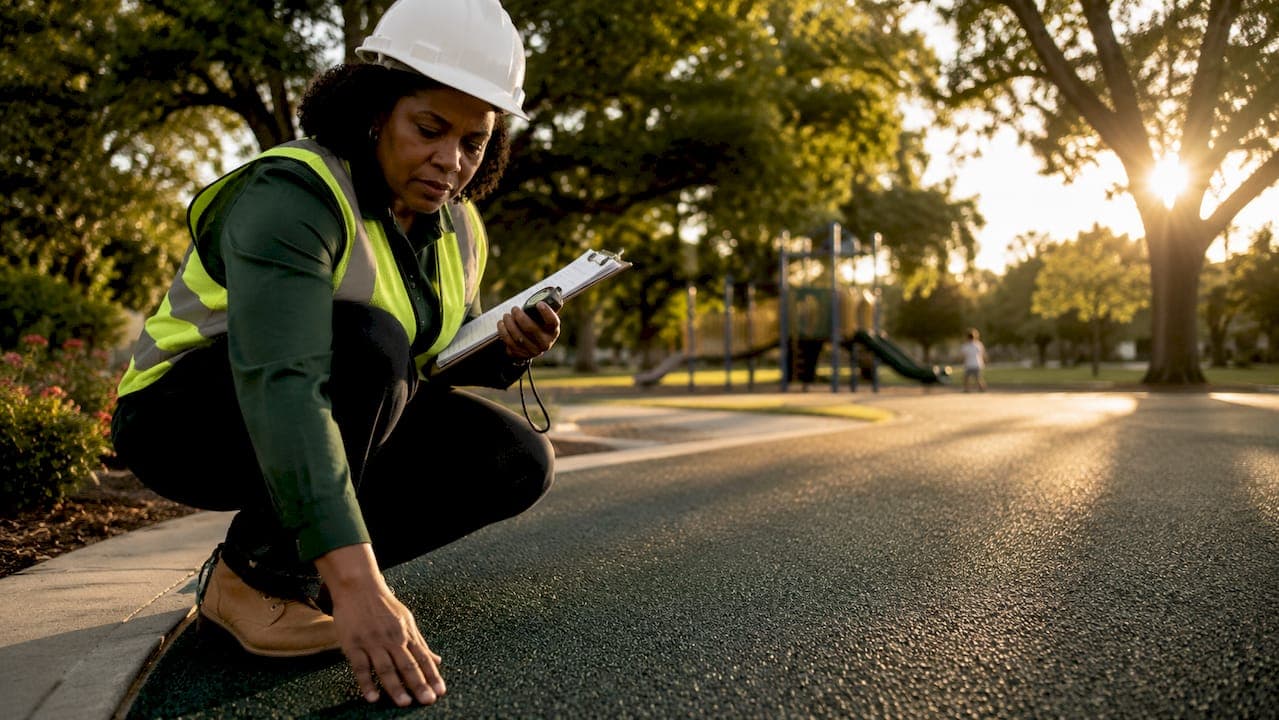
Cure time in rubber paving is defined as the period a freshly installed rubber surface must set before it develops the strength, adhesion, and flexibility needed for real-world use. The role of cure time in rubber paving directly determines whether your surface lasts a decade or fails within months. Factors including ambient temperature, material thickness, substrate condition, and compound formulation all shift the timeline. Industry standards like ASTM D5893 and rheometer metrics such as t90 give installers and property owners a scientific framework for making those timing decisions accurately, not by guesswork.
What factors influence cure time in rubber paving?
Cure time is not a fixed universal value. Rheometer metrics must be interpreted in the context of material thickness and heat transfer to produce a reliable schedule. That means two identical products installed on different days can behave very differently.
The most significant variables include:
- Temperature and humidity. Heat accelerates the rubber paving curing process, while cold and high humidity slow crosslinking. Florida's summer heat can shorten surface set times, but high humidity can interfere with adhesive cure.
- Material thickness. Thicker pours retain heat longer and require more time for full cure to reach the center of the layer. A 1-inch pour cures faster than a 2-inch pour, even under identical conditions.
- Ventilation. Enclosed spaces trap moisture and slow solvent evaporation in adhesive layers, extending the cure window.
- Substrate type and condition. Porous or uneven substrates absorb adhesive unevenly, creating weak zones where cure is incomplete.
- Compound formulation. Cure kinetics vary widely by product; installers must calibrate timing per site-specific parameters rather than relying on a single rule of thumb.
The rheometer metric ts2 marks the point where early crosslinking begins. Rushing installation past ts2 risks locking in defects before the material has properly flowed and bonded to the substrate.
Pro Tip: Always check the manufacturer's cure data sheet for your specific product batch. Cure windows printed on generic guides are starting points, not guarantees.
How does cure time affect durability and performance?
The impact of cure time on rubber is most visible at the bond layer. When rubber paving is opened to traffic before full cure, the adhesive has not yet reached its design strength. The result is delamination, surface bubbling, or cracking that appears within weeks of installation.
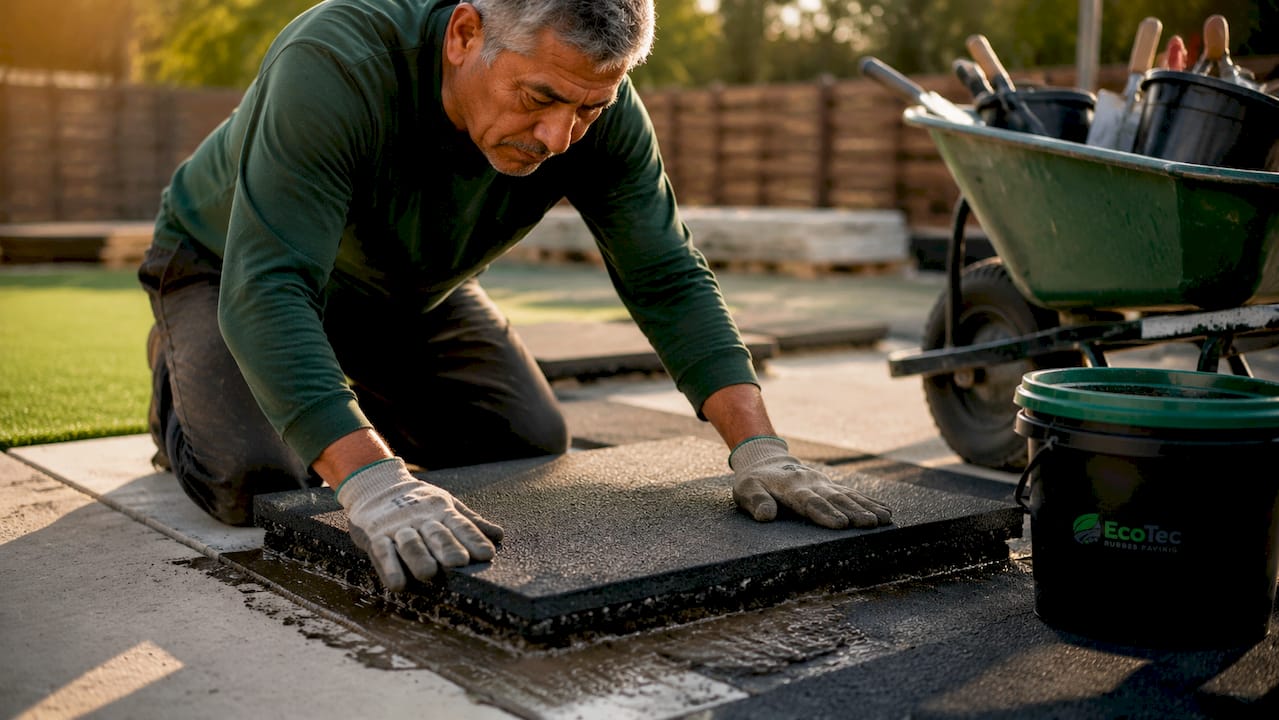
Understanding the difference between initial set and full functional cure is critical. Reopen times around 24–48 hours often reflect initial set or tack-free properties, not the full cure required for optimal strength. A surface that feels firm underfoot at 24 hours may still be chemically active and vulnerable to load stress.
The science behind this is vulcanization. During curing, sulfur bridges form between rubber polymer chains in a process called crosslinking. The t90 metric represents cure time to 90% crosslinking, which is the standard reference point for setting molding and cure periods in production. Below t90, the surface lacks the tensile strength and elasticity that make rubber paving worth installing in the first place.
Common defects linked to rushed cure times include:
- Delamination. The rubber layer separates from the substrate because the adhesive never fully bonded.
- Surface cracking. Incomplete crosslinking leaves the surface brittle under thermal expansion and contraction.
- Moisture entrapment. Premature sealing traps water between layers, promoting mold growth and accelerating wear.
- Soft spots. Uneven cure creates localized weak zones that compress under foot or vehicle traffic.
"Many sites allow reopening in 24–48 hours, but full crosslinking and durability require longer cure periods, up to several days." — RevaFlex Rubber Surfacing
Cure time effects on durability are not theoretical. Every day of patience during the cure window translates directly into years of surface life.
What are the typical cure time recommendations for traffic?
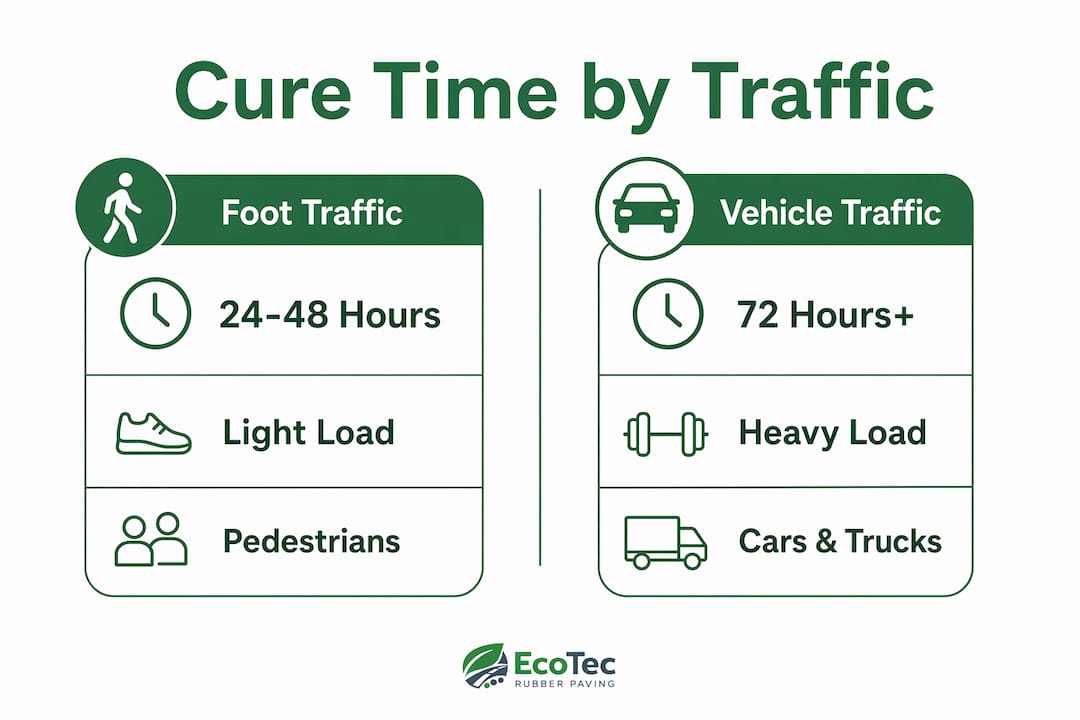
Optimal cure time for rubber pavement depends on the type of load the surface will carry. The table below outlines standard timing guidelines and the conditions that shift those windows.
| Traffic Type | Minimum Wait Time | Key Influencing Factors |
|---|---|---|
| Foot traffic (light) | 24–48 hours | Temperature, humidity, thickness |
| Foot traffic (heavy/public) | 48–72 hours | High-use areas need extra margin |
| Placing furniture or equipment | 3–5 days | Weight concentration risks bond stress |
| Vehicle traffic (light) | 5–7 days | Full crosslinking required |
| Vehicle traffic (heavy loads) | 7+ days | Substrate cure and full t90 completion |
Contractor guides detail 48 hours before walking and tie cure time directly to environment and thickness. That 48-hour figure assumes moderate temperatures and standard installation depth. In cold weather or thick pours, extend that window by at least 24 hours.
The gap between surface readiness and full cure matters practically. A surface that passes a visual check at 48 hours is ready for light foot traffic. It is not ready for a loaded pallet jack or a parked vehicle. Premature load or traffic on rubber paving can cause weak spots, bond failure, or premature degradation due to incomplete curing.
Pro Tip: Post clear signage at the installation site with the exact date and time when each traffic type is permitted. This protects the surface and removes ambiguity for clients and workers.
Why is concrete substrate cure time important before installing rubber pavers?
Rubber paving does not cure in isolation. The substrate beneath it must also be fully prepared, and for concrete bases, that means waiting. New concrete requires about 4 weeks of curing before rubber paver installation to avoid adhesion and moisture problems. This is one of the most overlooked steps in the rubber pavement installation time calculation.
Fresh concrete still contains significant moisture. When rubber adhesive is applied over wet concrete, that moisture has nowhere to go. It becomes trapped between layers, weakening the bond and creating conditions for mold growth and early surface failure. The concrete's alkalinity also remains elevated in the early weeks, which can chemically interfere with certain adhesive formulations.
Key substrate preparation steps before rubber paver installation:
- Wait the full 4 weeks. Do not compress this timeline for scheduling convenience. The cost of a failed installation far exceeds the cost of a delayed one.
- Perform a hardness scratch test. Concrete hardness can be assessed by scratch test; proper substrate preparation is non-negotiable for bond integrity. Drag a nail or key across the surface. If it leaves a deep groove, the concrete is not ready.
- Check for surface moisture. Tape a plastic sheet to the concrete for 24 hours. Condensation underneath signals moisture levels that will compromise adhesive cure.
- Clean and profile the surface. Remove all dust, oil, and debris. A clean, slightly rough surface gives the adhesive maximum contact area.
- Follow adhesive manufacturer specs. Different adhesives have different moisture tolerance thresholds. Match the product to the substrate condition.
Understanding rubber paving basics makes clear that substrate preparation is not a separate step. It is the foundation of the entire curing chain.
How to optimize installation schedules around curing times
Scheduling rubber paving projects with curing constraints requires planning from day one, not as an afterthought. The rubber paving curing process is not something you can rush with extra product or faster equipment. It follows chemistry, not convenience.
A practical scheduling sequence looks like this:
- Confirm substrate readiness first. If you are working over new concrete, lock in the 4-week cure window before booking the rubber installation crew.
- Pull a 10-day weather forecast. Temperature below 50°F or rain in the forecast during the cure window requires rescheduling or protective measures.
- Use manufacturer rheometer data. Request the t90 and ts2 values for your specific product. Build your traffic restriction timeline from those numbers, not from generic guides.
- Protect the fresh surface. Use barriers, cones, and temporary covers to prevent accidental foot traffic and debris contamination during the cure window.
- Communicate restrictions in writing. Give clients a written schedule showing exactly when light foot traffic, heavy foot traffic, and vehicle access are permitted. This prevents misunderstandings and protects you from liability if the surface is damaged prematurely.
- Build buffer time into the project handoff. Add 24 hours beyond the minimum cure window before the official client walkthrough. That margin costs nothing and prevents embarrassing surface defects discovered during handover.
Best practices for rubber cure time always include a weather contingency. Florida's afternoon thunderstorms, for example, can introduce unexpected moisture during a critical cure window. Ecotecrubber's Rubberway® installations account for local climate patterns precisely because Florida's conditions do not match the assumptions baked into standard cure guides written for northern climates.
Key takeaways
Proper cure time management is the single most important factor separating a rubber paving installation that lasts from one that fails within its first year.
| Point | Details |
|---|---|
| Cure time defines surface strength | Full functional cure, not just surface set, determines long-term durability and bond integrity. |
| Environmental factors shift the timeline | Temperature, humidity, and thickness all change the cure window; always use site-specific data. |
| Concrete substrate needs 4 weeks | Installing rubber pavers over uncured concrete causes moisture entrapment and adhesive failure. |
| Traffic restrictions protect the investment | Light foot traffic at 24–48 hours; vehicle traffic requires 5–7 days minimum under standard conditions. |
| Rheometer metrics guide accurate scheduling | Use t90 and ts2 values from the manufacturer to set precise, defensible cure timelines. |
What i've learned from watching rushed cures fail
I have seen the same mistake repeated on job sites more times than I care to count. A contractor finishes a rubber paving installation on a Friday, the client wants to use the space by Saturday morning, and everyone convinces themselves that "it looks fine." Two months later, the surface is delaminating at the edges and the contractor is back on site eating the cost of a repair.
The uncomfortable truth about why cure time matters in paving is that the consequences are delayed. The surface does not fail the moment you walk on it too early. It fails weeks or months later, under conditions that have nothing to do with the original mistake. That delay makes it easy to rationalize skipping the wait. It also makes it nearly impossible to explain to a client why their brand-new surface is already failing.
What I tell every contractor I work with is this: the cure window is not downtime. It is the period when your installation is actually completing itself. Respecting that window is not patience. It is professionalism.
The best practice I have found is to work with your product supplier to get the actual rheometer curve for your batch, not just the printed guide. Cure behavior varies by formulation, and a durable rubber paving project starts with knowing exactly what your specific material needs. Clients who understand the science behind the wait are also far more willing to respect the timeline. Explain crosslinking once and you rarely have to fight the same battle twice.
— Roger
Get expert cure management with Ecotecrubber
Ecotecrubber brings professional-grade cure time management to every Rubberway® installation across Florida. Their team accounts for Florida's specific climate conditions, from summer humidity to seasonal temperature swings, when planning every project timeline.
Working with an experienced installer means your cure windows are calculated from actual product data and site conditions, not generic estimates. Ecotecrubber's licensed and insured crews handle substrate assessment, adhesive selection, and post-installation protection so your surface reaches full cure without shortcuts. Whether you are a homeowner upgrading a driveway or a contractor managing a commercial property, explore Rubberway® product options or contact Ecotecrubber directly to schedule a consultation and get a project timeline built around your surface's actual curing needs.
FAQ
How long does rubber paving take to cure fully?
Full crosslinking and durability require several days, even though surfaces may feel firm within 24–48 hours. Vehicle traffic should wait at least 5–7 days under standard temperature and thickness conditions.
What happens if you walk on rubber paving too soon?
Premature traffic causes weak spots, bond failure, and surface degradation because the adhesive and rubber compound have not completed crosslinking. Damage from early loading often appears weeks after installation, not immediately.
Does temperature affect how rubber paving cures?
Yes. Cold temperatures slow the vulcanization process and extend cure times beyond standard estimates. Heat accelerates surface set but high humidity can interfere with adhesive cure, particularly in enclosed or shaded areas.
How do i know if concrete is ready for rubber paver installation?
Concrete requires about 4 weeks of curing before rubber paver adhesion. Confirm readiness with a scratch test for hardness and a plastic sheet moisture test before applying any adhesive.
What is t90 and why does it matter for rubber paving schedules?
t90 represents cure time to 90% crosslinking and is the standard reference point for setting cure periods in rubber production. Installers use it to build accurate traffic restriction timelines based on actual material behavior rather than generic estimates.