
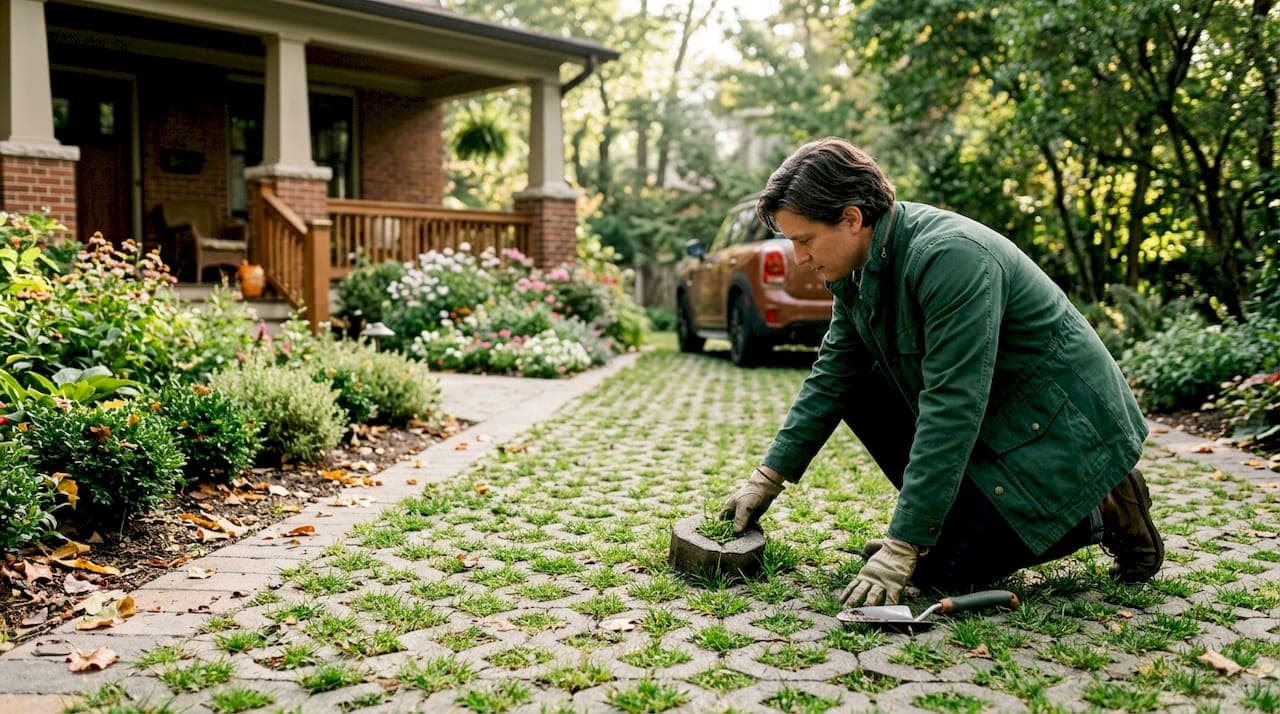
Choosing the right eco-friendly driveway material options is harder than it looks. You want something that handles stormwater, holds up under daily traffic, fits your neighborhood's style, and doesn't cost a fortune to maintain. Most homeowners pick based on looks alone and regret it two years later when they're dealing with pooling water, cracked surfaces, or a driveway that needs constant upkeep. This guide cuts through the noise. You'll get a clear breakdown of every major sustainable paving option, what each one actually delivers, and how to match the right material to your property's real needs.
Table of Contents
- Key takeaways
- Eco-friendly driveway material options: what to evaluate first
- 1. Grass driveway pavers
- 2. Recycled asphalt
- 3. Recycled concrete
- 4. Gravel with stabilization grids
- 5. Rubber driveway tiles and poured rubber surfaces
- 6. Natural stone driveways
- 7. Reclaimed brick
- 8. Resin-bound porous paving
- 9. Pervious concrete
- 10. Porous asphalt
- Side-by-side comparison of sustainable driveway materials
- Matching the right material to your property
- My honest take on eco-friendly driveways
- Why rubber paving deserves a serious look
- FAQ
Key takeaways
| Point | Details |
|---|---|
| Permeability is the top priority | Permeable materials reduce stormwater runoff and support local drainage systems more than any other feature. |
| Maintenance determines long-term performance | Permeable driveways require regular cleaning or they lose infiltration capacity within a few years. |
| Recycled content varies widely | Some materials like resin-bound paving offer up to 100% recycled aggregate, while others offer far less. |
| Match material to property type | Residential low-traffic driveways and commercial high-traffic areas need different materials and base designs. |
| Rubber paving is an underrated option | Recycled rubber surfaces offer durability, drainage, and comfort with minimal maintenance in warm climates. |
Eco-friendly driveway material options: what to evaluate first
Before you pick a material, you need a framework. The term "eco-friendly" gets applied loosely in the paving industry. The recognized standard for evaluating sustainable driveway materials focuses on four measurable factors: water permeability, recycled content, thermal performance, and lifecycle durability.
Water permeability is the most consequential factor for most residential properties. Driveways are impervious surfaces by default, meaning they send rainwater directly into storm drains rather than letting it soak into the ground. Permeable alternatives redirect that water back into the soil, reducing runoff and supporting local water tables.
Durability and load capacity matter more than people expect. A material that fails under the weight of a delivery truck or cracks after one freeze-thaw cycle isn't eco-friendly in practice. Replacing a driveway every five years creates more waste than using a conventional surface that lasts 25 years.
Maintenance requirements are where most sustainable driveways fall short in real-world use. Permeable pavements require quarterly vacuum sweeping at minimum, and monthly cleaning in high-traffic areas, to maintain their infiltration capacity. Skip that schedule and you lose the eco-benefit entirely.
Environmental impact factors include recycled content percentages, heat island contribution, and pollutant filtration. A driveway surface that absorbs heat and radiates it back at night raises your cooling costs and contributes to urban warming. Porous and light-colored surfaces reduce that effect significantly.
Pro Tip: Don't sacrifice permeability for aesthetics. Many modern permeable materials now come in attractive finishes that match traditional paving. You get both.
1. Grass driveway pavers
Grass pavers use a grid system, typically made from plastic or concrete, that stabilizes turf while allowing vehicles to drive and park on it. The grass grows through the grid openings, creating a surface that looks almost entirely natural.
The drainage benefit is real. Grass pavers stabilize turf for vehicle use while promoting natural drainage and reducing your property's ecological footprint, with installation costs typically running $5 to $10 per square foot. The downside is maintenance. Grass needs mowing, watering, and fertilizing. In drought conditions or heavy shade, the turf can die and leave you with an ugly grid pattern and bare dirt.
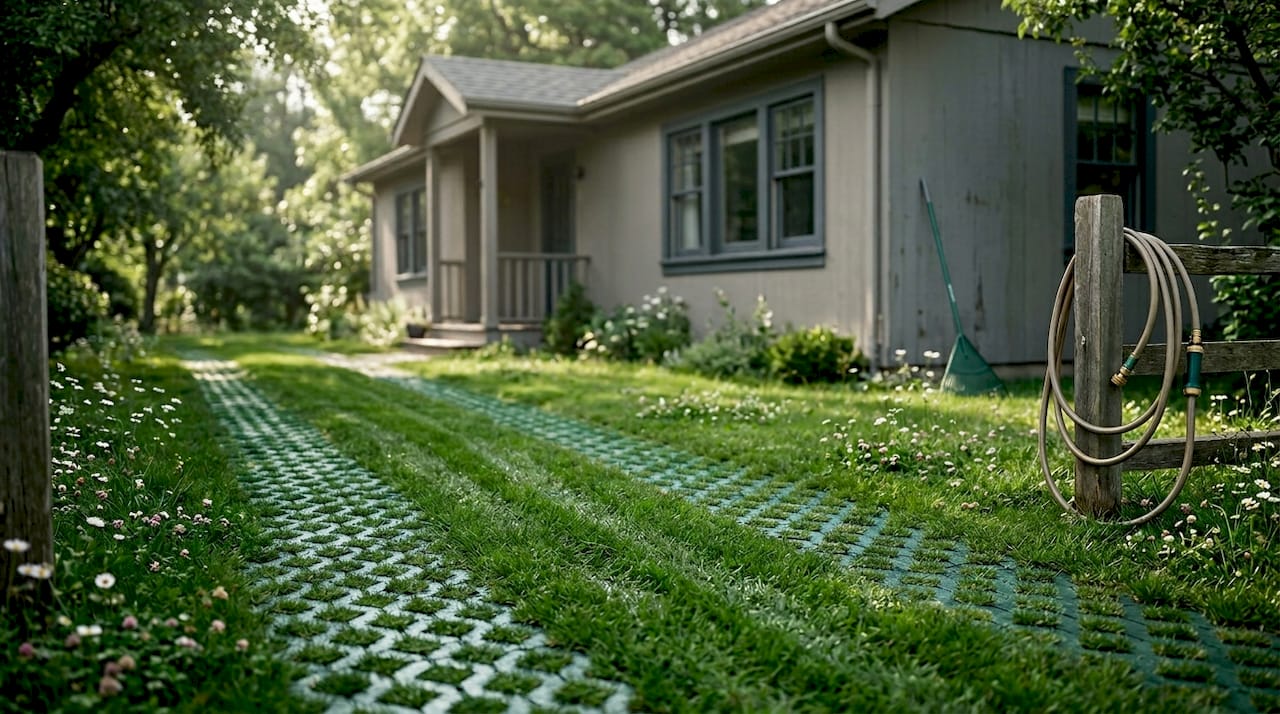
Best for: Low-traffic residential driveways in temperate climates with regular rainfall.
2. Recycled asphalt
Recycled asphalt, also called reclaimed asphalt pavement (RAP), is made from milled-up old asphalt surfaces. It binds together when compacted and performs similarly to fresh asphalt at a fraction of the cost.
Recycled asphalt and concrete offer durable, environmentally friendlier alternatives that significantly reduce virgin resource use and landfill waste. The material is permeable enough to allow some water infiltration, though not at the level of purpose-built permeable surfaces. It's one of the most cost-effective green paving options available, especially for long driveways.
The trade-off is that recycled asphalt can soften in extreme heat and may track tar onto shoes and vehicles in the first season. It also needs recompaction every few years.
Best for: Budget-conscious homeowners with long driveways who want recycled content without high installation costs.
3. Recycled concrete
Crushed recycled concrete, sometimes called urbanite, works well as a loose driveway surface or as a base material under other pavers. It's heavy, durable, and keeps concrete waste out of landfills.
When used as a surface material, recycled concrete allows water to pass through the gaps between pieces, functioning as a permeable driveway alternative. It's not the most polished look, but for rural properties or utilitarian commercial lots, it delivers solid performance at low cost.
Pro Tip: Pair recycled concrete with a stabilization grid to prevent shifting and rutting under heavy vehicle loads. The grid keeps the aggregate in place without sacrificing permeability.
4. Gravel with stabilization grids
Plain gravel driveways are highly permeable but notorious for migrating onto lawns, clogging gutters, and creating uneven surfaces. Stabilization grids solve most of those problems.
The grid system locks gravel in place while maintaining the open structure that allows water to pass through freely. Installation is straightforward, and the material cost is low. The main ongoing issue is occasional top-up of gravel as some displacement still occurs over time.
For commercial properties with large parking areas, stabilized gravel is one of the most affordable permeable driveway alternatives available. It handles heavy loads well when installed with a proper compacted base.
5. Rubber driveway tiles and poured rubber surfaces
Recycled rubber paving is one of the most underappreciated eco-friendly paving stones on the market. Made from shredded tires and other post-consumer rubber, it diverts significant waste from landfills while delivering a surface that's durable, slip-resistant, and comfortable underfoot.
Rubber surfaces handle Florida's heat and heavy rainfall particularly well. They resist cracking, don't absorb and radiate heat the way dark asphalt does, and require minimal maintenance beyond occasional rinsing. The Rubberway® system used by Ecotecrubber takes this further with professional-grade installations that are ADA-compliant and built specifically for Florida's climate demands.
The surface also has some give to it, which reduces fatigue for people who walk on it regularly. For commercial properties, that's a meaningful benefit.
6. Natural stone driveways
Natural stone, including granite, slate, and flagstone, is one of the most durable and visually striking options in any eco-friendly driveway materials guide. Properly installed stone driveways can last 50 years or more with minimal intervention.
The ecological argument for natural stone is its longevity. A surface that lasts half a century never needs replacement, which eliminates the manufacturing and disposal cycles that shorter-lived materials require. Some natural stone installations also allow water infiltration through the gaps between stones, depending on joint treatment.
The drawback is cost. Natural stone driveways are among the most expensive to install, and the quarrying process carries its own environmental footprint. For homeowners who can afford it and want a permanent solution, it's hard to beat.
7. Reclaimed brick
Reclaimed brick is salvaged from demolished buildings and repurposed as driveway paving. It carries genuine eco credentials: no new manufacturing, no new raw material extraction, and a material that was already proven to last decades.
The surface is slightly porous, and when laid with open joints filled with sand or gravel, reclaimed brick allows meaningful water infiltration. It also looks exceptional on older homes and historic properties. The main challenge is sourcing enough matching brick for a full driveway, and installation is labor-intensive.
8. Resin-bound porous paving
Resin-bound paving bonds aggregate to a surface using a clear resin, creating a smooth, permeable finish that looks like polished stone. It's one of the fastest-growing green paving options in residential and commercial applications.
The sustainability credentials are strong. Addaset Eco resin-bound surfacing contains between 25% and 100% recycled aggregate and holds BBA certification and an Environmental Product Declaration supporting full lifecycle data. That level of certified recycled content is rare in the paving industry and makes it a standout choice for commercial sustainability goals.
The surface is fully permeable, meets Sustainable Drainage System (SuDS) requirements, and requires almost no maintenance beyond occasional brushing. It's more expensive than gravel or recycled asphalt but less expensive than natural stone.
9. Pervious concrete
Pervious concrete is purpose-built for stormwater management. Unlike standard concrete, it contains little to no fine aggregate, creating a network of interconnected voids throughout the material. Pervious concrete absorbs stormwater at 3 to 5 gallons per square foot per minute, with interconnected voids comprising 15 to 25% of total volume.
Beyond drainage, pervious concrete mitigates the urban heat island effect by allowing evaporation cooling and reducing surface heat absorption. That's a meaningful benefit for urban and suburban properties where heat buildup affects both comfort and energy costs.
The maintenance commitment is significant. Sediment during construction frequently causes premature failure, so pervious concrete should be installed last on any project. Ongoing vacuum sweeping is required to keep the voids clear.
10. Porous asphalt
Porous asphalt works on the same principle as pervious concrete but uses asphalt binder instead of cement. It performs well in freeze-thaw climates because the open structure allows water to drain before it can freeze and expand inside the material.
Infiltration rates in permeable pavements decline over time under pollutant loads, but biennial high-pressure washing can restore performance close to original levels. That maintenance cycle is manageable for most property managers and far less demanding than replacing a failed conventional surface.
Porous asphalt looks similar to standard asphalt, which makes it an easy aesthetic choice for homeowners who want sustainability without a dramatic visual change.
Side-by-side comparison of sustainable driveway materials
| Material | Permeability | Durability | Maintenance | Relative Cost | Recycled Content |
|---|---|---|---|---|---|
| Grass pavers | High | Moderate | High (lawn care) | Low | Low |
| Recycled asphalt | Low-moderate | Moderate | Low-moderate | Very low | High |
| Recycled concrete | Moderate | High | Low | Very low | High |
| Stabilized gravel | High | Moderate | Low-moderate | Low | Low-moderate |
| Rubber paving | Moderate-high | High | Very low | Moderate | Very high |
| Natural stone | Low-moderate | Very high | Low | High | None |
| Reclaimed brick | Moderate | High | Low | Moderate | Very high |
| Resin-bound paving | High | High | Very low | Moderate-high | Up to 100% |
| Pervious concrete | Very high | High | Moderate | Moderate | Low |
| Porous asphalt | High | High | Moderate | Moderate | Low |
Pro Tip: Use this table as a starting filter. Identify your top two priorities (permeability, cost, or maintenance) and eliminate any material that scores poorly on both. That usually narrows your list to two or three real contenders.
Matching the right material to your property
The best sustainable driveway material for your property depends on four variables: traffic volume, climate, budget, and how much maintenance you're genuinely willing to do.
For residential low-traffic driveways, resin-bound paving, rubber tiles, or stabilized gravel offer the best balance of permeability, aesthetics, and low ongoing effort. Grass pavers work well in mild climates with reliable rainfall.
For commercial or higher-traffic areas, pervious concrete, porous asphalt, or rubber paving deliver the load capacity and durability those sites demand. Permeable pavers with high infiltration rates can exceed 500 inches per hour, making them effective for large parking areas where stormwater management is a regulatory requirement.
Climate matters more than most guides acknowledge. In Florida and other warm, wet climates, heat resistance and drainage capacity outweigh freeze-thaw performance. In northern states, porous asphalt's freeze-thaw resilience makes it a stronger choice than pervious concrete.
On maintenance: be honest with yourself. Permeable pavements treated as stormwater infrastructure and integrated with local best management practices deliver the best long-term outcomes. But that requires a real maintenance commitment. If you won't vacuum sweep quarterly, choose a lower-maintenance option like rubber paving or resin-bound surfacing instead.
- Prioritize permeability if your property has drainage issues or sits in a high-rainfall area.
- Prioritize durability if you have heavy vehicles or commercial traffic.
- Prioritize recycled content if sustainability certification matters for your project.
- Prioritize low maintenance if you manage multiple properties or have limited time.
My honest take on eco-friendly driveways
I've seen more permeable driveways fail from neglect than from poor installation. The material isn't the problem. The maintenance plan is. Homeowners choose pervious concrete or permeable pavers because they want to do something good for the environment, and then they treat the driveway like a standard surface that takes care of itself. Within three years, the voids are clogged, infiltration is lost, and the whole eco-benefit disappears.
My view is that permeable driveways should be treated as stormwater infrastructure, not just paving. That shift in thinking changes how you budget for upkeep and how you plan for the long term.
I'm also genuinely optimistic about where the industry is heading. Resin-bound paving with certified recycled aggregates is making sustainable driveways look better than conventional concrete. Rubber paving is solving problems that other materials can't, particularly in hot climates where heat absorption and cracking are constant issues. The permeable pavers vs. pervious concrete distinction matters too. They work differently, fail differently, and suit different properties. Understanding that difference before you buy saves you from an expensive mistake.
The options are genuinely good right now. The key is matching the material to your actual situation, not just picking what looks best in a brochure.
— Gm
Why rubber paving deserves a serious look
If you're weighing your options and want a surface that combines recycled content, durability, and low maintenance without compromising on drainage, rubber paving belongs near the top of your list. Ecotecrubber specializes in exactly this, using the Rubberway® system to install recycled rubber surfaces built for Florida's heat, humidity, and heavy rainfall.
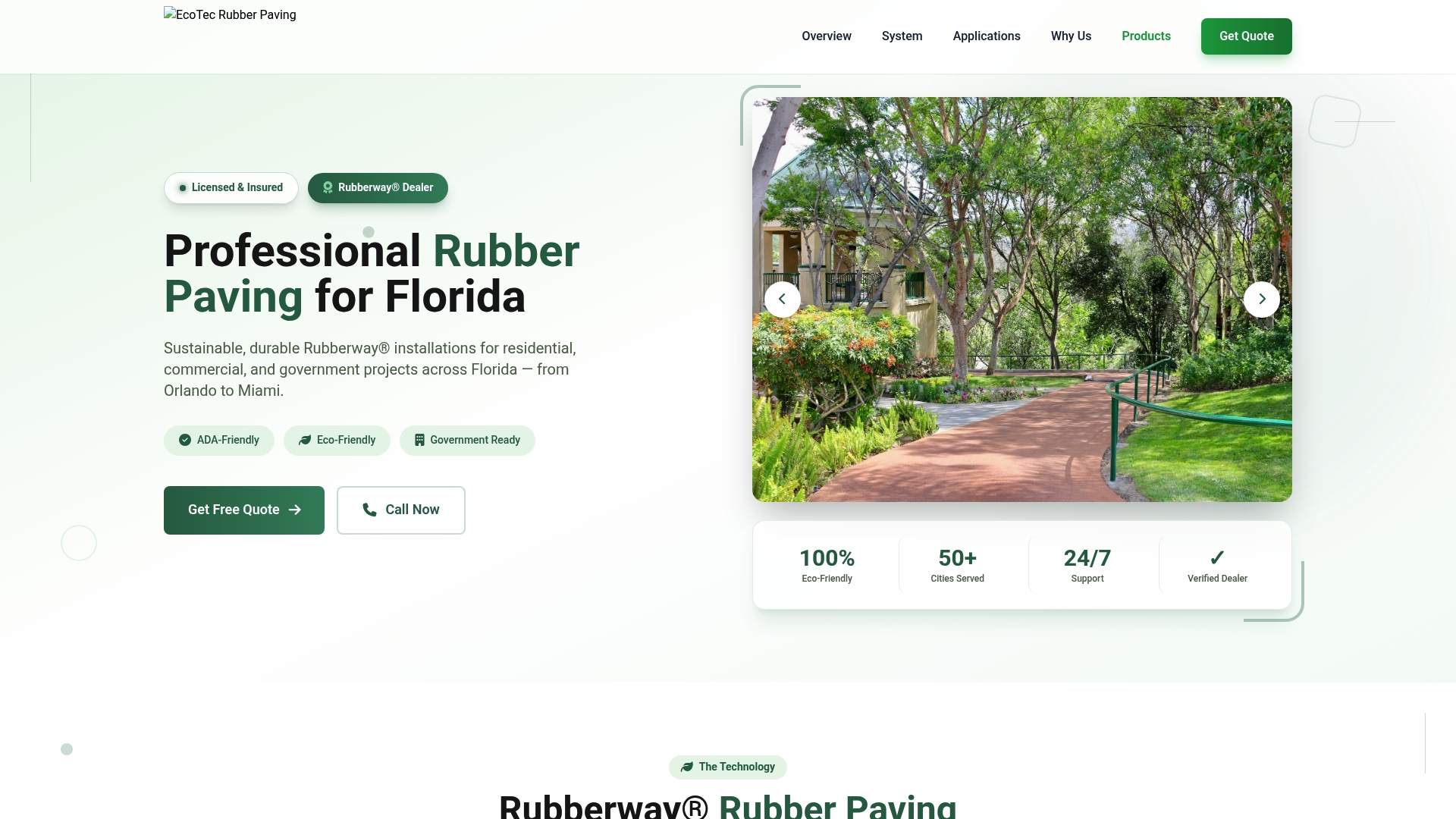
Their installations are ADA-compliant, crack-resistant, and designed for both residential driveways and commercial properties. The rubber paving products Ecotecrubber offers divert post-consumer tire rubber from landfills while delivering a surface that outperforms standard asphalt in heat resistance and drainage. If you're in Florida and want a durable, genuinely sustainable driveway, Ecotecrubber's installations are worth a direct conversation.
FAQ
What is the most permeable eco-friendly driveway material?
Pervious concrete absorbs stormwater at 3 to 5 gallons per square foot per minute, making it one of the highest-performing permeable options. Resin-bound paving and stabilized gravel also offer strong infiltration rates with lower maintenance demands.
How often do permeable driveways need maintenance?
Permeable driveways require vacuum sweeping at least quarterly, and monthly in high-traffic areas, to prevent clogging of the infiltration voids. Without regular cleaning, infiltration capacity can be lost within 2 to 5 years.
Is rubber paving a genuinely eco-friendly driveway option?
Yes. Rubber paving is made from recycled post-consumer tires, diverts significant waste from landfills, and requires minimal maintenance. It also resists heat absorption better than dark asphalt, reducing the urban heat island effect on your property.
What eco-friendly driveway material works best for commercial properties?
Pervious concrete, porous asphalt, and resin-bound paving with certified recycled aggregates all handle commercial traffic loads while meeting stormwater management requirements. The best choice depends on traffic volume, climate, and local drainage regulations.
Can permeable driveways be restored after clogging?
Yes. Biennial high-pressure washing and vacuum suction can restore infiltration performance close to original levels, even after years of pollutant buildup. Installing permeable surfaces last during construction also prevents premature clogging from sediment.