

Green building material options for paving are sustainable materials engineered to minimize environmental impact while delivering durable, attractive, and functional outdoor surfaces. The best choices combine low carbon footprints, high recyclability, and strong permeability to manage stormwater. From permeable concrete and recycled rubber to bio-binders derived from algae and waste-based products like Reconophalt, today's eco-friendly pavers outperform traditional materials on multiple fronts. This article covers the leading sustainable paving materials, their real-world performance, and how to choose the right one for your property.
1. Green building material options for paving: what qualifies
Not every material marketed as "green" earns the label. Sustainable paving materials must meet at least three criteria: reduced carbon emissions during production, recyclability or use of recycled content, and functional performance equal to or better than conventional alternatives. The industry term for this category is sustainable pavement, and it spans permeable concrete, recycled asphalt, rubber pavers, natural stone, and bio-based binders. Each option addresses a different combination of environmental and performance priorities, so understanding the full range is the starting point for any smart paving decision.
2. Permeable and pervious paving options
Permeable paving is the most widely recommended green construction material for flood-prone properties and urban sites. These systems allow rainwater to pass through the surface and into a sub-base, rather than running off into storm drains. The result is reduced flooding, groundwater recharge, and lower pollutant loads in local waterways.
Common permeable paving types include:
- Pervious concrete: A porous mix with little to no fine aggregate, allowing water to drain at rates up to 8 gallons per minute per square foot
- Plastic grid systems: Interlocking grids filled with gravel or grass, used for overflow parking and low-traffic areas
- Turfstone pavers: Concrete units with open cells planted with grass, blending green coverage with load-bearing capacity
- Gravel-filled permeable grids: Lightweight, flexible systems suited for pathways and driveways
Permeable paving reduces flood risk by allowing water to soak through instead of running off, and it integrates into landscapes far more naturally than traditional decking. Homeowners in flood-risk zones increasingly favor these systems over concrete slabs precisely because they solve a drainage problem while looking good.
The critical installation detail most contractors overlook is the sub-base. An open-graded crushed stone sub-base is required to store and allow infiltration of water. Without it, even the most porous surface layer will fail to drain properly.
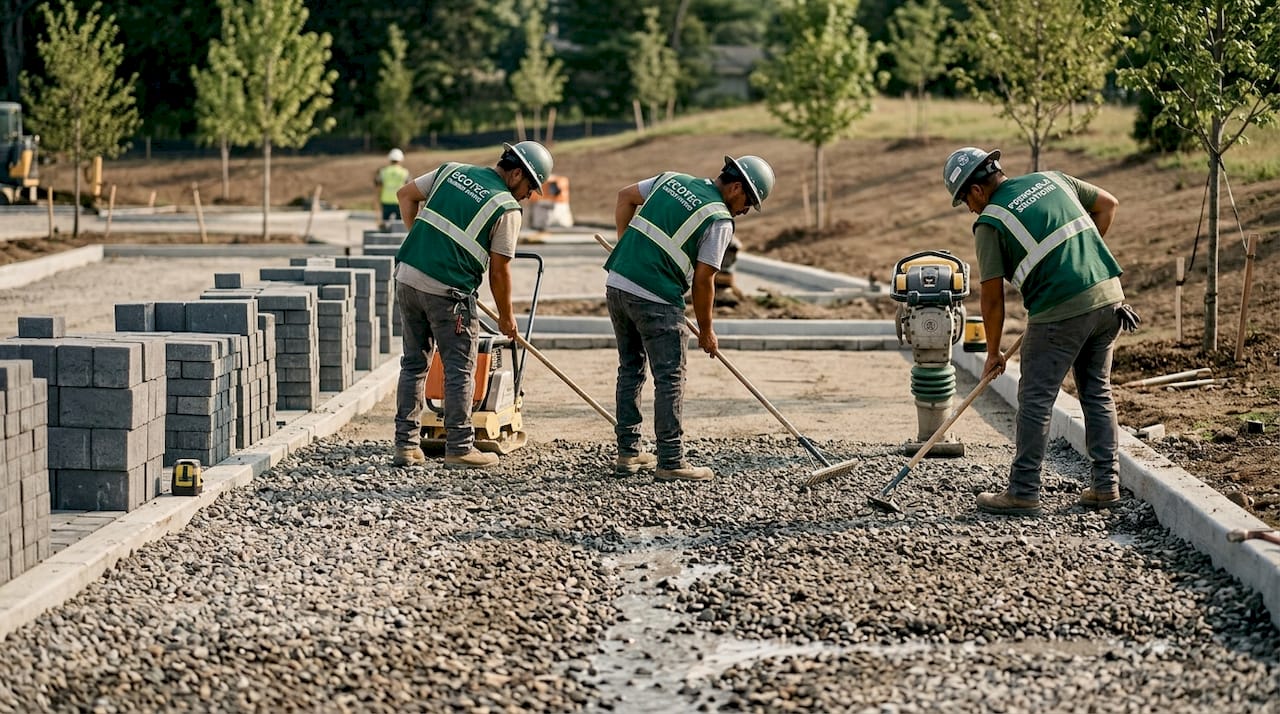
Pro Tip: Ask your installer to specify the sub-base aggregate size and depth in writing before work begins. A sub-base of 6 to 12 inches of clean crushed stone is standard for residential driveways.
3. Recycled materials: concrete, asphalt, and rubber
Recycled building materials represent the fastest-growing segment of sustainable paving. Three categories stand out for performance and environmental impact.
Recycled concrete aggregate (RCA) uses crushed demolition concrete as a base or sub-base material, diverting construction waste from landfills and reducing demand for virgin aggregate. Recycled asphalt pavement (RAP) reprocesses milled road surfaces into new asphalt mixes, cutting both material costs and emissions.
The most striking example of waste-based paving comes from Australia. Reconophalt pavement repurposes plastic bags, glass bottles, toner cartridges, and reclaimed asphalt into road surfaces, reducing construction carbon emissions by up to 76%. Each kilometer of Reconophalt uses 200,000 plastic bags, 63,000 glass bottles, and toner from 4,500 cartridges. A 2018 project using this mix diverted waste that reduced emissions by 339 tons of CO₂, equivalent to removing 140 cars from the road for a year.
Rubber pavers made from recycled tires round out this category. They offer impact absorption, slip resistance, and ADA compliance, making them popular for playgrounds, pool decks, and commercial walkways. Ecotecrubber's Rubberway rubber paving products are a prime example of how recycled tire rubber becomes a high-performance, long-lasting surface.
| Material | Primary recycled content | Carbon reduction | Best application |
|---|---|---|---|
| Reconophalt | Plastic, glass, toner, asphalt | Up to 76% | Roads, sidewalks, freeways |
| Recycled asphalt pavement | Milled road surface | 20–30% (typical) | Driveways, parking lots |
| Rubber pavers | Recycled tires | Significant landfill diversion | Walkways, pool decks, playgrounds |
| Recycled concrete aggregate | Demolition concrete | Reduces virgin aggregate demand | Sub-base, base layers |
4. Natural and bio-based paving materials
Natural stone, including granite, bluestone, slate, and limestone, carries strong sustainability credentials when sourced locally. It requires no manufacturing energy beyond quarrying and cutting, lasts for decades without replacement, and can be reclaimed and reused. The carbon footprint of natural stone drops significantly when the quarry is within 500 miles of the project site.
Bio-based binders represent the most exciting frontier in green paving science. Researchers at Pacific Northwest National Laboratory found that adding 6% bio-binder from Ulva algae to asphalt boosts elastic recovery from 0.1% to 71%, dramatically improving flexibility and self-healing. Every 1% of bio-binder added reduces net carbon emissions by 3%, and a 33% blend may achieve carbon neutrality or net-negative emissions. That is a performance and environmental win in a single material change.
Pilot projects are already proving bio-based paving works at scale:
- Barcelona's olive and pine waste pavement: The city tested asphalt using olive oil biochar and pine waste to substitute limestone. The result was nearly 76% lower CO₂ emissions, better temperature resistance, and less cracking tendency in wet conditions.
- Algae-modified asphalt: Performs well at subzero temperatures, making it relevant for northern climates as well as warm ones.
- Biomass-derived binders: Sourced from agricultural waste streams, these binders reduce dependence on petroleum-based bitumen.
"The shift from petroleum-based binders to bio-derived alternatives is not incremental. It is a structural change in how pavement chemistry works, and the performance data backs it up." — Pacific Northwest National Laboratory research summary
For homeowners and businesses, natural stone and bio-based asphalt represent opposite ends of the spectrum: one is ancient and proven, the other is emerging and transformative. Both belong in the conversation about best paving materials for sustainability.
5. How to compare and choose the right sustainable paving material
Choosing among eco-friendly pavers requires matching material properties to your specific site, budget, and goals. No single material wins every category.
| Factor | Permeable pavers | Recycled rubber | Natural stone | Bio-based asphalt |
|---|---|---|---|---|
| Upfront cost | Moderate | Moderate | High | Moderate to high |
| Durability | High | Very high | Very high | High |
| Maintenance | Low | Very low | Low | Low |
| Stormwater management | Excellent | Good | Poor to moderate | Poor |
| Aesthetics | Varied | Functional | Premium | Standard |
| Best for | Driveways, patios | Walkways, pool decks | Patios, paths | Roads, large areas |
Site conditions drive the decision more than any other factor. A Florida property with sandy soil and heavy rainfall benefits most from permeable pavers or rubber paving with drainage channels. A commercial property in a dense urban area may prioritize recycled asphalt or Reconophalt-style mixes for large-scale paving. A residential patio focused on aesthetics and longevity points toward natural stone or premium permeable concrete units.
When evaluating sustainable property development practices, contractors consistently recommend assessing three things before specifying a material: local climate and soil drainage capacity, expected traffic load, and long-term maintenance budget. A material that costs more upfront but lasts 40 years with minimal maintenance almost always beats a cheaper option replaced every 10 years.
Pro Tip: Request a life-cycle cost analysis from your contractor, not just a material quote. The 20-year total cost of ownership for permeable concrete or rubber paving typically beats traditional concrete when you factor in drainage repairs and resurfacing.
6. Emerging trends in green paving materials for 2026
The next generation of sustainable paving materials is already moving from lab to field. Several developments are worth tracking.
- Carbon-cured pervious concrete with seashell sand: Researchers found that pervious concrete blocks cured with seashell sand via accelerated carbonation show 27% higher compressive strength and 60% higher splitting tensile strength compared to uncarbonated mixes. These blocks met EN 1338 standard thresholds within 3 to 7 days, combining marine waste diversion with structural performance.
- Human hair fiber reinforcement: Adding 1 to 2% alternative fibers like human hair to concrete increases tensile strength and crack resistance while diverting waste from landfills. Barbershops and salons in pilot programs have supplied fiber directly to concrete producers.
- Flexible permeable paver systems: Products like Invisible Structures' Gravelpave2 can be shaped on-site with standard hand tools, enabling custom curves and layouts that rigid concrete cannot match. This flexibility makes permeable paving practical for complex residential landscapes.
- Plastic and waste-derived road surfaces: Reconophalt and similar systems are scaling from sidewalks to freeways, with municipal adoption growing across Australia, Europe, and North America.
- Bio-oil modified asphalt: Low-temperature performance improvements from algae and biomass oils are making bio-based asphalt viable in climates previously limited to petroleum binders.
The common thread across all these trends is that green construction materials no longer require a performance trade-off. The science has caught up with the ambition.
Key takeaways
The most effective green building material options for paving combine recycled content, permeability, and bio-based chemistry to deliver surfaces that outperform traditional concrete and asphalt on both environmental and durability metrics.
| Point | Details |
|---|---|
| Permeable paving leads for drainage | Open-graded sub-base is required for permeable systems to function correctly. |
| Recycled materials cut emissions sharply | Reconophalt reduces construction carbon emissions by up to 76% per kilometer of road. |
| Bio-binders transform asphalt performance | Algae-derived binders boost elastic recovery from 0.1% to 71% and cut carbon per percent added. |
| Match material to site conditions | Climate, soil drainage, traffic load, and budget determine the best sustainable paving choice. |
| Emerging materials are field-ready | Carbon-cured seashell concrete and fiber-reinforced mixes meet industry standards today, not just in theory. |
Why I think most homeowners are choosing green paving for the wrong reasons
Most people start looking at eco-friendly pavers because they want to do something good for the environment. That is a fine motivation, but it often leads to decisions based on marketing rather than performance. I have seen properties where beautiful natural stone was installed with zero drainage planning, turning a premium investment into a standing-water problem within two rainy seasons.
The shift I have noticed among the most satisfied property owners is that they start with the site problem, not the material. Flooding? Permeable paving or rubber with drainage channels. Heat absorption? Light-colored natural stone or recycled rubber with reflective coatings. Heavy traffic with low maintenance budget? Recycled asphalt or Reconophalt-style mixes. The green credentials follow naturally from solving the real problem.
I am also skeptical of anyone who dismisses recycled rubber as a "lesser" material. The performance data from projects like Ecotecrubber's Rubberway installations in Florida shows crack resistance, ADA compliance, and drainage performance that traditional concrete cannot match in high-heat, high-rainfall environments. The material comes from tires that would otherwise sit in a landfill. That is not a compromise. That is a better product.
The one prediction I will make with confidence: bio-based binders will be mainstream within a decade. The algae asphalt research from Pacific Northwest National Laboratory is not a curiosity. It is a roadmap. When a 33% bio-binder blend can achieve carbon neutrality in asphalt, the economics will force adoption even without regulatory pressure.
Choose materials that solve your site's real problems first. The sustainability story will take care of itself.
— Gm
Ecotecrubber brings green paving to Florida properties
If you are a homeowner or business in Florida looking for a proven, eco-friendly paving solution, Ecotecrubber delivers exactly that through the Rubberway® installation system. Every installation uses recycled rubber from tires, diverting waste from landfills while producing surfaces that handle Florida's heat, heavy rain, and humidity better than traditional concrete or asphalt.
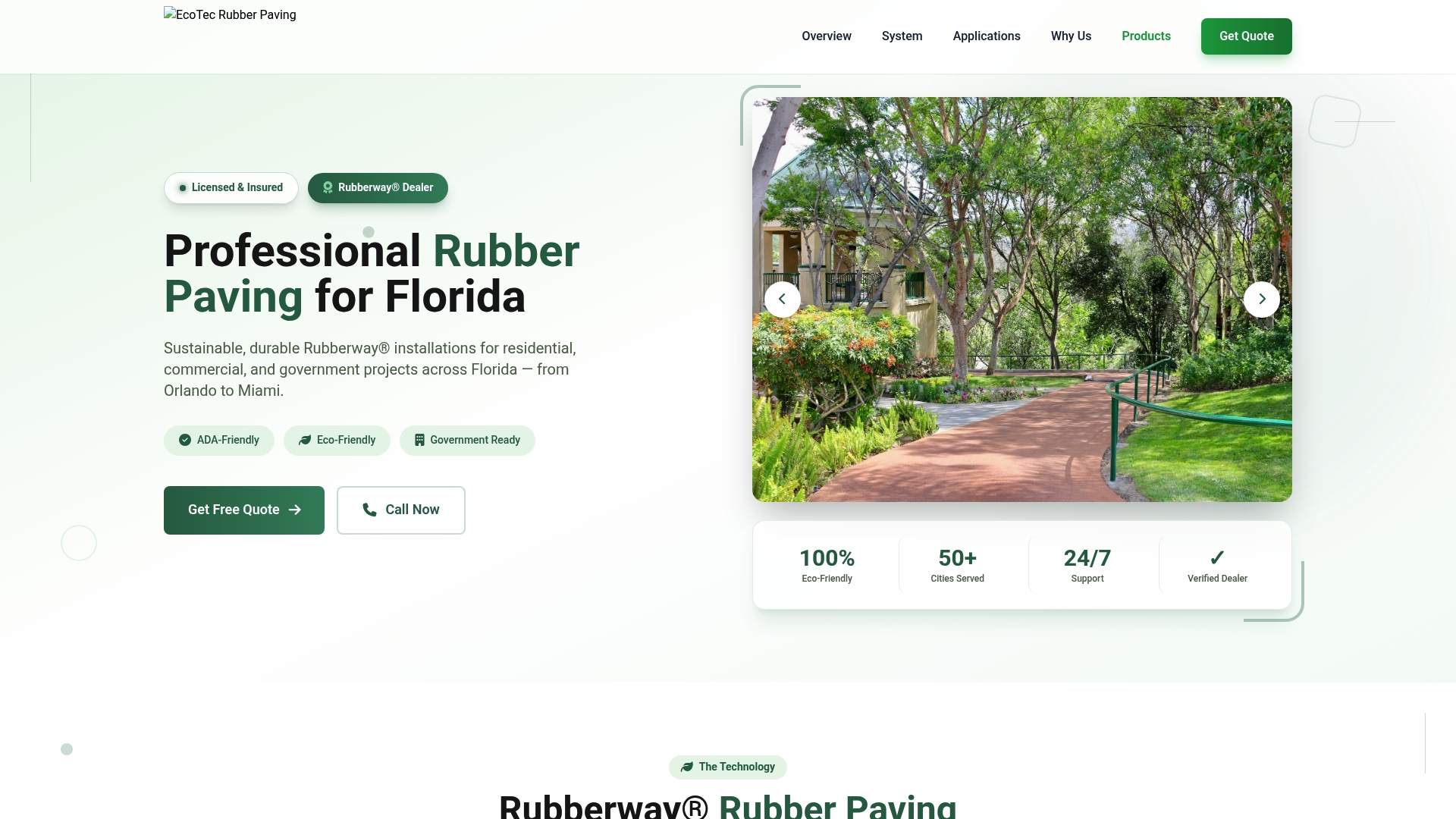
Ecotecrubber's surfaces are ADA-compliant, crack-resistant, and designed for excellent drainage, addressing the two most common outdoor paving failures in the state: standing water and heat-induced cracking. Licensed, insured, and focused exclusively on rubber paving, Ecotecrubber coordinates every project from material selection to final installation. For homeowners and businesses ready to invest in a surface that performs and protects the environment, Ecotecrubber is the specialist to call.
FAQ
What are the most sustainable paving materials available?
Permeable concrete, recycled rubber pavers, recycled asphalt, natural stone, and bio-based asphalt with algae binders are the leading sustainable paving materials. Each reduces carbon emissions, diverts waste, or improves stormwater management compared to conventional concrete.
How does permeable paving reduce flooding?
Permeable paving allows rainwater to pass through the surface and into a crushed stone sub-base, where it infiltrates the soil rather than running off into storm drains. This reduces flood risk and replenishes groundwater at the same time.
Are recycled rubber pavers durable enough for driveways?
Recycled rubber pavers offer very high durability, excellent crack resistance, and strong performance in high-heat and high-rainfall climates like Florida. Ecotecrubber's Rubberway® system is specifically engineered for these conditions.
What is Reconophalt and where is it used?
Reconophalt is an Australian pavement material that incorporates plastic bags, glass bottles, toner cartridges, and reclaimed asphalt into road surfaces, cutting construction carbon emissions by up to 76%. It has been used on sidewalks, roads, and freeways.
Can bio-based binders replace petroleum asphalt?
Bio-binders derived from Ulva algae can replace a portion of petroleum-based bitumen in asphalt, with a 33% blend potentially achieving carbon neutrality. Research from Pacific Northwest National Laboratory confirms significant improvements in flexibility and low-temperature performance.