
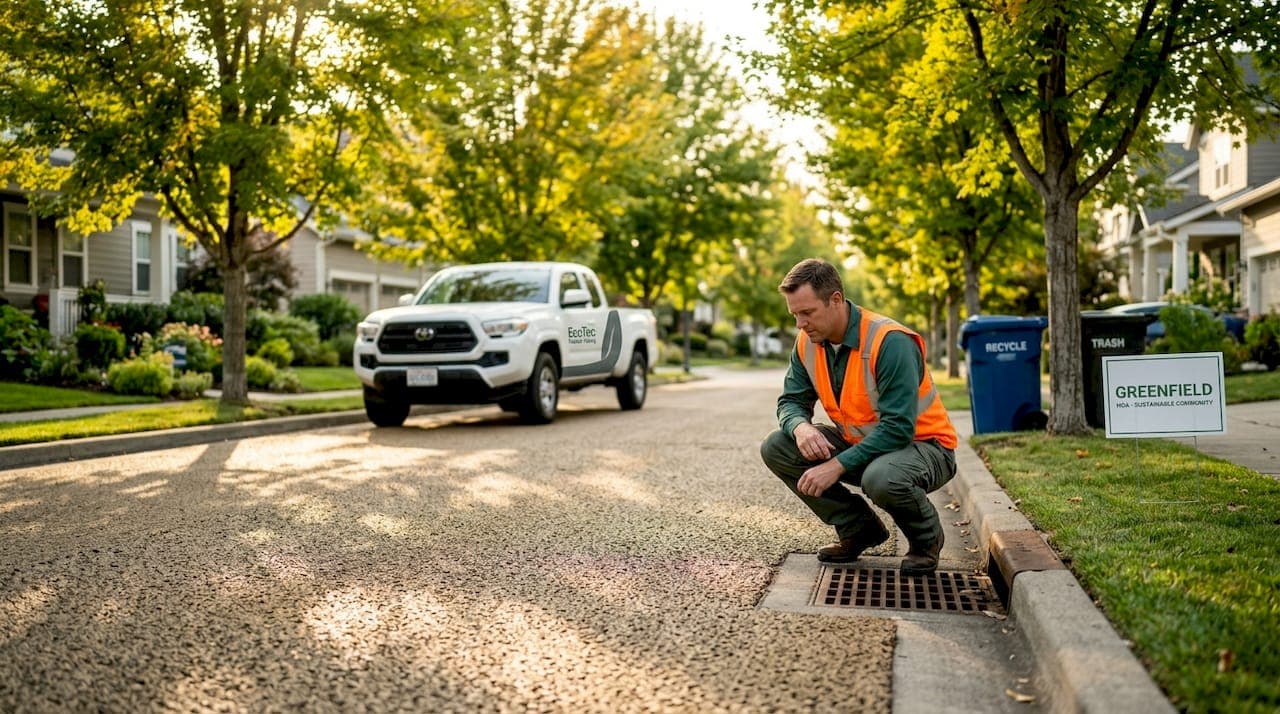
Eco-friendly paving is a sustainable infrastructure approach that directly advances HOA community values by managing stormwater, reducing pollutants, cutting urban heat, and meeting regulatory compliance standards. Understanding how eco-friendly paving supports HOA values means looking beyond aesthetics to measurable environmental and financial outcomes. Research published in 2026 by MDPI and regulatory updates from the New Jersey Department of Environmental Protection confirm that permeable and high-albedo paving systems deliver quantifiable benefits for residential communities. For HOA boards navigating green policy commitments and resident expectations, these findings provide the evidence base needed to make confident paving decisions.
How eco-friendly paving supports HOA stormwater management goals
Stormwater runoff is one of the most costly and legally complex problems HOA communities face. Permeable paving solves it at the source by allowing rainwater to infiltrate directly through the surface rather than sheet-flowing into storm drains and downstream waterways.
The NJ Stormwater Best Management Practices Manual 2026 mandates groundwater recharge and runoff quantity and quality standards using green infrastructure approaches. This means permeable paving is not just a preference for forward-thinking HOAs. It is a recognized compliance mechanism in major regulatory frameworks. Communities that install permeable surfaces are actively reducing their exposure to stormwater violations and the fines that follow.
The stormwater benefits of permeable paving break down into three distinct functions:
- Runoff volume reduction: Water infiltrates the surface and recharges groundwater rather than overwhelming municipal storm systems during heavy rain events.
- Downstream discharge reduction: Less runoff leaving the property means lower peak flows in local streams and drainage channels, reducing flood risk for neighboring properties.
- Water quality improvement: As water passes through permeable layers, suspended solids and nutrients are filtered out before reaching groundwater or surface water bodies.
Eco-paving also supports HOA green policies by positioning communities as responsible stewards of shared natural resources. Boards that frame paving as green infrastructure rather than a cosmetic upgrade gain stronger support from residents and regulators alike.
Pro Tip: When presenting permeable paving to your HOA board, lead with the regulatory compliance angle. Framing it as stormwater risk management rather than a green marketing choice tends to move budget approvals faster.
What measurable environmental benefits do eco-friendly pavements provide?
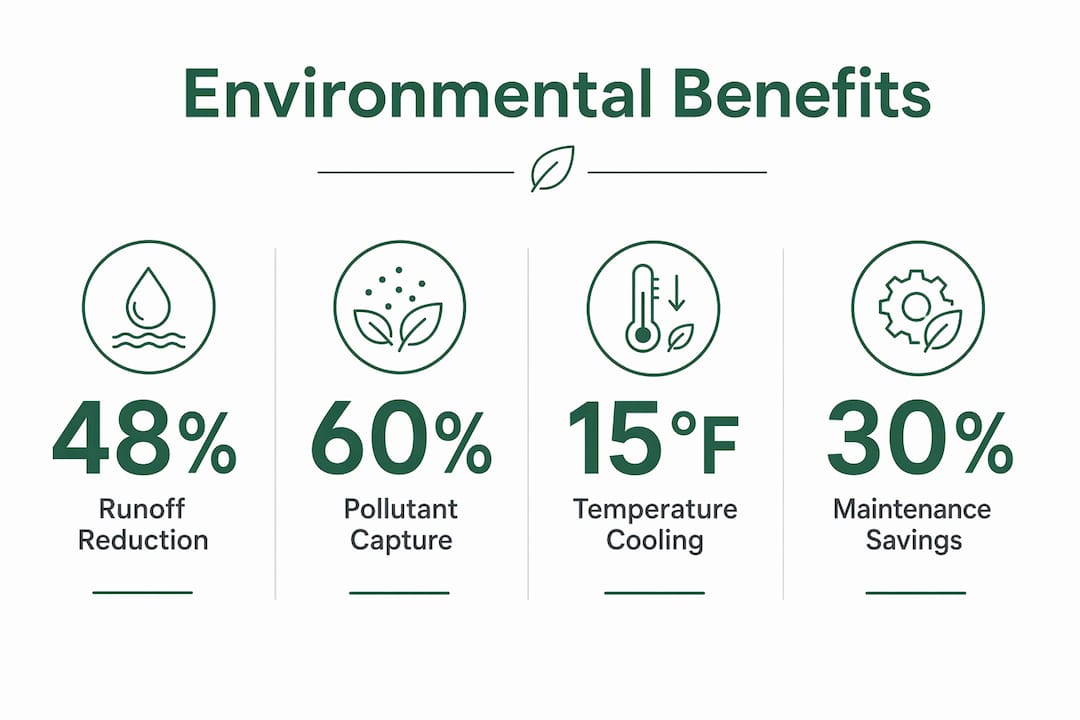
The environmental performance of mature permeable paving systems is well-documented and more nuanced than most HOA boards realize. A 2026 MDPI field study tracked precast permeable slabs over five years and found that permeability dropped 48% due to clogging from sediment and organic matter. That sounds alarming until you see the recovery data: high-pressure cleaning restored 42.5% of that lost capacity. The takeaway is that degradation is real but reversible with proper maintenance.
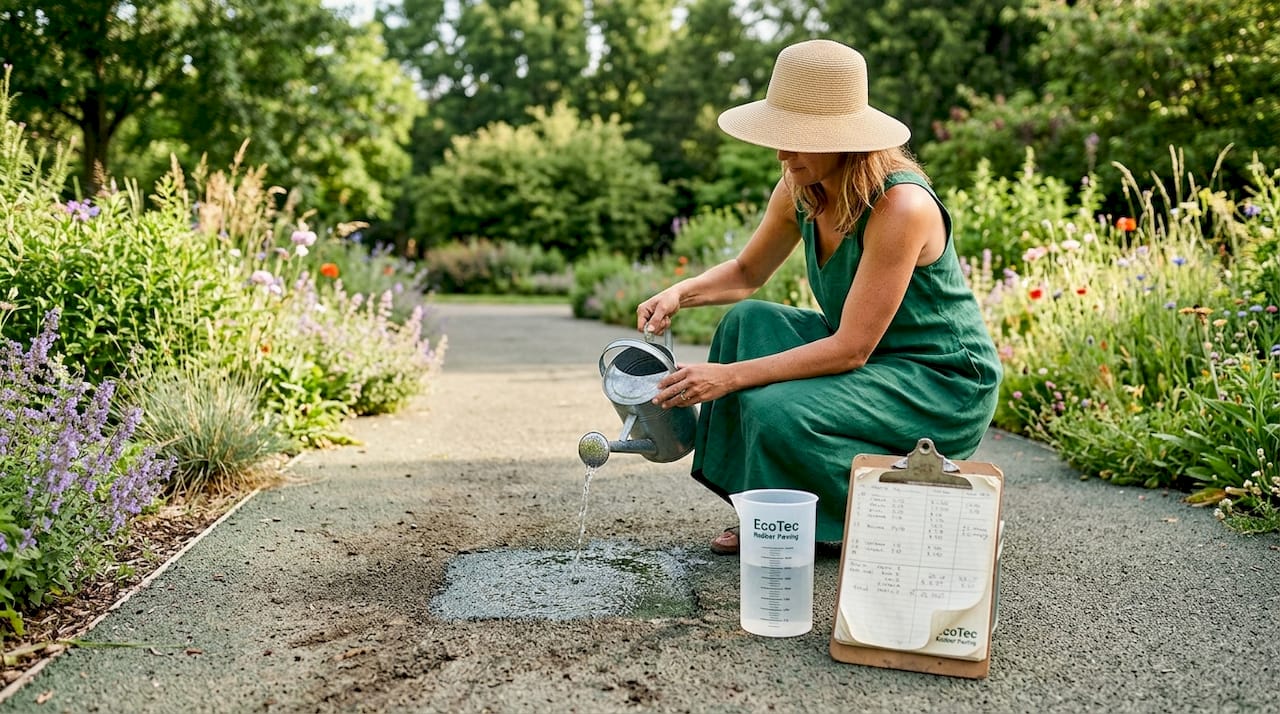
The same study confirmed that permeable pavements retain substantial quantities of suspended solids, nutrients, and microplastics even as permeability declines. This is a critical finding for HOA communities near water bodies or in areas with strict water quality regulations. The surface continues to function as a pollutant filter even when hydraulic performance has partially degraded.
Thermal performance is equally compelling. A separate 2026 MDPI study on high-albedo interlocking concrete block pavements (ICBPs) found that ICBP albedo reaches approximately 0.20 compared to traditional asphalt at roughly 0.08. That difference translates to a measurable reduction in surface temperature and urban heat island intensity.
| Paving Type | Albedo Value | Urban Heat Island Reduction |
|---|---|---|
| Traditional asphalt | ~0.08 | Baseline (no reduction) |
| High-albedo ICBP | ~0.20 | Approximately 15% reduction |
| Aged/dirty ICBP | ~0.11 | Partial reduction, maintenance required |
"Thermal comfort and urban heat island reduction are persuasive community benefits that improve outdoor usability and resident satisfaction." — MDPI 2026 Heat Island Research
The cooling effect matters most in Florida and other Sun Belt states where summer pavement temperatures routinely exceed 140°F on traditional asphalt. Cooler surfaces mean more usable outdoor common areas, lower ambient temperatures near buildings, and reduced cooling loads for adjacent structures. These are benefits residents feel directly, which makes them powerful arguments in community meetings.
One important caveat: the albedo can drop from 0.20 to 0.11 after surface aging and dirt accumulation. HOAs that invest in high-albedo paving must budget for regular cleaning to preserve the thermal benefit over time.
How does eco-friendly paving connect to LEED certification and documentation?
LEED v5 Sustainable Sites and Location and Transportation credits directly reward communities for making responsible hardscape choices. The path to earning those credits, however, requires more than installing the right material. LEED v5 documentation requirements specify that hardscape choices must be supported by measurable proof, technical specifications, and verified maintenance schedules.
For HOA boards, this creates both an opportunity and an obligation. The opportunity is real: communities that pursue LEED or similar sustainability ratings gain third-party validation of their environmental commitments, which supports property value arguments and attracts sustainability-minded buyers. The obligation is that documentation must be planned before installation, not assembled after the fact.
Here is a practical sequence for HOAs pursuing sustainability certification through paving choices:
- Identify target credits before procurement. Determine which LEED Sustainable Sites credits your paving choice can support and confirm the documentation requirements with a certified LEED consultant.
- Specify materials with documented environmental performance. Request manufacturer data on permeability rates, albedo values, recycled content, and pollutant retention from your paving contractor before signing any contract.
- Establish a maintenance schedule at installation. LEED verification requires proof of ongoing performance. A written maintenance plan with scheduled inspections and cleaning cycles is non-negotiable for credit retention.
- Archive all project records. Store specifications, installation photos, contractor certifications, and maintenance logs in a centralized HOA document system accessible to future board members.
Pro Tip: Procurement timing matters more than most boards expect. Delays in documentation after installation can disqualify your community from sustainability credits entirely. Lock in your documentation strategy before the first slab goes down.
Sustainable refurbishments that earn recognized ratings also tend to support property value arguments at resale. Buyers increasingly search for communities with verified green credentials, and paving is one of the most visible signals of a community's environmental commitment.
What maintenance must HOAs plan for to preserve eco-paving performance?
Maintenance is where most HOA eco-paving investments succeed or fail. The research is unambiguous: without routine upkeep, permeable paving loses both its hydraulic capacity and its pollutant retention function within a few years of installation.
The MDPI 2026 study recommends a two-tier maintenance approach to keep permeable pavements performing above regulatory thresholds:
- Routine sweeping: Regular mechanical sweeping removes surface debris and organic matter before it migrates into the permeable layer and causes clogging. This should occur at least quarterly in most climates, and more frequently in areas with heavy tree cover or high traffic.
- Biennial high-pressure washing with vacuum suction: Every two years, a high-pressure wash combined with vacuum extraction removes embedded sediment from the permeable layer. This is the intervention that recovered 42.5% of lost permeability in the MDPI field study.
- Annual hydraulic performance checks: Measure infiltration rates at representative points across the paved surface to confirm performance stays above the regulatory minimum. This data also feeds your LEED documentation requirements.
- Visual inspection after major storm events: Heavy rainfall can deposit significant sediment loads in a single event. Post-storm inspections catch problems before they compound.
Property managers who treat eco-paving maintenance the same way they treat HVAC or elevator servicing, as a scheduled operational cost rather than a reactive repair, see dramatically better long-term performance. Effective maintenance strategies for property managers consistently show that preventive schedules outperform reactive repairs on both cost and outcome.
Board-level success metrics should include not just installation milestones but also scheduled maintenance completion rates and regular performance verification against hydraulic thresholds. Communities that track these metrics can demonstrate ongoing environmental stewardship to residents and regulators.
How can HOA boards communicate eco-paving value to residents?
Clear communication is what separates eco-paving projects that build community pride from those that generate complaints about cost. The key is separating the value proposition into distinct, understandable channels rather than presenting a single "green" argument.
The MDPI 2026 research supports breaking eco-paving benefits into three separate conversations with residents and stakeholders:
- Stormwater quantity management: Frame this as flood risk reduction and protection of property values. Residents understand that standing water damages foundations, landscaping, and driveways. Permeable paving addresses that directly.
- Water quality improvement: Connect pollutant retention to the health of local waterways, community ponds, or nearby beaches. This resonates strongly in coastal Florida communities where water quality is a visible, personal concern.
- Thermal comfort: Present cooling data in terms residents feel. A 15% reduction in urban heat island intensity means cooler sidewalks, more comfortable outdoor common areas, and potentially lower air conditioning costs for units adjacent to paved surfaces.
Framing eco-paving as regulatory compliance and risk management rather than green marketing removes the perception that the board is spending money on ideology. Third-party certifications and published research give residents confidence that the investment is grounded in evidence, not trends.
Key takeaways
Eco-friendly paving supports HOA values by delivering measurable stormwater control, pollutant reduction, thermal comfort, and regulatory compliance, all of which require planned maintenance to sustain over time.
| Point | Details |
|---|---|
| Stormwater compliance | Permeable paving meets regulatory BMPs and reduces HOA exposure to stormwater violations. |
| Pollutant retention | Eco-pavements capture suspended solids, nutrients, and microplastics even as permeability gradually declines. |
| Thermal benefit | High-albedo ICBPs reduce urban heat island intensity by approximately 15% compared to asphalt. |
| Maintenance is non-negotiable | Biennial high-pressure washing recovers lost permeability and sustains pollutant retention performance. |
| Documentation drives certification | LEED v5 credits require pre-planned documentation; post-installation assembly risks disqualification. |
Why I think HOAs underestimate the maintenance side of eco-paving
Most HOA boards I have seen approach eco-paving as a one-time capital decision. They research materials, get bids, approve the budget, and move on. The maintenance plan is an afterthought, if it exists at all. That is the single most common reason eco-paving projects underperform.
The 48% permeability reduction documented in the MDPI field study did not happen because the product was poor. It happened because clogging is a natural consequence of a surface doing its job, capturing sediment and debris. The surface that works hardest also clogs fastest. Without a scheduled maintenance response, that performance degrades silently until the board notices standing water and assumes the product failed.
What I have found actually works is treating maintenance as a line item in the original project proposal, not a separate future decision. When the board approves the paving installation, they approve the five-year maintenance schedule at the same time. This approach also strengthens LEED documentation, since you have a written maintenance commitment from day one.
The thermal benefits follow the same pattern. An albedo of 0.20 is genuinely impressive. An albedo of 0.11 after two years of dirt accumulation is barely better than asphalt. The investment in cooling only pays off if the surface stays clean. That is not a product limitation. It is an operational reality that boards need to plan for honestly.
Eco-paving is not a luxury upgrade for communities with extra budget. It is a risk management tool, a compliance strategy, and a community health investment. Boards that treat it that way get the full return. Boards that treat it as a green marketing gesture tend to be disappointed.
— Gm
Sustainable rubber paving solutions for your HOA community
HOA communities across Florida are choosing Ecotecrubber's Rubberway® system for sustainable paving that handles the state's intense heat, heavy rainfall, and demanding drainage requirements. Ecotecrubber uses recycled rubber materials to create surfaces that resist cracking, drain effectively, and meet ADA compliance standards without sacrificing durability. Every installation is managed by licensed, insured professionals focused exclusively on rubber paving, so your board gets a coordinated project with clear documentation for sustainability records. If your community is ready to explore rubber paving products designed specifically for HOA needs, Ecotecrubber is the place to start.
FAQ
What is eco-friendly paving for HOA communities?
Eco-friendly paving refers to permeable, recycled-material, or high-albedo surfaces that reduce stormwater runoff, capture pollutants, and lower urban heat. These systems align with HOA sustainability goals and regulatory compliance requirements.
How does permeable paving reduce HOA stormwater problems?
Permeable paving allows rainwater to infiltrate through the surface and recharge groundwater rather than running off into storm drains. This directly reduces runoff volume and downstream discharge, meeting stormwater BMP standards like those in the NJ 2026 manual.
Does eco-friendly paving actually increase property values?
Eco-paving supports HOA value enhancement by reducing flood risk, improving outdoor comfort, and enabling sustainability certifications like LEED. Communities with verified green credentials attract buyers who prioritize environmental standards, which supports long-term property values.
How often does permeable paving need maintenance?
Routine sweeping should occur at least quarterly, with biennial high-pressure washing using vacuum suction to restore infiltration capacity. The 2026 MDPI study found this schedule recovered 42.5% of permeability lost to clogging over five years.
Can eco-paving help an HOA qualify for LEED credits?
Yes. LEED v5 Sustainable Sites credits reward responsible hardscape choices, but documentation must be planned before installation. Specifications, maintenance schedules, and performance records all factor into credit eligibility.