
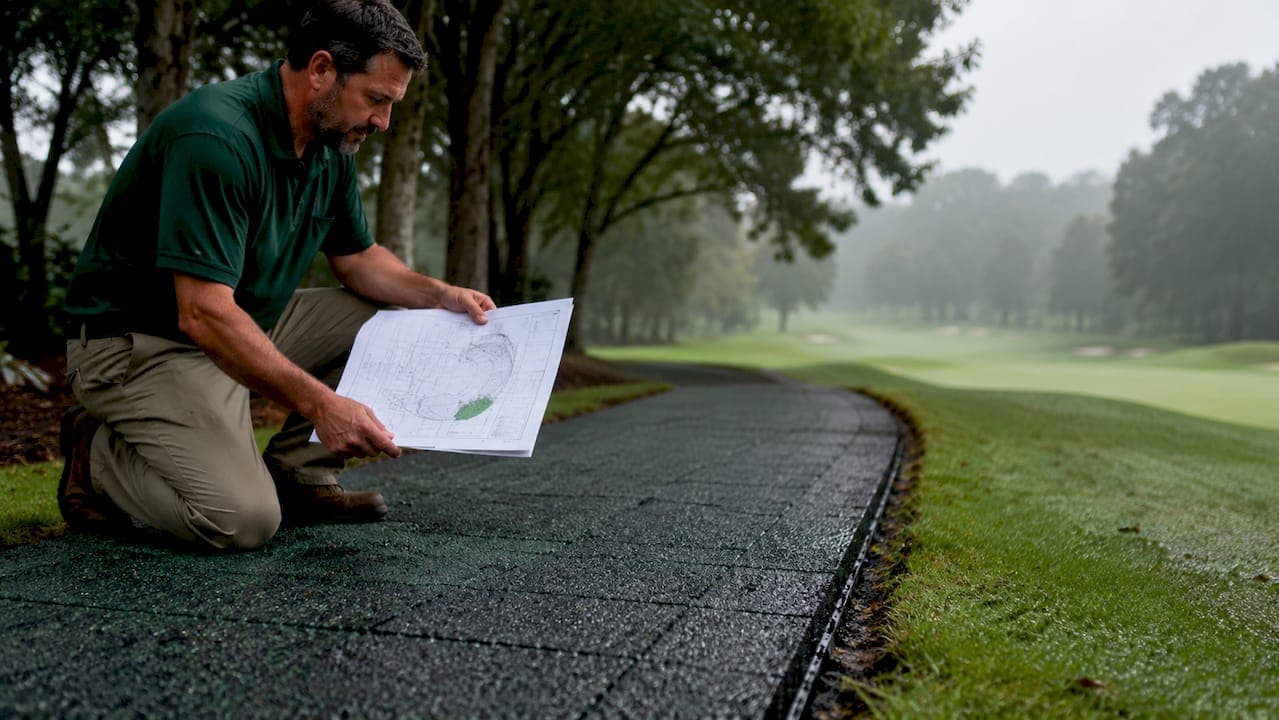
Recycled paving is defined as surfacing material made from post-consumer waste, including tire rubber and crushed aggregates, engineered to replace virgin asphalt or concrete on golf course paths, cart routes, and bunker surrounds. Understanding how recycled paving supports golf sustainability requires looking at three simultaneous benefits: stormwater infiltration, pollutant removal, and reduced material consumption over the life of the course. Products like Porous Pave and systems like EcoBunker technology demonstrate that eco-friendly golf construction is no longer experimental. It is a measurable operational strategy that reduces runoff, cuts maintenance cycles, and extends surface life under Florida's intense heat and rainfall conditions.
How recycled paving supports golf sustainability through stormwater management
Permeable recycled pavements are the most direct tool golf courses have for controlling stormwater at the source. Traditional asphalt and concrete shed water across fairways, cart paths, and parking areas, carrying fertilizers, sediment, and heavy metals into adjacent waterways. Recycled permeable systems intercept that flow before it becomes a problem.
The numbers are specific. Porous Pave, a recycled tire rubber product, achieves 27% void space and drains 5,800 gallons per square foot per hour. That rate means a heavy Florida downpour passes through the surface rather than pooling across cart paths or washing out bunker faces. For golf course managers dealing with standing water complaints and turf damage after rain events, that infiltration capacity directly reduces recovery time and labor.
Pollutant capture is equally significant. Pervious concrete incorporating recycled brick and concrete aggregates shows improved long-term removal of total suspended solids, total nitrogen, total phosphorus, zinc, and lead compared to natural aggregate systems. Recycled aggregates alter the adsorption chemistry inside the pavement matrix, creating more surface area for particle retention across the 10 to 100 micrometer size range. This means the pavement itself acts as a filter, not just a drain.
Field performance data from permeable articulating concrete blocks in Maryland found mean subsurface infiltration of 2.35 cm per hour, with the capacity to capture rainfall from storms up to 10.44 cm without overflow. That data was collected across 50 rainfall events over 18 months, which gives it real credibility for specification decisions. Golf courses in high-rainfall regions like Florida's Gulf Coast can use these benchmarks to size their permeable paving systems accurately.
Pro Tip: Map your course's impervious surface area before specifying a permeable paving system. Cart paths, maintenance roads, and parking areas combined often exceed five acres on a standard 18-hole layout. Knowing your total impervious footprint lets you calculate expected runoff reduction and justify the investment with hard numbers.
| Surface type | Infiltration rate | Pollutant removal | Runoff reduction |
|---|---|---|---|
| Recycled rubber permeable (Porous Pave) | 5,800 gal/sq ft/hr | High (TSS, nutrients, metals) | Significant at source |
| Permeable articulating concrete blocks | 2.35 cm/hr mean | Moderate to high | Up to 10.44 cm storm capture |
| Traditional asphalt | Near zero | None | Generates full runoff |
| Standard concrete | Near zero | None | Generates full runoff |
What recycled materials actually go into golf course paving
The material science behind sustainable golf course materials is more specific than most procurement decisions acknowledge. Recycled tire rubber, crushed kiln-dried stone aggregate, and urethane binders form the core composition of products like Porous Pave. Each component serves a distinct structural role.
Tire rubber contributes flexibility. Golf cart paths experience repeated point loading from cart wheels, and rigid surfaces crack under that stress, particularly through Florida's wet and dry seasonal cycles. Rubber absorbs and distributes load rather than fracturing. One pathway product incorporating 30% polymer from end-of-life tire rubber is specifically engineered for UV resistance and severe weather durability, with anti-slip properties that reduce liability on wet surfaces. That 30% recycled content figure also represents a meaningful diversion of tire waste from landfills.
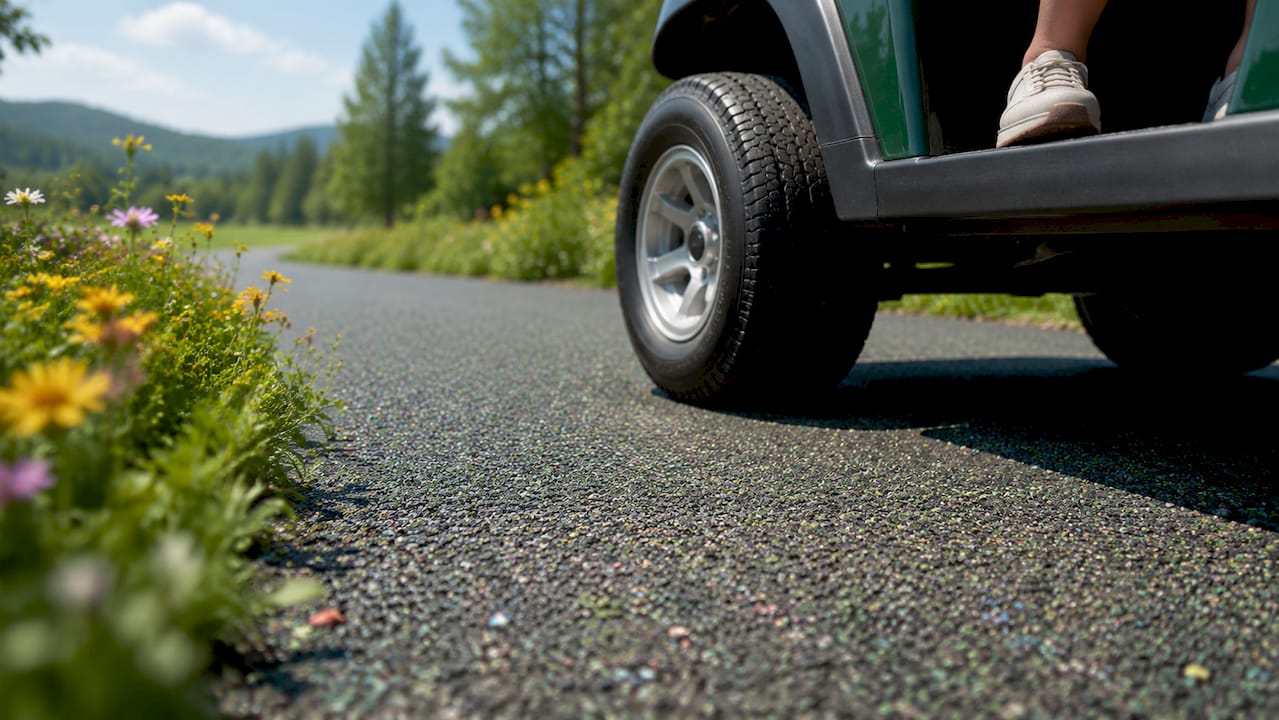
Crushed aggregate fills the structural matrix and creates the void space that enables drainage. When that aggregate comes from recycled concrete or brick, the adsorption and particle retention properties improve relative to virgin stone. Recycled aggregate surfaces are not a compromise. They perform better on pollutant capture precisely because of their altered surface chemistry.
Durability under operational conditions matters as much as initial performance. Golf course paving must withstand:
- Repeated cart traffic at 15 to 20 mph across uneven terrain
- UV exposure exceeding 2,800 hours annually in Florida
- Thermal expansion and contraction through seasonal temperature swings
- Foot traffic from golfers, maintenance crews, and event staff
- Irrigation overspray and standing water in low-lying areas
Recycled rubber paving systems address each of these stressors without the brittleness of standard concrete. The permeable paving specification for golf applications requires balancing structural flexibility to withstand heavy cart loads while preserving pore space for stormwater infiltration. That balance is built into the material composition, not added as an afterthought.
Operational sustainability: maintenance, cost savings, and lifecycle impact
Recycled paving reduces the frequency of surface replacement, but it does not eliminate maintenance. Understanding this distinction is what separates courses that sustain their eco-friendly paving upgrade from those that watch performance degrade within three years.
Porous concrete slabs lose up to 48% of infiltration capacity over five years due to sediment and microplastic accumulation in the pore structure. The same research shows that pressure cleaning restores approximately 42.5% of that lost capacity. This means a scheduled maintenance program, not reactive repairs, is the operational model that keeps recycled permeable paving performing as specified.
A practical maintenance schedule for golf course permeable paving looks like this:
- Annual pressure cleaning of all cart path and pathway surfaces, timed before the wet season to maximize infiltration capacity during peak rainfall months.
- Quarterly visual inspection for surface clogging, sediment accumulation at low points, and any cracking at expansion joints.
- Post-storm assessment after events exceeding 3 inches of rainfall to identify any areas where runoff bypassed the permeable surface.
- Five-year performance audit using a simple infiltration test to measure actual drainage rates against the original specification.
The lifecycle cost argument for recycled paving is strongest when you account for what it replaces. Newark Golf Club's adoption of EcoBunker synthetic edge technology demonstrates how durable recycled infrastructure eliminates repetitive erosion cycles that previously consumed greenkeeping labor and sand replacement budgets every season. The installation model trains in-house staff after a brief orientation, which means ongoing maintenance stays within the existing team rather than requiring specialist contractors.
Pro Tip: Schedule pressure cleaning for permeable cart paths in late April in Florida, before the June through September wet season peak. Restoring infiltration capacity before the heaviest rainfall months maximizes the stormwater benefit you paid for.
Recycled paving vs. traditional concrete and asphalt on golf courses
The comparison between recycled permeable paving and conventional surfaces is not close on environmental metrics. It is closer on upfront cost, which is where most procurement conversations stall.
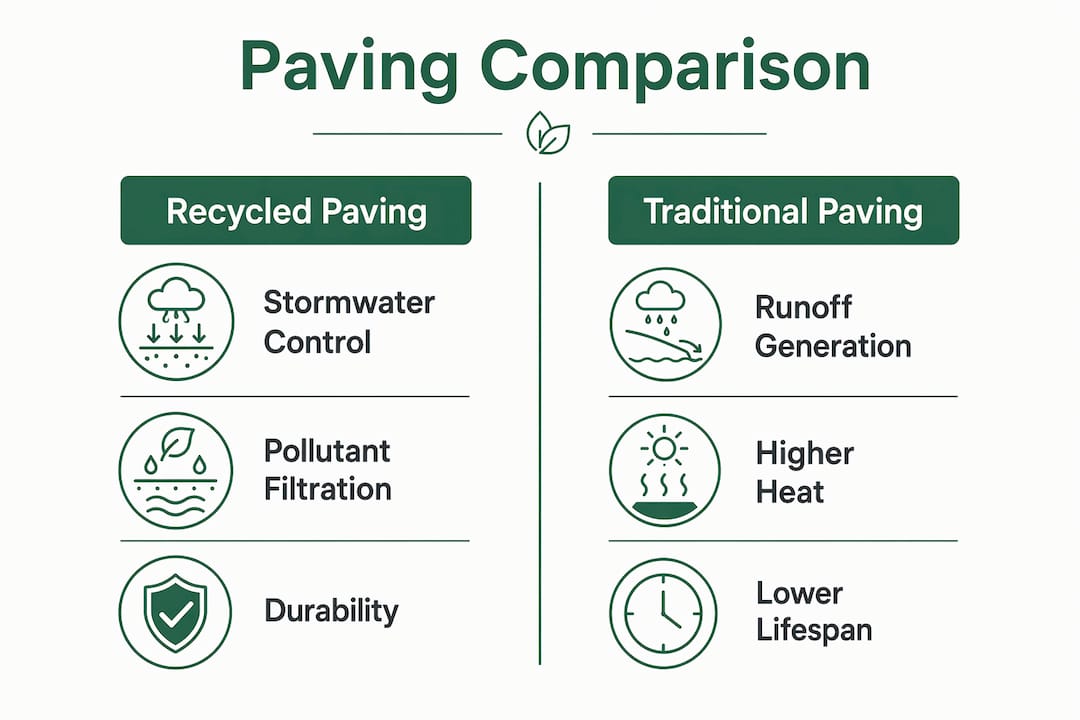
Traditional asphalt and concrete generate full surface runoff. Every inch of rain that falls on a standard cart path leaves the surface as runoff, carrying whatever it picks up along the way. Recycled permeable systems capture that water at the point of contact. The stormwater management benefit of permeable recycled pavements directly reduces runoff volume and pollutant transport, protecting water quality and course integrity simultaneously.
On heat performance, recycled rubber surfaces absorb and dissipate heat differently than dark asphalt. Florida asphalt cart paths regularly reach surface temperatures above 140°F in summer, creating thermal stress on the surface and discomfort for golfers walking between holes. Rubber-based surfaces with lighter aggregate top dressings run cooler and resist UV degradation longer than petroleum-based asphalt.
Surface safety is a practical differentiator that rarely appears in sustainability discussions but matters operationally. Wet asphalt and smooth concrete create slip hazards on sloped cart paths. Recycled rubber paving with anti-slip texture reduces incident risk, which has direct liability implications for course operators. The safety benefit comes built into the material, not as a coating that wears off.
The one area where traditional surfaces hold an advantage is initial installation cost. Recycled permeable paving typically costs more per square foot to install than standard asphalt. That gap narrows significantly when you factor in reduced stormwater infrastructure requirements, lower long-term maintenance frequency, and the avoided cost of surface replacement on a shorter cycle.
Key takeaways
Recycled permeable paving reduces golf course runoff, filters pollutants, and outlasts conventional surfaces when maintained on a scheduled cleaning program.
| Point | Details |
|---|---|
| Stormwater infiltration | Recycled rubber paving drains at rates that eliminate standing water on cart paths after heavy rain events. |
| Pollutant removal | Recycled aggregates improve TSS, nutrient, and heavy metal capture compared to virgin material systems. |
| Maintenance is non-negotiable | Infiltration capacity drops significantly over five years without pressure cleaning; schedule it annually. |
| Lifecycle cost advantage | Durable recycled surfaces reduce replacement frequency and eliminate repetitive erosion repair cycles. |
| Material composition matters | 30% recycled tire rubber content delivers anti-slip performance and UV resistance built into the surface. |
Why I think most golf courses underestimate recycled paving
Most sustainability conversations on golf courses center on water use, chemical inputs, and turf management. Paving gets treated as infrastructure, not ecology. That framing is a mistake, and it costs courses real money.
Cart paths and maintenance roads are the largest impervious surfaces on most courses. They generate the most concentrated runoff, carry the highest pollutant loads, and receive the least scrutiny in sustainability audits. When a course invests in precision irrigation and integrated pest management but leaves 40,000 square feet of standard asphalt paths untouched, it is solving the wrong problem first.
What I have found in practice is that the maintenance argument lands harder than the environmental one with most course managers. When you show that recycled permeable paving eliminates the standing water complaints, reduces the post-storm cleanup labor, and extends the surface replacement cycle from 12 years to 20-plus years, the conversation changes. The sustainability benefit is real, but the operational relief is what closes decisions.
The EcoBunker model at Newark Golf Club is instructive here. The course did not adopt synthetic bunker edges because of a sustainability mandate. It adopted them because erosion was consuming greenkeeping time and budget every season. The sustainability outcome was a consequence of solving an operational problem with better materials. That is the right sequence for most courses: identify the operational pain point, specify the recycled material solution, and document the environmental benefit as a result.
Staff training is the underrated variable. Recycled permeable paving performs as specified only when the maintenance team understands why infiltration capacity matters and how to restore it. A single pressure cleaning session with an explanation of what clogging does to drainage performance creates institutional knowledge that sustains the investment for years.
— Gm
Upgrade your golf course with Ecotecrubber's recycled rubber paving
Golf course managers across Florida are replacing aging asphalt paths with recycled rubber paving that handles the state's rainfall intensity without generating runoff or cracking under summer heat. Ecotecrubber's Rubberway® paving system uses recycled materials to deliver ADA-compliant, crack-resistant surfaces with drainage performance built into the material composition.
Ecotecrubber is licensed and insured, and every project is coordinated by specialists focused exclusively on rubber paving solutions. Whether you are planning an eco-friendly golf course paving upgrade for cart paths, walkways, or maintenance areas, the Rubberway® system addresses standing water, surface cracking, and slip hazards in a single installation. Explore the full range of recycled rubber paving products designed for Florida's climate and golf course operational demands.
FAQ
How does recycled paving reduce runoff on golf courses?
Recycled permeable paving creates void space within the surface matrix that allows water to infiltrate directly into the subbase rather than flowing across the surface. Products like Porous Pave achieve 27% void space and drain at rates that handle intense rainfall without generating runoff.
What pollutants does recycled permeable paving remove?
Recycled aggregate permeable pavements capture total suspended solids, total nitrogen, total phosphorus, and heavy metals including zinc and lead. Recycled brick and concrete aggregates improve adsorption performance relative to virgin material systems, making them more effective filters over time.
How often does recycled permeable paving need maintenance?
Porous surfaces lose up to 48% of infiltration capacity over five years without cleaning, but pressure washing restores approximately 42.5% of that capacity. Annual pressure cleaning before peak rainfall season is the standard maintenance interval for sustained performance.
Is recycled rubber paving durable enough for golf cart traffic?
Yes. Recycled tire rubber paving is specifically engineered to absorb and distribute the repeated point loading of cart traffic without cracking. The material's flexibility also resists thermal expansion and contraction through seasonal temperature cycles better than rigid concrete or asphalt.
How does recycled paving compare to asphalt on cost?
Recycled permeable paving typically costs more per square foot at installation than standard asphalt. The cost gap narrows over the surface lifecycle when you account for reduced stormwater infrastructure needs, lower maintenance frequency, and a longer replacement cycle that can extend from 12 years to 20-plus years.