

Paving is one of those business expenses that sneaks up on you. You budget for the big stuff, and then a parking lot starts cracking, a walkway develops drainage problems, and suddenly you are staring at a repair estimate that could have been avoided. The good news is that you can reduce paving maintenance costs for your business without sacrificing quality or safety. The strategies in this article are built for business owners and facility managers who want to stop reacting to pavement failures and start preventing them, protecting both their budget and their property.
Table of Contents
- Key takeaways
- How to reduce paving maintenance costs for your business
- Preparing your pavement maintenance plan
- Executing your cost-saving maintenance strategy
- Common mistakes that inflate your paving costs
- Measuring the impact of your maintenance efforts
- My take on paving cost reduction
- How Ecotecrubber can help you spend less on paving
- FAQ
Key takeaways
| Point | Details |
|---|---|
| Preventive care pays off | Proactive maintenance costs 60-80% less than reactive repairs over a five-year period. |
| Drainage is the root cause | Fixing water flow issues first prevents the most expensive category of pavement failure. |
| Bundle your maintenance tasks | Combining sealcoating, crack filling, and striping in one contractor visit cuts mobilization costs significantly. |
| Assess before you spend | A pavement condition assessment every three to five years tells you exactly where to spend and where to wait. |
| Material upgrades reduce frequency | Polymer-modified binders and reinforcement fibers add upfront cost but lower long-term repair frequency. |
How to reduce paving maintenance costs for your business
Most facility managers discover what paving maintenance actually costs businesses the hard way. A crack that looked minor in spring becomes a pothole by fall, and a pothole that gets ignored becomes a base failure that costs ten times more to fix. Understanding this cost progression is the first step to breaking the cycle.
Here is a realistic cost breakdown for commercial asphalt maintenance:
| Service | Typical cost | Frequency |
|---|---|---|
| Crack filling | $0.35–$1.50 per linear foot | Annually |
| Sealcoating | $0.14–$0.50 per sq. ft. | Every 2–4 years |
| Overlay | $3–$6 per sq. ft. | Every 10–15 years |
| Full reconstruction | $4–$10 per sq. ft. | As needed |
The math here is unambiguous. Preventive maintenance costs 60 to 80% less than reactive repairs, with typical five-year maintenance running $12,500 to $18,000 compared to $34,000 to $72,000 for reactive repair cycles. Every dollar you spend on prevention saves approximately six dollars in future repair costs.
The damage progression works like this: surface cracks allow water to penetrate the pavement structure. Water softens the base layer beneath the asphalt, which causes the surface to flex and break further. Once the base fails, you are not patching anymore. You are rebuilding. Properly maintained asphalt lasts 20 to 30 years, but neglect can cut that lifespan to under 10 years.
The most common mistakes that inflate costs are straightforward to avoid once you know them:
- Deferring crack repairs past the point where simple filling still works
- Ignoring standing water and drainage problems until they cause base failure
- Choosing contractors based solely on the lowest bid without evaluating quality
- Scheduling maintenance reactively instead of on a planned cycle
Pro Tip: Take photos of your pavement surface every six months and date them. This simple habit creates a visual record that helps you and your contractor identify deterioration trends before they become expensive problems.
Preparing your pavement maintenance plan
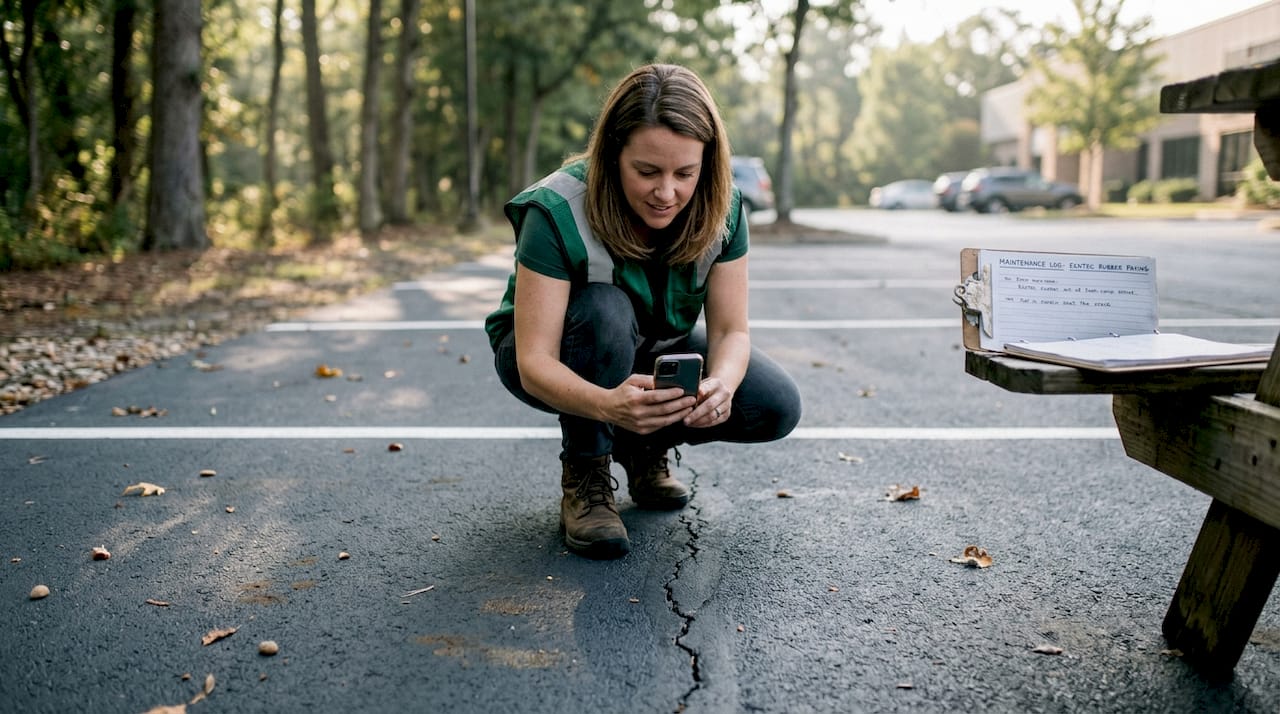
Before you spend a dollar on repairs, you need to know what you are actually dealing with. Skipping the assessment phase is one of the most expensive mistakes a facility manager can make, because it leads to spending money on the wrong things in the wrong order.
A pavement condition assessment every three to five years gives you a clear picture of where your pavement stands and what interventions will deliver the most value. During an inspection, focus on these four areas:
- Surface cracks: Note the width, length, and pattern. Cracks wider than one-quarter inch need immediate attention.
- Drainage performance: Identify any areas where water pools after rain. Poor drainage is the leading cause of pavement base failure and the single most expensive maintenance driver.
- Surface wear and oxidation: Faded, gray, and brittle asphalt has lost its binding oils and is vulnerable to cracking.
- Edge deterioration: Pavement edges without proper curbing or support tend to crumble first.
Once you have your assessment data, build a maintenance schedule around industry-standard intervals. Sealcoating every two to four years and annual crack filling for cracks wider than one-quarter inch form the foundation of any cost-effective maintenance program.
Material selection also matters more than most business owners realize. Polymer-modified binders add roughly 15% to upfront costs but significantly improve pavement flexibility and resistance to cracking and rutting. That upfront premium pays for itself by reducing how often you need to repair or resurface.
Pro Tip: When evaluating contractors, ask specifically whether they use polymer-modified materials and whether they perform a drainage assessment before starting work. Contractors who skip these steps are setting you up for repeat visits.
Executing your cost-saving maintenance strategy
Now that you have a plan, execution is where the real savings happen. The sequence matters as much as the tasks themselves.
- Address drainage first. Before any surface treatment, fix pooling water, regrade low spots, and clear clogged drains. Surface repairs applied over drainage problems will fail prematurely, wasting your investment.
- Fill and seal all cracks. Use hot-pour rubberized crack filler for cracks up to three-quarters of an inch wide. This stops water infiltration at the source.
- Apply sealcoating. Sealcoating protects the asphalt binder from UV oxidation, fuel spills, and water. It should go on after crack filling, not before.
- Restripe parking areas and walkways. Fresh striping improves safety, supports ADA compliance, and maximizes your parking capacity.
- Schedule preventive overlays at the right time. The optimal window for an overlay is before base failure occurs. Pavement condition assessments identify this timing window precisely, and missing it means the difference between a resurfacing job and a full reconstruction.
Beyond the basics, two strategies consistently deliver outsized returns on your maintenance budget.
Bundling maintenance tasks is one of the most underutilized ways to lower paving upkeep expenses. When a contractor mobilizes to your site, the travel, setup, and equipment costs are fixed regardless of how much work they do. Bundled maintenance packages for sealcoating, crack filling, and striping can reduce your per-service cost significantly compared to scheduling each task separately. You get more done per contractor visit, and the contractor can price the package more competitively.
AI-driven predictive maintenance platforms are no longer just for highway departments. These tools analyze pavement condition data, weather patterns, and traffic load to recommend exactly when and where to intervene. AI predictive maintenance reduces paving operational expenses by up to 40% and delivers a 5.2x ROI within 24 months by replacing broad, scheduled repairs with targeted interventions.
For businesses in Florida and similar climates, permeable paving options also qualify for green infrastructure incentives in some municipalities, which can offset installation costs while solving drainage problems permanently.
Pro Tip: Ask your contractor to schedule sealcoating and crack filling during dry weather windows of at least 48 hours. Applying sealcoat before rain cures it properly and prevents you from having to redo the work.
Common mistakes that inflate your paving costs
Even well-intentioned maintenance programs go wrong. These are the pitfalls that consistently push business paving costs higher than they need to be.
The biggest cost trap is deferred maintenance. A $5,000 crack sealing job deferred for five years can become a $35,000 to $50,000 base repair. Beyond the financial hit, deteriorated pavement creates liability exposure. A customer who trips on a cracked walkway or damages their vehicle in a pothole can generate legal costs that dwarf any repair bill.
Deferred maintenance does not save money. It borrows against future budgets at a very high interest rate. The cost compounds every season you wait.
Other mistakes that consistently inflate costs:
- Ignoring drainage. Water is the primary accelerant of pavement failure. Fixing surface issues without addressing the underlying drainage problem is like patching a roof without fixing the leak.
- Choosing the lowest bid without vetting quality. A contractor who skips proper surface preparation or uses inferior materials will leave you paying for the same area twice within a few years.
- Missing bundle opportunities. Scheduling crack filling in March and sealcoating in September means paying two mobilization fees for work that could have been done in one visit.
- Scheduling repairs at peak traffic times. Repairs done during high-traffic periods cure improperly and wear faster. Plan maintenance during low-traffic windows, typically early morning or off-season periods.
Routine inspections and seasonal reviews catch these issues before they compound, and they cost almost nothing compared to the problems they prevent.
Measuring the impact of your maintenance efforts
Reducing paving costs is not a one-time project. It is an ongoing management discipline, and you need a way to know whether your strategy is working.
- Establish a baseline. Document your pavement's current condition with photos, inspection reports, and repair cost records before you start your new maintenance program.
- Track costs year over year. Compare your annual maintenance spend against the baseline. A well-executed preventive program should show declining repair costs within two to three years.
- Use inspection reports as scorecards. Each professional inspection should show fewer new cracks, better drainage performance, and stable surface condition compared to the prior report.
- Adjust your schedule based on data. If inspections reveal faster-than-expected deterioration in a specific area, increase treatment frequency there rather than applying a blanket approach across the whole property.
- Plan professional evaluations every three to five years. These catch structural issues that visual inspections miss and give you the data you need to plan major capital expenditures without surprises.
Pro Tip: Create a simple maintenance log in a shared spreadsheet that records every repair, inspection, and treatment with the date, cost, and area. This becomes invaluable when negotiating with contractors or planning your annual facilities budget.
My take on paving cost reduction
I have watched business owners make the same mistake for years. They treat paving as a cost to minimize rather than an asset to manage. The moment that mindset shifts, the decisions change completely.
In my experience, the businesses that spend the least on paving over a ten-year period are not the ones who defer repairs. They are the ones who invest modestly every year and never let small problems become structural ones. The data backs this up, but so does the pattern I have seen repeatedly: a facility manager who does annual crack filling and sealcoating on schedule will spend a fraction of what their counterpart spends after five years of "saving money" by skipping maintenance.
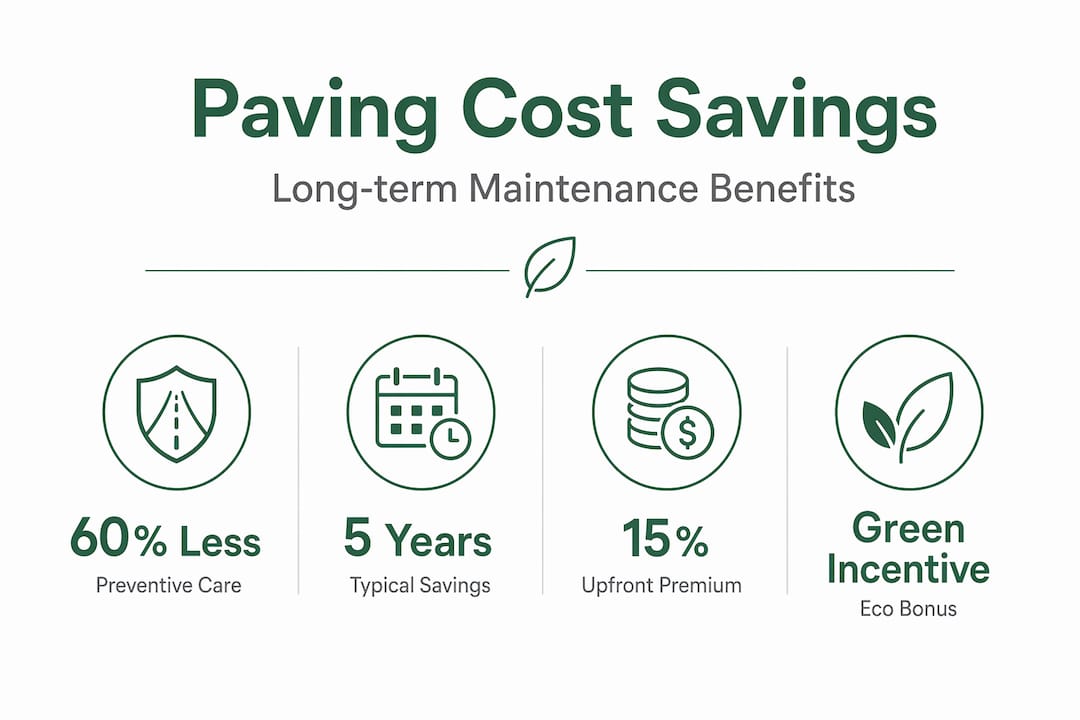
Bundling is also more powerful than most people realize. I have seen facilities cut their per-service costs by a third simply by combining tasks into one contractor visit per season. That is not a small efficiency. That is real money recovered without sacrificing quality.
The emerging materials and AI tools genuinely excite me, because they make it possible to be precise rather than reactive. Instead of guessing when to resurface, you have data. Instead of applying sealcoat everywhere, you treat where it matters most. That kind of targeted approach is where the biggest future savings will come from. The shift from "paving maintenance cost" to "pavement asset investment" is not just semantic. It changes what you authorize, what you track, and what you get back.
— Gm
How Ecotecrubber can help you spend less on paving
If you are rethinking your approach to pavement, it is worth looking at what surface technology can do for your long-term costs.
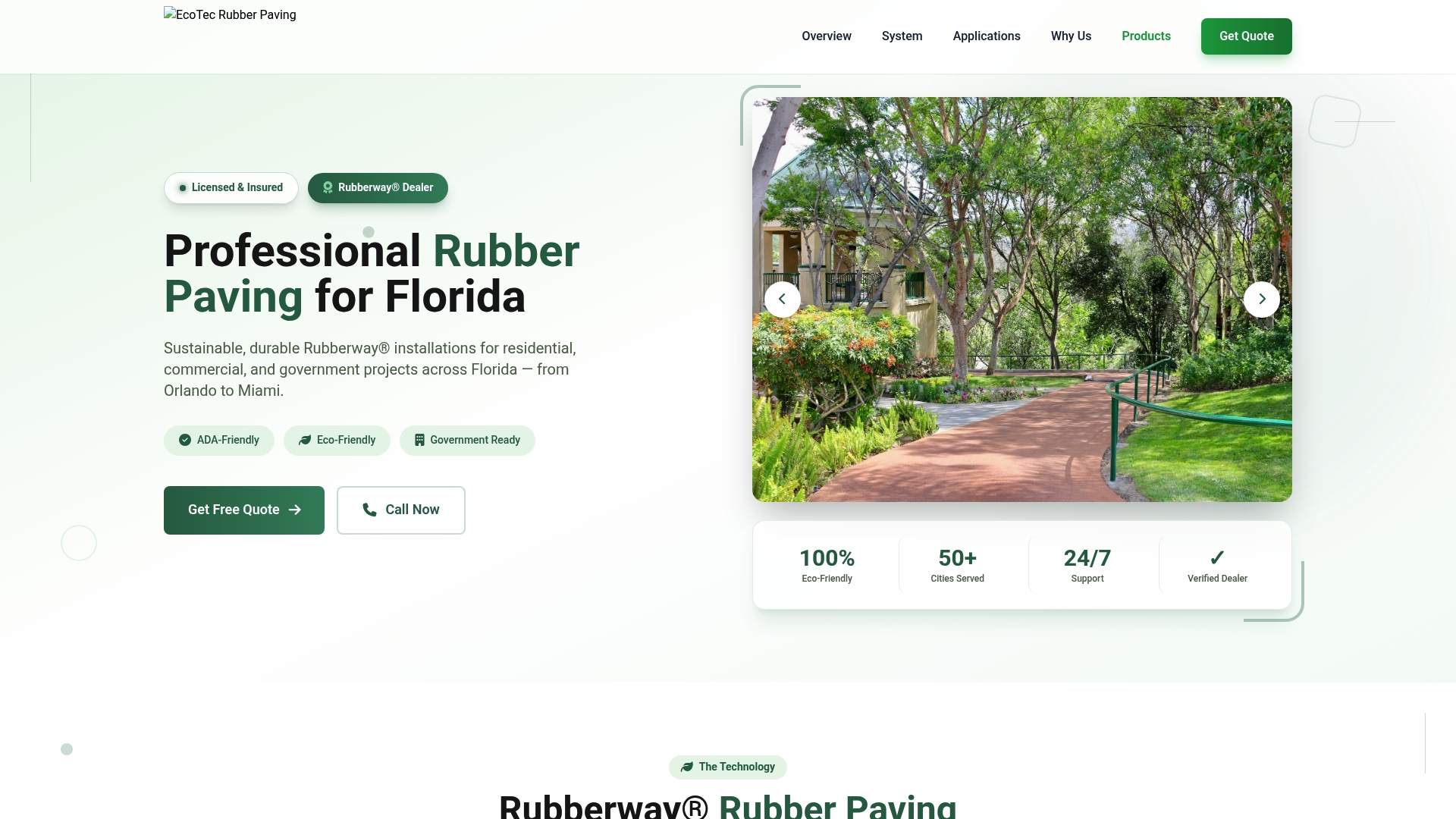
Ecotecrubber's Rubberway® system uses recycled rubber materials engineered for Florida's demanding climate, where heat-induced cracking and standing water are the two biggest drivers of pavement failure. The system's built-in drainage performance addresses the root cause of base failure directly, which means fewer repairs and longer surface life compared to traditional asphalt. Rubberway® installations are also ADA-compliant, crack-resistant, and designed to hold up under heavy foot traffic without the maintenance cycles that asphalt demands. For businesses looking at the full lifecycle picture, the reduced repair frequency adds up to real savings. You can explore the full range of Rubberway paving products or visit Ecotecrubber's installation page to request a consultation and see what a lower-maintenance surface could mean for your facilities budget.
FAQ
What does paving maintenance typically cost a business?
Commercial paving maintenance costs range from $0.14 to $0.50 per square foot for sealcoating and $0.35 to $1.50 per linear foot for crack filling, while full reconstruction runs $4 to $10 per square foot. Proactive maintenance programs typically cost $12,500 to $18,000 over five years compared to $34,000 to $72,000 for reactive repair cycles.
How often should businesses schedule pavement inspections?
A professional pavement condition assessment every three to five years is the standard recommendation, with visual inspections conducted seasonally. Regular reviews catch deterioration early and allow you to plan repairs before small cracks become structural failures.
Does bundling maintenance services actually save money?
Yes. Combining sealcoating, crack filling, and striping into a single contractor visit eliminates duplicate mobilization costs and allows contractors to price the work more competitively. Bundled packages consistently reduce per-service costs compared to scheduling each task separately.
What is the biggest mistake businesses make with paving maintenance?
Deferring repairs is the most expensive mistake. A $5,000 crack sealing job left unaddressed for five years can escalate to a $35,000 to $50,000 base repair or full overlay, in addition to creating liability exposure from deteriorated surfaces.
Can AI tools really help reduce paving maintenance costs?
AI-driven predictive maintenance platforms analyze pavement condition data and traffic patterns to recommend targeted interventions, reducing paving operational expenses by up to 40% and delivering a 5.2x return on investment within 24 months.