

Weather is the single most controllable variable in rubber paving installation, and ignoring it causes more project failures than any material defect. Temperature and humidity directly determine whether polyurethane adhesives cure properly, whether rubber compounds expand without buckling, and whether the finished surface holds up through seasonal stress. Homeowners, contractors, and property managers who understand how weather affects rubber paving installation before they schedule a project avoid costly repairs and premature surface failure. The guidance below covers the full picture, from ideal installation windows to freeze-thaw science to practical scheduling strategies.
What are the ideal temperature and humidity conditions for rubber paving?
The recognized industry standard for rubber paver adhesive installation is a temperature range of 50 to 80°F with relative humidity below 85% for proper outdoor curing. That range is not a suggestion. Most polyurethane adhesives are chemically engineered to cross-link within those parameters, and stepping outside them disrupts the molecular bonding process at the substrate level.
Humidity is the factor most installers underestimate. Moisture in the air competes with the adhesive's curing chemistry, and a surface that looks bonded after a humid installation may fail within weeks. Applying adhesive at high humidity can produce initial bond failures later because moisture interferes with bond strength despite the initial appearance of a set surface. This is the most common hidden defect in DIY rubber paving projects.
Key weather conditions to verify before any adhesive-based installation:
- Temperature: Confirm air and substrate surface temperature are both within 50 to 80°F. Concrete substrate can read 15 to 20°F hotter than air temperature on a sunny afternoon.
- Humidity: Use a digital hygrometer to confirm relative humidity stays below 85%. Morning humidity in Florida regularly exceeds 90%, which pushes installation windows to midday.
- Precipitation: No installation during rain or within 24 hours of heavy rain. Wet substrate prevents adhesive penetration entirely.
- Wind: High wind accelerates adhesive skinning, reducing open time and bonding quality.
Pro Tip: Bring a digital thermometer and a humidity gauge to every job site. Subjective assessment of "it feels dry enough" is less reliable than instruments for timing adhesive application, and the cost of a $20 gauge is trivial compared to a failed installation.
Temperature extremes above 80°F accelerate adhesive open time, meaning the window to press pavers into the adhesive shrinks. In Florida summers, surface temperatures on concrete can exceed 120°F by early afternoon, which is well outside the safe application range. Scheduling installations for early morning in warm climates is not just a preference. It is a technical requirement for adhesive performance.
How do cold weather and freeze-thaw cycles affect rubber paving performance?
Cold temperatures change the physical behavior of rubber compounds in ways that directly affect pavement durability. Rubber becomes harder and more brittle below 40°F, reducing its natural elasticity and increasing the risk of surface cracking under load or impact. This brittleness is temporary in moderate cold, but repeated thermal cycling between freezing and thawing creates cumulative structural damage.
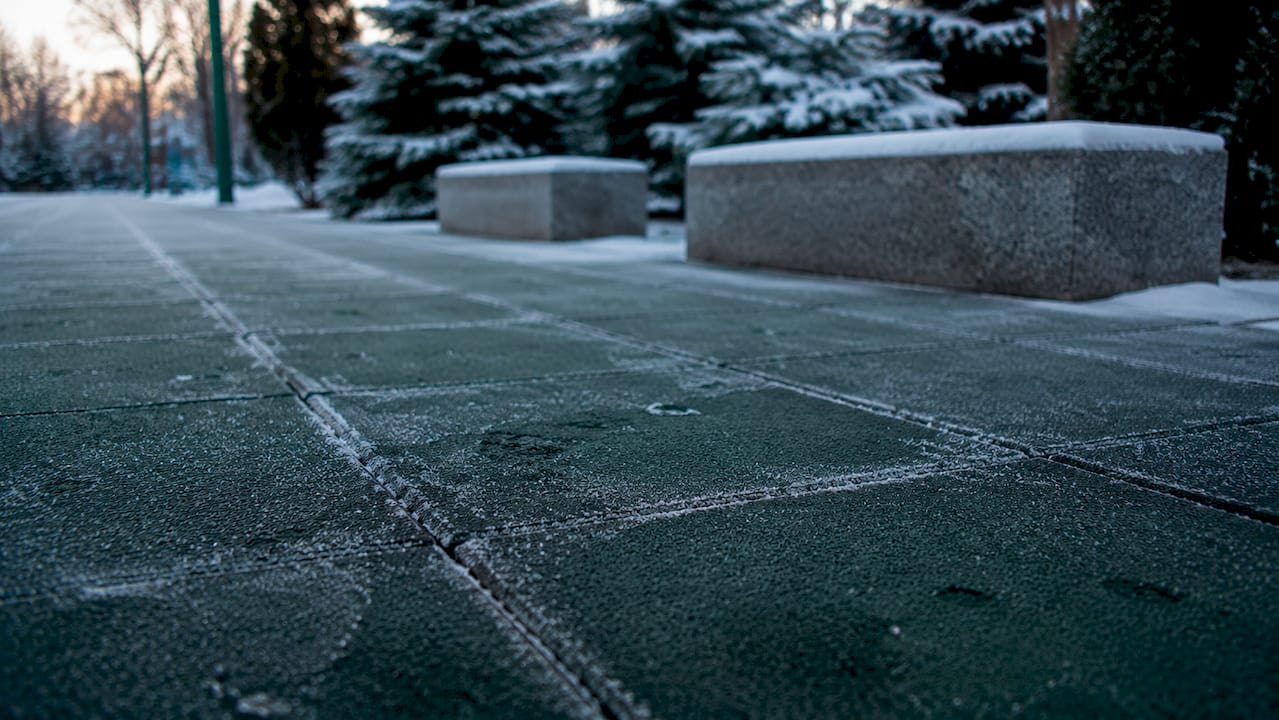
Research on rubberized pavement mixes shows that freeze-thaw cycles reduce stiffness and dynamic modulus while increasing damping and frictional energy dissipation. After 15 freeze-thaw cycles, frictional energy dissipation in rubberized mixtures increased from 0.38 J to 0.73 J. That near-doubling of energy dissipation signals that the material is absorbing more stress per cycle, which translates to accelerated fatigue over a full winter season.
| Weather condition | Effect on rubber paving | Long-term implication |
|---|---|---|
| Freeze-thaw cycling | Reduces stiffness, increases damping | Accelerated fatigue and surface softening |
| Sustained cold below 40°F | Increases brittleness, reduces elasticity | Higher cracking risk under impact |
| Thermal cycling (hot/cold swings) | Causes microcracks in substrate bonds | Gradual delamination if adhesive is substandard |
| High humidity during curing | Disrupts adhesive cross-linking | Bond failure weeks after installation |
Hybrid fiber-reinforced rubber concrete mixes show improved resistance to these stresses. Studies on rubberized concrete paving mixes under thermal cycles and snowmelt conditions found a ~5.96% reduction in maximum crack mouth opening displacement load after thermal cycles, with water absorption increases staying below 6%. The takeaway is that rubber additions genuinely improve fracture mechanics, but they do not eliminate the need for careful installation practice.
"Rubber additions significantly improve fracture mechanics in pavement substrates but still require mindful installation practices to avoid thermal stress damage." — Research on fiber-reinforced rubber concrete paving mixes
One underappreciated factor is moisture absorption during freeze-thaw cycles. As rubberized surfaces absorb water and then freeze, internal pressure builds within the material matrix. Rubber's natural flexibility buffers some of this stress, which is why rubber surfaces resist freeze-thaw damage better than stone or concrete. But that advantage only holds when the installation was executed correctly in the first place.
How do different installation methods compare in weather sensitivity?
Not all rubber paving systems respond to weather conditions the same way. The two primary installation methods, adhesive-bonded systems and interlocking loose-laid pavers, have meaningfully different weather tolerances during installation.
Adhesive-bonded systems require strict environmental control throughout the entire installation window. Every step from surface prep to final paver placement depends on temperature and humidity staying within range. A single hour of rain or a sudden temperature drop can compromise an entire section. These systems deliver superior long-term bond strength and a finished look that suits commercial and residential applications equally, but they demand disciplined scheduling.
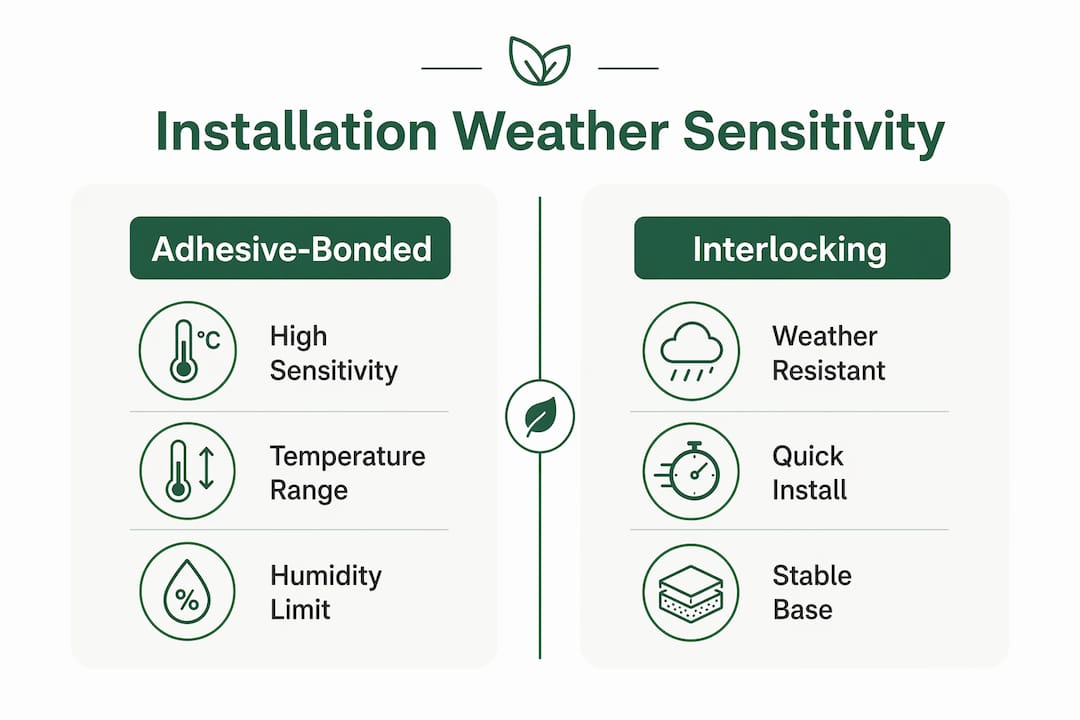
Interlocking rubber pavers are weather resistant and can be installed quickly over a flat, stable base without the curing requirements associated with adhesives. They are typically installed within one day and are far less sensitive to humidity and temperature swings than adhesive systems. For property managers who need a fast turnaround or contractors working in unpredictable climates, interlocking systems reduce weather-related risk significantly.
| Installation method | Weather sensitivity | Best climate use case |
|---|---|---|
| Adhesive-bonded rubber pavers | High: requires 50 to 80°F and humidity below 85% | Controlled conditions, Florida dry season, spring |
| Interlocking rubber pavers | Low: tolerates wider temperature and humidity range | Year-round installation, variable climates |
| Rubberized asphalt overlay | Moderate: heat-sensitive during application | Warm climates, urban surfaces |
Pro Tip: For outdoor installations in climates with unpredictable weather, consider interlocking systems for large surface areas and reserve adhesive-bonded pavers for smaller, sheltered zones where you can control conditions more precisely.
Base layer preparation matters regardless of which system you choose. A poorly compacted or uneven base amplifies the effects of thermal expansion and contraction, creating pressure points that accelerate surface failure. For outdoor paving installations, temperature and humidity considerations apply to the base layer as much as to the surface material itself.
What practical steps help manage weather challenges during installation?
Managing the impact of weather on rubber paving installation comes down to planning, measurement, and material selection. None of these steps require specialized expertise, but all of them require deliberate attention before and during the project.
- Schedule within the optimal window. Target installation days when temperatures will stay between 50 and 80°F for the entire workday. In Florida, this typically means late fall through early spring for adhesive-based systems.
- Acclimate rubber pavers before installation. Store pavers on-site for 24 to 48 hours before installation so they reach ambient temperature. Cold pavers placed on a warm substrate create differential expansion that stresses adhesive bonds immediately.
- Check the weather forecast twice. Verify conditions the night before and again the morning of installation. A forecast that shows 70°F and clear skies can shift to afternoon thunderstorms in Florida with very little warning.
- Install expansion joints in large areas. Expansion joints every 20 feet in both directions, using flexible sealants, accommodate the thermal movement rubber undergoes between seasons and prevent buckling or gap formation.
- Use compatible ice melt products in winter. Standard rock salt can degrade rubber surfaces over time. Calcium chloride or magnesium chloride formulations are safer for rubber paving. Use plastic shovels rather than metal to avoid surface gouging.
- Protect fresh installations from rain. If rain is forecast within 24 hours of adhesive application, delay the project. Covering a fresh installation with plastic sheeting is a temporary measure, not a substitute for proper scheduling.
Pro Tip: In warm, humid climates like Florida, rubberized asphalt maintains flexibility and resists heat-induced cracking better than conventional asphalt. If you are choosing between surface materials for a long-term outdoor installation, rubber-based systems outperform standard concrete or asphalt in sustained heat and UV exposure.
Key takeaways
Successful rubber paving installation requires temperature between 50 and 80°F, humidity below 85%, and dry substrate conditions to guarantee adhesive curing and long-term surface durability.
| Point | Details |
|---|---|
| Temperature and humidity control | Install adhesive-bonded rubber pavers only between 50 and 80°F with relative humidity below 85%. |
| Freeze-thaw awareness | Repeated freeze-thaw cycles increase energy dissipation and fatigue; rubber outperforms concrete but is not immune. |
| Method selection matters | Interlocking pavers tolerate wider weather conditions; adhesive systems need strict environmental control. |
| Expansion joints prevent failure | Install flexible expansion joints every 20 feet in large rubber paving areas to manage thermal movement. |
| Acclimate materials on-site | Store rubber pavers at the installation site for 24 to 48 hours before laying to equalize temperature. |
What I have learned from watching weather ruin good installations
I have seen contractors with years of experience skip the humidity check because the sky looked clear, and I have seen those same installations delaminate before the first winter. The most common mistake is treating weather conditions as background context rather than as active installation variables. You would not pour concrete without checking the forecast. Rubber paving adhesive deserves the same respect.
What the research confirms, and what field experience reinforces, is that the failure mode is almost always invisible at first. A bond that cures at 88% relative humidity looks identical to one that cures at 75%. The difference shows up six months later when a corner lifts or a seam opens. By then, the contractor is gone and the homeowner is left wondering what went wrong.
Regional climate matters more than most installation guides acknowledge. Florida's combination of high humidity, intense UV radiation, and rapid afternoon temperature swings creates a genuinely challenging environment for adhesive-based rubber paving. The Rubberway® system that Ecotecrubber uses is specifically engineered for these conditions, which is not marketing language. It reflects real engineering decisions about adhesive chemistry, rubber compound formulation, and drainage design that generic products do not make.
The tradeoff between interlocking and adhesive systems is also more nuanced than most comparison articles suggest. Interlocking pavers are faster and more forgiving of weather variation, but they shift slightly under heavy foot traffic over time. Adhesive systems, when installed correctly in proper conditions, deliver a more stable long-term surface. The right choice depends on the specific site, the local climate, and how much control the installer can realistically maintain over weather conditions during the project window.
— Gm
Get your rubber paving installed right the first time
Weather-related installation failures are preventable when you work with a team that monitors environmental conditions as a standard part of every project. Ecotecrubber brings professional-grade environmental monitoring and the proven Rubberway® installation system to every rubber paving project in Florida. Their licensed and insured crews schedule installations within optimal weather windows, use adhesives matched to Florida's climate, and build drainage and expansion design into every surface from the start. If you are a homeowner, contractor, or property manager planning an outdoor rubber paving project, explore Ecotecrubber's weather-resilient paving products or contact their team directly to discuss your site conditions and timeline.
FAQ
What temperature is best for rubber paving installation?
The recommended installation temperature for adhesive-bonded rubber pavers is between 50 and 80°F for both air and substrate surface. Temperatures outside this range compromise adhesive curing and long-term bond strength.
How does rain affect rubber paving installation?
Rain introduces moisture to the substrate that prevents adhesive penetration and bonding. Installation should not proceed during rain or within 24 hours of heavy precipitation on the work surface.
Do freeze-thaw cycles damage rubber paving?
Freeze-thaw cycles reduce stiffness and increase energy dissipation in rubberized surfaces, but rubber performs better than concrete or stone under the same conditions. Proper installation and compatible maintenance products extend surface life significantly.
Can rubber pavers be installed in high humidity?
Humidity above 85% disrupts polyurethane adhesive curing and can cause bond failures that are not visible at installation but appear weeks later. Digital hygrometers on-site are the only reliable way to confirm safe humidity levels before applying adhesive.
Why do large rubber paving installations need expansion joints?
Rubber expands and contracts with temperature changes, and without expansion joints every 20 feet in both directions, large installations buckle in heat or develop gaps in cold. Flexible sealants in those joints accommodate seasonal movement without surface damage.