

A LEED-friendly paving material is defined as any hardscape product specifically engineered and documented to contribute to LEED certification credits, primarily through stormwater infiltration and urban heat island mitigation. The term "LEED-friendly" is informal shorthand used in specifications and marketing. The recognized industry terms are LEED-compliant or LEED-credit-supporting materials, categorized under LEED v4's Sustainable Sites credit pathways. Architects and builders who understand the difference between a material that earns credits and one that merely sounds green will make faster, more defensible specification decisions. This guide covers the performance criteria, documentation requirements, and material options that actually move the needle on LEED certification.
What is LEED-friendly paving material and how is it defined?
A LEED-credit-supporting paving material earns its designation through two primary Sustainable Sites pathways: stormwater management and heat island mitigation. A material qualifies not because of a label, but because it delivers measurable, documented performance aligned with specific LEED v4 credit requirements. This distinction matters enormously in practice. A product marketed as "eco-friendly" with no Environmental Product Declaration (EPD) or infiltration test data will not survive a LEED submittal review.
LEED v4 hardscape requirements focus on two quantifiable factors. First, permeability: the material must allow stormwater to infiltrate rather than run off. Second, solar reflectance (SR): the material must reflect solar radiation to reduce surface temperatures and urban heat island effects. Both pathways require third-party-verified documentation, including ASTM test results and EPDs, to substantiate credit claims. Without that documentation, the material is simply a paving product, not a LEED asset.
Which paving materials qualify as LEED-friendly and why
Several paving systems consistently support LEED credits when properly specified and documented. Each carries distinct performance characteristics and documentation requirements.
| Material | Primary LEED Credit Pathway | Key Limitation |
|---|---|---|
| Permeable interlocking concrete pavers (PICP) | Stormwater management | Requires scheduled maintenance to prevent clogging |
| Permeable concrete | Stormwater management + heat island | Lower SR without coatings |
| Porous asphalt | Stormwater management | Higher embodied carbon than concrete alternatives |
| Concrete grids with grass infill | Stormwater absorption | Limited storage capacity, weak credit justification |
| High-SR porcelain pavers | Heat island mitigation | No permeability benefit |
Permeable interlocking concrete pavers (PICP) are among the most specified options for LEED projects. Products like Belgard's Eco Dublin paver carry precise infiltration data including 7% open surface area and initial infiltration rates exceeding 500 inches per hour. That level of engineering specificity is exactly what LEED reviewers expect to see in a submittal.
Permeable concrete functions through a porous matrix that allows water to pass directly through the slab into a gravel reservoir below. It supports both stormwater and, with the right mix design, heat island credits. Porous asphalt operates on the same infiltration principle but carries a higher embodied carbon footprint, which affects Materials and Resources credits. Concrete grids filled with grass absorb water similarly to turf but offer minimal subsurface storage, making them a weak choice for stormwater credits specifically.
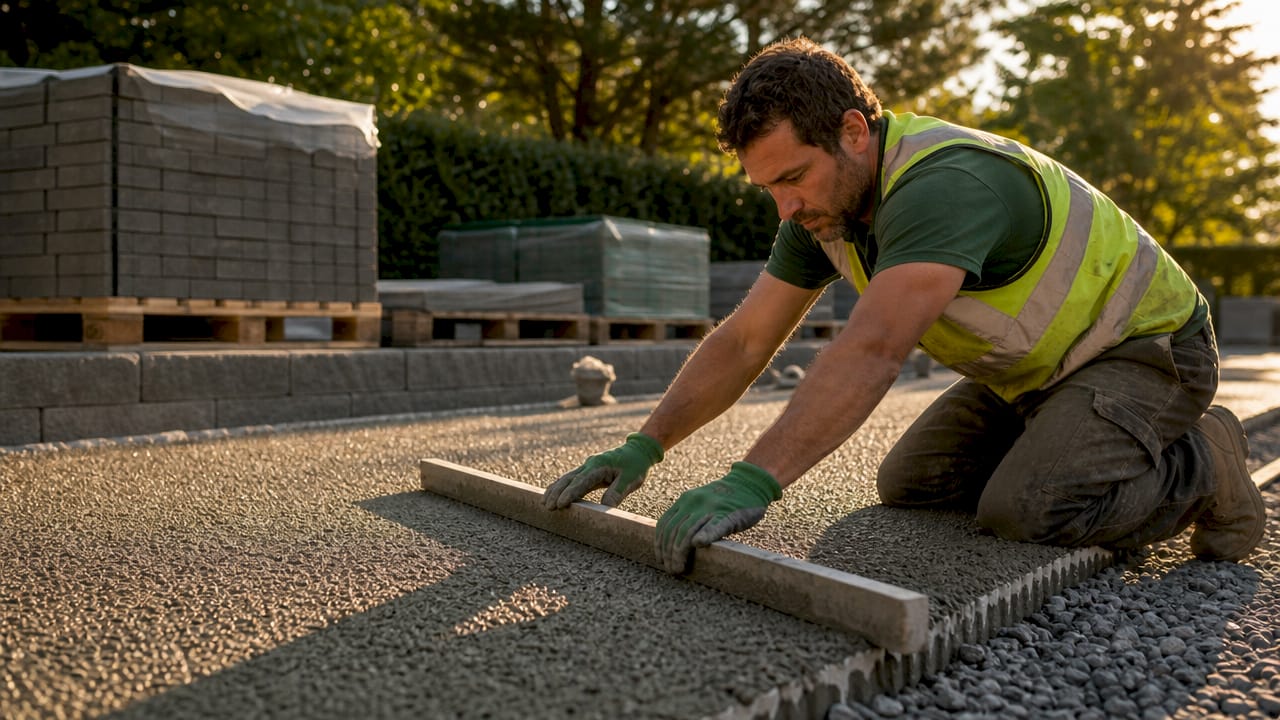
Recycled content is a separate but related factor. Materials incorporating recycled aggregates or industrial byproducts like ground-granulated blast furnace slag (GGBS) can support LEED Materials and Resources credits in addition to Sustainable Sites credits. The combination of permeability, high SR, and recycled content is the most credit-efficient specification strategy available.
Pro Tip: Request the EPD and ASTM test report before finalizing any paving specification. If a manufacturer cannot provide both, treat the product as unqualified for LEED submittals regardless of marketing claims.
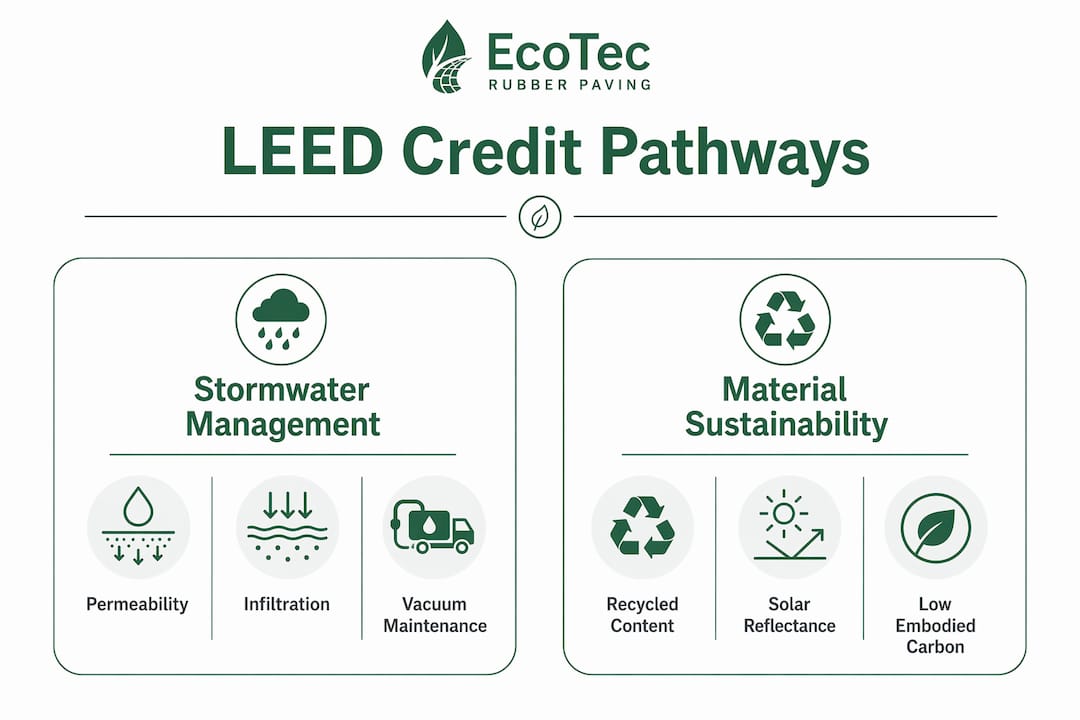
How do permeable pavement systems support stormwater management within LEED?
Permeable pavements manage stormwater through a layered system of interconnected voids that capture, store, and slowly release rainwater. The mechanism is straightforward but the engineering behind it is precise. Here is how the system works from surface to subgrade:
- Surface infiltration: Rainwater enters through open joints, porous concrete, or porous asphalt at the surface layer. PICP infiltration rates can exceed 500 inches per hour initially, far outpacing typical storm events.
- Reservoir storage: Water moves into a crushed stone base layer where it is temporarily stored. Void storage in well-designed bases represents 30 to 40% of base volume, providing meaningful detention capacity.
- Pollutant filtration: As water percolates through the aggregate layers, suspended solids, heavy metals, and hydrocarbons are filtered out. This reduces the pollutant load reaching groundwater and receiving water bodies.
- Groundwater recharge: Water that passes through the full profile recharges local aquifers, reducing dependence on municipal water infrastructure and supporting watershed health.
- Runoff reduction: By capturing the first flush of a storm event, permeable systems reduce peak runoff volumes and help municipalities avoid combined sewer overflow events.
"Permeable pavement benefits including runoff reduction, pollutant filtration, and evaporative cooling are proven, but they depend heavily on maintenance." — Permeable Pavements: An Integrative Review
That last point deserves emphasis. Clogging is the primary failure mode for permeable pavements, and it develops gradually through sediment accumulation in surface voids. A system that performs at 500 inches per hour at installation can degrade significantly within a few years without scheduled vacuum sweeping. LEED credit validity depends on sustained performance, not just installation-day data.
The role of solar reflectance and heat island mitigation in LEED-certified paving materials
Solar reflectance (SR) is the fraction of solar energy a surface reflects rather than absorbs. LEED v4 uses SR rather than the Solar Reflectance Index (SRI) for non-roof hardscape documentation, which is a meaningful distinction for specification purposes. SR is measured directly using ASTM C1549 with a portable solar reflectometer, making field verification practical.
LEED v4 sets clear SR thresholds for hardscape compliance:
- New surfaces: SR of 0.33 or higher at time of installation
- Aged surfaces: SR of 0.28 or higher after three years of weathering
- Shaded areas: Hardscape under permanent shade from trees or structures may be exempt from SR requirements
- Permeable pavements: These can qualify for heat island credits through a separate pathway based on their evaporative cooling effect, even without meeting full SR thresholds
Standard gray concrete typically achieves SR values between 0.25 and 0.35 depending on mix design and surface finish. High-reflectance porcelain pavers can exceed SR 0.50, making them strong performers for heat island credits in parking lots and plazas. Coatings containing titanium dioxide (TiO2) can boost SR values on existing or new concrete surfaces, offering a retrofit pathway for projects where material substitution is not feasible.
The practical implication for architects is straightforward. Specify materials with manufacturer-provided SR data tested to ASTM C1549, and confirm whether the value represents initial or aged performance. A material with SR 0.34 at installation that drops to 0.22 after three years fails the aged-surface threshold and loses the credit.
How sustainable mix design and recycled content enhance LEED-friendliness
The embodied carbon and energy content of a paving material affects LEED Materials and Resources credits, and the differences between mix designs are substantial. Standard ordinary Portland cement (OPC) concrete carries significant embodied carbon. Substituting GGBS as a partial cement replacement reduces both embodied energy and CO2 emissions measurably.
| Mix Design | Embodied Energy Reduction | CO2 Reduction | Cost Impact |
|---|---|---|---|
| GGBS + recycled aggregates (up to 50% / 30%) | 20 to 30% | 20 to 30% | 5 to 15% savings |
| Alkali-activated concrete with agro-industrial wastes | 57% reduction | 77% reduction | Up to 60% savings |
These numbers are not theoretical. Life cycle assessment data from peer-reviewed research confirms that low-impact binder substitution delivers the largest measurable improvements in LEED-friendly mix performance beyond surface permeability alone. A 77% reduction in CO2 emissions compared to conventional concrete is a specification decision, not a research curiosity.
Recycled aggregates from construction and demolition waste can replace up to 30% of virgin aggregate in permeable concrete mixes without compromising structural performance. Combined with GGBS cement replacement at up to 50%, these substitutions support LEED material transparency requirements through documented EPDs. The EPD quantifies environmental impact across the full material life cycle, from raw material extraction through end-of-life disposal, giving LEED reviewers the third-party verification they require.
Pro Tip: When evaluating manufacturer EPDs, check whether the declared unit matches your project's specified quantity and whether the EPD covers the specific product variant you are specifying. Generic category EPDs are less defensible in LEED submittals than product-specific declarations.
Practical considerations: maintenance, documentation, and selection
Selecting a LEED-credit-supporting paving material is only half the work. The documentation package and maintenance plan determine whether the credit holds through construction administration and post-occupancy audits.
For documentation, every LEED paving submittal should include:
- SR test reports to ASTM C1549 for heat island credits, specifying initial and aged values
- Infiltration rate data and open surface area percentages for stormwater credits
- Product-specific EPDs for Materials and Resources credits
- Manufacturer cut sheets with engineering data, not marketing summaries
- Maintenance schedules specifying vacuum sweeping frequency and inspection intervals
For material selection, the most common mistake is relying on marketing language. Terms like "sustainable," "green," and "eco-friendly" carry no LEED credit weight without supporting data. Engineering-relevant specifications such as measured infiltration rates and open area percentages are what LEED reviewers evaluate. A product with a 7% open surface area and documented infiltration performance is a defensible specification. A product described as "environmentally responsible" with no test data is not.
Integrated design coordination is the most underused strategy for maximizing LEED paving credits. Bringing the civil engineer, landscape architect, and paving manufacturer into the same conversation during schematic design allows the team to align stormwater management calculations, SR documentation, and maintenance planning before the specification is written. Projects that treat paving as a late-stage finish selection consistently leave credits on the table.
Key takeaways
LEED-friendly paving is a system plus documentation aligned with targeted credits, not a single material label. The combination of permeability, verified solar reflectance, recycled content, and a maintained performance record is what converts a paving product into a LEED asset.
| Point | Details |
|---|---|
| Definition requires documentation | A material qualifies for LEED credits only with EPDs, ASTM SR tests, and infiltration data. |
| Two primary credit pathways | Stormwater management and heat island mitigation drive most LEED paving credit opportunities. |
| Mix design multiplies impact | GGBS and recycled aggregates reduce embodied CO2 by 20 to 77% depending on substitution level. |
| Maintenance preserves credit validity | Clogging degrades permeable pavement performance; scheduled vacuum sweeping is non-negotiable. |
| Integrated design wins credits | Early coordination between civil engineers, landscape architects, and manufacturers maximizes credit capture. |
Why the spec sheet matters more than the product name
I have reviewed enough LEED submittals to know where projects lose credits they thought they had locked in. The pattern is almost always the same. A paving product gets specified based on a manufacturer's sustainability brochure, the documentation package arrives thin, and the LEED reviewer sends it back. The product was genuinely permeable. The documentation just could not prove it.
The uncomfortable truth about LEED-friendly paving is that the material itself is often the easier part. Permeable concrete, PICP, and porous asphalt are mature technologies with real performance data behind them. What separates a successful LEED submittal from a failed one is whether the project team requested the right data early enough to act on it. An EPD that arrives after the specification is locked is useful for the next project, not this one.
I have also seen projects over-specify for SR performance in climates where shading provisions would have satisfied the credit with less cost and complexity. The green homes design conversation has matured enough that most experienced builders understand shading as a legitimate heat island strategy. Not every parking lot needs high-reflectance porcelain. Sometimes a well-placed tree canopy and a permeable base course gets you to the same credit with a lower material budget.
The best LEED paving specifications I have seen share one characteristic: they were written by teams who understood which credit they were targeting before they chose the material, not after.
— Gm
How Ecotecrubber supports your LEED-compatible paving goals
Ecotecrubber's Rubberway® system uses recycled rubber materials to deliver paving surfaces with excellent drainage performance, crack resistance, and ADA compliance across Florida's demanding climate conditions. The system's recycled material composition directly supports LEED Materials and Resources credit documentation, and its permeability characteristics contribute to stormwater management credit pathways. Ecotecrubber serves municipalities, commercial builders, and homeowners with licensed, insured professional installations focused exclusively on rubber paving. If you are specifying sustainable paving solutions for a LEED project or a sustainability-focused design, explore the full range of Rubberway paving products to see how recycled rubber fits your credit strategy.
FAQ
What is a LEED-friendly paving material?
A LEED-friendly paving material is any hardscape product that contributes to LEED certification credits through documented stormwater infiltration, solar reflectance, or recycled content performance. The material must be supported by third-party-verified data such as EPDs and ASTM test reports to qualify.
Which paving materials earn the most LEED credits?
Permeable interlocking concrete pavers (PICP) and permeable concrete earn the most LEED credits by supporting both stormwater management and, with appropriate mix design, heat island mitigation and Materials and Resources pathways simultaneously.
What SR value does LEED v4 require for paving?
LEED v4 requires a solar reflectance of 0.33 for new hardscape surfaces and 0.28 for three-year aged surfaces, measured using ASTM C1549.
How does maintenance affect LEED credit validity for permeable pavement?
Clogging degrades infiltration performance over time, which can compromise the stormwater credit basis. Scheduled vacuum sweeping and debris management must be included in the project's maintenance plan to sustain credit validity.
Do recycled paving materials qualify for LEED credits?
Yes. Paving materials incorporating recycled aggregates or low-carbon binders like GGBS qualify for LEED Materials and Resources credits when supported by product-specific EPDs documenting their environmental impact over the full material life cycle.