

Rubber paving is defined as a surfacing system made from recycled crumb rubber that resists cracking, repels standing water, and extends pavement service life by 30 to 40% compared to standard asphalt. For community planners and maintenance managers, that single material property translates directly into fewer repair cycles, lower annual budgets, and outdoor spaces that stay functional longer. The Rubberway® system used by Ecotecrubber, rubberized asphalt research from Michigan Technological University, and field data from Ann Arbor's municipal streets all confirm that rubber paving is one of the most practical community maintenance solutions available today.
How rubber paving materials reduce community maintenance
Every ton of rubberized asphalt mix contains approximately 100 million grains of crumb rubber. Those granules physically interrupt the propagation of cracks before they reach the surface, which is why rubberized roads in Ann Arbor show measurably less surface deterioration than adjacent conventional asphalt sections. The mechanism is mechanical, not chemical, so it works regardless of traffic volume or climate.
The raw material for most rubberized asphalt is scrap tire rubber, reused at a scale of tens of thousands of tires per project. Michigan Technological University's road research program documents that rubber powder used in chipseal and hot-mix applications produces roads that require less frequent intervention than conventional surfaces. That finding matters for public works budgets because it shifts spending from reactive patching to planned, lower-cost inspections.
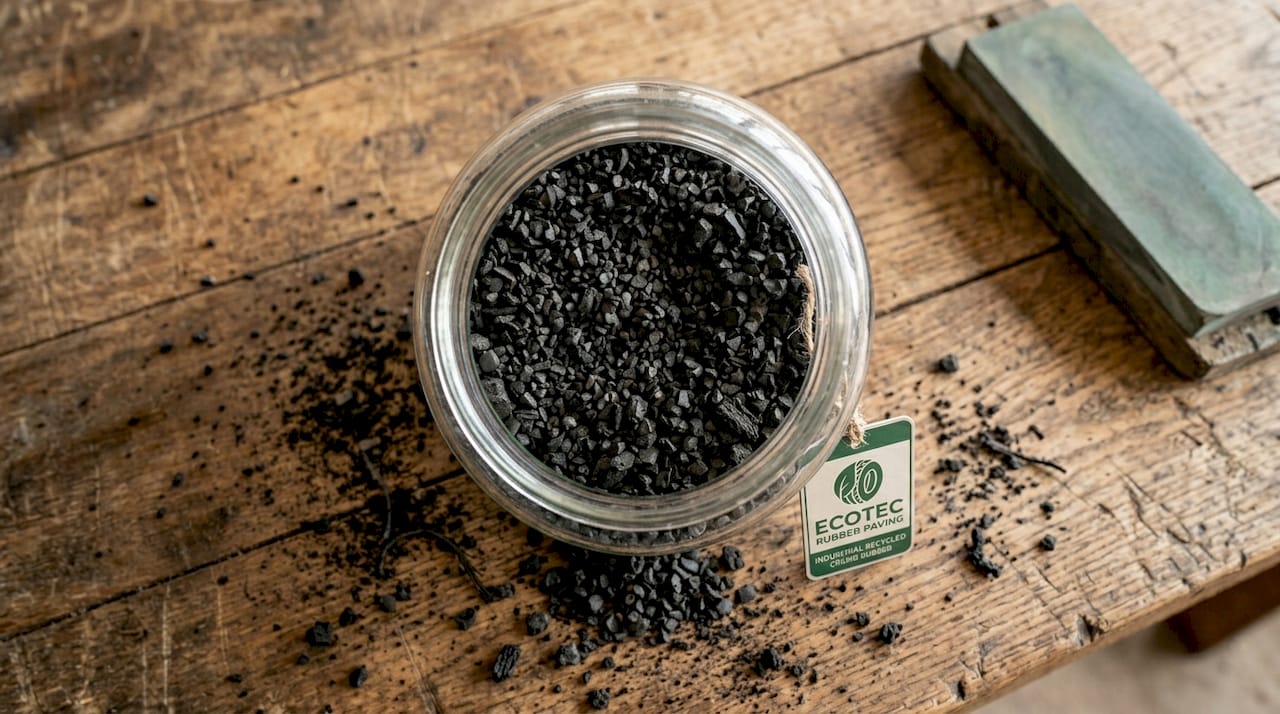
Mix design is where most rubber paving projects succeed or fail. Binder-starved mixtures lose the crack-resistance advantage entirely, even when the rubber content looks correct on paper. Communities should require laboratory-verified mix designs and written quality control documentation from any contractor before a single ton is laid.
Key material properties that support low-maintenance rubber surfaces:
- Crack resistance: Crumb rubber particles interrupt crack growth at the granule level, preventing structural deterioration.
- Rut resistance: Rubber granules add elasticity that reduces permanent deformation under heavy or repetitive loads.
- Recycled content: Scrap tire reuse reduces landfill waste and often qualifies projects for sustainability credits.
- Permeability options: Rubber grass mats and open-grade rubberized mixes allow rainwater infiltration, reducing runoff and drainage maintenance.
Pro Tip: Ask your supplier for the mix design report before signing any contract. Verify that binder content meets the project specification. A single page of lab data can prevent years of premature maintenance.
What are the best installation practices for long-lasting rubber paving?
Proper installation determines whether a rubber surface delivers its full service life or becomes a maintenance liability within three years. The steps below apply to both rubber paver systems and rubberized asphalt overlays in community settings.
- Assess and prepare the sub-base. Compact the sub-base to the specified density and verify that no soft spots remain. Inadequate compaction is the leading cause of premature surface failure in public spaces.
- Install perimeter drainage before laying any material. Drainage failures under rubber pavers rank among the most expensive post-installation problems. Standing water that contacts adhesive before it cures requires full removal and relaying of affected sections.
- Apply adhesive at the correct temperature. Most rubber paver adhesives require ambient temperatures above 50°F for proper bonding. In Florida's climate, early morning installations during summer avoid heat-related adhesive failures.
- Follow manufacturer curing times strictly. Opening a surface to foot or vehicle traffic before the adhesive cures fully causes edge lifting and joint separation, both of which accelerate maintenance needs.
- Inspect drainage performance immediately after installation. Run a water test across the full surface before project sign-off. Any pooling indicates a sub-base or slope issue that costs far less to fix now than after the surface has been in service.
Pro Tip: For rubber paver installations over existing concrete, check the concrete for active cracks before laying. Active cracks will telegraph through the rubber layer within one to two seasons, creating maintenance callbacks that are entirely avoidable with a 30-minute pre-installation inspection.
Common pitfalls that increase future upkeep include skipping the perimeter drainage step, using adhesive past its shelf life, and failing to account for thermal expansion in large continuous surfaces. Each of these errors adds cost that negates the maintenance savings rubber paving is designed to deliver.
How does rubber paving compare to asphalt and concrete maintenance costs?
The financial case for rubber paving becomes clear when you map maintenance schedules side by side. Traditional asphalt requires crack sealing annually, sealcoating every two to three years, and a full overlay every 15 to 20 years. Concrete demands joint resealing, surface grinding for trip hazards, and panel replacement when freeze-thaw cycles cause spalling. Both surfaces generate reactive repair costs that compound over time.
Reactive repair-only approaches cost 50 to 70% more over a pavement's life than proactive maintenance programs. That gap widens further when you factor in the extended service life of rubberized surfaces. Rubberized asphalt can last approximately 60 years versus roughly 40 years for standard asphalt, meaning one fewer full replacement cycle over a typical infrastructure planning horizon.
| Surface type | Typical service life | Annual maintenance cost per sq ft | Major resurfacing frequency |
|---|---|---|---|
| Standard asphalt | 40 years | $0.05 to $0.12 | Every 15 to 20 years |
| Rubber paver systems | 15 to 20+ years | $0.30 to $0.50 | Rarely needed with proper care |
| Rubberized asphalt | Up to 60 years | Lower than standard asphalt | Every 25 to 30+ years |
| Concrete | 30 to 50 years | Moderate to high | Panel replacement as needed |
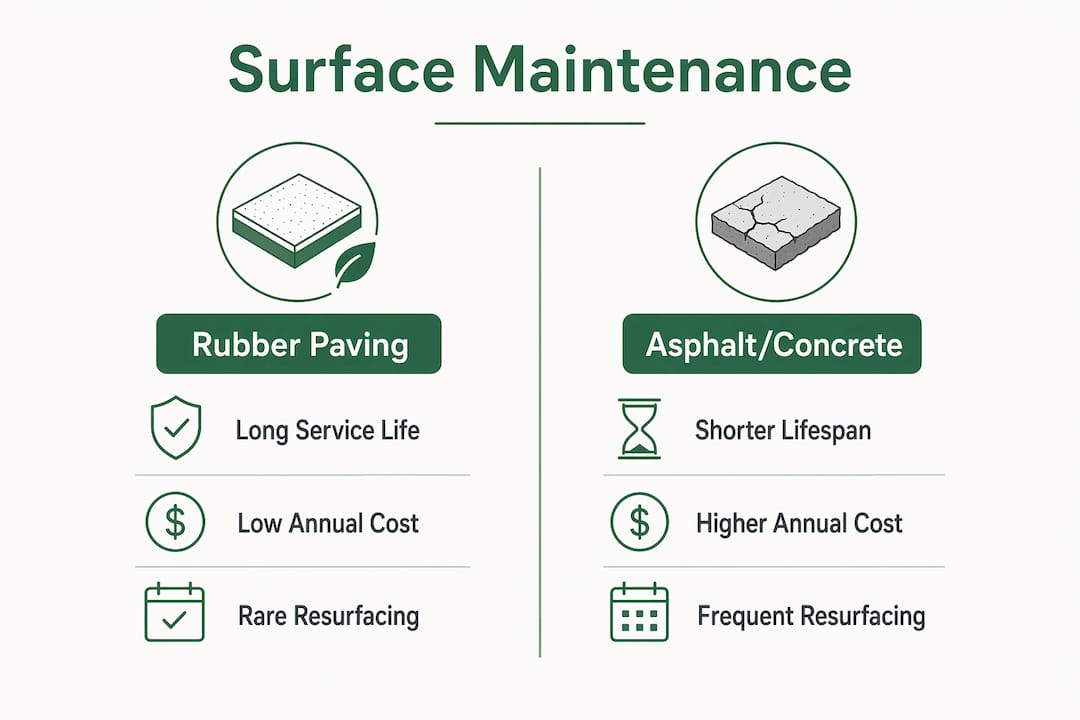
The rubber paver annual cost figure of $0.30 to $0.50 per square foot includes routine cleaning and minor repairs. That number is higher per square foot than asphalt's proactive budget of $0.05 to $0.12, but rubber paver systems are typically used in high-traffic pedestrian zones, playgrounds, and pool decks where concrete or wood decking would cost significantly more to maintain. The correct comparison is rubber pavers versus wood decking or poured concrete in those specific applications, not versus road asphalt.
For community planners modeling 20-year budgets, the combination of proactive crack sealing on any remaining asphalt surfaces alongside rubberized overlays on high-stress areas produces the lowest total lifecycle cost. Rubber is most powerful as part of a layered maintenance strategy, not as a single solution applied everywhere.
How do you troubleshoot and maintain rubber paving surfaces?
Rubber paving surfaces are low-maintenance, not no-maintenance. A simple inspection and cleaning routine keeps them performing at full capacity for decades.
- Weekly or biweekly sweeping removes debris that can trap moisture against the surface and accelerate edge adhesive degradation in paver systems.
- Pressure washing two to four times per year clears organic buildup from open-grade surfaces and rubber grass mats. Use a fan-tip nozzle at moderate pressure to avoid dislodging granules from the surface layer.
- Quarterly drainage checks confirm that perimeter drains and sub-base drainage paths remain clear. Blocked drainage is the single most common cause of premature rubber paver failure.
- Annual edge inspection identifies adhesive separation at borders before it progresses to full panel lifting. Early re-bonding costs a fraction of full section replacement.
Rubber grass mats deserve special mention for community green spaces. They last 25 or more years with minimal maintenance, handle more than 15,000 liters of water per square meter per hour, and require no resealing or weed treatment. That performance profile makes them a strong choice for overflow parking areas, pathways through parks, and event grounds where SuDS compliance is required.
Pro Tip: Build a simple inspection calendar into your facility management software. Schedule drainage checks for the first week of each quarter and edge inspections every October before winter loading begins. An explicit calendar, rather than reactive response, is what separates surfaces that last 20 years from those that need replacement at 10.
For minor surface damage such as small gouges or localized granule loss, rubber patch compounds from the original installer restore the surface without full section removal. Address these within 30 days of identification. Delayed repairs allow water infiltration that undermines the sub-base and converts a $50 patch into a $500 section replacement.
Key takeaways
Rubber paving reduces community maintenance costs by combining crack resistance, extended service life, and lower repair frequency into a single surface solution that outperforms standard asphalt over any 20-year planning horizon.
| Point | Details |
|---|---|
| Material selection matters | Require lab-verified mix designs to confirm binder content before installation begins. |
| Drainage is non-negotiable | Install perimeter drainage before laying any rubber surface to prevent the most expensive post-installation failures. |
| Lifecycle cost beats unit cost | Rubberized asphalt lasting up to 60 years eliminates one full replacement cycle versus standard 40-year asphalt. |
| Maintenance calendars extend life | Quarterly drainage checks and annual edge inspections prevent minor issues from becoming costly repairs. |
| Rubber works best in a system | Combine rubberized overlays on high-stress areas with proactive crack sealing on remaining asphalt for the lowest total lifecycle cost. |
Why I think most communities underestimate rubber paving's real value
Most budget conversations I see focus on the upfront cost per square foot, and rubber paving almost always loses that comparison. Standard asphalt is cheaper to lay. That framing is the wrong question entirely.
The right question is: what does this surface cost per year of service life, including every repair call, every reactive patch, and every full resurfacing cycle? When you run that number, rubberized asphalt's 60-year service life against asphalt's 40 years means you are buying 50% more time from the same budget line. Michigan's road research program at Michigan Technological University is building exactly that evidence base, and the early data from Ann Arbor's rubberized streets supports the lifecycle argument strongly.
What I find underappreciated is the community engagement dimension. Residents notice when a park path or plaza surface stays smooth and clean for years without orange construction cones appearing every spring. That perception of quality maintenance builds trust in public institutions in a way that is genuinely hard to quantify but very real. Ecotecrubber's work in Florida demonstrates this effect repeatedly: well-installed rubber surfaces in public spaces generate fewer complaints and more positive feedback than the concrete or asphalt they replace.
The one caution I would add is that rubber paving is not a substitute for maintenance discipline. An explicit inspection calendar combined with rubber surfaces is what delivers the full cost advantage. Rubber paving without a maintenance program still outperforms asphalt, but it does not reach its potential. The communities that get the most value treat rubber paving as a system upgrade, not a set-and-forget solution.
— Gm
How Ecotecrubber helps communities reduce upkeep costs
Ecotecrubber specializes in Rubberway® installations designed for Florida's specific climate challenges, including heat-induced cracking, standing water from heavy rainfall, and ADA compliance requirements. Their team manages the full project cycle from sub-base assessment and drainage planning through installation and post-project maintenance guidance, so community planners receive a surface that performs from day one. Every installation is completed by licensed and insured professionals focused exclusively on rubber paving, which means no generalist contractor learning on your project budget. Explore the full range of Rubberway® paving products to find the right surface specification for your community's specific traffic loads and environmental conditions.
FAQ
What is rubber paving and how does it reduce maintenance?
Rubber paving is a surfacing system made from recycled crumb rubber that resists cracking and rut formation, extending pavement life by 30 to 40% compared to standard asphalt. Fewer cracks mean fewer repair cycles, which directly lowers annual maintenance spending for community facilities.
How long does rubberized asphalt last compared to standard asphalt?
Rubberized asphalt can last approximately 60 years versus roughly 40 years for standard asphalt, eliminating one full replacement cycle over a typical infrastructure planning horizon. That extended service life is the primary driver of lifecycle cost savings.
What is the annual maintenance cost for rubber paver surfaces?
Properly installed rubber paver surfaces average $0.30 to $0.50 per square foot annually, covering routine cleaning and minor repairs. That figure is lower than comparable concrete or wood decking in pedestrian and recreational applications.
What causes rubber paver installations to fail prematurely?
The two leading causes are inadequate sub-base compaction and drainage failures beneath the surface layer. Standing water that contacts adhesive before it cures requires full section removal and relaying, making drainage preparation the single most cost-critical installation step.
Are rubber grass mats suitable for community green spaces?
Rubber grass mats last 25 or more years with minimal maintenance, handle over 15,000 liters of water per square meter per hour, and require no resealing or weed treatment. Those properties make them a practical, SuDS-compliant choice for park pathways, overflow parking, and event grounds.