

Stormwater management paving solutions are permeable surface systems designed to control runoff, improve water quality, and allow precipitation to infiltrate through eco-friendly materials rather than sheet across impervious surfaces into municipal drains. The industry term for this category is permeable pavement, and it covers everything from permeable interlocking concrete pavers (PICP) and pervious concrete to rubber paving systems like the Rubberway® platform. Recent research confirms that recycled-aggregate pervious concrete outperforms conventional materials in removing suspended solids, nutrients, and heavy metals from roadway runoff. Regulatory frameworks like the NJDEP 2026 BMP Manual now treat permeable paving as a measurable best management practice (BMP), not just a design preference. For property developers, civil engineers, and environmental planners, selecting the right system means balancing infiltration performance, pollutant removal, maintenance demands, and climate resilience.
1. Permeable interlocking concrete pavers (PICP)
Permeable interlocking concrete pavers are modular units installed with open-graded aggregate joints and base layers that allow water to pass through the surface and into the subgrade. They handle vehicle loads well, making them a top choice for parking lots, driveways, and low-speed roadways. PICP systems are among the most widely documented stormwater drainage solutions in North American municipal projects, partly because their modular design allows targeted maintenance without full-surface removal. Their infiltration rates vary significantly by joint width and aggregate gradation, so specifying the correct joint filler material is as critical as the paver unit itself.
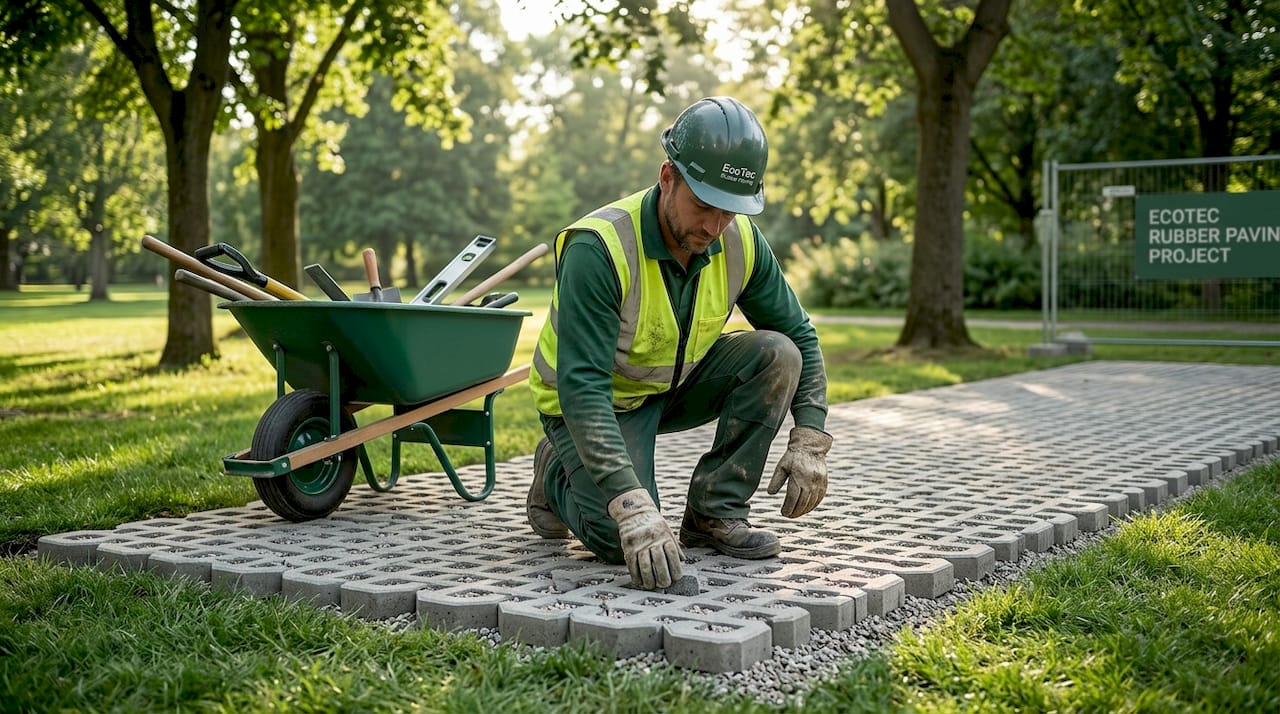
2. Pervious concrete with natural aggregate
Pervious concrete uses a reduced-paste mix design to create a porous matrix with roughly 15 to 25 percent void content, allowing water to pass through at rates that can exceed 100 inches per hour when new. It is cost-competitive with conventional concrete on many commercial projects and performs well under light to moderate traffic. The ASTM C1701 and C1781 infiltration test standards are the accepted methods for verifying surface permeability at installation and during maintenance cycles. One limitation is that natural aggregate pervious concrete offers moderate pollutant adsorption compared to its recycled-aggregate counterpart.
3. Recycled-aggregate pervious concrete (RAPC)
Recycled-aggregate pervious concrete is the highest-performing permeable paving option for pollutant removal currently documented in peer-reviewed research. Studies show RAPC preferentially retains 10 to 100 μm particles and reduces chemical oxygen demand, total phosphorus, total nitrogen, zinc, and lead under dynamic rainfall loading. The mechanism is straightforward: recycled brick and concrete aggregates have porous, rough surfaces that provide ions aiding pollutant adsorption, giving RAPC a measurable edge over natural aggregate mixes. For civil engineers specifying sustainable paving materials on projects near sensitive water bodies, RAPC is the most defensible choice on environmental performance grounds.
4. Rubber paving systems
Rubber paving, specifically systems like the Rubberway® platform offered by Ecotecrubber, uses recycled tire rubber bound with polyurethane to create a flexible, porous surface that drains freely and resists cracking under thermal cycling. This matters in Florida and other warm climates where heat-induced surface failure is a recurring problem with rigid pavements. Rubber paving delivers ADA-compliant surfaces, reduces landfill waste from end-of-life tires, and provides consistent drainage without the clogging vulnerability of fine-pore concrete systems. For municipalities and property developers seeking eco-friendly paving solutions with low crack-maintenance overhead, rubber paving is a practical and durable alternative.
5. Plastic grid pavers
Plastic grid pavers, sometimes called geocell or turf reinforcement grids, are open-cell polypropylene or HDPE panels filled with gravel or grass. They are among the most cost-effective best stormwater paving options for overflow parking areas, emergency access lanes, and low-traffic pedestrian paths. Their near-100 percent open area means infiltration rates are limited only by the subgrade, not the surface material. The tradeoff is reduced load-bearing capacity and aesthetic limitations that make them unsuitable for primary roadways or high-traffic commercial zones.
6. Natural stone and granite sett pavers
Natural stone pavers installed with open joints over permeable base courses function as effective stormwater drainage solutions in historic districts and high-value streetscape projects where aesthetics drive material selection. Granite setts in particular offer exceptional durability and a service life measured in decades. Their pollutant removal performance depends entirely on the joint fill material and base aggregate specification, not the stone itself. Engineers should treat them as a structural surface layer over a properly designed permeable base rather than a standalone infiltration system.
7. How maintenance practices affect long-term performance
Permeable pavement performance degrades over time as sediment, organic debris, and microplastics accumulate in pore spaces. Five-year monitoring data shows infiltration rates in mature permeable slabs drop by approximately 48 percent, with cleaning recovering roughly 42.5 percent of lost permeability. That means maintenance improves function but rarely restores original permeability, a fact that should be built into design assumptions from day one.
Effective maintenance follows a clear hierarchy:
- Vacuum sweeping (dry conditions): The most effective routine method for removing surface sediment without redistributing fines deeper into the pavement profile.
- Pressure washing with simultaneous suction: Dislodges embedded particles while capturing the released material. Pressure washing without suction risks flushing pollutants deeper into the base or releasing them to adjacent drainage.
- Wet-condition sweeping: The least effective option. Dry sweeping under wet conditions can reduce infiltration by up to 59 percent by compacting surface fines rather than removing them.
- Planned deep cleaning: Required when routine methods no longer recover adequate permeability. Some sediment deposits cannot be removed by surface cleaning and require partial reconstruction.
Pro Tip: Design maintenance access into the project from the start. Specify vacuum sweeper access routes, debris staging areas, and cleaning frequency triggers based on local sediment loading rates. Reactive maintenance after permeability failure is far more expensive than scheduled prevention.
8. Cold climate durability and service life
Cold climates introduce a compounding problem for permeable pavements: clogging and freeze-thaw cycling interact to accelerate structural deterioration beyond what either mechanism causes alone. Research on permeable concrete service life in cold climates quantifies this precisely.
Key findings for cold-region design:
- Unclogged permeable concrete service life ranges from approximately 7.36 to 6.78 years under cold climate conditions.
- Clogged pavements see service life drop to 5.44 to 5.28 years, a reduction of roughly two years.
- Cumulative damage models accurately predict service life when both clogging and freeze-thaw inputs are included.
- Cold climate designs require higher infiltration capacity margins and defined maintenance trigger levels to compensate for accelerated deterioration.
The practical implication is that specifying permeable concrete in cold regions without a clogging-prevention plan is specifying a system that will fail ahead of schedule. Engineers should build in at least a 30 percent infiltration capacity buffer above the minimum required rate and establish seasonal maintenance protocols targeting post-winter sediment loading before freeze-thaw damage compounds.
9. Selecting the right solution: a practical comparison
Choosing among the best stormwater management paving options requires matching system performance to project-specific constraints. The NJDEP 2026 BMP Manual requires measurable compliance documentation for permeable paving used as a structural BMP, which means infiltration testing per ASTM C1701 or C1781 is not optional on regulated projects. Budget, traffic load, climate, and pollutant profile all influence the final selection. Reviewing paver stone options alongside permeable concrete and rubber systems gives planners a fuller picture of surface material tradeoffs before committing to a specification.
| Solution | Infiltration rate | Pollutant removal | Maintenance demand | Best application |
|---|---|---|---|---|
| PICP | High | Moderate | Moderate (joint vacuuming) | Parking lots, driveways |
| Pervious concrete (natural aggregate) | Very high (new) | Moderate | High (clogging-prone) | Pedestrian plazas, low-traffic roads |
| RAPC (recycled aggregate) | High | High (TSS, nutrients, metals) | High | Roadways near water bodies |
| Rubber paving (Rubberway®) | High | Moderate | Low | Warm climates, ADA surfaces |
| Plastic grid pavers | Very high | Low (subgrade-dependent) | Low | Overflow parking, access lanes |
| Natural stone with open joints | Moderate | Low (base-dependent) | Low to moderate | Historic streetscapes |
Environmental planners working on green infrastructure integration should also consider how each paving system connects to downstream BMPs. Permeable pavements function best as the first layer in a treatment train, not as standalone solutions. Pairing RAPC or PICP with bioretention cells or infiltration trenches produces measurably better water quality outcomes than either system alone.
Key takeaways
The most effective stormwater management paving solutions combine high infiltration capacity, pollutant removal capability, and a maintenance plan designed before construction begins, not after performance degrades.
| Point | Details |
|---|---|
| RAPC leads on pollutant removal | Recycled-aggregate pervious concrete removes TSS, nutrients, and heavy metals better than natural aggregate mixes. |
| Maintenance rarely fully restores permeability | Plan for 42.5% recovery after cleaning; design infiltration margins accordingly from the start. |
| Cold climates shorten service life | Clogging reduces permeable concrete service life by approximately two years in freeze-thaw environments. |
| Regulatory compliance requires testing | NJDEP 2026 BMP Manual and ASTM C1701/C1781 standards make infiltration testing mandatory on regulated projects. |
| Rubber paving suits warm, high-crack-risk sites | Rubberway® systems offer drainage, ADA compliance, and crack resistance with lower maintenance overhead. |
What I've learned specifying permeable pavements on real projects
The gap between a well-specified permeable pavement and a failed one almost always comes down to maintenance planning, not material selection. I have reviewed projects where engineers chose RAPC correctly based on pollutant profiles, specified the right base aggregate, and passed ASTM C1701 testing at installation. Three years later, the system was functionally impermeable because no one had budgeted for vacuum sweeping or written a maintenance trigger into the operations plan.
The research on clogging and maintenance effectiveness confirms what field experience shows: some sediment simply cannot be removed by routine cleaning once it migrates below the surface layer. That means the design phase is the only realistic window to prevent it. Specifying debris-reducing edge treatments, vegetated buffers to intercept sediment before it reaches the pavement, and contractual maintenance obligations in the project handover documents are not optional extras. They are the difference between a system that performs for a decade and one that fails in three years.
On material selection, I would push back against the instinct to default to pervious concrete on every project. Rubber paving systems like Rubberway® are underspecified on commercial and municipal projects in warm climates, where thermal cycling destroys rigid pavements far faster than the design life assumes. The flexibility of rubber, combined with its drainage performance and recycled material content, makes it a genuinely strong option for applications where crack maintenance costs are a real budget concern. The Ecotecrubber products page is worth reviewing if you are specifying for Florida or similar climates.
The broader point is that effective stormwater runoff control methods require treating paving as part of a system, not a surface. Paving choice, base design, edge conditions, maintenance protocols, and downstream BMP integration all determine whether a project meets its water quality and quantity goals over its full service life.
— Gm
Sustainable paving for your next project with Ecotecrubber
Ecotecrubber brings the Rubberway® permeable paving system to municipalities, developers, and businesses across Florida, delivering drainage performance, ADA compliance, and crack resistance in a single recycled-material installation. Every project is licensed, insured, and focused exclusively on rubber paving, which means the team specifying and installing your surface has no divided attention between product lines. For property developers and civil engineers who need a permeable rubber paving solution that holds up to Florida's heat, rain, and regulatory requirements, Ecotecrubber is the direct path from specification to compliant installation. Explore the full range of available systems and surface options at the Rubberway products page to find the right fit for your project scope.
FAQ
What are the most effective stormwater management paving solutions?
Permeable interlocking concrete pavers, recycled-aggregate pervious concrete, and rubber paving systems like Rubberway® are the leading options, each offering high infiltration rates and documented pollutant removal. The best choice depends on traffic load, climate, pollutant profile, and maintenance capacity.
How often should permeable pavements be maintained?
Vacuum sweeping at least once or twice per year is the minimum for most installations, with additional cleaning after high-sediment events. Research shows infiltration drops approximately 48 percent over five years without maintenance, and cleaning recovers roughly 42.5 percent of lost permeability.
Does cold weather reduce permeable pavement service life?
Yes. Clogging combined with freeze-thaw cycling reduces permeable concrete service life from approximately 7.36 years to 5.44 years, a reduction of nearly two years. Cold-region designs should specify higher infiltration capacity margins and seasonal maintenance protocols.
Is permeable paving required for regulatory compliance?
Under frameworks like the NJDEP 2026 BMP Manual, permeable paving qualifies as a structural BMP subject to measurable compliance documentation, including infiltration testing per ASTM C1701 or C1781. Regulatory requirements vary by jurisdiction, so confirm applicable standards early in project design.
What makes recycled-aggregate pervious concrete better for pollutant removal?
The porous, rough surfaces of recycled brick and concrete aggregates provide ions that enhance pollutant adsorption, allowing RAPC to outperform natural aggregate mixes in removing suspended solids, nutrients, zinc, and lead under dynamic rainfall conditions.