
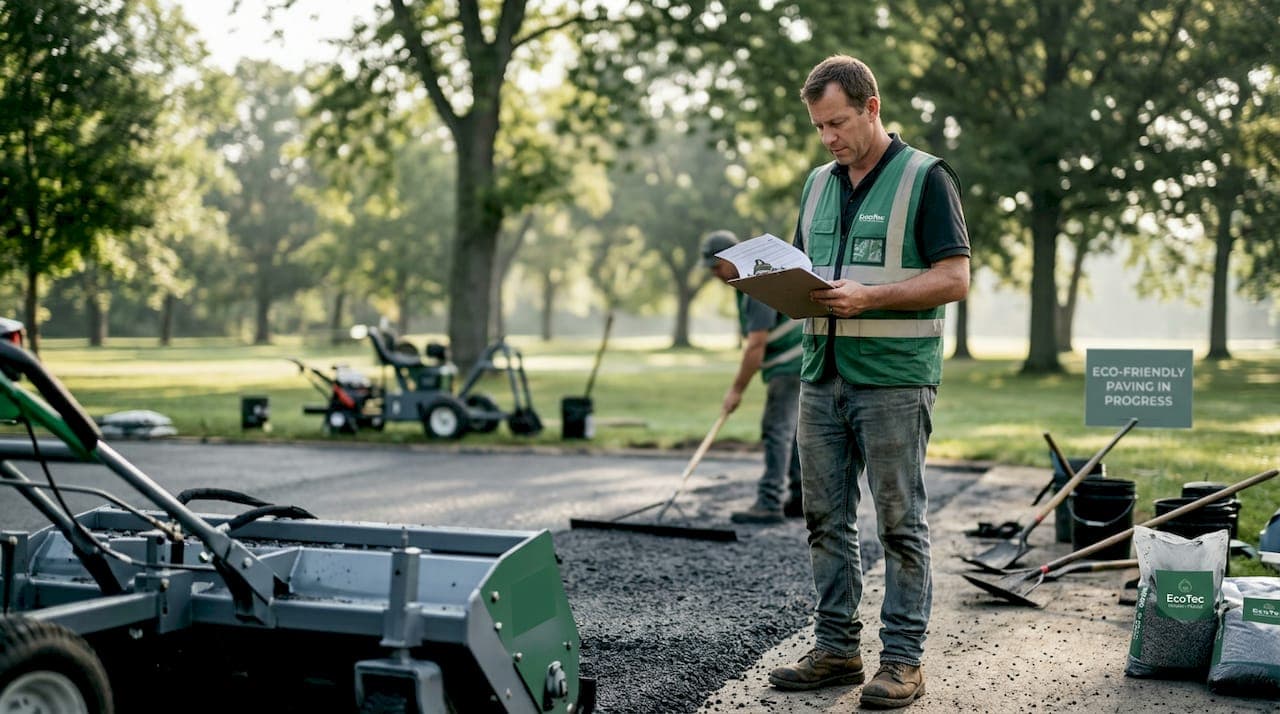
Most property owners assume asphalt overlays are the most practical and cost-effective paving choice. That assumption is increasingly hard to defend. The evidence for why rubber paving outperforms asphalt overlays has grown substantially, with real-world pilots and peer-reviewed research now showing measurable advantages in durability, crack resistance, wet-weather traction, and lifecycle emissions. This article breaks down the material differences, performance data, cost trade-offs, and sustainability factors so you can make an informed decision, whether you manage a driveway, a commercial lot, or a municipal street network.
Table of Contents
- Key Takeaways
- Why rubber paving outperforms asphalt overlays: the material difference
- Performance data: what the research actually shows
- Cost and sustainability: the full picture
- Practical guidance for homeowners, businesses, and municipalities
- My take on rubber paving's real-world impact
- See what Ecotecrubber can do for your property
- FAQ
Key Takeaways
| Point | Details |
|---|---|
| Material composition matters | Rubber paving uses crumb rubber from recycled tires, which changes binder behavior and improves flexibility. |
| Performance data is compelling | Studies show Marshall stability increases 24% and rutting resistance improves 29% at optimal crumb rubber content. |
| Lifecycle costs favor rubber | Despite higher upfront production costs, rubber-modified surfaces extend pavement life and reduce future rehabilitation spending. |
| Sustainability is measurable | Net greenhouse gas reductions of approximately 96 kg CO2-eq per ton make rubber paving a verified eco-friendly choice. |
| Optimization beats maximization | More crumb rubber is not always better. A 15% content level delivers the best balance of performance and cost efficiency. |
Why rubber paving outperforms asphalt overlays: the material difference
Before comparing performance numbers, you need to understand what these two materials actually are. Asphalt overlays are thin layers of conventional hot-mix asphalt applied over an existing pavement surface. They typically consist of aggregate, filler, and petroleum-based bitumen binder. The goal is to restore surface quality without full reconstruction.
Rubber paving refers to a category of surfaces that incorporate crumb rubber, which is recycled tire material ground into small particles. There are two distinct types, and confusing these two is one of the most common mistakes buyers make:
- Crumb rubber-modified (CRM) asphalt: Crumb rubber is blended directly into the asphalt binder or the aggregate mix. The result looks like standard asphalt but performs differently at a molecular level.
- Rubber surfacing layers: These use EPDM (ethylene propylene diene monomer) or SBR (styrene-butadiene rubber) granules bound together in a poured-in-place or tile format. Common in playgrounds and pedestrian surfaces.
Most performance research, including the studies referenced in this article, focuses on CRM asphalt. The crumb rubber particle size, treatment method (wet process vs. dry process), and content percentage all determine how the final material behaves. In the wet process, rubber is blended with the liquid binder before mixing. In the dry process, rubber particles replace a portion of the aggregate.
Pro Tip: If a contractor quotes you on "rubber paving" without specifying which type, ask directly whether they mean crumb rubber-modified asphalt or a rubber surfacing layer. The two products serve different applications and have very different performance profiles.
Rubberized asphalt improves flexibility and elasticity compared to unmodified asphalt, particularly under thermal cycling. That matters enormously in climates like Florida, where daily temperature swings stress pavement repeatedly across seasons. Beyond roads, rubberized asphalt membranes also provide seamless waterproofing in construction applications, showing how versatile the material category really is.
Performance data: what the research actually shows
This is where the conversation shifts from theory to proof. The numbers are worth examining closely.
A 2026 pilot program in Ann Arbor, Michigan used over 3,700 tons of rubberized asphalt, recycling approximately 2,000 car tires in the process. Early projections suggest the rubberized streets will extend pavement life by more than 30% while improving wet-weather traction. That is not a marginal gain. A 30% life extension on a street that would otherwise need resurfacing every 12 years means you push that cost out by nearly four years.
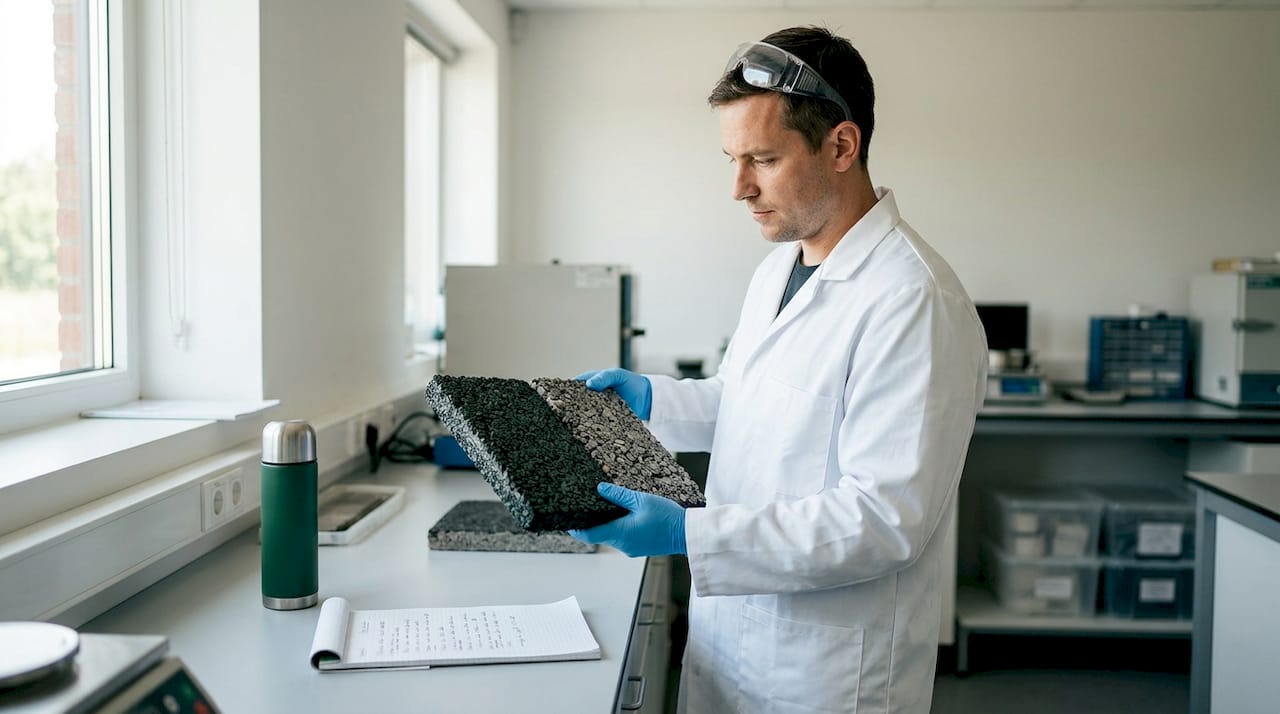
The laboratory data is equally strong. A 2025 MDPI study on crumb rubber-modified asphalt overlays found that at approximately 15% crumb rubber content combined with 4.8 to 5.0% asphalt binder:
- Marshall stability increased 24% compared to unmodified asphalt
- Rutting resistance improved by 29%
- Tensile strength ratio (TSR) rose from 73% to 81%, indicating better moisture resistance
That TSR improvement is particularly relevant for anyone dealing with standing water or freeze-thaw cycles. A higher TSR means the pavement holds together better when water infiltrates the mix.
| Performance Metric | Conventional Asphalt | CRM Asphalt (15% rubber) |
|---|---|---|
| Marshall stability | Baseline | +24% |
| Rutting resistance | Baseline | +29% |
| Tensile strength ratio | 73% | 81% |
| Pavement life extension | Baseline | +30% or more |
| Wet-weather traction | Standard | Improved |
The mechanism behind the rutting improvement is worth understanding. Viscosity at 135°C increases from 0.7 Pa·s to 1.207 Pa·s with 15% crumb rubber content. Higher viscosity at service temperatures means the binder resists deformation under load, which is exactly what you need on a hot Florida parking lot in July.
Pro Tip: When reviewing bids for paving projects, ask contractors for the crumb rubber content percentage in their mix design. A specification around 15% is where research places the performance sweet spot. Anything significantly higher may increase costs without proportional performance gains.
Cost and sustainability: the full picture
Here is where many buyers get tripped up. Rubber-modified asphalt does cost more to produce upfront. Production temperatures run 15 to 20°C higher than conventional asphalt, which increases fuel consumption during manufacturing. If you are evaluating bids purely on installation cost per square foot, CRM asphalt will look more expensive.
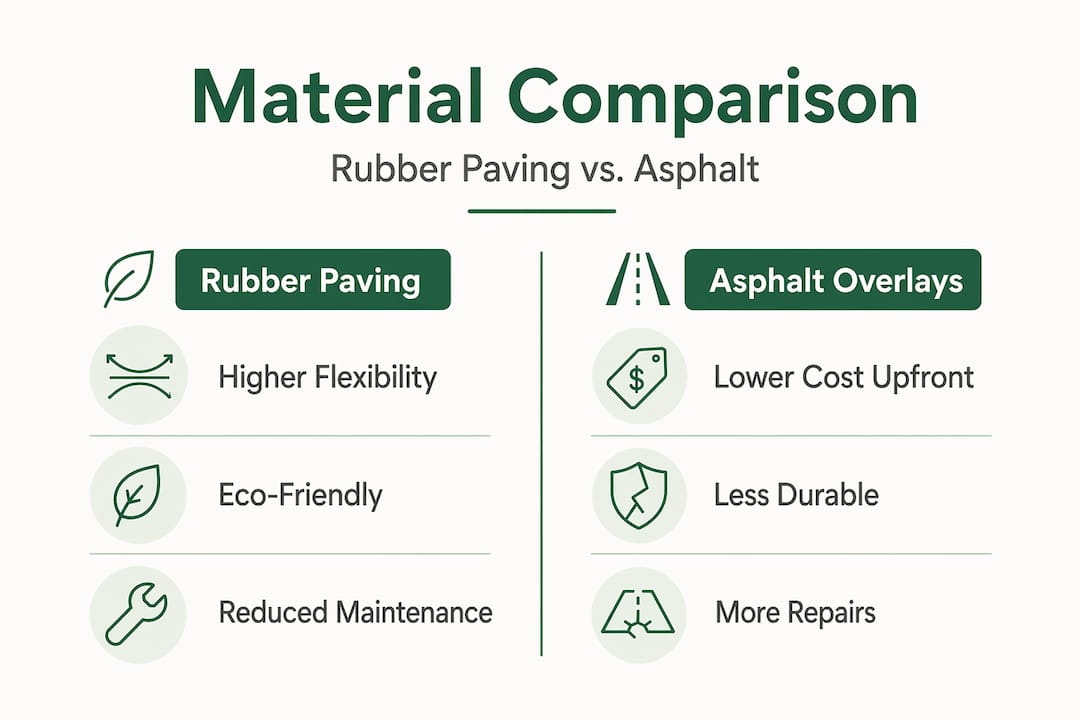
The lifecycle math tells a different story. Delaying major pavement rehabilitation through improved rubber overlays directly reduces future emissions and maintenance spending. A surface that lasts 30% longer means fewer resurfacing cycles, less material consumed, and lower disruption costs over a 20-year horizon. That is real money for a municipality managing hundreds of lane-miles, and it is real convenience for a business owner who does not want their parking lot torn up every decade.
The sustainability case is equally clear when you look at the full lifecycle:
- Net GHG reduction: Lifecycle analysis shows approximately 96 kg CO2-eq reduction per ton of CRM asphalt mixture, despite higher production energy use.
- Tire diversion: Rubber paving contributes to circular economy goals by diverting scrap tires from landfills. The Ann Arbor pilot alone recycled the equivalent of 2,000 car tires.
- Reduced rehabilitation frequency: Fewer resurfacing cycles mean less raw material extraction, less truck traffic, and less construction zone emissions over time.
One misconception worth addressing directly: adding more crumb rubber does not automatically improve performance or sustainability. Optimization of crumb rubber content is the key variable. Beyond roughly 15%, production costs climb and workability can suffer without proportional performance gains. The best rubber paving specifications are engineered to a target, not maximized for rubber content.
Practical guidance for homeowners, businesses, and municipalities
Knowing the data is one thing. Knowing when and how to apply it is what actually matters. Here is a structured way to think about your decision:
- Assess your climate and traffic conditions. Rubber-modified surfaces perform best in environments with thermal cycling, heavy traffic loads, or frequent wet conditions. Florida's heat and rain make it an ideal application zone.
- Match the product to the application. CRM asphalt overlays suit roads, parking lots, and driveways. Rubber surfacing layers (EPDM/SBR) suit pedestrian areas, pool decks, and playgrounds where cushioning and slip resistance are priorities.
- Request ADA compliance documentation. Rubber surfacing systems can be designed to meet ADA requirements for surface firmness and stability, which matters for commercial and municipal buyers.
- Plan for installation differences. Hot-applied CRM asphalt requires specialized equipment. Cold-applied rubber surfacing systems are more accessible for smaller projects but serve different performance goals.
- Evaluate maintenance expectations honestly. Rubber-modified asphalt overlays require less frequent maintenance than conventional overlays due to improved crack resistance under thermal cycles. Budget accordingly and factor that into your total cost of ownership.
Pro Tip: For commercial and municipal projects, request a lifecycle cost analysis from your paving contractor, not just an installation quote. A contractor who cannot provide lifecycle numbers is likely not experienced with rubber-modified specifications.
My take on rubber paving's real-world impact
I have watched the paving industry treat asphalt overlays as the default answer for decades, and I understand why. Conventional asphalt is familiar, widely available, and easy to specify. But familiarity is not the same as performance.
What I find genuinely compelling about the rubber paving data is not just the performance numbers. It is that the benefits compound. A surface that resists cracking also holds up better in wet weather, which reduces liability for slip-and-fall incidents. A surface that lasts longer also generates fewer resurfacing projects, which means less construction disruption for businesses and neighborhoods. These are not independent benefits. They reinforce each other.
The Ann Arbor pilot resonates with me because it represents exactly the kind of real-world validation that moves a technology from promising to proven. Municipal engineers are conservative by necessity. When a city engineer commits to testing rubberized asphalt on public streets, that is a meaningful signal that the performance case has cleared a high bar.
My honest advice to anyone comparing rubber paving and asphalt overlays: stop treating upfront cost as the primary filter. The projects I have seen go wrong almost always made that mistake. A surface that fails in eight years instead of twelve is not a bargain at any price. Specify for lifecycle value, demand the data, and work with contractors who can actually back their recommendations with research.
— Gm
See what Ecotecrubber can do for your property
If the performance and sustainability case for rubber paving resonates with you, Ecotecrubber is worth a serious look. They specialize in the Rubberway® installation system across Florida, with a focus on the specific climate challenges that make conventional asphalt overlays underperform in this region. Their work covers residential driveways, commercial parking areas, and municipal surfaces, all using recycled materials that meet ADA compliance standards.
Ecotecrubber is licensed and insured, and every project is managed by specialists focused exclusively on rubber paving. That focus matters. You are not getting a general contractor who occasionally installs rubber surfaces. You are getting a team whose entire practice is built around this material. Visit Ecotecrubber's Florida installations to review their project portfolio, request a consultation, or get a quote for your specific application.
FAQ
What makes rubber paving more durable than asphalt overlays?
Crumb rubber modifies the asphalt binder's rheology, increasing viscosity and flexibility. This translates to a 24% increase in Marshall stability and 29% better rutting resistance compared to conventional asphalt at optimal rubber content.
Is rubber paving more expensive than asphalt overlays?
The upfront production cost is higher due to elevated mixing temperatures, but lifecycle costs favor rubber paving because surfaces last over 30% longer, reducing rehabilitation frequency and total spending over time.
How does rubber paving help the environment?
Rubber paving diverts scrap tires from landfills and delivers a net greenhouse gas reduction of approximately 96 kg CO2-eq per ton of mixture across the full lifecycle, despite slightly higher production energy use.
What is the optimal crumb rubber content for performance?
Research consistently identifies approximately 15% crumb rubber content as the performance and cost sweet spot. Higher percentages increase production costs without delivering proportional improvements in durability or sustainability.
Can rubber paving be used for residential driveways?
Yes. Rubber surfacing systems and crumb rubber-modified asphalt are both viable for residential applications, with rubber surfacing layers offering particular advantages for areas where drainage, cushioning, and slip resistance are priorities.