
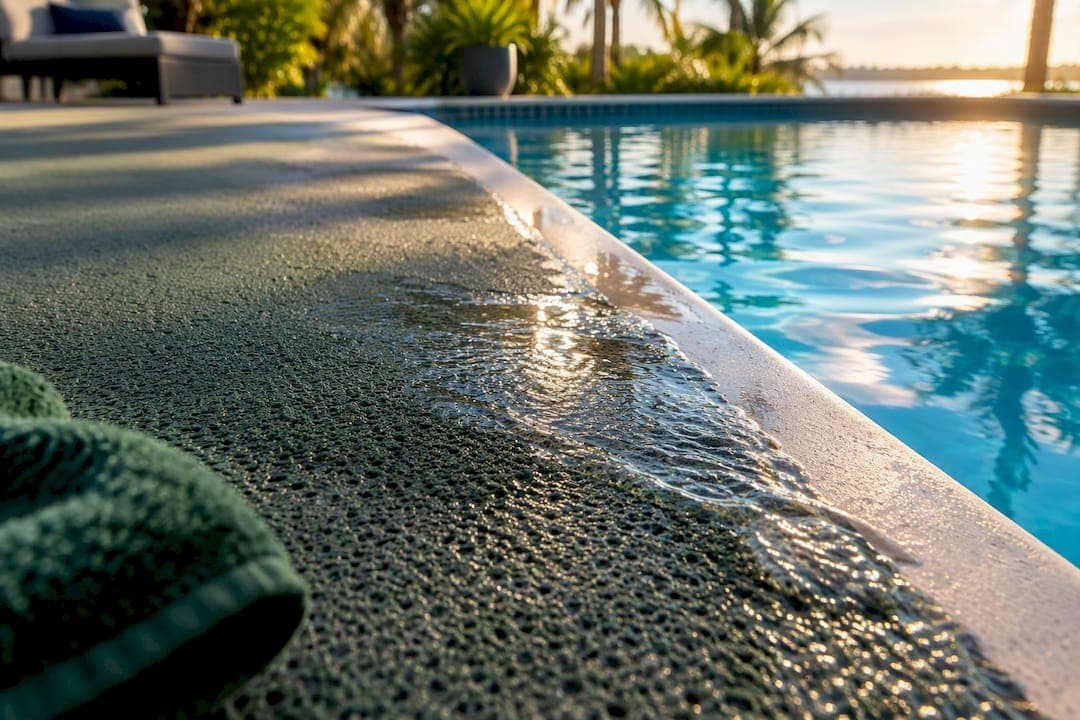
The safest pool deck surfaces are aquatic-rated porous rubber systems, light-colored textured stone or porcelain pavers, and properly sloped broom-finish concrete. Before choosing any of them, verify one thing: does the material carry aquatic-specific slip-resistance testing under ANSI A326.3, and does the installation plan account for real drainage? Skip that check, and even a premium surface can turn dangerous the first rainy weekend.
TL;DR:
- Verify that the pool deck surface has passed ANSI A326.3 slip-resistance testing under wet conditions, not just a general flooring standard.
- Ensure the deck has a slope of around 1/4 inch per foot and proper drainage pathways to prevent standing water that can cause slips.
- Prioritize light-colored, textured materials like porous rubber or stone pavers for barefoot safety and heat management, especially within four feet of the pool edge.
- Regularly scrub, pressure-wash, and inspect the deck to remove biofilm and maintain traction, replacing surfacing when texture significantly wears down.
- Avoid polished tile, untreated hardwood, turf, and unsealed stamped concrete in wet zones, as these materials can trap moisture or become dangerously slick.
Table of Contents
- Which Pool Deck Materials Actually Work Best?
- What Slip-Resistance Standards Should You Require?
- Why Drainage and Slope Determine Real-World Safety
- How Do You Keep a Pool Deck Cool Underfoot?
- What Maintenance Keeps a Pool Deck Slip-Resistant?
- How Much Should a Safe Pool Deck Cost Over Time?
- What Contractors Get Wrong About Pool Deck Safety
- Ready for a Pool Deck That Passes Every Safety Check?
- Sources
- FAQ
Which Pool Deck Materials Actually Work Best?
Not every surface belongs near water, and the differences show up fast once bare feet, sunscreen, and splash zones enter the picture.
Rubberized surfacing, including poured-in-place rubber and rubberstone systems, holds traction even when saturated because the surface stays porous rather than glassy. Water drains through the material instead of sitting on top of it. Ecotecrubber's Rubberway® system falls into this category, built specifically for wet-perimeter zones where standing water is the enemy.
Broom-finish concrete and acrylic "cool deck" coatings remain the most budget-friendly path, and they perform well when a contractor gets the slope and texture right. Skip the texture step, and you get a slab that looks fine dry and turns into a skating rink wet.
Natural stone and porcelain pavers deliver a premium look and strong traction when the finish is properly textured, not polished. Expect a higher price tag and less room for installer error.
Composite and PVC decking work fine away from the immediate splash zone but run into moisture retention and heat buildup issues right at the coping, and many local pool codes restrict them there entirely.
A few materials never belong at the wet edge, regardless of price or aesthetics:
- Carpet or turf, which trap moisture and grow biofilm
- Polished or glazed tile, which loses almost all traction wet
- Untreated hardwood, which cups and splinters with cycling moisture
- Smooth, unsealed stamped concrete without broom or acid texture
Oregon's aquatic facility guidance explicitly prohibits wood, carpet, and artificial turf at the perimeter deck for exactly this reason.
What Slip-Resistance Standards Should You Require?
Here's where most buyers get misled: a slip-resistance number means nothing if it wasn't measured for a wet, barefoot, poolside environment.
The Model Aquatic Health Code defines the "perimeter deck," commonly called the wet deck, as the hardscape within 4 feet of the pool edge. Both that zone and the broader pool deck require slip-resistant finishes under MAHC guidance. That 4-foot line matters because it's where vendors most often try to substitute a generic flooring test for an aquatic one.
Ask specifically for Dynamic Coefficient of Friction results from the DCOF AcuTest, tested wet, and confirm the material meets ANSI A326.3, the standard built for aquatic and wet-area applications. Oregon's health authority ties its own minimum DCOF requirements directly to ANSI A326.3 for exactly this reason.
Watch for the trap: ASTM F1637, a common general flooring standard, explicitly excludes pool decks and wet areas from its scope. A contractor citing it as proof of slip resistance is citing the wrong test entirely.
Before signing anything, request:
- The specific wet-test report and its standard (ANSI A326.3, not a generic floor standard)
- Sample conditions used in testing (dry versus wet DCOF)
- Installation references from prior aquatic projects
Why Drainage and Slope Determine Real-World Safety
A gorgeous, correctly rated surface still fails if water pools on it. Slope is not optional, it's the mechanism that makes slip resistance meaningful day to day.
- Confirm the slope. Industry practice commonly targets around 1/4 inch of fall per foot, directing water away from the coping rather than toward it. Confirm the exact figure with your local code and design professional, since requirements vary by jurisdiction.
- Check the joints. Coping and deck junctions need watertight, flexible sealant. Rigid joints crack under thermal movement and let water undercut the surface, causing delamination over time.
- Plan the drainage path. Strip or channel drains work for concrete and paver decks; porous rubber systems often route water through the surface itself into an underdrain, sometimes avoiding a trench drain altogether.
- Inspect the base. Compaction quality under the surface determines whether it holds its shape for years or develops dips that collect water within a season.
Pro Tip: A well-installed basic concrete deck with correct slope will outperform a premium stone deck laid on a poorly compacted base almost every time. Base prep is where safety budgets should go first, not last.
How Do You Keep a Pool Deck Cool Underfoot?
Heat and traction pull in opposite directions more often than people expect. Dark, smooth surfaces trap heat and often lose texture over time, a bad combination right where bare feet spend the most time.
Light-colored, textured, and porous materials solve both problems at once. Travertine and light porcelain pavers stay noticeably cooler underfoot than dark stamped concrete, and light rubber-mix formulations behave the same way. Acrylic cool-deck coatings or a light porcelain retrofit can rescue an existing dark deck without a full tear-out.
The rule to hold onto: never sacrifice wet-edge traction for a cooler color. A light, glassy tile is still a hazard. Prioritize light, textured surfaces that pass wet slip testing first, then optimize for color and heat.

What Maintenance Keeps a Pool Deck Slip-Resistant?
Traction is not permanent. Biofilm, algae, and mineral buildup can quietly erase a surface's slip resistance long before the material itself wears out.
- Scrub regularly. CDC guidance on operating public pools stresses that scrubbing to remove biofilm is essential, since standing water and organic buildup undo even a well-tested surface. For concrete, dedicated algae-removal techniques work without stripping the texture that provides grip.
- Pressure-wash on a schedule. Most residential decks benefit from a wash every few months; commercial facilities need it more often depending on bather load and shade.
- Match chemicals to material. Harsh acid washes can degrade certain sealed stone and rubber surfaces; check manufacturer chemical-resistance guidance before switching cleaners.
- Inspect quarterly. Look for worn texture, clogged drain grates, failing joints, and shaded algae hotspots that never fully dry.
Pro Tip: If texture feels smoother than it did a year ago, that's your surface losing traction before your eyes tell you anything is wrong. Resurface at that signal, don't wait for a visible crack.
How Much Should a Safe Pool Deck Cost Over Time?
Upfront price and lifetime cost rarely match up cleanly, and that gap is where most budget decisions go wrong.
- Broom-finish concrete carries the lowest upfront cost but the shortest maintenance-free window, needing resealing and occasional resurfacing.
- Acrylic coatings and rubberized systems sit in the mid-range, trading a higher install cost for better drainage and fewer callbacks.
- Travertine and porcelain pavers cost the most upfront but often need less frequent resurfacing if the base and joints were done correctly.
Hidden costs sneak up on almost every deck owner: correcting bad drainage after the fact, replacing failed joint sealant, or adding more frequent cleaning cycles because the wrong surface was chosen for a shaded, algae-prone spot. Watch for fading texture, hairline cracking along joints, or persistent puddling as your signal that resurfacing, not just cleaning, is due.
What Contractors Get Wrong About Pool Deck Safety

Most pool deck failures I've seen analyzed trace back to installation shortcuts, not bad material choice. A contractor skips proper slope, skimps on base compaction, or seals a joint with rigid caulk, and the "premium" surface fails years early regardless of its rated traction.
My recommendation stays consistent: for wet-edge zones, aquatic-rated porous rubber or light-colored textured stone wins on the combination that matters, verified traction plus drainage plus heat comfort. Get the installation details right, and the material choice becomes the easy part of the decision.
— Roger
Ready for a Pool Deck That Passes Every Safety Check?
Most pool deck fixes trade one problem for another: a slip-resistant surface that bakes bare feet, or a cool material that turns slick the moment it's wet. Ecotecrubber built the Rubberway® system specifically to avoid that tradeoff, using porous, recycled rubber that drains fast, resists pool chemicals, and can be formulated in lighter colors to cut surface heat.
Every Rubberway® installation is provided with ADA-compliant results built in rather than bolted on. That focus means the crew on your site isn't splitting attention between rubber, concrete, and pavers on the same week. Whether you're a homeowner replacing a cracked slab or a facility manager updating a commercial deck to meet code, the fix starts with an on-site look at your slope, drainage, and traffic patterns. Explore the Rubberway® product lineup to see color and texture options, or request a site evaluation from Ecotecrubber to get a plan specific to your deck.
Sources
- Model Aquatic Health Code (MAHC) — CDC (2023)
- Aquatic Facility Rules Fact Sheet #4 PR — Oregon Health Authority
- Pool deck ideas: Best materials, colors & layouts for 2026 — PoolPad
FAQ
What Is the Best Surface for a Pool Deck?
Aquatic-rated porous rubber, light-colored textured porcelain or stone, and properly sloped broom-finish concrete all perform well when they pass wet DCOF testing under ANSI A326.3. The right pick depends on budget, climate, and how much barefoot traffic the deck sees, but drainage and installation quality matter as much as the material itself.
What Are the Safety Considerations for a Pool Deck?
Safety comes down to verified wet slip resistance, correct slope to prevent standing water, watertight coping joints, and a maintenance routine that removes biofilm before it builds up. The Model Aquatic Health Code treats the area within 4 feet of the pool edge as requiring the strictest standard.
What Are Some Non-Slip Pool Deck Surfaces?
Textured broom-finish concrete, aquatic-rated porous rubber systems like Rubberway®, and properly finished travertine or porcelain pavers all provide reliable wet traction. Avoid polished tile, carpet, and artificial turf, which Oregon's aquatic guidance specifically prohibits at the wet perimeter.
What Is the Coolest Surface for a Pool Deck?
Light-colored, textured materials stay coolest, with travertine and light porcelain pavers outperforming dark stamped concrete in barefoot comfort. Light rubber-mix formulations and acrylic cool-deck coatings offer similar heat reduction on existing decks.
How Much Does Rubber Pool Deck Installation Cost?
Ecotecrubber does not publish flat pricing for Rubberway® installations since costs vary by deck size, drainage needs, and site conditions. Request a site evaluation for a project-specific quote.