
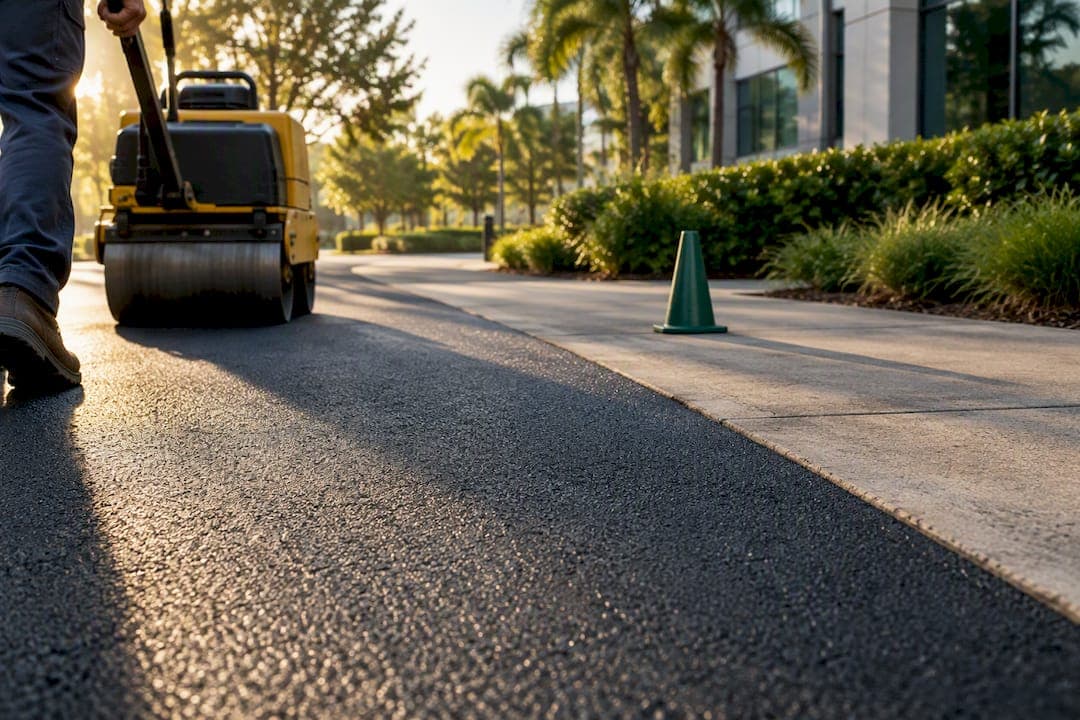
Most worn but structurally sound commercial walkways can be resurfaced rather than replaced, usually with a cementitious overlay, a resinous coating, or rubber paving like Rubberway®. The right choice depends on traffic, drainage, and climate exposure. If cracks run deep or the slab has settled, replacement is the safer call. Either way, start with a professional site assessment and a written quote that spells out scope and cure windows.
TL;DR:
- Resurfacing options include cementitious overlays for cosmetic issues, resin coatings for high traffic and chemical exposure, and rubber paving systems for drainage and heat cracking.
- Proper surface preparation involving pressure washing and grinding is critical for durability, and deep cracks or settlement generally require slab replacement instead of resurfacing.
- Cost varies based on slab condition and chosen system, with overlays being most economical and rubber paving or resin coatings costing more but offering specific benefits.
- Obtaining detailed, written estimates that specify prep methods, cure windows, warranties, and site conditions is essential to avoid premature failure.
- Rubber paving like Rubberway® is most suitable for sites with drainage problems, hot climates, or strict ADA requirements, offering long-term benefits in slip resistance and erosion control.
Table of Contents
- What Are Your Commercial Walkway Resurfacing Options?
- How Does the Resurfacing Process Actually Work?
- How Much Does Commercial Walkway Resurfacing Cost?
- What Should You Ask Before Hiring a Contractor?
- How Long Does a Resurfaced Walkway Last?
- When Does Rubberway® Make Sense for Your Property?
- What This Comes Down to for Property Managers
- Get an Estimate for Your Commercial Walkway
- Sources
- FAQ
What Are Your Commercial Walkway Resurfacing Options?
Not every worn walkway needs the same fix. The right system depends on how much foot traffic the surface handles, what it's exposed to, and how fast you need it back in service.
Cementitious overlays and microtoppings work best for cosmetic restoration on walkways with light pedestrian traffic. They cover surface discoloration, minor scaling, and hairline cracking at a lower cost than most alternatives, and they can be stamped or colored to match existing hardscape. ConcreteNetwork notes these overlays restore appearance effectively but can't correct structural settlement underneath.
Polyurea, polyaspartic, and epoxy coatings cure fast and hold up under heavy commercial traffic, chemical spills, and constant sun exposure. Busy plazas, loading zones near walkways, and retail entrances benefit from the chemical resistance and quick turnaround these systems offer, though material costs run higher than a standard overlay.
Rubber paving systems like Rubberway® solve a different problem entirely: standing water and heat-related cracking. The pervious design lets water pass through instead of pooling, which matters on Florida walkways during heavy rain. It's slip-resistant underfoot and resists the crack propagation that plagues rigid concrete in extreme heat cycles.
None of these fix a structurally compromised slab. If you're seeing:
- Deep, shifting cracks that reopen after patching
- Visible settlement or uneven sections
- Drainage failure that's undermined the base
...resurfacing won't hold. That level of damage calls for excavation and replacement, not a topcoat.
Finish choice matters beyond looks, too. Broomed textures, exposed aggregate, and rubber surfaces all add traction that stamped or troweled-smooth finishes can lack, which becomes a real safety variable once UV fading or algae growth sets in over time.
How Does the Resurfacing Process Actually Work?
Resurfacing a commercial walkway is a sequenced job, not a one-day pour-and-go. Here's the typical path a qualified contractor follows:
- Structural assessment first. A contractor inspects the slab for settlement, base failure, or drainage problems that would make resurfacing pointless. This step decides whether you're even a candidate for resurfacing.
- Surface preparation. Crews pressure wash at roughly 3,500 psi and follow with mechanical grinding to strip contaminants, old sealers, and laitance. Skipping this step is the number one cause of resurfacer delamination.
- Spall and crack repair. Damaged sections get patched before the topcoat goes down, since resurfacer isn't designed to bridge structural gaps.
- Sectioned mixing and application. Because most resurfacers set within about 20 minutes of mixing, crews work in small batches and defined sections using long-handled squeegees, trowels, and finishing tools rather than pouring the whole walkway at once.
- Cure and phasing. Light foot traffic is generally possible within a few hours, with heavier use requiring more time and full cure taking several days to weeks.
Weather matters here too. Temperature swings and rain can throw off set times, so scheduling around a dry, moderate-temperature window keeps the project on track.
How Much Does Commercial Walkway Resurfacing Cost?
Cost varies more by project condition than by material alone, but the ranking of relative expense stays fairly consistent across most commercial jobs.
- Slab condition drives the number. Extensive spall repair or crack injection before resurfacing adds cost regardless of which topcoat you choose.
- Material system sets the baseline. Cementitious overlays are the most economical starting point. Resinous coatings (polyurea, polyaspartic, epoxy) cost more per square foot but cure faster, which can offset labor and closure costs on high-traffic sites.
- Rubber paving runs at a premium relative to a basic overlay, but the drainage and ADA benefits often justify it on sites where standing water or slip hazards are a recurring liability.
- Site access and phasing add line items. Mobilization fees, off-hours work, and partial closures to keep a business operating all show up in the final bid.
- Decorative finishes (stamping, color, exposed aggregate) sit on top of the base material cost.
Most contractors quote by square footage with a project minimum and a mobilization charge built in. Ask for a contingency line for hidden slab damage discovered during prep. If a walkway has needed patching two or three times in recent years, that pattern of recurring repair usually signals it's cheaper long-term to replace than to keep resurfacing.
What Should You Ask Before Hiring a Contractor?
The gap between a resurfacing job that lasts a decade and one that fails in a year almost always traces back to who did the prep work and how they documented it.
Before signing anything, ask about:
- Licensing and insurance, including coverage for work near public pedestrian access.
- Manufacturer certifications for the specific resurfacing or coating system proposed.
- Project references from similar commercial sites, not just residential driveways.
- A written warranty and maintenance plan, spelling out what's covered and for how long.
- Documented cure windows for light traffic, full use, and any vehicle access nearby.
Verify that the contractor's proposal names specific prep methods (pressure washing psi, grinding equipment, joint treatment) rather than a vague "surface will be prepared." Manufacturer guidance is explicit that inadequate prep, not an inexpensive finish choice, is the leading cause of resurfacing failure. Commercial jobs with phased occupancy should also come with a written phasing plan and proof of insurance endorsements for work near active foot traffic.
Red flags include a contractor who quotes a price without a site visit, a scope that doesn't mention joint or crack treatment, or a bid far below every other estimate you've collected.
Pro Tip: Ask every bidder for the exact same scope in writing, then compare warranty length and cure-time commitments side by side. Price alone tells you almost nothing about which quote is actually the better deal.
How Long Does a Resurfaced Walkway Last?
A resurfaced walkway holds up as long as you keep water and chemicals off it and address small problems before they spread. Routine cleaning, avoiding harsh deicing salts, and steering clear of oil or chemical stains all extend the surface's working life. Some cementitious systems benefit from a scheduled re-coat every few years to maintain the wear layer.
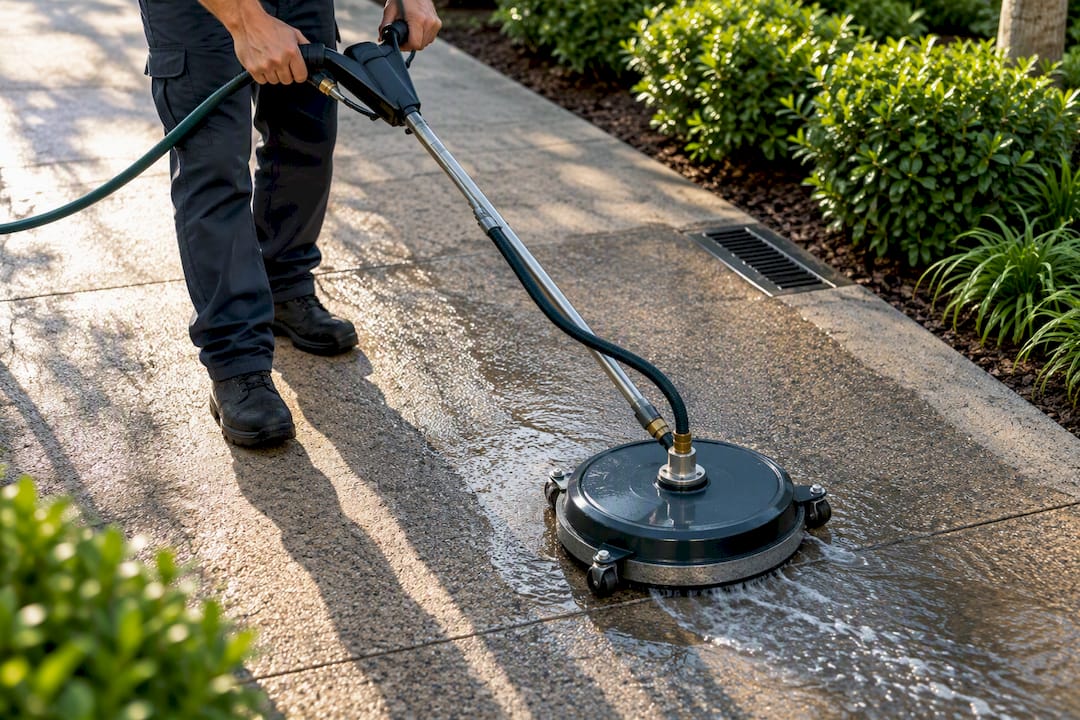
Lifespan varies by system and by environment. Freeze-thaw cycling, standing water, and chemical exposure all shorten how long a resurfaced walkway performs well, regardless of which material you chose. Fixing drainage issues, maintaining control joints, and repairing small cracks the moment they appear are the cheapest ways to push that lifespan further out.
When Does Rubberway® Make Sense for Your Property?
Rubber paving isn't the right call for every walkway, but certain site conditions make it the clear choice. Standing water after storms, hot climates where rigid concrete cracks under thermal stress, and projects with strict ADA accessibility requirements all favor a pervious rubber surface over a traditional overlay.
Before hiring anyone for a rubber paving install, request:
- Product datasheets covering permeability and slip-resistance figures
- Written warranty terms
- Proof of installer licensing and insurance
- Documentation showing the installer has handled similar commercial or municipal projects
The appeal isn't just aesthetic. A pervious rubber surface reduces standing water on walking paths, which cuts long-term maintenance costs tied to erosion and pooling. That's a meaningful advantage for property managers juggling drainage complaints alongside slip-and-fall liability.
What This Comes Down to for Property Managers
Every resurfacing decision boils down to three things: safety, how fast you get the walkway back open, and what it costs over its full lifespan, not just this quarter. Get a site assessment, insist on a written quote with named cure windows, and don't sign anything without warranty language spelled out.
— Roger
Get an Estimate for Your Commercial Walkway
A specialized rubber paving contractor offers commercial property owners surfaces designed to address standing water and heat-cracking. That focus means fewer surprises during prep and fewer callbacks after cure.
The Rubberway® product family covers a range of commercial needs. Rubberway® Pervious Pavement handles drainage-priority sites, while Rubberway Rubberrock 6000 and Rubberway EVOLUTION address different traffic and finish requirements. A commercial quote from Ecotecrubber includes a site visit, a documented scope of work, a realistic timeline with cure windows, and warranty terms in writing before any crew shows up. If your walkway has drainage complaints, slip hazards, or recurring crack damage, request an estimate through Ecotecrubber and get a scoped proposal instead of a guess.
For related groundwork, a pre-repair site inspection can help document substrate conditions before any resurfacing bid comes in, especially on older commercial properties with an unclear repair history.
Sources
- QUIKRETE - Resurfacing concrete project guide
- This Old House — How to resurface concrete
- ConcreteNetwork — Resurfacing concrete walkways
- QUIKRETE Concrete Resurfacer product datasheet
FAQ
How much does it cost to resurface a concrete walkway?
Cost depends on slab condition, material system, and site access, with cementitious overlays as the most economical option and rubber paving or resinous coatings priced higher. Get a written quote with a per-square-foot breakdown and contingency line, since Ecotecrubber and most commercial installers price projects individually rather than publishing flat rates.
Can a concrete walkway be resurfaced?
Yes, as long as the slab is structurally sound and the damage is cosmetic rather than caused by settlement or drainage failure underneath. Deep shifting cracks or significant settlement usually mean replacement is the better long-term investment.
What is the best product for resurfacing concrete sidewalks?
The right product depends on the problem: cementitious overlays for cosmetic wear, resinous coatings for chemical and traffic exposure, and pervious rubber systems like Rubberway® for drainage and heat-cracking concerns. There's no single best material across every commercial site.
Can you put a skim coat of concrete over old concrete?
Yes, but only after thorough mechanical prep. Manufacturer guidance calls for pressure washing and grinding to remove contaminants first, since a skim coat applied over dirty or unbonded concrete will delaminate.