
Long term paving maintenance benefits are defined as the measurable cost, safety, and durability gains that result from scheduled preventive treatments applied before pavement failure occurs. The Federal Highway Administration confirms that every $1 spent on preventive pavement maintenance saves $6 to $10 in future rehabilitation costs. That ratio alone makes proactive upkeep one of the most financially sound decisions a property owner or facility manager can make. The industry term for this approach is pavement preservation, and it centers on keeping serviceable surfaces in good condition rather than waiting for structural failure to force expensive reconstruction.
1. How long term paving maintenance benefits your bottom line
The financial case for scheduled pavement care is straightforward. A structured maintenance plan reduces capital-intensive repairs by 50% by year 20 and cuts total costs by 35–50% over a 30-year lifecycle. That is not a marginal improvement. It is the difference between a manageable annual maintenance budget and a sudden six-figure reconstruction bill.
Lifecycle cost analysis, known as LCCA, is the tool pavement engineers use to model these outcomes. LCCA compares the total cost of different maintenance strategies over the full life of a surface, including repair, disruption, and replacement expenses. Facility managers who apply LCCA consistently find that preventive treatments scheduled at the right intervals always outperform reactive repairs on total cost.

The cost gap between preventive and reactive approaches is stark. Sealcoating costs $0.14 to $0.30 per square foot. Full-depth reconstruction runs $4 to $8 per square foot. That makes reactive repair up to 40 times more expensive than routine surface protection. No budget justifies skipping sealcoating when those numbers are on the table.
Pro Tip: Schedule an LCCA review every three years for any paved surface larger than 10,000 square feet. The analysis pays for itself the first time it prevents a premature reconstruction.
2. What are the top preventive treatments for long-term pavement care?
Pavement preservation works through a short list of targeted treatments applied at the right time. Each treatment addresses a specific failure mode before it becomes structural.
Sealcoating is the most widely used surface protection method. Applied every 2–4 years, it blocks UV damage and water intrusion, which are the two primary causes of asphalt oxidation and surface cracking. Sealcoating does not repair existing damage. It prevents new damage from forming on a surface that is still in good condition.
Crack sealing addresses the next stage of deterioration. Water entering unsealed cracks accelerates freeze-thaw erosion and undermines the base layer. Crack sealing costs less than one-tenth of treating moderate cracking and less than one-fortieth of severe repair costs. Treating cracks early is one of the highest-return maintenance actions available.
Surface patching handles isolated failures before they spread. A pothole left untreated grows in diameter and depth with every rain cycle and vehicle pass. Patching at the first sign of failure keeps the surrounding surface intact.
Routine cleaning removes debris, oil, and organic material that degrade binder chemistry and clog drainage channels. Pressure washing and sweeping are low-cost actions that extend the effectiveness of every other treatment.
The Pavement Condition Index, or PCI, is the standard 0–100 scale used to rate surface condition. Treatments applied when PCI scores are in the 70–85 range cost far less and last far longer than treatments applied after scores drop below 50. Pavement deterioration is non-linear: a surface holds its PCI rating for roughly the first 75% of its design life, then declines rapidly. That final 25% of the lifecycle is where most reactive repair budgets get consumed.
Pro Tip: Commission a PCI assessment before budgeting season each year. A single walk-through inspection with a trained technician gives you the data to prioritize treatments before prices escalate.
3. What operational and environmental benefits come with sustained pavement maintenance?
Cost savings are the most visible benefit of regular paving upkeep, but the operational and environmental gains are equally significant for facility managers with sustainability goals.
Safety performance improves directly with surface quality. Smooth, well-maintained pavement provides consistent surface friction, which reduces slip-and-fall incidents in pedestrian areas and improves vehicle stopping distances in parking lots and driveways. Deteriorated surfaces with loose aggregate, ruts, and cracks create liability exposure that no property owner wants.
Vehicle wear and fuel consumption decrease on well-maintained surfaces. Long-term maintenance benefits include measurable reductions in fuel consumption and vehicle operating costs for fleets and frequent visitors. Rough pavement increases rolling resistance, which burns more fuel per mile. Smoother surfaces reduce that resistance directly.
Drainage performance depends on surface integrity. Cracked and rutted pavement channels water unpredictably, leading to ponding, erosion, and base layer saturation. Maintained surfaces direct stormwater as designed, protecting both the pavement structure and surrounding landscaping. Facilities that manage stormwater through proper paving avoid costly drainage repairs downstream.
Sustained pavement maintenance reduces urban heat island effects by preserving surface reflectivity and preventing the dark, oxidized surfaces that absorb and radiate excess heat in dense urban and suburban environments.
Sustainability compliance is easier to achieve with a maintained surface. Many municipalities and commercial property certifications now require documented pavement management practices. Facilities that reduce community maintenance needs through proactive care are better positioned to meet those requirements without emergency spending.
4. How do data-driven tools optimize long-term paving maintenance?
Pavement Management Systems, known as PMS, are software platforms that track surface condition data, model deterioration curves, and recommend treatment schedules across an entire property or network. PMS tools turn maintenance planning from guesswork into a documented, repeatable process.
The most common mistake in pavement management is the "worst-first" mentality. Property owners naturally focus repair budgets on the most visibly damaged surfaces. Data-driven prioritization via PMS shows that spending on fair-to-good condition surfaces delivers far greater ROI than pouring money into surfaces that are already beyond cost-effective repair. Fixing the worst pavement first often means spending the most money for the least network-wide benefit.
Predictive modeling within PMS platforms projects how each surface will deteriorate under different budget scenarios. A facility manager can model the outcome of a $50,000 annual maintenance budget versus a $30,000 budget and see exactly which surfaces will fail and when. That visibility prevents the budget surprises that come from deferred maintenance compounding over multiple years.
Pavement preservation, as defined by the American Public Works Association (APWA), aims to keep good roads good through scheduled minor interventions before structural failure occurs. That definition captures the core logic of data-driven maintenance: act early, act often, and act based on condition data rather than visible crisis.
Multi-year maintenance planning is the practical output of PMS analysis. A five-year plan that sequences sealcoating, crack sealing, and targeted patching across a property portfolio costs a fraction of the reactive repair bills that accumulate without one. Facility managers who want to reduce paving maintenance costs consistently find that the plan itself is the most valuable deliverable.
Pro Tip: Ask your paving contractor for a written five-year maintenance schedule tied to your current PCI scores. Any contractor worth hiring can produce one.
5. The hidden costs of reactive repair that most owners miss
Reactive repairs carry costs that never appear on the invoice. Disruption costs from reactive repairs include tenant loss, business downtime, and operational interruptions that can surpass the direct repair expense. A parking lot reconstruction that takes two weeks does not just cost the contractor's fee. It costs every business day of reduced access, every tenant complaint, and every customer who parks elsewhere and does not return.
Facility managers who account for disruption costs in their maintenance budgets consistently choose preventive care. The math is not close. A sealcoating application completed overnight or on a weekend causes minimal disruption. A full-depth reconstruction requires weeks of closure, heavy equipment, and coordination with tenants, utilities, and local permits.
Insurance and liability exposure also rise with deteriorating surfaces. A single slip-and-fall claim on a cracked parking lot can cost far more than years of preventive maintenance. Documented maintenance records demonstrating regular upkeep provide legal protection that reactive repair histories cannot.
Key takeaways
Proactive pavement preservation, applied before PCI scores decline sharply, delivers the highest return on maintenance spending across every surface type and budget size.
| Point | Details |
|---|---|
| Prevention beats reconstruction | Sealcoating at $0.14–$0.30/sqft prevents reconstruction costs of $4–$8/sqft. |
| Early intervention maximizes ROI | Treating pavement during the first 75% of its design life costs far less than late-stage repairs. |
| Data-driven planning outperforms reactive repair | PMS tools and LCCA analysis prevent the "worst-first" trap that drains maintenance budgets. |
| Disruption costs are real | Reactive repairs create tenant loss and downtime that often exceed direct repair expenses. |
| Environmental benefits support compliance | Maintained surfaces improve drainage, reduce fuel use, and help meet sustainability standards. |
Why I think most property owners are solving this problem backwards
The standard advice is to fix what is broken. That instinct is understandable, and it is exactly wrong for pavement management.
I have seen facility managers spend three times their annual maintenance budget in a single year because they deferred sealcoating for two seasons. The surface looked fine. The PCI score was still in the 70s. Then a wet Florida winter accelerated the oxidation, cracks spread to the base, and the repair scope jumped from a $4,000 sealcoat to a $60,000 mill-and-overlay. That is not bad luck. That is the non-linear deterioration curve doing exactly what the data predicts.
The property owners who get this right treat their pavement the way a good mechanic treats a vehicle. They do not wait for the engine light. They follow a schedule, document every treatment, and adjust based on condition data rather than visual crisis. The result is a surface that lasts longer, costs less per year, and never forces an emergency decision.
The sustainability angle matters too, especially in Florida. Maintained surfaces drain better, reflect more heat, and require fewer heavy repair cycles that consume energy and materials. Ecotecrubber's Rubberway® system is built around this logic: use recycled materials, design for drainage and crack resistance from the start, and reduce the maintenance burden over the full lifecycle. That is what cost-effective paving looks like when you plan it correctly from day one.
The uncomfortable truth is that deferred maintenance is not a savings. It is a loan at a very high interest rate.
— Roger
Ecotecrubber's approach to durable, low-maintenance paving
Property owners who want to reduce long-term maintenance obligations from the start should look at what the surface material itself contributes to durability.
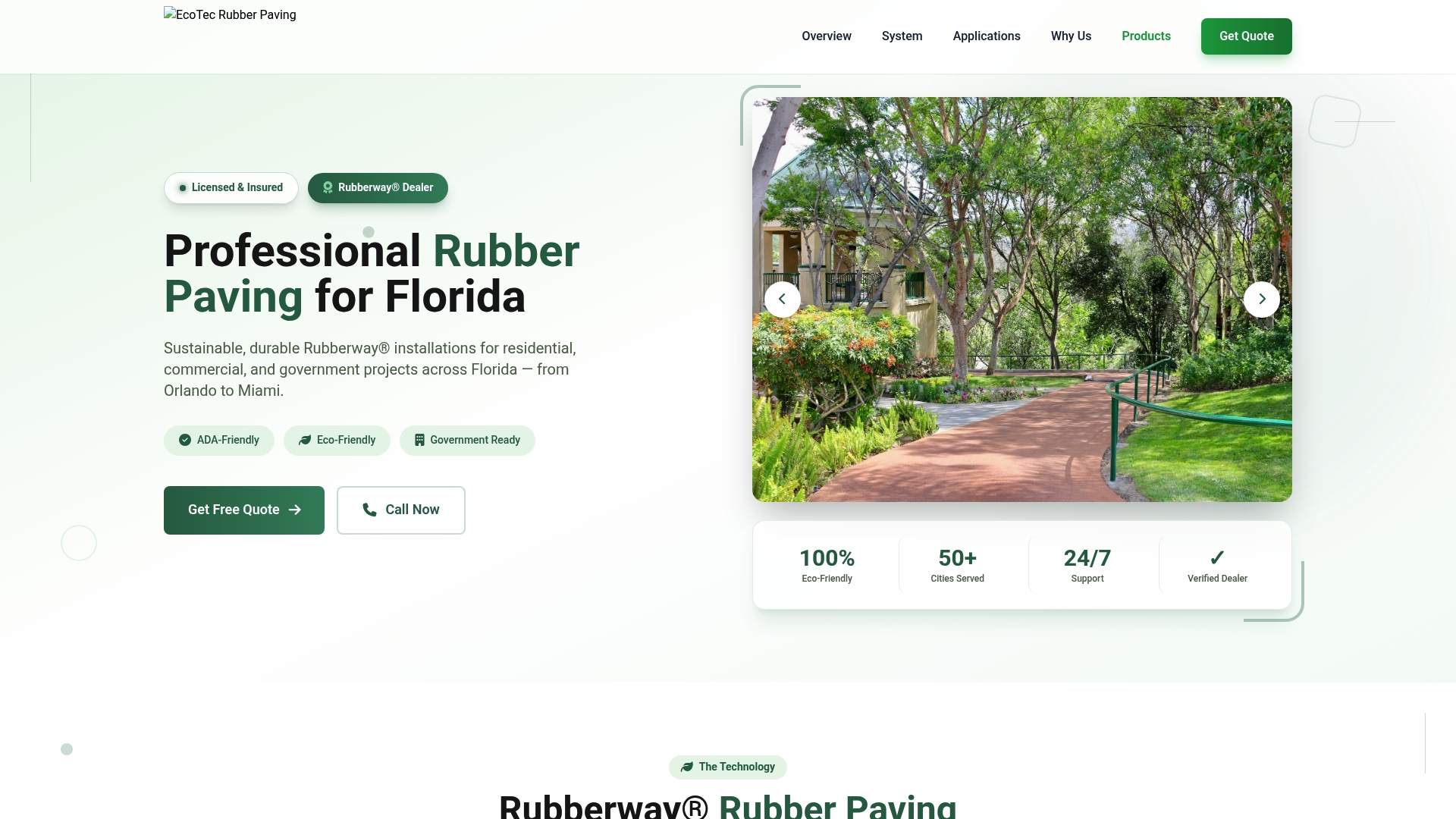
Ecotecrubber installs the Rubberway® paving system across Florida using recycled rubber materials engineered for the state's heat, humidity, and heavy rain cycles. Rubberway® surfaces resist cracking, drain efficiently, and meet ADA compliance standards without the oxidation and freeze-thaw failures that shorten traditional asphalt life. For municipalities, HOAs, and commercial property managers looking at the long-term ROI of sustainable paving, Ecotecrubber offers licensed, insured installations with a focused scope: rubber paving done right. Contact Ecotecrubber to discuss your property's maintenance goals and get a project consultation.
FAQ
What is the main financial benefit of preventive paving maintenance?
Every $1 spent on preventive pavement maintenance saves $6 to $10 in future rehabilitation costs, according to Federal Highway Administration standards. A structured plan also reduces capital-intensive repairs by 50% by year 20.
How often should sealcoating be applied to extend pavement life?
Sealcoating should be applied every 2–4 years to block UV damage and water intrusion. Applying it on a surface still in good condition maximizes its protective effect and extends overall pavement life significantly.
What is the Pavement Condition Index and why does it matter?
The Pavement Condition Index (PCI) is a 0–100 scale that rates surface condition. Pavement holds a high PCI for the first 75% of its design life, then deteriorates rapidly, making early treatment the most cost-effective window for intervention.
What is the "worst-first" trap in pavement management?
The "worst-first" approach directs repair budgets to the most damaged surfaces, which are often beyond cost-effective repair. Data-driven Pavement Management Systems show that maintaining fair-to-good surfaces delivers far greater network-wide ROI.
Are there environmental benefits to regular pavement upkeep?
Maintained pavement surfaces reduce fuel consumption, improve stormwater drainage, and mitigate urban heat island effects. These benefits support sustainability compliance goals for commercial properties and municipalities.