
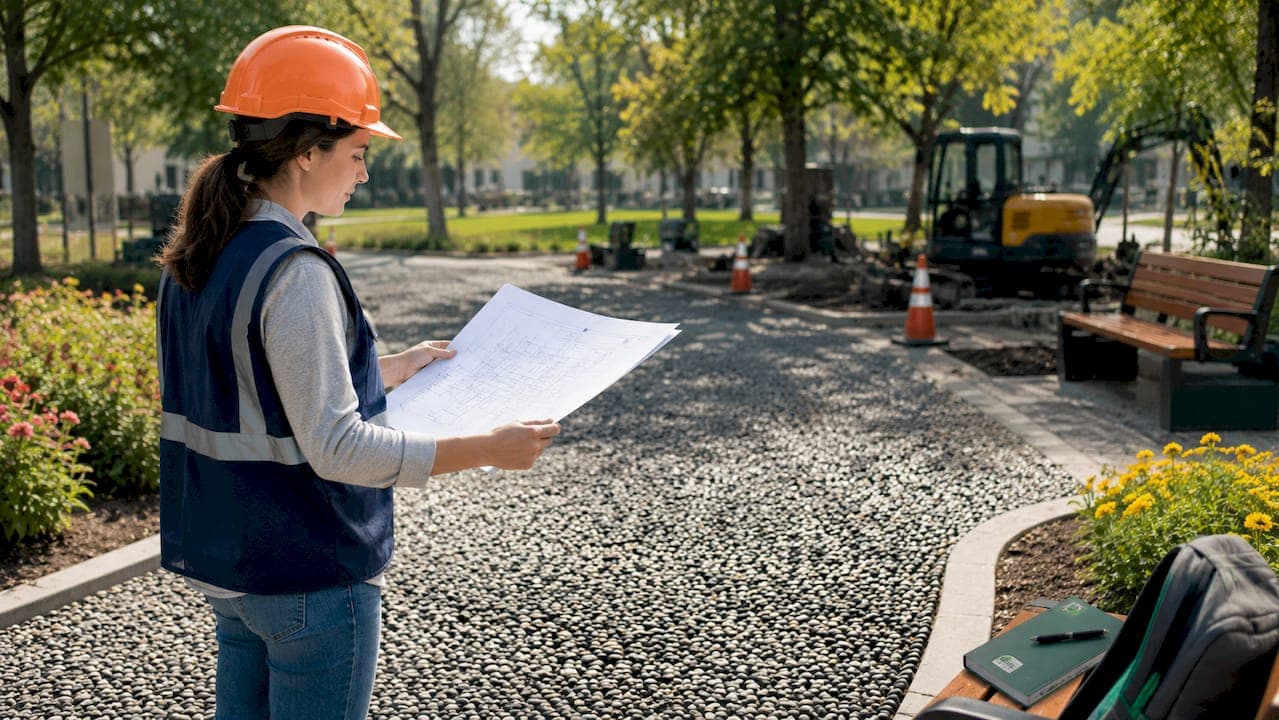
Sustainable commercial paving is defined as the use of materials and systems that reduce environmental impact, extend pavement lifespan, and lower total ownership costs compared to conventional asphalt or concrete. The benefits of sustainable commercial paving include measurable reductions in stormwater runoff, access to LEED and BREEAM certification credits, and structural performance that outlasts traditional surfaces. Technologies like permeable asphalt, reclaimed asphalt pavement (RAP), full-depth reclamation (FDR), and rubber paving systems give commercial property owners real tools to cut costs, meet regulations, and increase asset value. This article breaks down each advantage with specific data so you can make an informed decision.
1. How sustainable commercial paving improves durability and lifecycle performance
Sustainable paving materials consistently outperform conventional surfaces over a 20-year lifecycle. Permeable asphalt, rubber paving, and RAP-based systems resist water infiltration at the surface level, which eliminates the freeze-thaw cracking that destroys traditional pavement in cold climates. Fewer cracks mean fewer repairs, and fewer repairs mean lower labor costs over time.
Maintenance labor for permeable systems runs 40% lower than conventional pavement. That figure compounds significantly across a large commercial parking lot or campus pathway over a decade. The structural integrity of the surface stays intact longer because water drains through rather than pooling and weakening the subbase.
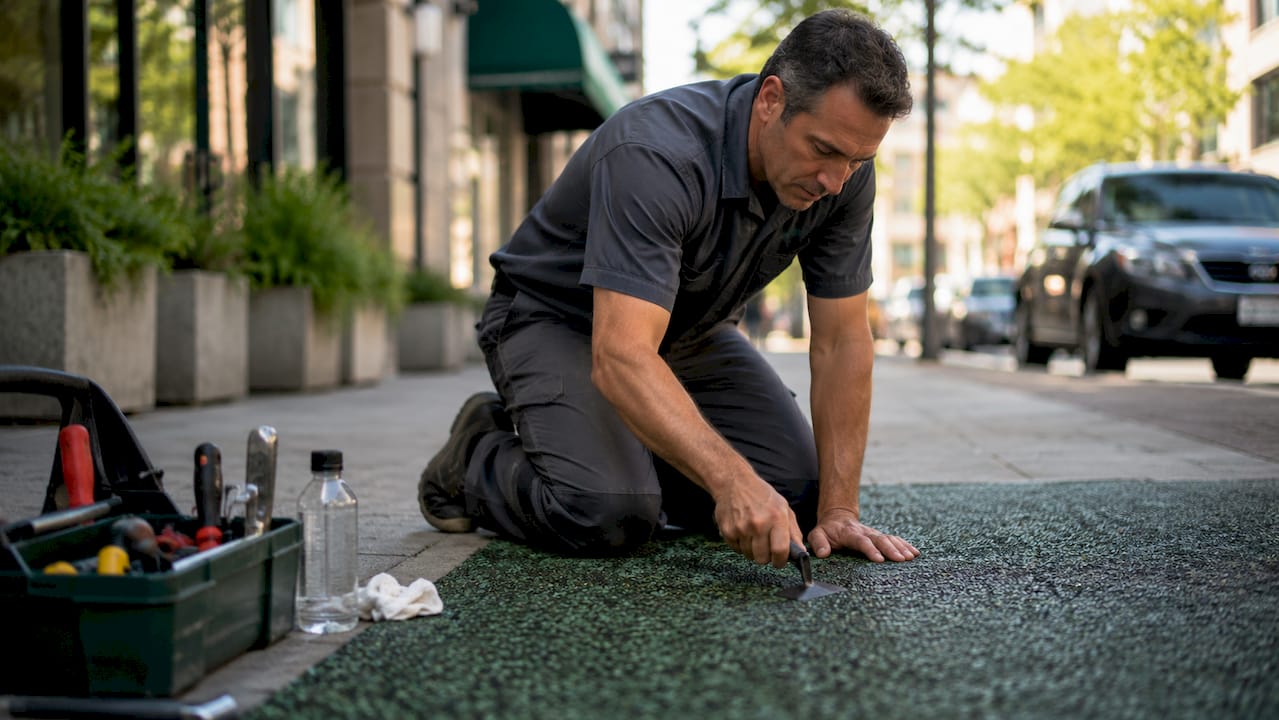
Pro Tip: When comparing paving bids, ask vendors for a 20-year total cost of ownership estimate, not just the installation price. The upfront premium for sustainable materials often disappears within 8–12 years.
For Florida properties specifically, heat-induced surface cracking is a persistent problem with standard asphalt. Rubber paving systems like the Rubberway® product line from Ecotecrubber address this directly. The material flexes under thermal expansion rather than fracturing, which extends surface life without requiring annual patching.
You can review a detailed paving surface comparison to see how lifespan and maintenance costs stack up across material types.
2. What environmental advantages eco-friendly paving offers commercial properties
Permeable asphalt systems reduce stormwater runoff by 50–75% and filter up to 80% of common contaminants before water reaches the subgrade. That level of filtration removes oils, heavy metals, and sediment that would otherwise enter municipal drainage systems and local waterways. For commercial properties in regulated watersheds, this performance directly affects permit compliance.
The environmental benefits extend beyond water management:
- Heat island reduction: Permeable pavements lower surface temperature by 5–35°C through evaporation and reflective properties. Cooler surfaces reduce cooling loads on adjacent buildings and improve outdoor comfort for employees and visitors.
- Lower greenhouse gas emissions: RAP and FDR methods reuse existing pavement material, which cuts the energy required for new material production. Recycled rubber paving repurposes waste tires, diverting them from landfills entirely.
- Pollutant filtration: Permeable systems achieve infiltration rates up to 5 gallons per square foot per minute, giving them the capacity to handle heavy Florida rain events without surface flooding.
These outcomes matter beyond environmental goodwill. Municipalities increasingly tie stormwater utility fees to impervious surface area. A property that manages its own runoff effectively pays less and faces fewer regulatory hurdles during permit renewals.
For a technical breakdown of how these systems handle drainage at the engineering level, Ecotecrubber's guide on stormwater management paving covers the specifics in detail.
3. How sustainable paving solutions generate economic incentives and increase property value
Sustainable paving is a direct path to green building certification credits. Permeable concrete and similar systems can earn commercial properties 3–5 LEED or BREEAM credits, translating to $85,000–$220,000 in rebates. That range reflects real project outcomes, not projections. Properties that achieve LEED certification also see 5–10% increases in assessed value, which strengthens your balance sheet and improves refinancing terms.
| Benefit | Estimated Value |
|---|---|
| LEED/BREEAM credits earned | 3–5 credits per project |
| Certification rebates | $85,000–$220,000 |
| Property value increase | 5–10% |
| Stormwater fee reduction | Up to 70–85% |
| Total ownership cost savings | Up to 33% over 20 years |
Stormwater utility fees represent one of the largest hidden costs for commercial property owners. Permeable paving can reduce those fees by 70–85%. That reduction alone can offset the upfront cost premium within a single budget cycle for high-fee municipalities.
Pro Tip: Before finalizing your paving specification, contact your local stormwater utility to confirm which surface types qualify for fee reductions. Some municipalities require third-party certification of infiltration rates.
Permeable paving costs 10–20% more upfront than conventional asphalt. However, it eliminates detention basin costs of $2,000–$2,500 per parking space. On a 200-space commercial lot, that is a $400,000–$500,000 infrastructure saving that never appears in a standard paving bid comparison. Commercial CFOs who understand this math increasingly treat sustainable paving as a value-generating asset rather than a compliance expense.
For architects and developers focused on certification strategy, the Ecotecrubber resource on LEED-friendly paving materials explains how to maximize credit capture during the design phase.
4. What sustainable paving methods and materials businesses should consider
The right material depends on your site conditions, budget, and regulatory requirements. Here is a direct comparison of the four most relevant options for commercial properties:
| Material | Key Advantage | Primary Limitation |
|---|---|---|
| Permeable asphalt | Runoff reduction, LEED credits | Requires periodic cleaning of stone layers |
| Reclaimed asphalt pavement (RAP) | Lower material cost, waste diversion | Performance depends on mix quality |
| Full-depth reclamation (FDR) | Reuses existing base, minimal waste | Requires specialized equipment |
| Rubber paving (Rubberway®) | Crack resistance, ADA compliance, drainage | Best suited for pedestrian and light-traffic areas |
Adaptive reuse paving with RAP and FDR reduces construction waste, lowers material costs, and maintains structural performance comparable to virgin asphalt. Construction and demolition waste is one of the largest waste streams in the United States. Reusing pavement material directly supports waste diversion targets and ESG reporting goals.
Rubber paving occupies a distinct category. Systems like Ecotecrubber's Rubberway® use recycled tire rubber to create surfaces that flex rather than crack, drain effectively, and meet ADA compliance standards. These properties make rubber paving particularly well-suited for Florida commercial properties dealing with heat expansion, heavy rainfall, and accessibility requirements simultaneously.
Permeable asphalt requires planned access to its clean stone layers for periodic maintenance. Neglecting this maintenance leads to performance loss and potential compliance issues with stormwater permits. Build a maintenance schedule into your contract from day one.
5. Why integrating sustainability early in commercial bids increases success
Successful sustainable paving bids integrate green solutions into core project methods rather than treating sustainability as a separate feature. Evaluators penalize proposals that list recycled content without connecting it to measurable outcomes like waste diversion rates, carbon savings, or lifecycle cost reductions. The distinction matters because reviewers can tell the difference between a genuine methodology and a checklist.
Key practices for competitive sustainable paving bid proposals:
- Document specific ESG outcomes: tons of waste diverted, percentage reduction in carbon versus baseline, projected stormwater fee savings
- Align your sustainability narrative with the project schedule and construction methodology, not as a standalone appendix
- Reference past project metrics directly. Linking prior outcomes to current bid goals builds evaluator confidence
- Engage municipalities on drainage adoption routes before design begins. Pre-design workshops with highways and drainage stakeholders are recognized best practice and reduce project delays
"Sustainability in paving must be embedded in the core project methodology with measurable results. Just listing recycled content is insufficient for competitive bids." — Adaptive Reuse Paving Strategies
The most common failure point in sustainable paving bids is misalignment between the proposal document and the methodology section. Evaluators notice when the environmental claims in the executive summary do not appear in the construction program. Fix that gap before submission, and your bid immediately stands above most of the competition.
For a practical framework on reviewing vendor submissions, Ecotecrubber's guide on evaluating eco-friendly paving bids walks through the key evaluation criteria.
Key takeaways
Sustainable commercial paving delivers the strongest return when durability, environmental performance, and financial incentives are evaluated together rather than in isolation.
| Point | Details |
|---|---|
| Lifecycle cost advantage | Permeable systems lower total ownership costs by up to 33% over 20 years. |
| Stormwater fee savings | Qualifying surfaces reduce municipal stormwater fees by 70–85%. |
| Certification value | LEED and BREEAM credits from sustainable paving can generate $85,000–$220,000 in rebates. |
| Bid competitiveness | Embedding sustainability in core methodology, not as an add-on, wins more commercial bids. |
| Material selection | Match the paving type to site conditions: permeable asphalt for large lots, rubber paving for pedestrian and ADA-critical areas. |
Why I think most businesses underestimate sustainable paving's financial case
Most commercial property managers evaluate paving as a maintenance line item. That framing causes them to reject sustainable options the moment they see a 10–20% cost premium on the installation quote. The real financial case sits in three places that never appear on a standard bid sheet: stormwater utility fees, detention basin construction, and certification rebates.
I have seen properties avoid $400,000 or more in drainage infrastructure costs simply by specifying permeable paving from the start. That saving does not show up in the paving contract. It shows up in the civil engineering budget, which is why the two teams rarely talk to each other during specification. The CFO never connects the dots unless someone forces the conversation.
The environmental leadership argument is real, but it is secondary for most commercial decision-makers. What actually moves the needle is showing that a sustainable surface pays for itself and then generates ongoing savings through reduced fees and lower maintenance labor. The 40% reduction in maintenance labor for permeable systems is not a minor footnote. On a large commercial campus, that figure represents a meaningful annual budget line.
My recommendation is straightforward. Before your next paving project, get a full lifecycle cost analysis that includes stormwater fees, detention basin costs, and available certification rebates alongside the installation quote. The comparison will look very different from what you expect.
— Roger
Explore Ecotecrubber's sustainable rubber paving solutions
If your commercial property needs a paving solution that handles Florida's heat, rainfall, and ADA requirements without the cracking and drainage failures of standard asphalt, Ecotecrubber has a direct answer.
Ecotecrubber's Rubberway® rubber paving installations use recycled materials to create surfaces that drain effectively, resist cracking, and meet ADA compliance standards. Every project is managed by a licensed and insured team focused exclusively on rubber paving, which means you get specialists rather than generalists. Ecotecrubber serves municipalities, businesses, and commercial property managers across Florida with installations tailored to local climate conditions. Contact Ecotecrubber to get a project assessment and see how the Rubberway® system fits your site.
FAQ
What are the main benefits of sustainable commercial paving?
Sustainable commercial paving reduces stormwater runoff by 50–75%, lowers maintenance labor costs by up to 40%, and can earn 3–5 LEED or BREEAM certification credits. These outcomes translate to lower utility fees, reduced repair costs, and increased property value.
How much can permeable paving reduce stormwater fees?
Permeable paving systems can reduce municipal stormwater fees by 70–85%, depending on local utility rate structures and the percentage of impervious surface replaced. Some commercial properties reach cost parity with traditional paving within 8–12 years.
What is the difference between RAP, FDR, and rubber paving?
Reclaimed asphalt pavement (RAP) and full-depth reclamation (FDR) reuse existing pavement material to cut waste and material costs while maintaining structural performance. Rubber paving uses recycled tire rubber to create flexible, crack-resistant surfaces best suited for pedestrian areas and ADA-compliant applications.
Does sustainable paving qualify for LEED credits?
Yes. Permeable concrete and similar sustainable paving systems can earn 3–5 LEED or BREEAM credits per project. Those credits contribute to overall certification scores and can unlock $85,000–$220,000 in rebates depending on project scope and location.
How should businesses include sustainable paving in commercial bid proposals?
Embed sustainability into the core project methodology with specific metrics such as waste diversion rates and carbon savings. Proposals that treat sustainability as a standalone add-on rather than an integrated part of the construction program consistently score lower in competitive bid evaluations.