
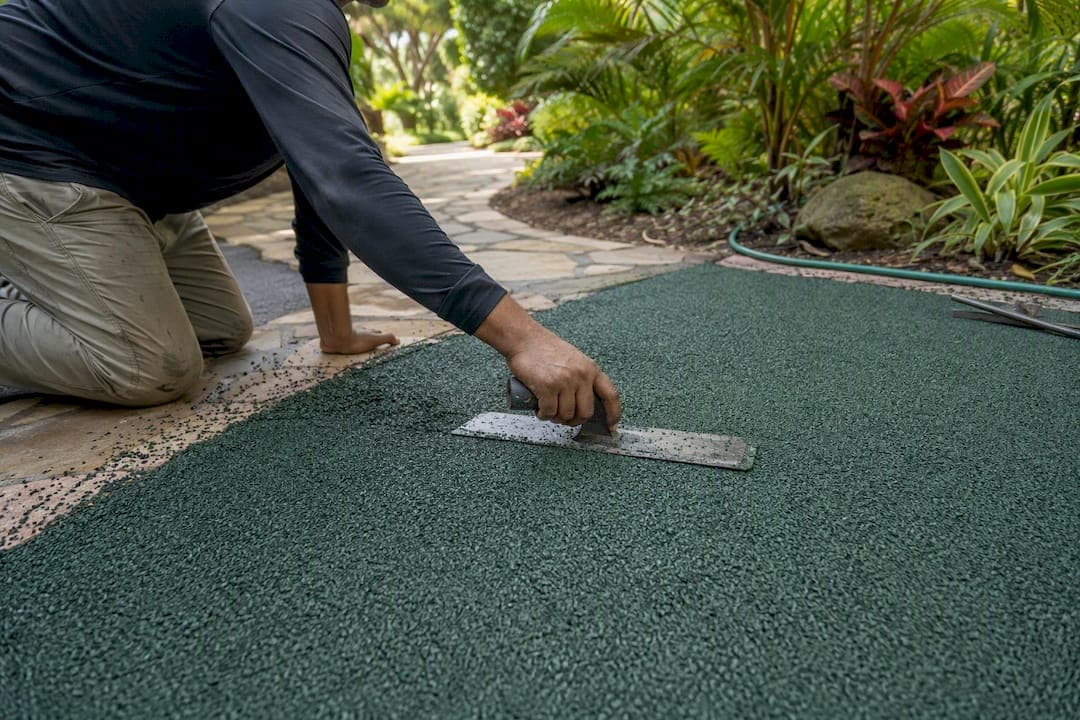
Six categories cover almost every walkway resurfacing job: cement overlays and microtoppings, epoxy or resin coatings, stamped or stained overlays, pavers and flagstone, gravel or aggregate, and rubber paving systems like EcoTec's Rubberway®. If durability and low upkeep matter most, pavers or a concrete overlay usually win. If budget and drainage top the list, gravel or rubber paving make more sense. If you just want a cosmetic refresh without tearing anything out, a stamped overlay or coating gets there fastest.
A few numbers help frame the decision:
- Poured concrete typically lasts 25 to 30 years under normal wear; loose gravel needs major replenishment every 5 to 10 years.
- DIY resurfacing over sound concrete can take a single weekend; overlays on damaged or uneven slabs are a professional job.
- Every option, without exception, needs the same non-negotiable first step: a proper prep checklist covering surface assessment, crack repair, cleaning, and bonding.
Key Takeaways
The right walkway resurfacing option depends on your slab's actual condition, your climate, and how much long-term maintenance you're willing to take on.
| Point | Details |
|---|---|
| Match method to damage | Cosmetic issues suit overlays and coatings; structural cracks or settlement require replacement. |
| Prep determines success | Mechanical abrasion, crack repair, and cleaning matter more than which material you choose. |
| Lifespan varies widely | Concrete lasts 25 to 30 years, gravel needs replenishment every 5 to 10 years. |
| DIY has real limits | Small pavers and flagstone suit weekend projects; overlays and rubber paving need professionals. |
| Rubber paving fits Florida conditions | EcoTec's Rubberway® drains through, resists heat cracking, and meets ADA slip-resistance needs. |
Table of Contents
- What Are the Main Walkway Resurfacing Options?
- Which Resurfacing Method Fits Your Walkway?
- Should You Resurface or Replace Your Walkway?
- What Prep Work Does Resurfacing Require?
- Should You DIY Your Walkway Resurfacing?
- How Do You Choose the Right Resurfacing Option?
- What Makes Rubber Paving Different From Other Resurfacing Options?
- A Publisher's Take on Choosing a Resurfacing Method
- Get a Rubberway® Estimate for Your Walkway
- Sources
What Are the Main Walkway Resurfacing Options?
Each resurfacing route solves a different problem, and knowing which one matches your walkway's actual condition saves you from paying for the wrong fix.

Cement overlays and microtoppings work well on structurally sound slabs with surface staining, minor pitting, or a dated look. They can be tinted or textured, and they're one of the cheaper ways to make old concrete look new. Epoxy and resin coatings add a hard, glossy or textured skin, often used where chemical resistance or a decorative finish matters more than flexibility. Staining and sealing doesn't add material thickness at all. It just changes color and adds protection, which makes it the lightest-touch option on this list.
Stamped and textured overlays can mimic slate, brick, or cobblestone at a fraction of the material cost of the real thing. Pavers, brick, and flagstone trade lower upfront simplicity for high durability and easy spot repairs, since you replace one unit rather than patching a slab. Gravel and stone fines are the cheapest and most permeable choice, though they migrate over time and aren't ideal for wheelchairs or strollers. Paint and coatings sit closer to a cosmetic touch-up than a real resurfacing method and tend to wear fastest under foot traffic. Rubber paving stands apart because it's poured or tiled as a flexible, porous surface rather than a rigid one.
"Overlays are a good choice when the slab is structurally sound but cosmetically worn," notes one contractor resource, which is really the filter to run every option through before spending a dollar.
Pro Tip: If accessibility is a factor, cross gravel and traditional stamped concrete off your list first. Rubber paving and broom-finished overlays hold up far better for wheelchairs, walkers, and strollers.
Which Resurfacing Method Fits Your Walkway?
Cement overlay and microtopping
Expect a smooth to lightly textured finish, tintable in dozens of colors. Lifespan runs 10 to 15 years with proper sealing. Materials run modest; labor often matches or exceeds material cost depending on prep work. DIY-friendly for flat, sound slabs. Maintenance means resealing every 2 to 3 years. Skip it if the slab has settled or shows through-cracks.
Stamped overlay
Mimics stone, brick, or tile using textured mats pressed into a fresh topping. Lifespan sits around 10 to 15 years. Cost climbs above a basic overlay because of labor intensity. This is a professional job in almost every case, since stamping timing is unforgiving. Overlays and coatings can be colored and textured to mimic stone or tile while adding well under a quarter inch of thickness.
Epoxy and polymer coatings
Glossy or textured, often flecked for slip resistance. Lifespan runs 5 to 10 years depending on UV exposure and foot traffic. Materials are pricier per square foot than cement overlays, but coverage is thin. DIY kits exist, though outdoor UV-stable formulas are trickier to apply evenly than indoor garage-floor kits.
Concrete staining and sealing
Lowest cost of any real resurfacing option, with a lifespan of 3 to 5 years per seal coat. Highly DIY-friendly. This is upkeep, not repair, so it won't help a walkway with structural problems.
Pavers and brick
Modular units installed over a compacted base last 25 years or longer, and damaged sections get swapped out individually rather than patched. Pavers and brick perform well year-round, including through winter freeze-thaw cycles, when installed over a 6-inch trench and 2-inch gravel base with edge restraints every 4 feet. DIY-achievable for straightforward runs; plan on a weekend project if the ground is already flat.
Natural stone and flagstone
Irregular or cut stone gives a premium look with a lifespan matching pavers when set on a proper base. Cost runs higher than concrete pavers due to material sourcing. Flagstone at least three-quarters of an inch thick resists cracking, and buying about 10% extra covers waste and odd cuts.
Gravel and aggregate
The cheapest surface by far, with a 5 to 10 year replenishment cycle. Fully permeable, DIY in an afternoon, but prone to migration on slopes and rough on bare feet or wheels.
Stepping-stone mixes
Combines paver or stone treads set into gravel or groundcover. Lifespan depends on the hard units, usually 20 plus years. Low material cost, moderate labor for leveling each stone.
Paint and coatings
The shortest-lived option, typically 1 to 3 years before peeling starts under weather exposure. Cheap and entirely DIY, best treated as a stopgap rather than a real fix.
Rubber paving (Rubberway®)
A poured, porous rubber surface made from recycled tire material. Lifespan runs 15 to 20 years with minimal cracking risk since the surface flexes instead of fracturing. Installation is professional-only. Maintenance is low: no resealing cycle, no joint sand to replenish.

Red flag across every method: if you see full-depth cracks, heaved slabs, or exposed rebar, no coating or overlay fixes that. That's a replacement problem, not a resurfacing one.
Pro Tip: Ask any contractor how they handle joint refilling and salt exposure before signing anything. Winter deicing salt eats away at unsealed pavers and cement overlays faster than almost anything else.
Should You Resurface or Replace Your Walkway?
Surface staining, minor pitting, and light spalling are resurfacing candidates. Structural settlement, full-depth cracks, heaved or sunken slabs, and exposed rebar are not. If a slab has shifted enough to create a trip hazard higher than roughly a quarter inch, that's an ADA and liability concern, not a cosmetic one, and it usually calls for a contractor or structural inspection before you spend money on a topping.
Consult a professional if the slab is settling or badly cracked; a cement-based overlay is built for superficial damage, not structural repair.
The quick checklist: clean the surface, repair any cracks first, and mechanically profile the concrete so a new material actually bonds instead of sitting on top like paint on rust.
What Prep Work Does Resurfacing Require?
Skipping prep is the single most common reason resurfacing jobs fail early, regardless of which material you choose.
- Inspect the full walkway and map every crack, stain, and low spot.
- Strip loose coatings, old paint, or failing sealer completely.
- Open the surface profile with mechanical abrasion or pressure washing around 3,500 psi using a 25 degree fan tip.
- Patch cracks and low spots, then let repairs cure fully.
- Apply a bonding agent or primer if your chosen overlay requires one.
Timing and moisture matter as much as the mechanics. Cooler, slightly damp conditions bond better than a scorching afternoon, since rapid drying in peak heat raises the risk of shrinkage cracking. For crack assessment before you start, this crack repair checklist walks through what counts as cosmetic versus structural.
Pro Tip: A garden hose won't cut it for surface prep. Most DIY failures trace back to skipping mechanical abrasion, because a smooth, unprofiled surface gives the new material nothing to grip.
Should You DIY Your Walkway Resurfacing?
Thin resurfacer over a sound, flat slab is realistic for a confident DIYer, as are small paver paths or flagstone set over a compacted base. Overlays on uneven slabs, large stamped or stained jobs, and any rubber paving installation belong with a professional.
Professional-grade concrete resurfacer is typically troweled 1/8 to 1/4 inch thick, and a 40 pound bag covers roughly 17 to 35 square feet depending on mix, numbers that matter when you're pricing a DIY weekend against a contractor quote.
DIY saves labor cost but adds risk: poor prep, wrong cure conditions, and joints that aren't properly restrained are the three most common shortcuts that shorten a surface's life. Professional installs typically come with a workmanship warranty; most DIY jobs don't.
How Do You Choose the Right Resurfacing Option?
Run every option through the same checklist before you commit:
- Traffic level (foot only, wheelchairs, occasional vehicles)
- Desired lifespan and how much maintenance you're willing to do
- Drainage and permeability needs, especially in flood-prone yards
- Slip resistance in wet conditions
- Budget band for materials plus labor
- Aesthetic fit with your home and landscaping
Ask any contractor these questions before signing: How many of this exact method have you installed? What warranty comes with the work? What's your substrate prep plan, in writing? What's the expected timeline? How will the surface handle slope and drainage? What's the maintenance schedule after installation? Walk away from anyone who won't put a prep plan in writing, can't provide references, or promises an unusually fast cure time. For a side-by-side look at long-term costs across materials, this lifecycle cost guide breaks down what you actually pay over 20 years, not just at installation.
Pro Tip: Mixing a durable center path material with softer, permeable edges often beats an all-or-nothing choice, giving you durability where feet actually land and cost savings everywhere else.
What Makes Rubber Paving Different From Other Resurfacing Options?
Rubberway® is made from recycled tire rubber bound into a porous surface, which behaves nothing like a hard overlay. Water passes through instead of pooling, and the surface flexes under heat and pressure instead of cracking the way rigid concrete or stamped overlays can in a Florida summer.
That flexibility makes it well suited to high-drain pathways, pool decks, and heat-exposed walkways where hard surfaces get uncomfortably hot underfoot. Its cushioned, textured finish also helps with ADA-compliant surfaces where slip resistance and impact absorption matter, and its recycled content appeals to owners who want a genuinely lower-waste material rather than a marketing label.
Installation is a licensed, professional job, not a DIY weekend project, and color options run wide since the rubber granules can be blended before pouring. Maintenance stays minimal over the long run: no resealing schedule, no joint sand to top off. EcoTec Rubber Paving installs Rubberway® across Florida for homeowners, HOAs, and municipalities, with licensed and insured crews coordinating each project from prep through finish.
Pro Tip: If standing water has ever pooled on your existing walkway after a storm, that's the clearest sign a porous surface like rubber paving will outperform anything solid you resurface over it.
A Publisher's Take on Choosing a Resurfacing Method
In Florida's climate, permeability and crack resistance matter more than a glossy finish, which is why rubber paving earns a real look alongside traditional overlays rather than staying a niche afterthought. Whatever you choose, prioritize prep and a licensed installer over the prettiest sample board.
Get a Rubberway® Estimate for Your Walkway
If drainage, heat resistance, and recycled content matter to you more than picking between overlay finishes, Ecotecrubber gives you a route the comparisons above don't: a poured rubber surface that drains through instead of pooling, flexes instead of cracking, and meets ADA slip-resistance needs without a separate coating step. Every installation uses recycled tire material, and crews are licensed and insured for residential driveways, pool decks, patios, and municipal walkways across Florida.
Browse the Rubberway® product specifications to see color options and installation details, or request an estimate directly through EcoTec Rubber Paving to get a project timeline and quote for your walkway.
Sources
- How To Resurface Concrete This Old House
- Walkway installation | Better Homes & Gardens
- Resurfacing Concrete Walkways - Concrete Network
- Resurfacing a sidewalk | Family Handyman
- Best Hardscape Materials for Patios & Walkways: Complete Guide