
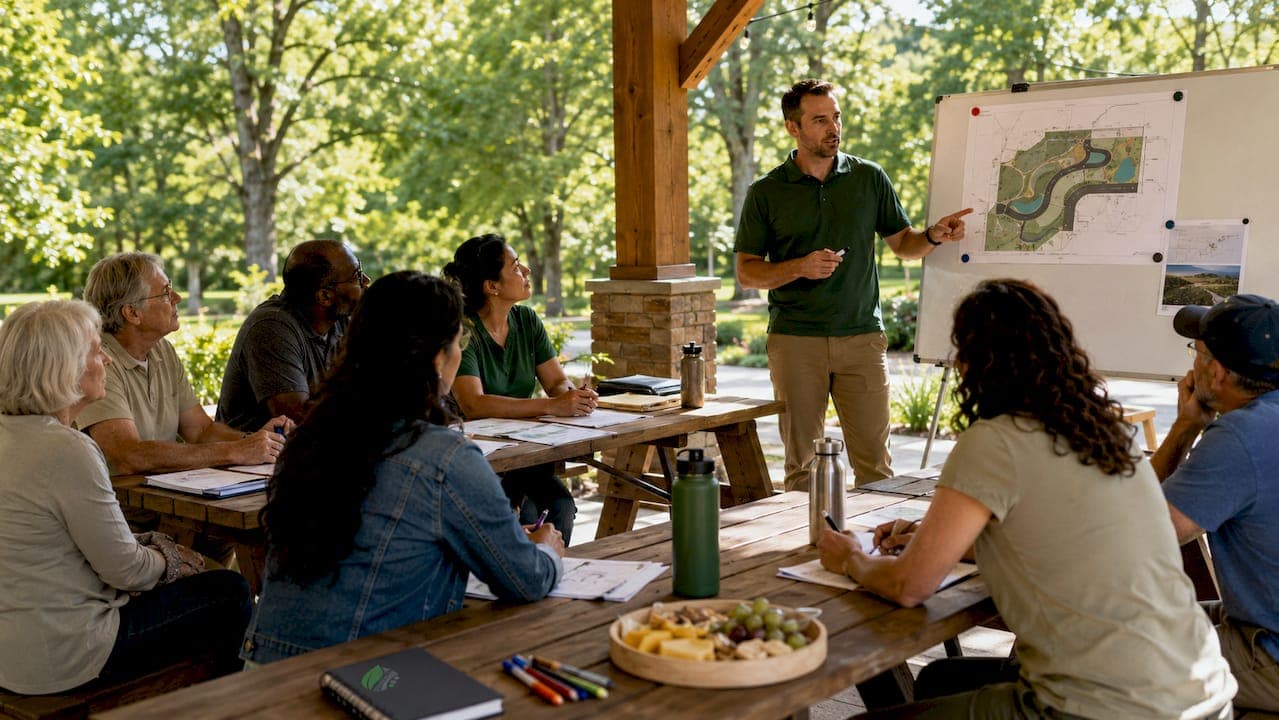
A present paving upgrade residents meeting is a community event where residents review planned road improvement projects and provide direct input to shape the final design. These meetings typically occur when a project reaches roughly 75% design completion, meaning the plans are advanced but still adjustable. City staff, civil engineers, contractors, and residents all attend, making it one of the few moments where ordinary community members can directly influence infrastructure decisions. Knowing what to expect and how to prepare turns a routine public meeting into a real opportunity to protect your property and improve your street.
What to expect at a community paving upgrade meeting
Community paving meetings in 2026 include city staff, civil engineers, and contractors presenting project plans at approximately 75% design completion. That timing is deliberate. It gives engineers enough detail to answer specific questions while leaving room to incorporate resident feedback before final approvals.
Meeting formats fall into two main categories. A formal presentation followed by a Q&A session gives everyone the same information at once, then opens the floor for questions. An open house format works differently. Stations are set up around the room, each staffed by a project team member covering a specific topic like drainage, traffic, or timelines. Open house formats require residents to proactively seek out staff, since no formal presentation is given. If you attend an open house and wait for someone to brief you, you will likely leave with unanswered questions.
Typical agenda items at a paving project community meeting include:
- Project scope and design plans, including lane widths and sidewalk configurations
- Construction timeline and phasing, sometimes broken into multiple seasons
- Traffic and parking impacts during active construction
- Drainage modifications and how pavement elevation changes affect runoff
- Coordination with schools, emergency services, and utility providers
- Resident notification procedures for parking restrictions and road closures
Pro Tip: Arrive early at open house meetings. Engineers are less occupied before the room fills up, and you will get more detailed answers to your specific property questions.
The meeting is also where residents raise concerns about road closures, driveway access, and drainage. Those concerns go on record and feed directly into the design review process.
How should residents prepare for a paving meeting?
Preparation separates residents who influence outcomes from those who leave frustrated. The most effective resident involvement comes from arriving with documented concerns about property frontage, drainage, and access. Vague complaints are easy to set aside. Specific, documented issues are much harder to ignore.
Follow these steps before attending a neighborhood pavement improvement meeting:
- Request project documents in advance. Most municipalities post design plans online or will email them on request. Review the drawings for your street segment before the meeting.
- Walk your property line. Note where water pools after rain, where your driveway meets the road, and whether your sidewalk has any existing cracks or elevation issues.
- Write down specific questions. Generic questions get generic answers. Ask about the exact construction start date for your block, the number of days your driveway will be inaccessible, and how drainage will be handled at your curb cut.
- Photograph existing conditions. Time-stamped photos of current cracks, drainage problems, or pavement damage give you evidence if disputes arise later.
- Identify your meeting format. Confirm whether the session is a formal presentation or an open house. That changes how you engage.
Pro Tip: Bring a printed copy of the project map with your property marked. Pointing to a specific location on a physical map gets faster, more accurate answers than describing your address verbally.
Understanding the road upgrade residents information process also helps. Cities communicate directly with affected residents about parking restrictions and construction schedules, but that communication often comes close to the construction start date. The meeting is your best chance to ask questions while changes are still possible.

What is the difference between resurfacing and full replacement?
Resurfacing and full replacement are the two primary options in any pavement upgrade, and they are not interchangeable. Resurfacing is appropriate when less than 25–30% of the asphalt surface is damaged. It adds a new layer of asphalt over the existing pavement, extending its life by 8–15 years at a cost of roughly $3.50–$7.50 per square foot. Full replacement removes the existing pavement down to the base, corrects any structural failures, and installs new material. It costs $15 or more per square foot but lasts 15–25 years.
The critical factor is the condition of the pavement base, not just the surface. Ignoring base conditions leads to choosing overlays that fail prematurely, resulting in higher long-term costs. A road that looks rough on the surface may have a sound base and be a good candidate for resurfacing. A road with alligator cracking or visible sinking has base failures that resurfacing cannot fix.
| Factor | Resurfacing (overlay) | Full replacement |
|---|---|---|
| Surface damage threshold | Less than 25–30% | More than 30% or base failure |
| Cost per square foot | $3.50–$7.50 | $15+ |
| Added lifespan | 8–15 years | 15–25 years |
| Base repair included | No | Yes |
| Best for | Surface wear, minor cracking | Structural failure, drainage issues |

One technical detail residents rarely ask about is milling. Adding overlay without milling raises the pavement elevation, which can block drainage, conflict with garage thresholds, and create curb height problems. Overlays applied without milling often fail within 18–30 months. Ask the engineer at your meeting whether milling is included in the resurfacing plan. That single question can reveal whether the proposed solution will actually last.
For a broader look at how different paving surface materials compare in durability and cost, the options go well beyond traditional asphalt.
What concerns do residents most often raise at paving meetings?
Residents consistently raise the same categories of concerns at pavement enhancement proposal meetings, and knowing them in advance helps you prioritize your own questions.
Construction duration tops the list. Major paving projects can last up to 9 months, and smaller residential projects still run in weather-dependent phases. Ask for a phase-by-phase schedule, not just a start and end date.
Traffic and parking disruptions affect daily routines immediately. Residents want to know how long their street will be closed, where they can park during construction, and how emergency vehicles will access the neighborhood. Cities typically coordinate with local schools and emergency services, but residents should confirm this directly at the meeting.
Drainage changes are a technical concern that many residents overlook until it is too late. Pavement elevation changes from overlay work can redirect water toward driveways, foundations, or yards. If your property already has drainage issues, raise them explicitly and ask how the project design addresses runoff at your specific location.
Other common topics include:
- Sidewalk repairs or additions, including ADA-compliant ramp installations
- Utility work scheduled alongside paving, which can extend timelines
- Coordination with homeowners associations or neighborhood groups
- How residents will be notified before construction begins on their block
- Whether the project includes traffic calming measures like speed tables or narrowed lanes
Resident feedback can directly modify design elements like sidewalk widths and drainage controls, even at the 75% design stage. Significant community opposition can stop or modify projects entirely. That is not a theoretical possibility. It happens regularly when residents show up prepared and speak specifically.
What happens after the residents meeting?
The meeting is not the end of the process. It is the beginning of the feedback loop. After a paving meeting for residents, the project team documents all public comments and submits them to the engineers and city officials overseeing the design.
Here is what typically follows:
- Comment review. Engineers evaluate each documented concern and determine whether design changes are warranted. Not every request gets incorporated, but all comments go on record.
- Design revisions. Projects at 75% design can still be adjusted based on community input before final approval. Changes to drainage plans, sidewalk configurations, or traffic patterns are all possible at this stage.
- Select Board or City Council approval. Final designs go before the governing body for official approval. Residents who want to speak again can attend these public sessions.
- Pre-construction notification. Cities notify affected residents before construction begins, providing schedules and parking restriction details. This notification often comes 1–2 weeks before work starts on a specific block.
- Follow-up meetings. Some projects hold additional community sessions as construction progresses. Attending these keeps you informed and gives you another chance to raise issues.
Public comments are documented and reviewed before final design and Select Board approvals. That process gives residents a real mechanism for influence, but only if they participate. Staying engaged after the initial meeting, including tracking the project through public meeting agendas, is how residents protect their interests through the full construction cycle. Reviewing public infrastructure paving budgets can also help you understand how funding constraints shape what changes are actually possible.
Key Takeaways
A paving upgrade residents meeting gives communities real influence over road design, but only residents who arrive prepared with specific, documented concerns actually shape the outcome.
| Point | Details |
|---|---|
| Meeting timing matters | Meetings at 75% design leave room for changes to drainage, sidewalks, and traffic plans. |
| Know your meeting format | Open house sessions require you to seek out staff proactively; no presentation is given. |
| Resurfacing vs. replacement | Ask whether milling is included; overlay without milling fails within 18–30 months. |
| Document your concerns | Bring photos and written questions about your specific property frontage and drainage. |
| Stay engaged after the meeting | Follow the project through Select Board approvals and pre-construction notifications. |
Why I think most residents leave these meetings with less than they came for
I have watched residents walk out of paving meetings shaking their heads, convinced nothing they said mattered. In most cases, the problem was not the city. It was preparation.
The residents who actually changed project outcomes came in with photos, written questions, and a clear understanding of which design element they wanted modified. The residents who felt ignored showed up with general frustration and no specific ask. Engineers cannot act on "the road is bad." They can act on "the overlay plan raises the elevation four inches at my curb cut, which will flood my garage."
Open house formats are particularly unforgiving. There is no presentation to anchor the conversation, so residents who do not know what to ask end up chatting about the weather with a traffic engineer. The format rewards preparation and punishes passivity.
The other thing I have seen consistently is that residents assume the project is locked in. It is not. A design at 75% completion still has meaningful flexibility. Drainage configurations, sidewalk widths, and traffic calming elements are all negotiable at that stage. The residents who know this show up differently. They treat the meeting as a negotiation, not a notification.
My honest advice: read the project documents before you go, walk your property the day before, and write down three specific questions you want answered. That is the difference between attending a meeting and actually using it.
— Roger
Ecotecrubber's approach to residential paving upgrades
When your community's paving discussion turns to material options, rubber paving deserves a place in that conversation.
Ecotecrubber specializes in Rubberway® paving installations across Florida, using recycled materials that deliver excellent drainage, crack resistance, and ADA-compliant surfaces. These properties address the exact issues residents raise most often at community meetings: standing water, heat-induced cracking, and accessibility. Ecotecrubber is licensed, insured, and focused exclusively on rubber paving, which means every project gets the full attention of a specialized team. If your neighborhood is weighing sustainable paving options that hold up to Florida's climate, Ecotecrubber is worth a direct conversation before your project reaches final design.
FAQ
What is a paving upgrade residents meeting?
A paving upgrade residents meeting is a public session where city staff and engineers present road improvement plans and collect community feedback. These meetings typically occur at the 75% design stage, when changes are still possible.
How can residents influence a paving project at a community meeting?
Residents influence projects by submitting documented concerns about drainage, access, and traffic that engineers review before final design approval. Significant community feedback can modify sidewalk widths, drainage plans, and traffic configurations.
What is the difference between resurfacing and full road replacement?
Resurfacing applies a new asphalt layer over existing pavement and costs $3.50–$7.50 per square foot, while full replacement removes the base and costs $15 or more per square foot. Resurfacing is only appropriate when less than 25–30% of the surface is damaged and the base is structurally sound.
What should I bring to a neighborhood paving meeting?
Bring time-stamped photos of existing drainage problems or pavement damage, a printed project map with your property marked, and a written list of specific questions about your driveway access, drainage, and construction timeline.
How long do residential paving projects typically take?
Major paving projects can last up to 9 months, while smaller residential projects run in weather-dependent phases. Cities notify affected residents about parking restrictions and construction schedules before work begins on each block.