

Green paving, the industry term for permeable and recycled material paving systems, is the most direct way to offer green paving services clients who want outdoor surfaces that manage stormwater, reduce heat, and meet environmental standards. The US EPA classifies permeable pavement as a proven stormwater control, and LEED certification programs reward projects that incorporate it. Homeowners, businesses, and municipalities are all asking for these solutions now. This guide covers the materials, site preparation, installation practices, and client communication strategies you need to deliver them with confidence.
What eco-friendly paving options should you offer clients?
The three main categories of green paving options are permeable pavers, recycled rubber surfaces, and plastic grid systems. Each serves a different client need, and knowing the distinctions lets you match the right material to the right project.
Permeable pavers and pervious concrete allow rainwater to pass through the surface and into a prepared sub-base below. Non-porous pavements increase runoff by up to 50% compared to permeable alternatives. That single fact explains why municipalities and commercial property owners are replacing traditional asphalt with permeable systems wherever stormwater regulations apply.
Concrete lattice and turfstone blocks take permeability further. Concrete lattice blocks engineered with 40%–75% open area stabilize soil, support grass growth, and prevent standing water. These work well for overflow parking areas, fire lanes, and low-traffic municipal paths where a green aesthetic matters alongside function.
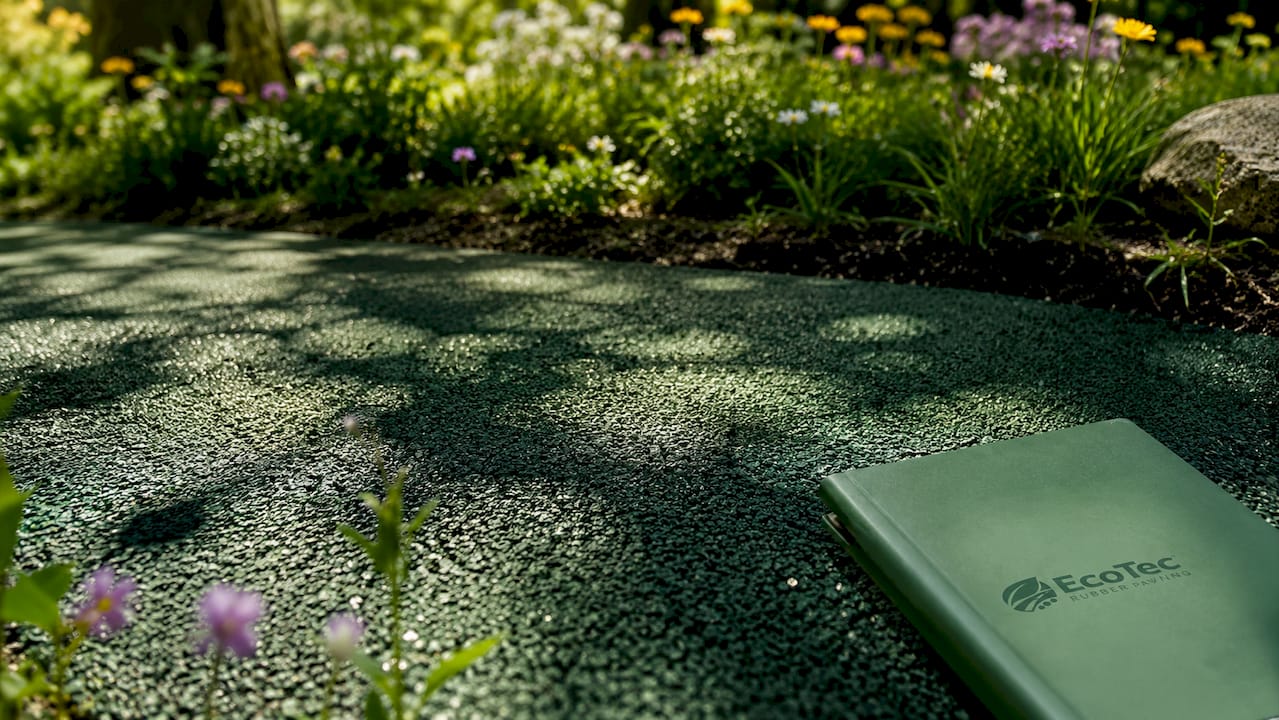
Recycled rubber paving is the standout option for clients who need durability, ADA compliance, and a surface that holds up under Florida's heat and rain cycles. Ecotecrubber's Rubberway® system uses recycled rubber paving from post-consumer tires, diverting waste from landfills while producing a surface that resists cracking, absorbs impact, and drains effectively. It suits residential driveways, commercial walkways, and municipal paths equally well.
- Pervious concrete: best for large commercial lots and municipal parking
- Interlocking permeable pavers: best for residential driveways and plazas
- Turfstone or plastic grid systems: best for overflow parking and fire access lanes
- Recycled rubber paving (Rubberway®): best for walkways, pool decks, and ADA-required surfaces
Pro Tip: When a client asks about aesthetics, lead with recycled rubber paving. It comes in multiple colors and textures, and it looks finished in a way that gravel or exposed aggregate systems do not.
Integrated eco-friendly paving systems can also complement conventional asphalt resurfacing for commercial sites with mixed traffic and budget requirements. That flexibility makes sustainable paving services easier to sell across a wide range of projects.
What site assessment steps must come before installation?
Site assessment is not optional. Incorrect site preparation leads to ponding and system failure, which destroys client trust and requires costly remediation. Get the groundwork right before any material goes down.
-
Run a soil percolation test. Dig a test hole to the depth of your planned sub-base, fill it with water, and measure how fast it drains. Soils with very low infiltration rates, such as heavy clay, may need an underdrain system or a different material specification entirely.
-
Assess traffic load and use type. A residential walkway and a commercial delivery zone have completely different structural requirements. Vehicle-rated areas require paver thickness of 2 3/8 inches over 8 to 12 inches of compacted aggregate. Pedestrian paths need only 1.5 to 2 inches of paver thickness. Specifying the wrong thickness causes premature failure.
-
Map existing drainage infrastructure. Identify where water currently flows on the site. A permeable system that drains into a clogged or undersized storm pipe creates a new problem instead of solving the old one. Plan the integration before excavation starts.
-
Evaluate the sub-base soil stability. Soft or organic soils need geotextile fabric between the native soil and the aggregate sub-base. Skipping this step allows fine particles to migrate upward and clog the system over time.
-
Document slope and grading. Permeable systems work best on relatively flat surfaces or gentle slopes. Steep grades accelerate surface flow and reduce infiltration time, which limits the system's effectiveness.
Pro Tip: Take photos and written notes during every site assessment. Clients who later question why you specified a certain sub-base depth or drainage detail will appreciate the documentation, and it protects you professionally.
How to install green paving systems for lasting results
Proper installation is where paving services for environmentally conscious clients either succeed or fail. The material choice matters, but execution determines longevity.
Excavation and sub-base preparation
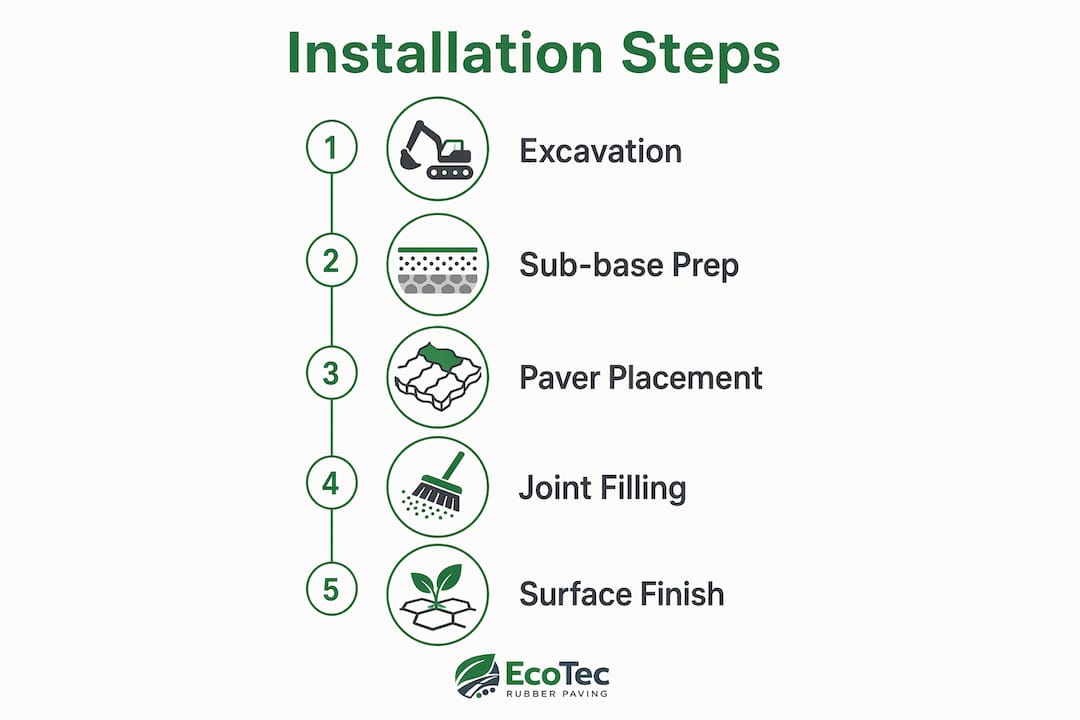
Excavate to the depth required by your traffic load calculation. Remove all organic material, roots, and soft spots. Compact the native soil to a stable bearing capacity before placing any aggregate. Lay geotextile fabric over the compacted soil to separate it from the aggregate layer. Place and compact the aggregate sub-base in lifts of no more than 4 inches at a time. Rushing this step causes uneven settling and surface cracking within the first year.
Paver placement and joint filling
Set pavers on a bedding layer of clean, washed aggregate, not sand. Sand migrates into the drainage layer and reduces permeability quickly. Using improper aggregates accelerates sediment buildup and compromises drainage. Fill joints with washed, high-porosity stone chips sized to match the joint width. Compact the surface with a plate compactor after filling joints, then top off the joints and compact again.
Common installation mistakes to avoid
- Using fine sand as bedding or joint filler (clogs drainage fast)
- Skipping geotextile fabric on clay or silty soils
- Placing the full sub-base depth in one lift without compacting between lifts
- Allowing construction debris or topsoil to wash onto the finished surface before it is fully set
- Failing to protect the surface during the rest of the construction project
| Installation step | Common mistake | Correct practice |
|---|---|---|
| Sub-base compaction | Single-lift placement | Compact in 4-inch lifts |
| Bedding layer | Fine sand | Washed clean aggregate |
| Joint filling | Silty or fine material | High-porosity stone chips |
| Surface protection | Left exposed during construction | Cover until project completion |
For a detailed walkthrough of current standards, the 2026 installation best practices guide covers sub-base engineering and material specifications in depth.
How do you address client concerns about durability and cost?
Clients push back on environmentally friendly paving for two reasons: they think it costs more and they think it won't last. Both objections have direct, factual answers.
On durability, modern recycled rubber and permeable paving systems often outlast standard asphalt by reducing water and heat stress on the surface. Traditional asphalt absorbs heat and expands, then contracts overnight, which causes cracking. Permeable and rubber surfaces flex or drain instead of cracking. That is a concrete performance advantage, not a marketing claim.
On cost, the upfront price of permeable or recycled rubber paving is often higher than basic asphalt. Sustainable paving reduces long-term expenses by eliminating or reducing the need for French drains, detention ponds, and oversized storm pipes. For commercial and municipal clients, those infrastructure savings can be substantial over a 10 to 20 year project horizon.
"The real value of green paving lies in stormwater management best practices that filter pollution and protect local ecosystems." — Angi, Environmental Benefits of Permeable Pavers
On environmental compliance, green paving qualifies as a Best Management Practice under EPA stormwater regulations. Municipal clients value this because it helps them meet permit requirements. Commercial clients value it because it supports LEED certification credits. Both outcomes reduce regulatory risk and can increase property value.
- Recycled rubber paving resists cracking under heat and freeze-thaw cycles
- Permeable systems reduce or eliminate separate drainage infrastructure costs
- EPA BMP status supports stormwater permit compliance for municipalities
- LEED credit eligibility adds value for commercial developers and architects
Pro Tip: When presenting cost to a commercial client, build a simple side-by-side comparison that includes drainage infrastructure costs for the traditional option. The total project cost gap narrows significantly, and sometimes the green option wins outright.
Key Takeaways
Eco-friendly paving succeeds when you match the right material to the site conditions, engineer the sub-base correctly, and communicate the long-term value clearly to clients.
| Point | Details |
|---|---|
| Match material to use case | Recycled rubber suits ADA paths; permeable pavers suit parking and driveways. |
| Test soil before specifying | Percolation testing prevents ponding and system failure after installation. |
| Engineer the sub-base first | Compact aggregate in 4-inch lifts and use geotextile fabric on clay soils. |
| Use correct joint filler | Washed, high-porosity stone chips maintain drainage; fine sand clogs it fast. |
| Quantify long-term savings | Reduced drainage infrastructure costs offset higher upfront material prices. |
What I've learned from years of green paving projects
The biggest mistake I see is treating green paving as a product swap. Contractors pull out asphalt, drop in permeable pavers, and wonder why the system ponds within a season. The surface material is only one part of the system. The sub-base, the soil, the drainage integration, and the joint filler all have to work together. When one element is wrong, the whole system underperforms.
Client expectations have shifted noticeably in the past few years. Homeowners now ask about stormwater management by name. Municipal engineers reference EPA BMP classifications in their RFPs. Commercial developers ask about LEED credits before they ask about price. That shift means the professionals who understand stormwater management paving at a technical level have a real advantage in the market.
My honest advice: invest time in understanding soil science and drainage design, not just paving materials. The contractors who win the best projects are the ones who can walk a site, read the soil, and explain the full system to a client in plain language. That combination of technical knowledge and clear communication is what separates a green paving specialist from someone who just installs a different product.
Stay current on EPA guidance and LEED updates. Both programs revise their standards, and a specification that earned credits two years ago may need adjustment today. Continuing education in this space is not optional if you want to serve clients at a high level.
— Roger
Ecotecrubber's Rubberway® system for sustainable paving
Florida's heat, rain, and humidity demand more from a paving surface than most climates do. Ecotecrubber installs the Rubberway® rubber paving system using recycled rubber from post-consumer tires, producing surfaces that drain effectively, resist cracking, and meet ADA compliance standards for public and commercial use.
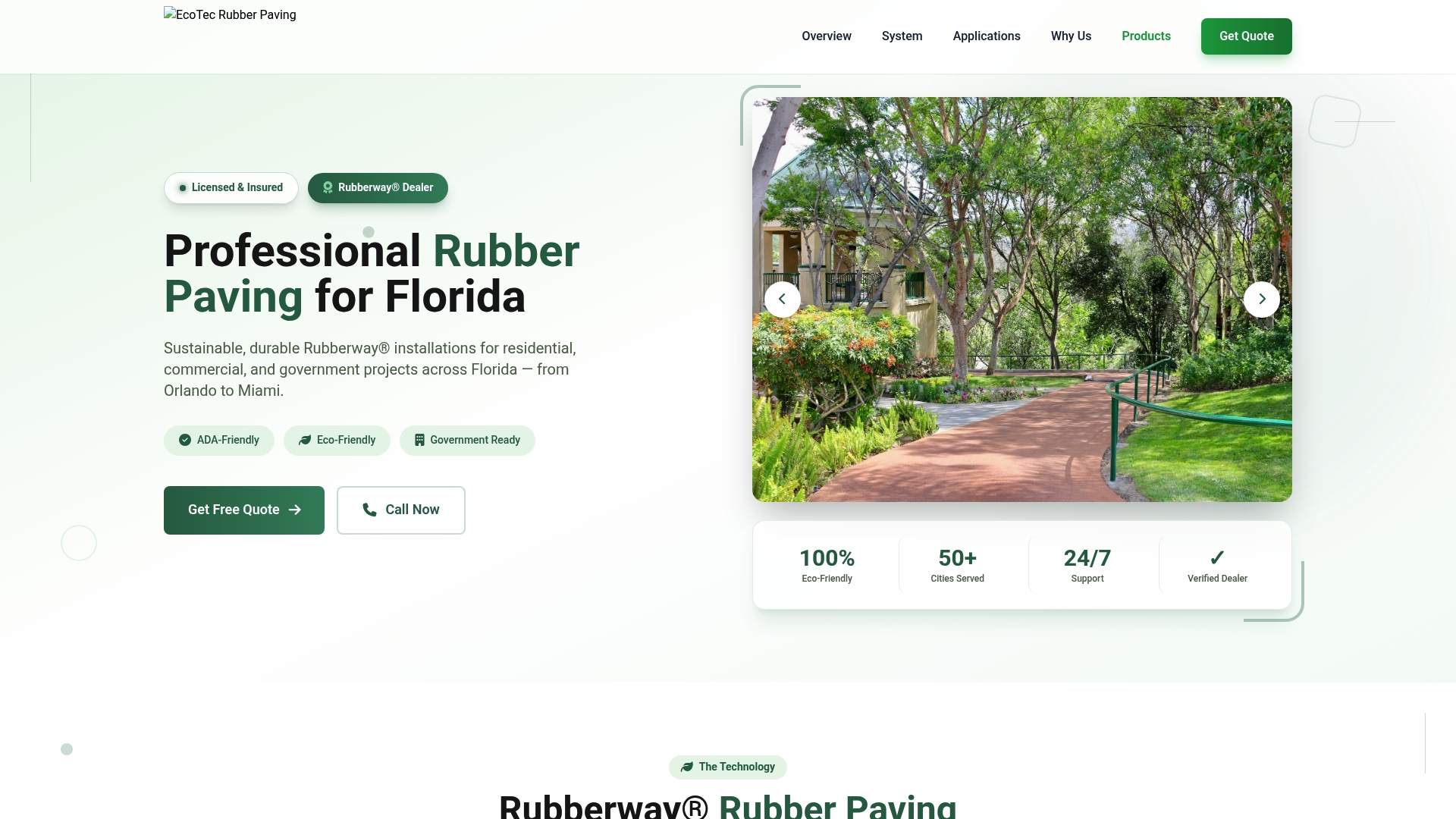
Ecotecrubber serves homeowners, businesses, and municipalities across Florida with licensed and insured installations focused entirely on rubber paving. Whether you need a residential pool deck, a commercial walkway, or a municipal path that meets ADA and stormwater requirements, Ecotecrubber's professional team can assess your site and recommend the right Rubberway® solution. Contact Ecotecrubber to request a consultation or quote for your next project.
FAQ
What are green paving services?
Green paving services provide permeable or recycled material surfaces that reduce stormwater runoff, lower heat absorption, and support environmental compliance goals. Common options include permeable pavers, pervious concrete, and recycled rubber paving systems like Rubberway®.
How long does eco-friendly paving last?
Recycled rubber and permeable paving systems often outlast standard asphalt because they reduce water and heat stress on the surface. Proper sub-base engineering and correct joint filler materials are the main factors that determine long-term performance.
Is green paving more expensive than traditional asphalt?
Upfront material costs are often higher, but sustainable paving reduces long-term expenses by eliminating or reducing drainage infrastructure like French drains and detention ponds. The total project cost gap is smaller than most clients expect.
Does permeable paving qualify for LEED credits?
Green paving qualifies as an EPA Best Management Practice and supports LEED certification credits related to stormwater management and sustainable site development. Municipal and commercial clients can use this status to meet permit requirements and green building goals.
What maintenance does permeable paving require?
Permeable paving needs periodic vacuuming or pressure washing to clear sediment from joints and surface voids. Using the correct high-porosity joint filler during installation significantly extends the time between maintenance cycles.