
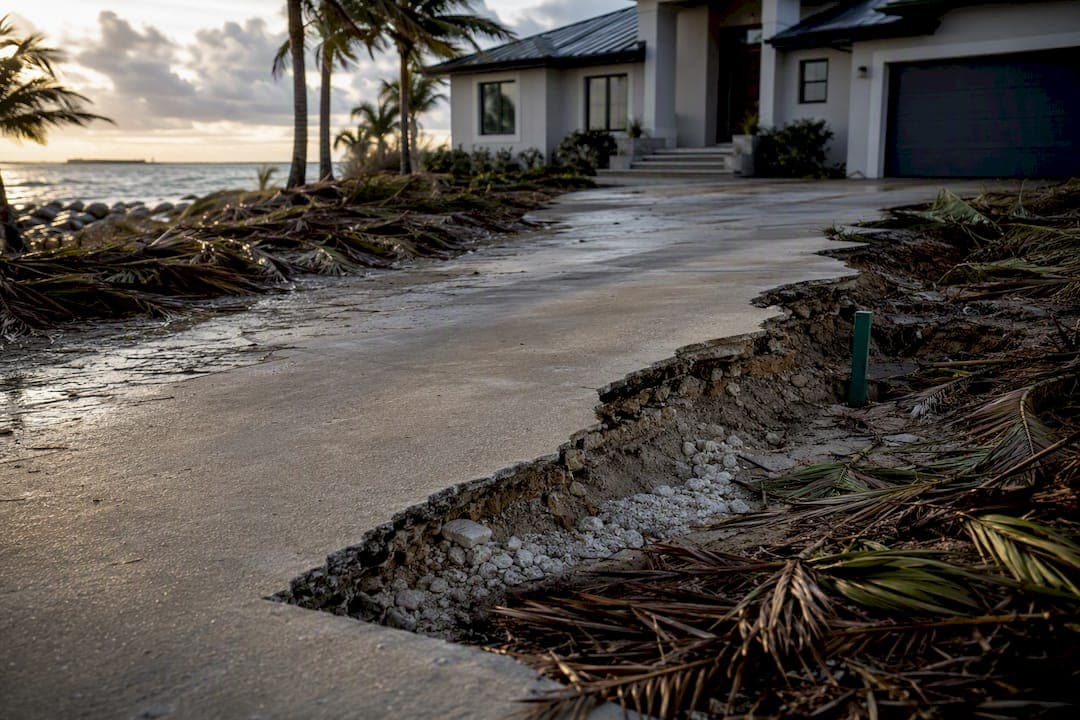
Check for standing water, downed lines, and voids under the slab before you step anywhere near the driveway, then photograph every crack, pothole, and washed-out edge for your insurance file. If the sub-base has shifted or washed away, you need a licensed contractor. If damage is limited to surface cracking, temporary patches can hold until you decide between resurfacing and full replacement.
TL;DR:
- Repair or patch isolated surface cracks only if the underlying sub-base remains stable and shows no signs of washout or erosion.
- Address widespread cracking, settlement, or evidence of base failure with resurfacing or full replacement to ensure long-term stability.
- Prioritize drainage improvements by regrading the site, adding swales or underdrains, and reinforcing weak sub-bases before resurfacing or replacing asphalt or concrete.
- Use materials like reinforced concrete or rubber overlays only if the existing base is intact, properly inspected, and meets stability criteria.
- Document storm damage thoroughly with photos, contractor estimates, and receipts to support insurance claims and avoid unnecessary repairs.
Table of Contents
- How Do I Inspect My Driveway Safely After a Hurricane?
- What Temporary Fixes Can Stop Further Driveway Damage?
- Should I Patch, Resurface, or Replace My Driveway?
- Which Materials Hold Up Best After Storm Damage?
- How Do You Fix Drainage So Resurfacing Actually Lasts?
- What Insurance and FEMA Help Is Available for Driveway Damage?
- What Should I Ask Before Hiring a Driveway Contractor?
- How Long Does Driveway Repair Take and What Does It Cost?
- Is Rubberway® a Good Fit for Your Storm-Damaged Driveway?
- Focus on the Base, Not the Surface
- Get a Rubberway® Inspection From Ecotecrubber
- Sources
- FAQ
How Do I Inspect My Driveway Safely After a Hurricane?
Walk the perimeter before you walk the surface. Standing water can hide downed power lines, and saturated ground near the foundation sometimes conceals voids that will not support your weight. Confirm utilities are off or verified safe, and keep kids and pets away from any area with pooling water until you have checked it yourself in daylight.
Once it is safe, work the driveway in a grid pattern rather than eyeballing it from the porch. You are looking for patterns, not just isolated flaws, because patterns tell you whether this is cosmetic or structural.
- Cracking that follows straight lines versus spiderweb patterns (straight lines often trace rebar or old joints; webbing usually means surface fatigue)
- Settlement or dips where the slab or asphalt has sunk relative to the surrounding grade
- Potholes, especially ones that keep growing after a rain
- Soft or spongy spots that flex slightly under foot pressure
- Washed-out edges where soil has eroded away from the pavement's border
- Exposed rebar, wire mesh, or geotextile fabric poking through the surface
- Oil, fuel, or chemical stains from floated containers or damaged vehicles
Hurricane-driven driveway failures generally come down to three mechanisms working together: salt-laden water degrading the surface material, hydraulic scouring that erodes the sub-base out from under the pavement, and buoyancy effects from rapid soil saturation that shift materials upward or sideways. That is why a driveway that looks fine on top can still be failing underneath.
Photograph everything with a consistent method: wide shots that show the whole driveway for scale, close-ups of individual cracks with a tape measure or coin in frame, and a few shots with a timestamp visible on your phone. Contractors and insurance adjusters both work faster with organized photos, and documenting damage early with photos and contractor estimates tends to speed up claims.
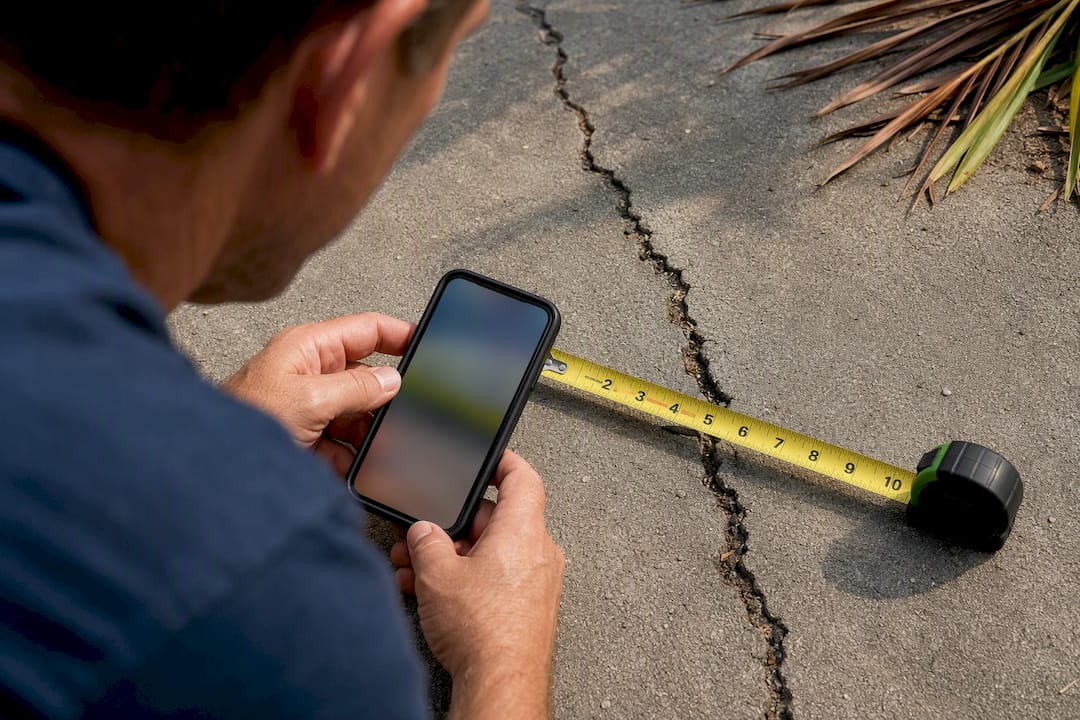
Pro Tip: Stop your inspection immediately and call a professional if you see a visible void under a slab edge, exposed or damaged utility lines, or active erosion still moving soil during your walkthrough. Those conditions can worsen in hours, not days.
What Temporary Fixes Can Stop Further Driveway Damage?
You do not need a contractor on-site to stop a bad situation from getting worse. A few inexpensive moves buy you time.
- Shore up washed-out edges with sandbags or compacted gravel, and lay an erosion-control blanket over exposed soil to keep the next rain from carrying more of it away.
- Fill small potholes with cold patch asphalt for a quick fix, understanding it is a stopgap, not a repair. It softens in heat and will not bond the way hot-mix asphalt does.
- Use a concrete repair compound on isolated surface cracks in slabs, but skip it if the crack keeps widening between checks.
- Clear leaves and debris from any drains or channels near the driveway so water has somewhere to go besides pooling against the pavement.
- Temporarily redirect downspouts away from the driveway edge, and cut a shallow overflow channel if water is pooling against the garage or house.
These fixes protect what you have. They do not fix what is broken. A cold patch over a pothole that keeps reopening usually means the sub-base underneath is still compromised, and covering it up without addressing that just delays the real repair while masking the evidence you need for a claim. If a "fixed" spot fails again within a week or two, treat that as a signal, not a coincidence.
Should I Patch, Resurface, or Replace My Driveway?
The rule of thumb is simple: isolated surface issues call for a patch, while widespread cracking, settlement, or sub-base loss calls for resurfacing or replacement. The hard part is figuring out which category you are actually in.
Start by probing the suspect areas. Push a screwdriver or thin rod into cracks and soft spots. If it sinks easily or you feel a hollow give, the material underneath has likely washed out or saturated to the point of losing load-bearing capacity. For anything beyond a few isolated spots, a contractor can run a more formal assessment, sometimes with ground-penetrating radar or core sampling, to check sub-base integrity before recommending a fix.
Academic reviews of pavement failure after flooding point to washout, subgrade saturation, and scouring as the primary failure modes, and they consistently recommend stabilization and drainage correction before any resurfacing work begins. Skip that step and you are gambling with the next storm.
- Patch: a handful of isolated cracks or one small pothole, with a solid, unmoving base underneath
- Resurface: widespread surface cracking or a worn-out top layer sitting on a base that still tests solid
- Replace: sub-base washout, repeated settlement, standing water that never drains, or a base that fails a probe test in multiple spots
Resurfacing over a compromised base is the single most common mistake homeowners make after a storm. It looks great for one season and fails again the next time heavy rain saturates the ground underneath, because the new surface was never the problem. When the base itself has shifted or eroded, full removal and rebuild is often the only option that actually holds.
Which Materials Hold Up Best After Storm Damage?
Your material choice matters less than your base prep, but it still matters. Here is how the main options behave once floodwater and salt have had their say.
Asphalt goes down fast and costs less upfront, which makes it tempting for quick turnarounds. It is also the most vulnerable to washout and oil contamination if the base was not properly compacted before flooding, and it softens faster than concrete under Florida heat once it starts to degrade.
Reinforced concrete, particularly continuously reinforced concrete pavement, tends to hold up better through repeated flood events when detailed correctly. After Hurricane Harvey, CRCP roadways showed notably strong resilience compared with other pavement types, which is a useful data point for anyone weighing higher upfront cost against lower long-term maintenance.
Permeable pavers give you real stormwater benefits by letting water infiltrate on-site instead of sheeting toward your garage. The catch: permeable systems need underdrains or detention when groundwater sits high, which describes a lot of coastal Florida lots. They also need regular maintenance, including vacuuming and joint replenishment, to keep infiltration working.
Rubber overlays, like the Rubberway® system, resurface existing sound concrete with a 1.5 to 2 inch layer made from recycled tire material. It improves drainage and crack resistance without a full tear-out, which matters when your base tested solid but your surface did not.
Every one of these options depends on the same groundwork: proper base compaction, edge restraints to prevent the erosion that started this whole problem, and enough cure time before the surface sees regular traffic. Skimp on compaction and even the best material on the list will fail early.
How Do You Fix Drainage So Resurfacing Actually Lasts?
Resilient hardscape design in Florida follows three principles: resist, drain, and recover. Resist means choosing materials and reinforcement that can take a hit. Drain means water has a clear, engineered path away from your pavement instead of pooling against it. Recover means building in a way that lets you inspect and repair quickly rather than tearing everything out.
Most driveway failures trace back to a drainage problem nobody addressed the first time. Homeowners tend to treat the driveway as an isolated slab, but it is really part of a site-wide drainage system that includes your yard grading, gutters, and any swales nearby. Fix the driveway without fixing that system and you are just waiting for the next storm to prove it.
Common technical fixes contractors use to get ahead of this:
- Regrading the surrounding soil so water flows away from the pavement, not toward it
- Adding swales or shallow drainage channels to redirect runoff before it reaches the slab
- Installing underdrains beneath permeable systems in high-groundwater areas
- Using geogrid stabilization to reinforce a weak or saturated sub-base
- Adding edge restraints to stop future erosion at the pavement's border
Resilient Florida hardscape guidance puts grading and drainage ahead of nearly every cosmetic fix, and for good reason: it is usually cheaper than a retrofit and prevents the exact failure you just went through. Regrading or adding drainage features sometimes triggers local permit requirements, so check with your municipality before work starts, particularly if the changes affect runoff onto a neighbor's property.
Pro Tip: Ask any contractor bidding on drainage work to walk your property line and show you where water currently exits your lot. If they can't answer that question, they haven't actually assessed your drainage problem.
What Insurance and FEMA Help Is Available for Driveway Damage?
Flood coverage and wind coverage are not the same policy, and that distinction decides whether your driveway damage gets covered at all. Wind-driven debris impact might fall under a standard homeowner's policy, while washout from storm surge or flooding typically falls under a separate flood policy, if you have one.
For homeowners without flood coverage or facing a gap, FEMA fact sheets outline eligibility for privately owned roads, bridges, and driveways after a federally declared disaster. Eligibility and documentation requirements vary by disaster declaration, so check the current guidance for your specific storm event rather than assuming last year's rules apply.
Documentation makes or breaks these claims:
- Timestamped photos from multiple angles, taken before you touch anything
- Written contractor estimates that itemize base repair separately from surface work
- Receipts for any temporary materials you purchased (sandbags, cold patch, gravel)
- A simple written timeline of when the damage occurred and when you reported it
Keep temporary repairs cheap and well-documented, and hold off on permanent, expensive work until your claim is filed and photographed. Adjusters and FEMA reviewers both want to see the damage as it happened, not the driveway after you already fixed it.
What Should I Ask Before Hiring a Driveway Contractor?
A rushed hire after a hurricane is how homeowners end up paying twice. Slow down enough to check these before signing anything.
- Verify the contractor's license and insurance directly with your state licensing board, not just by taking their word for it.
- Ask whether they pull permits for grading or drainage changes, and confirm they will handle that paperwork rather than leaving it to you.
- Request references and photos from similar storm-damage jobs, ideally ones involving base repair, not just resurfacing.
- Insist on a written scope that separates sub-base and drainage repair from the surface work, with pricing broken out for each.
- Ask about warranty terms and what maintenance you are responsible for afterward to keep that warranty valid.
Red flags worth walking away from: refusal to pull permits, a scope of work vague enough to mean anything, cash-only payment demands, and bids dramatically lower than every other estimate you got. That last one especially. A contractor skipping base repair to hit a low number is setting you up for the exact failure you are trying to avoid.
How Long Does Driveway Repair Take and What Does It Cost?
Timelines vary more by scope than by material. Cold patch cures fast, often within hours, but it is a temporary fix, not a real repair. Hot-mix asphalt typically needs a day or two before light traffic and roughly a week before full curing. Concrete needs the longest window, often a week before foot traffic and closer to a month for full strength, though it can carry vehicle weight sooner depending on the mix. Permeable pavers and rubber overlays like Rubberway® generally return to service faster than poured concrete since they involve less curing and more mechanical installation.
Cost per square foot depends heavily on site access, how much base repair is needed, and whether permitting adds time and fees. A driveway with intact sub-base and simple resurfacing needs will cost meaningfully less than one requiring full excavation, geogrid stabilization, and new drainage infrastructure.
Three things reliably stretch a schedule beyond the initial estimate:
- Permit review times, which spike after a regional disaster when every municipality is backlogged
- Weather delays, since concrete and asphalt both need dry conditions to cure properly
- Subcontracted drainage work, which often has to happen before the surface contractor can even start
Is Rubberway® a Good Fit for Your Storm-Damaged Driveway?
Rubberway® is a 1.5 to 2 inch overlay made from recycled rubber materials that Ecotecrubber installs over existing concrete driveways in Florida. It improves drainage and crack resistance without requiring a full tear-out, and it uses recycled tire material instead of virgin asphalt or aggregate.
The overlay works best under specific conditions, which is why it is not a universal answer to every storm-damaged driveway:
- The existing concrete base is intact and passed a solid inspection, with no washout or settlement underneath
- You want improved drainage and salt resistance without full replacement cost
- You are looking for a long-life, lower-maintenance surface rather than another material that will need resurfacing again in a few years
- ADA compliance matters for your property, whether residential or a shared community space
Before choosing any installer, including Ecotecrubber, ask about base inspection findings, warranty terms, ongoing maintenance needs, and expected lifespan for your specific site conditions. A rubber overlay resurfacing job only performs as well as the concrete underneath it, so that inspection step is not optional.
Focus on the Base, Not the Surface
Resist, drain, recover is not a marketing phrase. It is the actual order of operations that separates a driveway repair that lasts from one you will be redoing after the next named storm. Stage your repairs, keep every receipt and photo, and get at least two quotes that price base work and surface work as separate line items. A contractor who cannot break those apart has not actually diagnosed your driveway.
— Roger
Get a Rubberway® Inspection From Ecotecrubber
If your concrete base survived the storm but the surface didn't, Ecotecrubber gives you a repair path that skips full replacement costs while still fixing the drainage and crack issues the hurricane exposed. Unlike a full tear-out and rebuild, a Rubberway® overlay resurfaces sound concrete in place using recycled rubber material, so you are not paying for demolition you don't need.
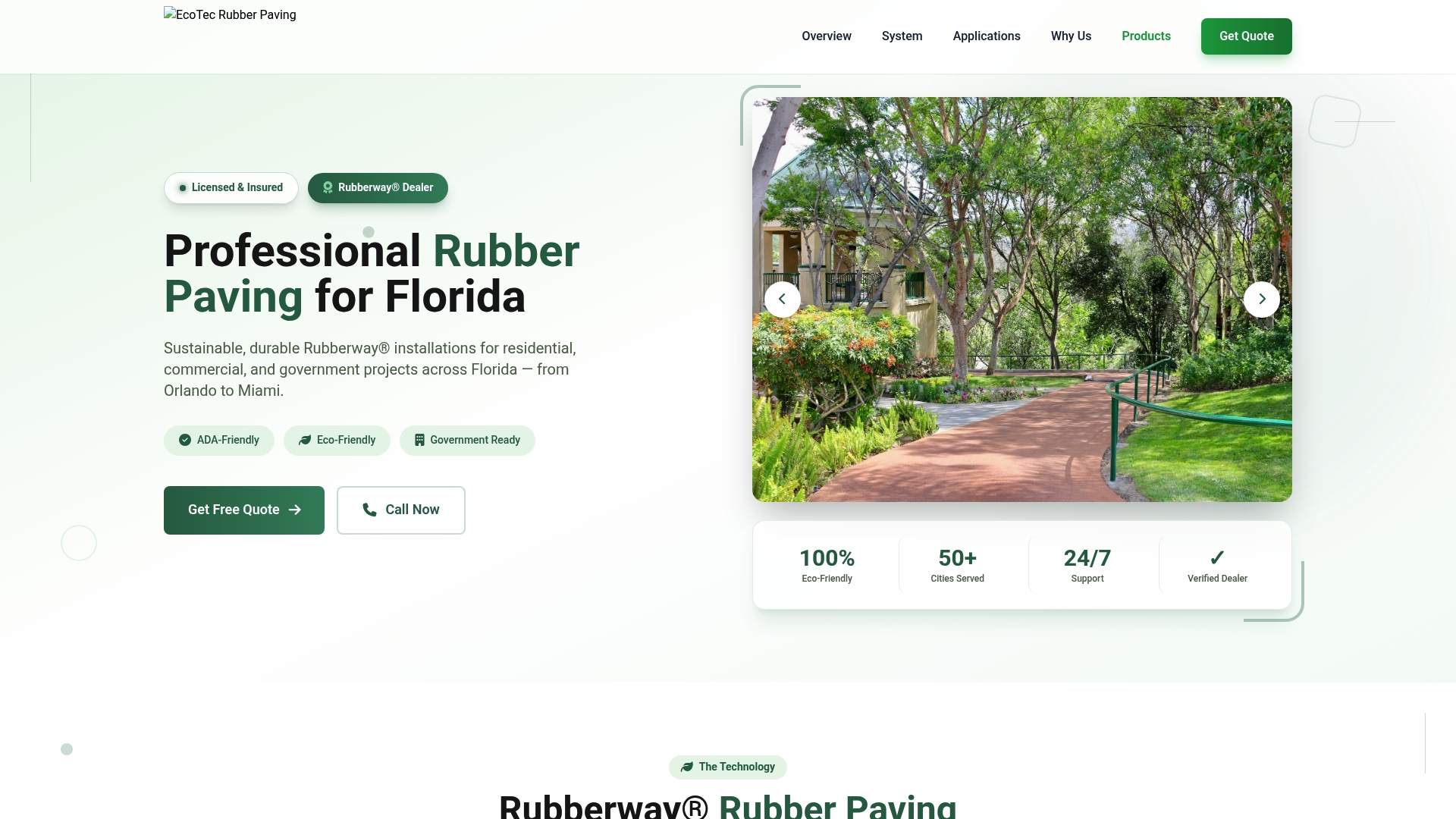
The company serves Florida homeowners with installation crews who specialize in rubber paving, which means your project is handled by specialists rather than a general contractor juggling five trades. The next step is straightforward: request an inspection that checks your existing base before anyone quotes a price, so you know upfront whether Rubberway® is the right fit for your driveway or whether base repair needs to come first. Start at Ecotecrubber's main site to schedule that inspection, or review overlay specs and color options on the Rubberway® products page before you call.
Sources
- Federal Assistance for Privately-Owned Roads, Bridges, and Driveways — FEMA
- How do permeable pavers help manage stormwater in Florida yards? — Cultivating Flora
- Enhancement of roadway pavement resilience to flooding: impact assessment and mitigation strategies — ScienceDirect
FAQ
What is the cheapest way to fix a cracked concrete driveway?
Concrete repair compound or cold patch on isolated, non-structural cracks is the cheapest option, but it only works when the sub-base underneath is still solid and stable.
What happens if your house gets damaged in a hurricane?
Homeowners typically file claims through their insurance carrier first, separating wind damage from flood damage since these usually fall under different policies, and may qualify for FEMA assistance for uninsured losses after a federally declared disaster.
What happens if my car gets destroyed in a hurricane?
Comprehensive auto insurance coverage, not standard liability coverage, typically pays for flood or storm damage to a vehicle, so check whether your policy includes comprehensive coverage before assuming you are protected.
How do I know if my driveway needs resurfacing or full replacement?
If a probe test shows the sub-base is still solid and damage is limited to the surface, resurfacing works; if the base has washed out, settled, or shows repeated failure after patching, full replacement is the durable option.
Is a rubber overlay a good option after hurricane damage?
Rubberway® works well when the existing concrete base is intact and you want improved drainage and crack resistance without a full replacement, though any installer should inspect the base first.