
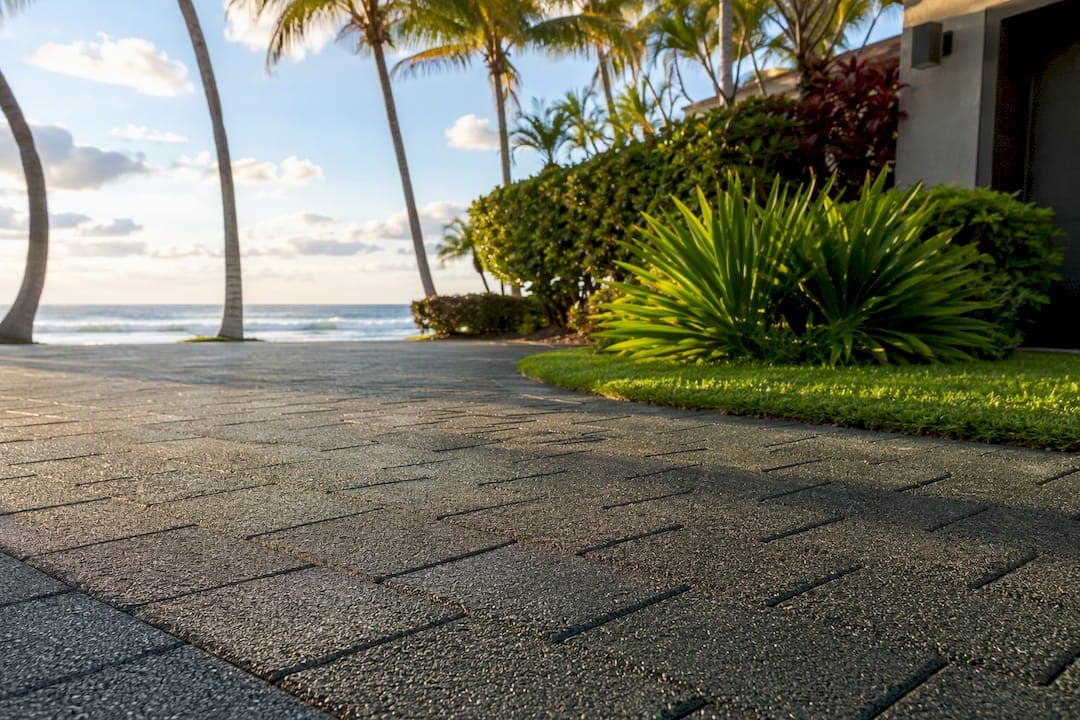
For most U.S. coastal properties, the strongest driveway choices are permeable interlocking pavers, air-entrained low-permeability concrete with corrosion-resistant reinforcement, resin-bound gravel, and Rubberway® rubber paving. Each handles salt exposure and drainage differently.
- Pavers: best repairability and drainage, moderate cost
- Air-entrained concrete: strong durability if the mix and rebar are specified correctly
- Resin-bound gravel: clean look, good permeability, higher upfront cost
- Rubberway® rubber paving: high permeability, salt resistance, and recycled content, with ADA-compliant surfacing available through Ecotecrubber
The right pick depends less on personal taste and more on your soil, your slope, and how close you sit to salt spray. The sections below walk through when each option actually earns its place in your driveway.
Key Takeaways
Coastal driveway durability depends more on base preparation and drainage design than on which surface material you ultimately choose.
| Point | Details |
|---|---|
| Prioritize permeability | Materials that let water drain through, like pavers and rubber paving, resist salt buildup better than solid surfaces. |
| Get the base right | Compact 8 to 12 inches of aggregate with a geotextile membrane before any surface goes down. |
| Use corrosion-resistant hardware | Specify epoxy-coated rebar and 316 stainless anchors anywhere salt spray reaches the driveway. |
| Budget for maintenance | Reseal concrete and resin surfaces every two to three years and rinse salt buildup after storms. |
| Consider Rubberway® for coastal sites | Ecotecrubber installs this permeable, salt-resistant, ADA-compliant rubber paving system across Florida. |
Table of Contents
- Coastal Driveway Material Options Compared by Performance
- Salt Resistance, Drainage, and Cost: How the Options Stack Up
- Site Prep That Determines Whether Your Driveway Survives
- Keeping a Coastal Driveway From Aging Before Its Time
- Why Rubberway® Fits the Coastal Homeowner's Checklist
- What Shifting Sand Does to a Driveway Over Time
- Getting Your Driveway Through Storm Season Intact
- The Environmental Trade-Offs Behind Each Material
- The One Factor Everyone Underestimates
- Get a Rubberway® Driveway Built for Florida's Coastline
- Frequently Asked Questions
- Sources
Coastal Driveway Material Options Compared by Performance
Picking a coastal driveway material comes down to matching the surface to your site, not chasing the trendiest option on a showroom sample board. Here's how the major contenders actually perform once salt, humidity, and sandy subgrades get involved.
1. Interlocking and permeable concrete pavers
Pavers let water pass between the units instead of pooling on top, which matters enormously near saltwater because standing water concentrates salt residue as it evaporates. ICPI project profiles document strong performance in coastal stormwater conditions when installers use proper base depth and the right joint material. Individual pavers can be lifted and replaced if one cracks or stains, so repairs don't mean repouring the whole driveway. Expect a base depth in the typical recommended range on sandy soils, with polymeric sand or open-graded aggregate in the joints depending on how permeable you want the system.
2. Air-entrained, low-permeability concrete
Standard concrete is a poor fit near the ocean because salt water penetrates its pores and corrodes any embedded steel. Engineered coastal mixes fix this with a low water-cement ratio, supplementary cementitious materials like fly ash or silica fume, and air entrainment that resists freeze-thaw and salt scaling. Pair that mix with epoxy-coated or stainless rebar, and you get a slab that can outlast a standard driveway pour by years. Plan to reseal periodically to keep the surface from absorbing moisture.
3. Resin-bound gravel
Resin-bound surfaces use a non-porous resin binder to lock aggregate in place, creating a smooth, seamless look with good UV and salt resistance. Some systems use an open-graded structure underneath for drainage, while fully bound versions need separate drainage planning. Costs run higher than gravel or asphalt, but the finish holds up well in front driveways.
4. Polymer-modified asphalt
Standard asphalt gets brittle and cracks under intense coastal UV and heat cycling. Polymer additives improve flexibility and salt resistance, extending the interval between reseals, though periodic resealing is still recommended in harsh salt-spray zones.
5. Natural stone and porcelain slabs
Dense, non-porous stones like granite resist salt penetration well, but installation is labor-intensive and costs run at the top of the range. Porcelain pavers offer similar salt resistance with a lighter material, though sourcing and installer familiarity vary by region.
6. Crushed shell and gravel
Shell driveways are a coastal tradition for good reason. They drain fast and cost little upfront. This Old House notes they need periodic replenishment and more upkeep than hard surfaces, which makes them better suited to secondary or informal drives than a primary daily-use entrance.
7. Rubberway® rubber paving
Built from recycled tire material, Rubberway® combines permeability with impact resistance and salt tolerance, and it comes ADA-compliant out of the installation. Ecotecrubber installs these systems across Florida for homeowners who want a driveway that drains fast and doesn't demand a resealing schedule.
Pro Tip: If your driveway sits within a few hundred feet of open water, prioritize permeability over pure hardness. A material that lets salt water drain through beats one that just resists it on the surface.
Salt Resistance, Drainage, and Cost: How the Options Stack Up
No single material wins on every metric, so the right call depends on which trade-off matters most for your lot.
- Salt resistance: rubber paving, resin-bound gravel, and dense natural stone lead; standard asphalt and unsealed concrete lag.
- Drainage/permeability: permeable pavers, rubber paving, and open-graded resin systems perform best; poured concrete and shell driveways depend heavily on slope and edge drainage.
- Base sensitivity in sandy soils: pavers and rubber systems tolerate settlement better because units flex individually; monolithic concrete slabs crack when the subgrade shifts unevenly.
- Maintenance: shell needs the most upkeep; sealed concrete and asphalt need periodic resealing; pavers and rubber paving need the least ongoing attention.
- Lifespan: properly specified concrete and pavers can outlast asphalt and shell by a decade or more.
- Cost: shell and gravel sit lowest; natural stone and resin-bound gravel sit highest, with pavers, engineered concrete, and rubber paving in the middle.
Driveway guides focused on coastal conditions consistently point to permeable pavers, resin-bound surfaces, and engineered concrete mixes as the top performers, and base prep is the variable that decides whether any of them lasts. A beachfront lot with direct salt spray needs a higher base spec and corrosion-resistant hardware than a driveway three streets back from the water. If your soil report shows loose, shifting sand or a high water table, bring in a geotechnical consultant before you commit to a material.
Site Prep That Determines Whether Your Driveway Survives
Get the base and drainage right, and almost any surface material listed above will perform reasonably well. Skip it, and even premium materials fail early.
- Compact 8 to 12 inches of aggregate base, increasing depth on very sandy soils and adding geogrid reinforcement where the subgrade is particularly loose, following Florida coastal hardscaping guidance.
- Install a geotextile separation membrane between native sand and the aggregate base to stop sand migration that causes long-term settlement.
- Grade for drainage at a minimum of a quarter inch per foot, with perimeter or underdrains daylighting to an approved outfall in areas with high groundwater or seasonal flooding.
- Specify corrosion-resistant hardware: epoxy-coated rebar for concrete, and 316 stainless anchors or edge restraints anywhere salt spray reaches the surface.
- Pull permits before you start, and hire a licensed, insured installer. Many coastal jurisdictions enforce specific compaction and thickness standards, according to regional Florida guidance.
Pro Tip: Ask any bidding contractor to show you their base depth and geotextile spec in writing before signing. If they can't answer without checking, that's a red flag for coastal work.
Keeping a Coastal Driveway From Aging Before Its Time
Salt and humidity work on a driveway year-round, so maintenance can't be a once-a-decade afterthought.
- Rinse with fresh water after storms and heavy salt-spray periods, and at minimum seasonally, to flush accumulated salt off the surface.
- Reseal concrete and resin surfaces on a two to three year cycle using a breathable sealant. Salt-damage resistant driveway guidance warns against non-breathable sealers that trap moisture and accelerate cracking.
- Maintain permeable joint systems by vacuuming debris and re-sanding paver joints with polymeric sand as needed to keep the drainage working as designed.
- Inspect twice a year for rust staining near hardware, edge loss, and base settlement. Any of these signals is a reason to call a professional before small damage turns into a full repair.
Why Rubberway® Fits the Coastal Homeowner's Checklist
Rubberway® rubber paving checks the boxes coastal homeowners actually care about: it drains fast, tolerates salt exposure, and doesn't demand constant sealing.
- Made from recycled tire material, cutting waste compared to virgin asphalt or concrete
- Porous structure that lets water and salt drain through rather than pool on the surface
- Crack-resistant under heat cycling and ground movement
- ADA-compliant surfacing available for driveways, walkways, and shared community spaces
- A range of color options for matching home exteriors or HOA standards
Rubber paving systems built from recycled tire material offer a balance of permeability, impact resistance, and lower heat retention, making them a practical coastal option where available.
Ecotecrubber installs Rubberway® systems as a licensed and insured contractor across Florida, coordinating base prep, drainage design, and ADA compliance as part of the project. If you're weighing this option, start with a site assessment so a contractor can confirm your soil conditions before quoting a base spec.
What Shifting Sand Does to a Driveway Over Time
Coastal soils move. Loose, sandy subgrades settle unevenly as water tables rise and fall with tides and seasonal rain, and that movement is what cracks concrete slabs and creates dips in asphalt long before the surface material itself wears out. A driveway that looked flawless at installation can develop low spots within a few years if the base wasn't compacted properly or if erosion at the edges goes unaddressed.

Erosion control starts before the driveway goes in. Edge restraints, whether concrete curbing or stainless steel edging, keep the base material from washing out during heavy rain or storm surge. Vegetation buffers along the driveway perimeter, like native dune grasses or salt-tolerant groundcover, slow runoff and hold soil in place better than bare sand ever will. On sloped coastal lots, French drains or swales redirect water away from the base rather than letting it pool and saturate the subgrade.
Segmented systems, pavers and rubber paving among them, tolerate this kind of gradual soil movement far better than a single poured slab. Individual units can shift slightly with the ground and be releveled or replaced without tearing out the whole driveway. That flexibility is one reason permeable systems keep showing up as the preferred choice in erosion-prone coastal zones. A monolithic surface has no such give. Once the subgrade beneath it shifts, cracking is usually a matter of when, not if.
Getting Your Driveway Through Storm Season Intact
Hurricanes and tropical storms test a driveway harder than any other stress it faces. Heavy rainfall, storm surge, and wind-driven debris hit coastal properties directly, and material choice determines how much of that impact turns into a repair bill.
Permeable materials, pavers and rubber paving among them, handle storm rainfall better than solid surfaces because water passes through instead of pooling and undermining the base during a downpour. Solid asphalt or concrete without adequate slope and drainage planning is far more prone to washout at the edges, where fast-moving surface water erodes unprotected base material. This is one reason a quarter-inch-per-foot slope minimum isn't a suggestion. It's the margin between water sheeting off safely and water carving channels through your base.

Recovery matters as much as resistance. After a major storm, segmented systems allow spot repairs. A lifted paver or a section of rubber paving can be reset or replaced without touching the rest of the driveway. A cracked concrete slab usually means a larger patch job or a full repour. If you're in a storm-prone zone, ask your installer how the material you're considering has performed in past hurricane seasons in your specific county, since local drainage codes and typical storm intensity vary meaningfully along the U.S. coastline.
The Environmental Trade-Offs Behind Each Material
Every driveway material carries an environmental footprint, and coastal properties sit closer to the ecosystems that footprint affects most directly.
Impermeable surfaces like standard asphalt and non-porous concrete send stormwater runoff, often carrying oil residue, fertilizer, and road salt, straight into storm drains that empty near shorelines and wetlands. Permeable systems change that equation by letting water filter through the base and into the soil, which reduces the volume of contaminated runoff reaching sensitive coastal waters. That's part of why permeable pavers and engineered permeable systems increasingly show up in municipal stormwater codes for coastal jurisdictions.
Material sourcing matters too. Quarried natural stone and virgin asphalt both carry extraction and production footprints, while crushed shell relies on a finite coastal resource that some regions now regulate to prevent overharvesting. Rubber paving made from recycled tire material takes a waste stream, roughly 300 million scrap tires generated annually in the U.S. by some industry estimates, and converts a portion of it into a functional surface instead of landfill material. For homeowners weighing sustainability alongside performance, that recycled content is a real differentiator, not just a marketing line, since it addresses a specific waste problem that other materials don't touch.
The One Factor Everyone Underestimates
Homeowners spend most of their research time comparing surface materials and almost none comparing base specifications, and that's backward. A mediocre surface on a properly engineered base will usually outlast a premium surface on a shortcut base, especially on the sandy, shifting soils common along U.S. coastlines.
The conventional advice, pick the toughest-looking material and call it done, misses that toughness on paper means nothing if water sits on the surface or the subgrade settles unevenly underneath it. Drainage and compaction are the unglamorous decisions that actually determine whether you're calling a contractor again in five years or twenty.
If I had to prioritize one thing for a reader shortlisting materials right now, it would be this: pick a permeable option first, then worry about finish and color. Rubber paving and interlocking pavers both build that permeability in from the start, which takes one major risk off the table before installation even begins. Everything else, sealant schedules, color matching, edge details, is a refinement on top of that foundational choice, not a substitute for it.
Get a Rubberway® Driveway Built for Florida's Coastline
Ecotecrubber installs Rubberway® rubber paving as a specialist contractor, not a general paving company juggling five surface types. That focus means every crew coordinating your driveway project understands recycled rubber systems specifically: how they drain, how they hold up against salt spray, and how to prep a base that keeps them performing for years.
If you've read this far weighing pavers against concrete against resin gravel, here's the shortcut: Rubberway® gives you the permeability of a paver system, the crack resistance sandy coastal soils demand, and ADA-compliant surfacing, all installed by a licensed and insured team that works exclusively in this material. Homeowners, HOA boards, and commercial property managers across Florida use it for driveways, pool decks, and shared community surfaces where standing water and heat cracking have been recurring problems.
Start by requesting a site assessment through Ecotecrubber or review Rubberway® product specs to see color options and technical details before your consultation.
Frequently Asked Questions
What is the best coastal driveway material for a beachfront lot with direct salt spray? Permeable options like interlocking pavers and Rubberway® rubber paving handle direct salt spray best because they let water drain through instead of concentrating salt on the surface. Pair either with corrosion-resistant hardware for the longest service life.
How deep should the base be for a coastal driveway on sandy soil? Most coastal driveways need 8 to 12 inches of compacted aggregate base, with deeper specs or geogrid reinforcement on especially loose or sandy sites, according to Florida coastal design guidance.
Do I need a permit to install a new driveway near the coast? In most coastal jurisdictions, yes. Local codes often set specific compaction and thickness standards, so check with your municipality and hire a licensed, insured installer who's familiar with those requirements.
How often should a coastal driveway be resealed? Concrete and resin-bound surfaces typically need resealing every two to three years in salt-heavy environments. Rubber paving systems like Rubberway® don't require the same sealing schedule.
Are shell driveways a good option for coastal homes? Shell driveways drain well and cost little upfront, but they need periodic replenishment and more frequent upkeep than paved surfaces, making them better suited to secondary drives than a main entrance.
Sources
- ICPI project profiles
- How to design Florida hardscaping for coastal conditions — Cultivating Flora
- Coastal Regions: Best Driveway Materials for California — Drivewayz USA
- Driveway materials for coastal Florida properties — Asphalt Paving South Florida