
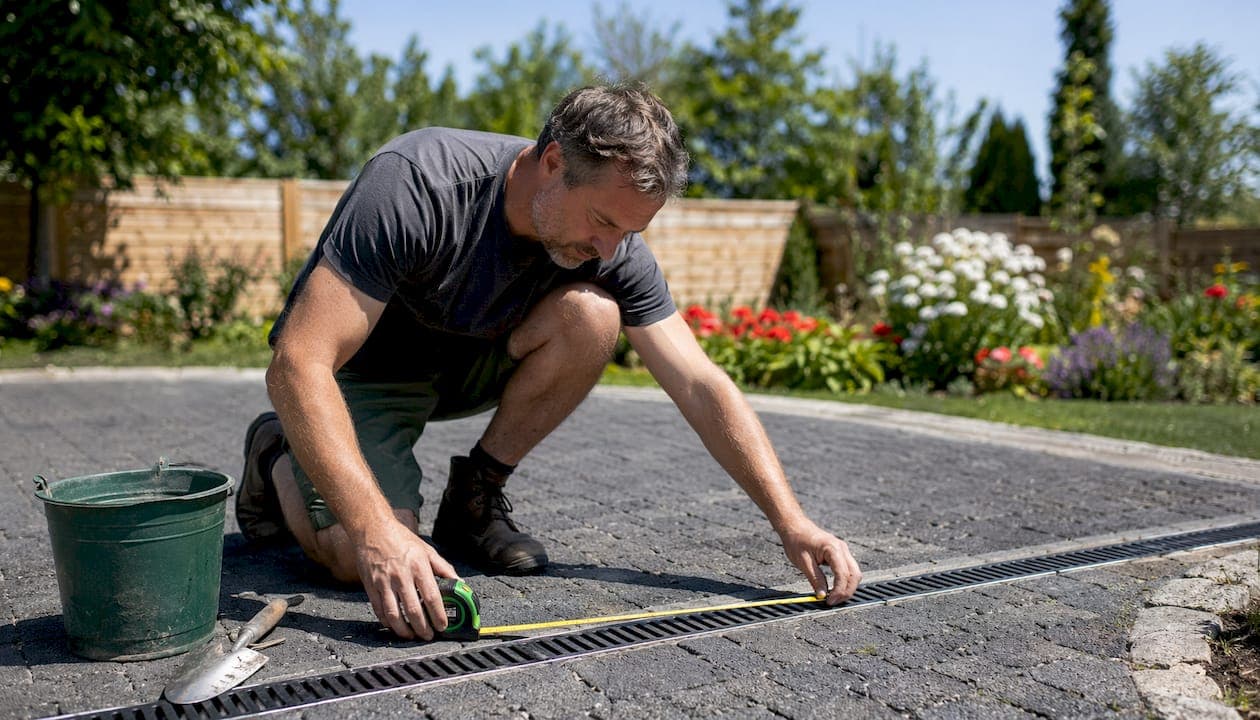
Outdoor paving drainage solutions are engineered systems that manage surface water to prevent pooling, erosion, and long-term structural damage to your property. Poor drainage is the leading cause of premature paving failure, cracked surfaces, and slip hazards on patios, driveways, and walkways. The right system does more than move water away. It protects your investment, meets modern sustainable drainage standards like SuDS (Sustainable Drainage Systems), and keeps your outdoor spaces safe year-round. Whether you manage a single-family home or a commercial property in Florida, choosing the correct drainage approach from the start saves significant repair costs down the road.
1. What are the top outdoor paving drainage solutions to consider?
The most effective outdoor drainage systems fall into five main categories: permeable paving, slot drains, channel drains, gravel borders, and rain gardens. Each solves a different drainage problem, and the best properties often combine two or more methods.
Permeable paving lets water pass directly through the surface and into an engineered sub-base below. This is the most complete solution for properties where runoff volume is high.
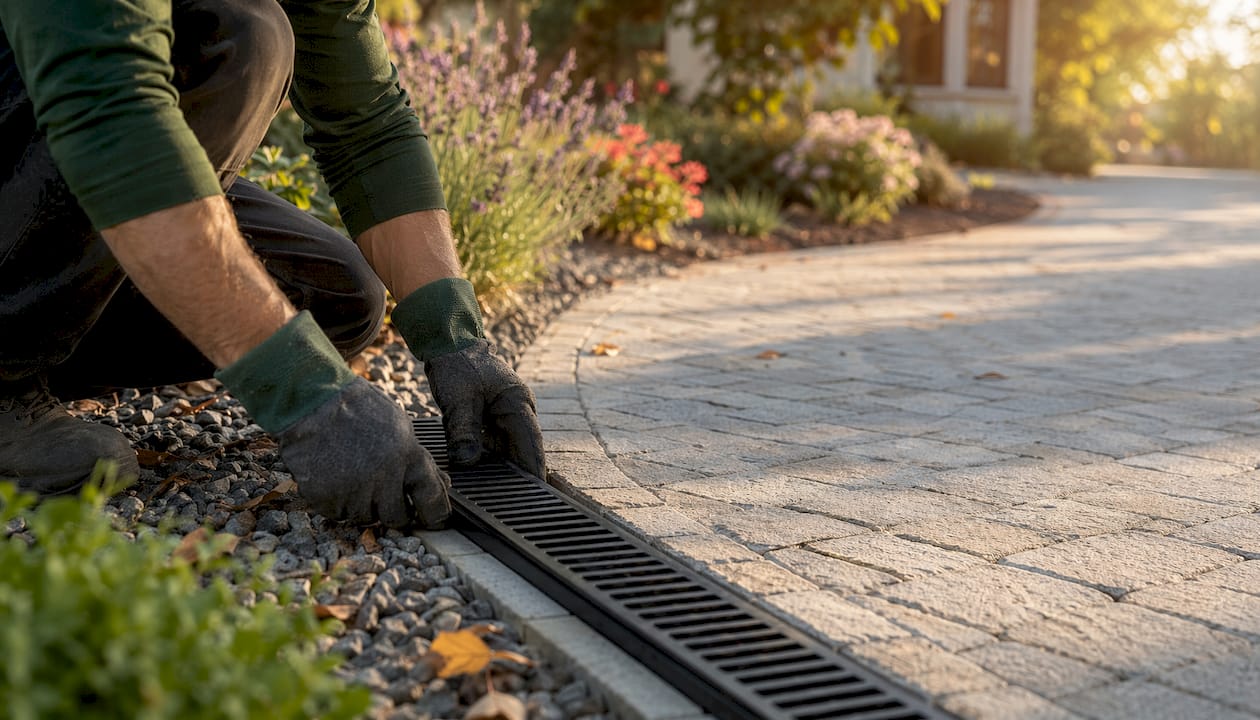
Slot drainage systems are narrow, linear drains installed flush with the paving surface. They intercept water quickly and direct it to a soakaway or storm drain without disrupting the visual flow of the paving design.
Channel drains sit at the edges of paved areas and collect water running off the surface. They work well along driveways, pool decks, and patio perimeters.
Gravel borders are the simplest option. A gravel strip around the perimeter of a paved area absorbs runoff and slows water movement before it reaches planted beds or structures.
Rain gardens are planted depressions that collect and absorb runoff naturally. They work best on properties with well-draining soil and moderate rainfall.
Pro Tip: Never rely on a single drainage method for a property larger than 500 square feet of paved surface. Combining a permeable surface with a perimeter channel drain gives you redundancy when heavy rain hits.
2. How permeable paving systems work for drainage
Permeable paving is not simply paving with gaps between stones. True permeable paving requires an engineered open-graded stone sub-base that acts as a water reservoir beneath the surface. Water passes through the paving layer, collects in the sub-base, and then slowly infiltrates into the ground or drains to a controlled outlet.
This layered construction is what gives permeable systems their power. Permeable systems handle rainfall events ranging from 1 in 30 to 1 in 100-year occurrences without surface pooling. That performance level is far beyond what a standard sloped patio with a channel drain can achieve on its own.
The environmental benefits are equally significant. Permeable paving replenishes groundwater and reduces demand on municipal sewer systems, which matters as cities tighten stormwater regulations. For Florida property owners, this aligns directly with state water management requirements.
A common mistake is assuming that any paving with visible joints qualifies as permeable. If the sub-base is compacted sand or concrete, water has nowhere to go. The surface may look open, but it functions like a solid slab. Always confirm the sub-base specification before installation.
Pro Tip: Ask your installer for the sub-base aggregate specification in writing. An open-graded crushed stone layer of at least 6 inches is the minimum for effective water storage and infiltration.
| Feature | Standard Paving | Permeable Paving |
|---|---|---|
| Surface water management | Relies on slope and edge drains | Infiltrates water through surface and sub-base |
| Groundwater replenishment | None | Active recharge through infiltration |
| Rainfall event capacity | Limited by drain sizing | Handles 1 in 30 to 1 in 100-year events |
| Regulatory alignment | Standard compliance | Meets SuDS and stormwater requirements |
| Maintenance | Low surface maintenance | Periodic vacuuming to clear surface pores |
For a deeper look at how permeable paving manages stormwater across different property types, the principles apply equally to residential patios and commercial parking areas.
3. Why slot drainage systems are gaining popularity
Slot drains solve a problem that traditional grate drains create: visual disruption and trip hazards. A slot drain is a narrow channel, typically 10–30 millimeters wide, installed flush with the paving surface. The slot is barely visible, which preserves the clean look of a patio or pedestrian zone.
The performance advantage is real. Slot drains flow 18% faster than standard polymer drain alternatives. That speed comes from the channel geometry, which creates a self-cleansing velocity that pushes debris toward the outlet rather than letting it settle and block the drain.
Slot drains reduce tripping risk and maintain aesthetic continuity, making them the preferred choice for outdoor dining areas, pool surrounds, and architectural paving projects. A wide grate breaks the visual line of a patio. A slot drain disappears into it.
Sizing matters more with slot drains than with any other system. Matching drainage capacity to local rainfall intensity is non-negotiable. An undersized slot drain will overflow during a heavy storm, defeating the purpose entirely. Your installer should calculate the catchment area and cross-reference it with local rainfall intensity data before specifying the drain width and depth.
Maintenance is straightforward when the system is designed correctly. Accessible flushing points built into the drain body let you clear debris with a hose without disassembling the channel. Systems without these access points become difficult and expensive to maintain over time.
Key installation considerations for slot drains:
- Install at the lowest point of the paved surface or at regular intervals across a level surface
- Specify stainless steel or polymer body based on load class requirements
- Confirm outlet connection to an approved soakaway or storm drain
- Include end-cap access sections every 6–10 meters for flushing
- Grade the drain channel itself at a minimum fall toward the outlet
4. How gravel borders and rain gardens complement paving drainage
Gravel borders and rain gardens are the most accessible drainage solutions for patios and smaller residential properties. They require no complex engineering and cost far less than engineered channel systems.
A gravel border is simply a strip of clean aggregate, typically 150–300 millimeters wide, placed around the perimeter of a paved area. Water running off the paving surface hits the gravel, slows down, and infiltrates into the soil below. This works well on properties with sandy or loamy soil. On clay-heavy ground, gravel borders slow runoff but do not eliminate it.
Rain gardens function as natural soakaways best suited for well-draining soils and small to medium-sized properties. A rain garden is a shallow planted depression positioned to receive runoff from a paved surface. Native plants with deep root systems help water move through the soil quickly. The garden absorbs the water, filters it naturally, and releases it slowly into the ground.
Both methods have clear limits. Clay soil drains too slowly for either approach to work without modification. On clay, you need either a perforated pipe soakaway filled with aggregate or a full engineered drainage system. Attempting to rely on gravel or a rain garden on clay soil leads to waterlogged beds and eventual paving heave.
- Best for: Sandy or loamy soil, small patios under 200 square feet, supplemental drainage alongside a primary system
- Not suitable for: Clay-heavy soil, high-rainfall regions, large paved areas, or areas adjacent to building foundations
- Cost advantage: Gravel borders and rain gardens cost a fraction of engineered channel systems and require minimal maintenance
5. How to choose and combine drainage solutions for your property
Combination drainage works best for large properties, while simpler methods often suffice for small sites. The decision comes down to three factors: property size, soil type, and local rainfall intensity.
Small residential patios under 300 square feet on well-draining soil do well with permeable paving alone or a gravel border around the perimeter. The water volume is manageable, and the soil can absorb it without engineered intervention.
Medium properties, typically 300–1,000 square feet of paved surface, benefit from combining permeable paving with a slot drain or channel drain at the lowest edge. The permeable surface handles most of the water. The drain catches overflow during heavy events.
Large properties and commercial sites need a full system. Channel drains along paved edges feed into deep soakaways or connect to the storm drain network. Permeable paving in high-traffic zones reduces the total runoff volume entering the channel system. A professional hydraulic assessment matches system capacity to the actual rainfall data for your specific location.
Soil permeability testing is the step most homeowners skip. A simple percolation test, where you fill a hole with water and measure how fast it drains, tells you whether natural infiltration is viable. If water takes more than four hours to drain from a 300-millimeter hole, you need an engineered outlet rather than a soakaway.
Pro Tip: Always design for the worst storm you are likely to see in a decade, not the average rainfall. Drainage systems sized for average conditions fail exactly when you need them most.
Key takeaways
The most effective approach to outdoor paving drainage combines a permeable surface layer with a correctly sized linear drain and a soil-appropriate outlet, sized for peak local rainfall rather than average conditions.
| Point | Details |
|---|---|
| Permeable paving requires engineered sub-base | Gaps alone do not create permeability; an open-graded stone sub-base is required for true infiltration. |
| Slot drains outperform standard grate drains | Slot drains flow 18% faster and self-cleanse, making them ideal for patios and pedestrian zones. |
| Soil type determines outlet strategy | Sandy soil suits soakaways and rain gardens; clay soil requires engineered outlets or channel drains. |
| Combine methods for large properties | Properties over 300 square feet of paving benefit from pairing permeable surfaces with perimeter channel drains. |
| Size drainage to peak rainfall, not averages | Undersized systems fail during the storms that matter most; use local rainfall intensity data for sizing. |
What I have learned after years of watching drainage go wrong
The most consistent mistake I see homeowners make is treating drainage as an afterthought. They choose the paving material, finalize the layout, and then ask about drainage at the end. By that point, the slope is wrong, the outlet location is inconvenient, and the budget is spent. Drainage needs to be the first design decision, not the last.
The second mistake is trusting that any paving with a textured surface drains well. I have seen beautifully installed natural stone patios that pool water after every rain because the installer never specified a proper sub-base or outlet. The surface looked right. The system did not exist.
What actually works is simple: match the drainage method to the soil, size it for the worst storm you expect, and build in maintenance access from day one. Permeable and slot drain systems now make it possible to have a completely level outdoor surface with no visible drains and no pooling. That was not practical ten years ago. The technology has caught up with what homeowners actually want.
Maintenance is where most systems fail over time. A slot drain without an access point becomes a blocked slot drain within three years. A permeable surface that never gets vacuumed loses its infiltration rate. Build the maintenance plan before you build the system.
— Roger
Rubber paving that handles drainage from the ground up
Drainage performance starts with the paving material itself. Ecotecrubber's Rubberway® rubber paving products are engineered to let water pass through the surface layer, reducing pooling and eliminating the standing water that damages conventional paving over time.
Ecotecrubber installs Rubberway® systems across Florida for residential and commercial properties, using recycled rubber materials that meet ADA compliance standards and hold up against Florida's heat and heavy seasonal rainfall. Every installation is professionally managed by a licensed and insured team focused exclusively on rubber paving. If you want a surface that handles water correctly from day one, explore Ecotecrubber's solutions and request a consultation for your property.
FAQ
What is the most effective drainage solution for a patio?
Permeable paving combined with a perimeter slot drain or channel drain is the most effective system for most patios. Permeable surfaces handle routine rainfall, while the drain manages overflow during heavy storms.
Do slot drains work better than traditional grate drains?
Slot drains flow up to 18% faster than standard polymer alternatives and self-cleanse during flow, making them more reliable and less prone to blockage than traditional grate systems.
Can I use a rain garden instead of a channel drain?
Rain gardens work well on small properties with well-draining, sandy, or loamy soil. On clay-heavy ground or large paved areas, a rain garden alone will not move enough water and an engineered drain is required.
How do I know if my soil can handle a soakaway?
Perform a percolation test by filling a 300-millimeter hole with water and timing how fast it drains. If the water takes more than four hours to clear, your soil cannot support a soakaway and you need a connected drainage outlet.
Does permeable paving require special maintenance?
Permeable paving needs periodic surface vacuuming or pressure washing to clear fine particles from the surface pores. Without this, the infiltration rate drops over time and the surface begins to behave like standard impermeable paving.