
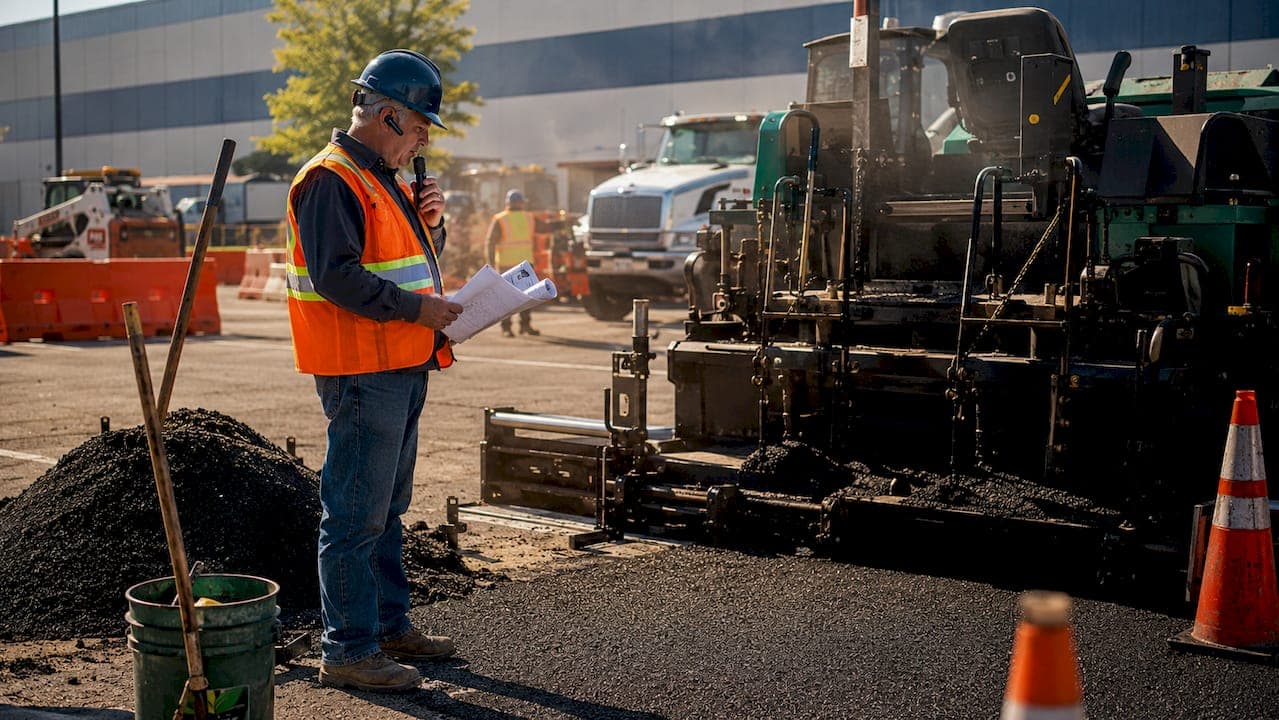
A high-traffic paving solution is a pavement system engineered to resist heavy vehicle loads and constant use without premature deterioration. The industry term for this category is "traffic-rated pavement," and it covers everything from stone matrix asphalt (SMA) to permeable polymer grids. Property owners managing parking lots, loading docks, or commercial driveways need systems built to AASHTO design standards, not standard residential mixes. The right choice depends on load type, drainage requirements, and lifecycle cost, not just upfront price.
What is a high-traffic paving solution made of?
The material is the foundation of any traffic-rated pavement system. Three categories dominate: asphalt-based systems, concrete, and permeable polymer grids. Each serves a different load profile and budget.
Stone matrix asphalt (SMA) is the top performer for heavy-use surfaces. It uses a stone-on-stone skeleton with 70–80% crushed aggregate, which locks together under load and resists rutting. SMA contains 6–7% binder content, compared to 4–5% in standard mixes. That higher binder level extends service life 20–30% beyond conventional asphalt. For a commercial parking lot or truck yard, that difference translates directly into fewer resurfacing cycles.
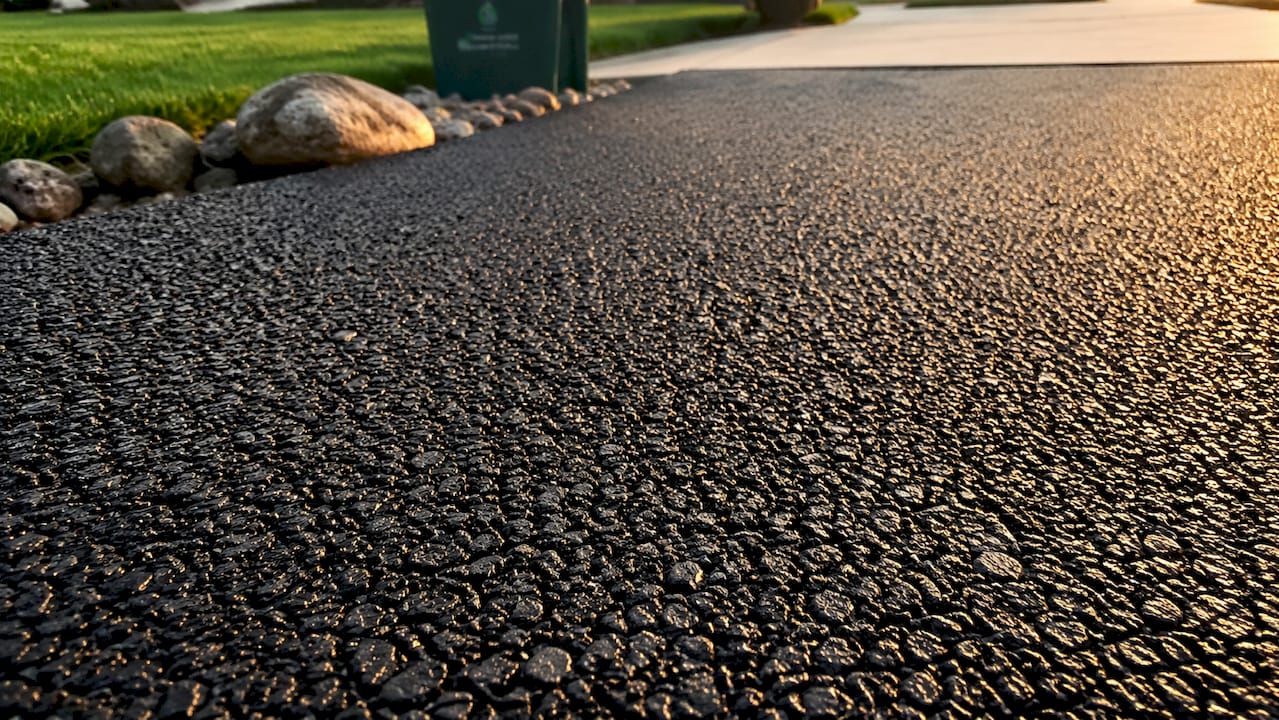
Polymer-modified asphalt takes durability a step further by blending polymer additives into the binder. These additives reduce oxidation and improve flexibility across temperature swings, which matters in climates like Florida where summer heat accelerates surface breakdown. Polymer-modified asphaltic grouted macadam systems go even further: they reduce whole-life carbon emissions by sealing aggregate interlock and extending service intervals. That makes them a strong choice for property owners who want both durability and a lower environmental footprint.
Concrete handles extreme point loads better than any asphalt variant. Its rigid structure distributes weight from forklifts and trailer jacks across a wider area. Asphalt costs $2–$5 per square foot installed, while ready-mix concrete runs $4–$8 per square foot. Concrete costs more upfront but requires less frequent resurfacing in areas with static heavy loads.
Permeable polymer grids round out the options for property owners who need both load capacity and stormwater management. Systems made from 100% recycled polymers can withstand wheel loads up to 40 tonnes and comply with sustainable drainage system (SuDS) standards. They install without specialist tools and can be removed and reused, which lowers lifecycle cost significantly.
- SMA: best for high-volume traffic lanes and commercial driveways
- Polymer-modified asphalt: best for temperature-variable climates and sustainability goals
- Concrete: best for loading docks, forklift zones, and static load areas
- Permeable polymer grids: best for stormwater-sensitive sites and emergency access routes
Pro Tip: Mix material types on the same site. Use concrete or SMA at truck bays and turning radii, then standard asphalt for lower-stress areas. This hybrid approach cuts costs without sacrificing durability where it counts.
How does pavement design adapt to heavy traffic and site conditions?
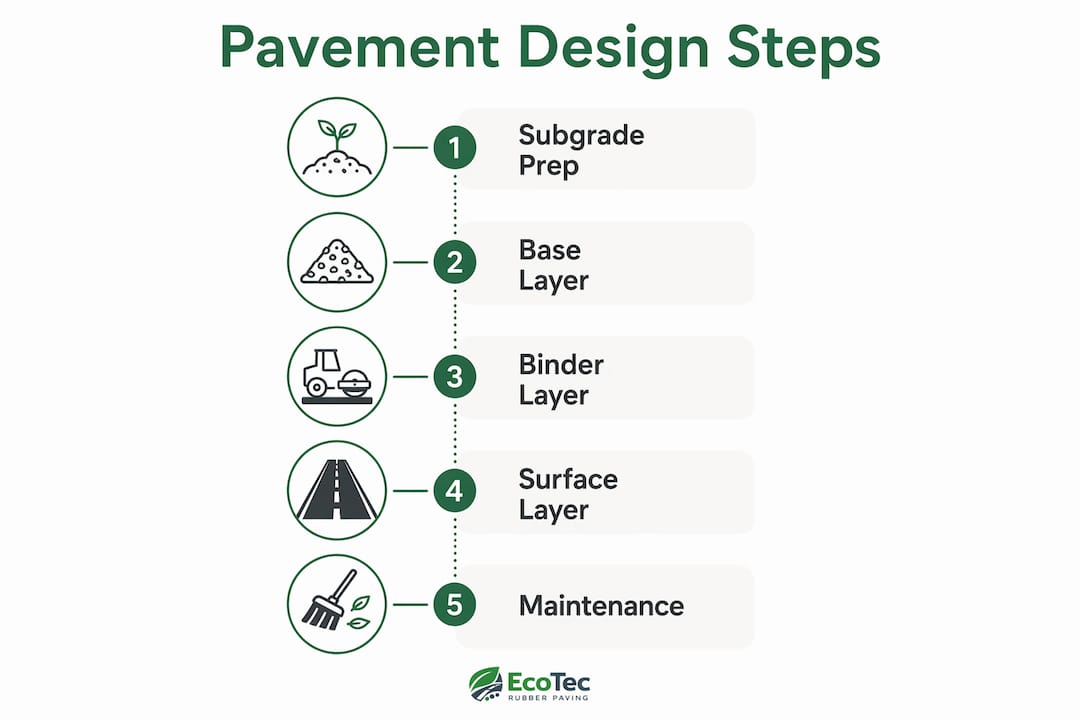
Material choice alone does not determine pavement performance. The design of each layer, from subgrade to surface, must match the actual loads and site conditions. Generic volume-based approaches consistently underperform because traffic type impacts paving needs more than sheer traffic volume.
The starting point is always the subgrade. Geotechnical standards require soil testing before any layer thickness is specified. Weak or moisture-prone subgrades need stabilization or thicker base layers to prevent settlement. Skipping this step is the single most common cause of premature pavement failure on commercial properties.
Here is how a properly sequenced design process works:
- Test the subgrade. Measure soil bearing capacity and moisture content. Soft or expansive soils require lime stabilization or a geotextile fabric layer before any aggregate base goes down.
- Size the base layer. Pavement thickness must be customized based on traffic type and subgrade strength. Heavy freight routes need thicker aggregate bases than passenger vehicle lots.
- Select surface material by zone. Truck turning areas, braking zones, and loading docks experience lateral shear forces that standard asphalt cannot handle long-term. Reinforced concrete or SMA belongs in these zones.
- Design for drainage. Grade the surface to direct runoff away from the pavement edge. Poor drainage saturates the base layer and accelerates cracking, regardless of surface material quality.
- Document design loads. Record the heaviest expected vehicle type and frequency. This becomes the baseline for future maintenance decisions and resurfacing schedules.
Rigid concrete pavements resist bending under heavy axle loads better than flexible asphalt. Flexible asphalt, however, accommodates ground shifting in areas with variable soil conditions. The best designs often combine both: concrete at fixed load points, asphalt across the broader surface. AASHTO design guidelines provide the layer thickness calculations that translate soil data and traffic loads into a buildable specification.
Pro Tip: Always design for the heaviest vehicle you expect, not the average. A single overloaded delivery truck can cause more damage in one pass than months of normal traffic on an undersized pavement.
What are the advantages of sustainable permeable paving for heavy-traffic areas?
Permeable paving systems have moved well beyond light-duty garden paths. Modern heavy-duty permeable systems handle wheel loads up to 40 tonnes, making them viable for HGV parking, emergency access routes, and commercial overflow lots. The structural performance now matches the environmental benefit.
The core advantage is stormwater management. Permeable surfaces allow water to pass through the pavement layer and into a sub-base reservoir, reducing surface runoff and the risk of standing water. For Florida property owners, this directly addresses one of the most common outdoor problems: flooding after heavy rain. Proper drainage design incorporated with permeable systems also enhances pavement longevity by keeping the base layer dry.
Key advantages of permeable paving systems for heavy-traffic sites:
- SuDS compliance: Permeable systems meet sustainable drainage system standards, which increasingly appear in local planning requirements.
- Recycled content: Systems made from 100% recycled polymers reduce material waste and support sustainability reporting for commercial properties.
- Rapid installation: No specialist tools or equipment are required, which reduces labor cost and site disruption.
- Reusability: Panels can be lifted, relocated, and reinstalled, making them cost-effective for temporary or phased developments.
- Aesthetic flexibility: Gravel or grass infill options blend with natural surroundings, which matters for properties where appearance affects tenant or customer perception.
Lifecycle cost is where permeable systems make their strongest case against traditional concrete. Concrete requires saw-cutting and full panel replacement when it fails. Permeable polymer grids can be repaired section by section. For property managers tracking total cost of ownership, that difference compounds over a 15–20 year asset life. Exploring permeable paving benefits in detail can help you build a business case for the switch.
What installation and maintenance practices extend pavement lifespan?
The best material specification fails without proper installation. Good grading, compaction, and runoff management account for more than half of a pavement's long-term performance. Property owners who cut corners on base preparation consistently face early cracking and settlement, regardless of surface quality.
Subgrade compaction is non-negotiable. Every lift of aggregate base must reach the specified density before the next layer goes down. Rushing this step to meet a project deadline creates weak spots that show up as depressions and cracks within the first two years of use.
Maintenance is where most property owners lose money. Proactive phased maintenance, including sealcoating, crack sealing, and targeted repairs, costs a fraction of full resurfacing. Waiting until visible failure forces action means paying for reconstruction instead of upkeep. A scheduled maintenance program keeps the surface sealed, prevents water infiltration, and extends the interval between major repairs.
Hybrid pavement designs that concentrate reinforced materials at high-stress zones deliver the best return on investment. Truck bays and turning radii take the most punishment. Spending more on material quality in those specific zones, while using standard asphalt elsewhere, optimizes the budget without compromising durability where it matters most.
Pro Tip: Schedule a pavement condition assessment every two years. Catching a small crack early costs under $500 to seal. Ignoring it until water infiltrates the base layer can turn a $500 repair into a $50,000 reconstruction.
Key takeaways
Traffic-rated pavement systems deliver long-term durability only when material choice, layer design, and phased maintenance align with the actual loads and site conditions of the property.
| Point | Details |
|---|---|
| Match material to load type | Use SMA or concrete at high-stress zones; standard asphalt works for lower-traffic areas. |
| Design from the subgrade up | Soil testing and base compaction determine pavement life more than surface material alone. |
| Permeable systems handle heavy loads | Recycled polymer grids withstand up to 40 tonnes and reduce stormwater runoff on commercial sites. |
| Proactive maintenance saves money | Sealcoating and crack sealing cost far less than full resurfacing triggered by visible failure. |
| Hybrid designs optimize budget | Concentrate reinforced materials at truck bays and turning radii; use standard asphalt elsewhere. |
What I've learned from watching property owners get paving wrong
Property owners consistently underestimate how much site-specific traffic behavior matters. I have seen well-specified asphalt fail within three years on a distribution center lot because the design treated the entire surface as a uniform passenger vehicle area. The loading dock zone, where trucks sat idling and turning for hours each day, needed reinforced concrete. The rest of the lot did not. That mismatch cost the owner a full reconstruction.
The other mistake I see repeatedly is treating maintenance as optional. Pavement is an asset with a predictable degradation curve. Sealcoating at year two and crack sealing at year four are not expenses. They are investments that push the resurfacing cycle from year eight to year fourteen. Property managers who track pavement condition as part of their asset management program consistently spend less over a ten-year period than those who react only to visible failure.
Sustainable materials have also crossed a threshold where they are no longer a compromise. Permeable polymer systems and polymer-modified asphalt now perform at or above traditional materials in most commercial applications. The sustainable commercial paving case is no longer just environmental. It is financial. Lower lifecycle cost, easier repair, and stormwater compliance benefits make the numbers work for most property managers I have spoken with.
The property owners who get paving right share one habit: they design for the worst-case vehicle on their site, not the average one. That single decision prevents more premature failures than any material upgrade.
— Roger
Ecotecrubber's Rubberway® system for high-traffic properties
Property owners in Florida managing high-traffic outdoor surfaces have a durable option worth considering.
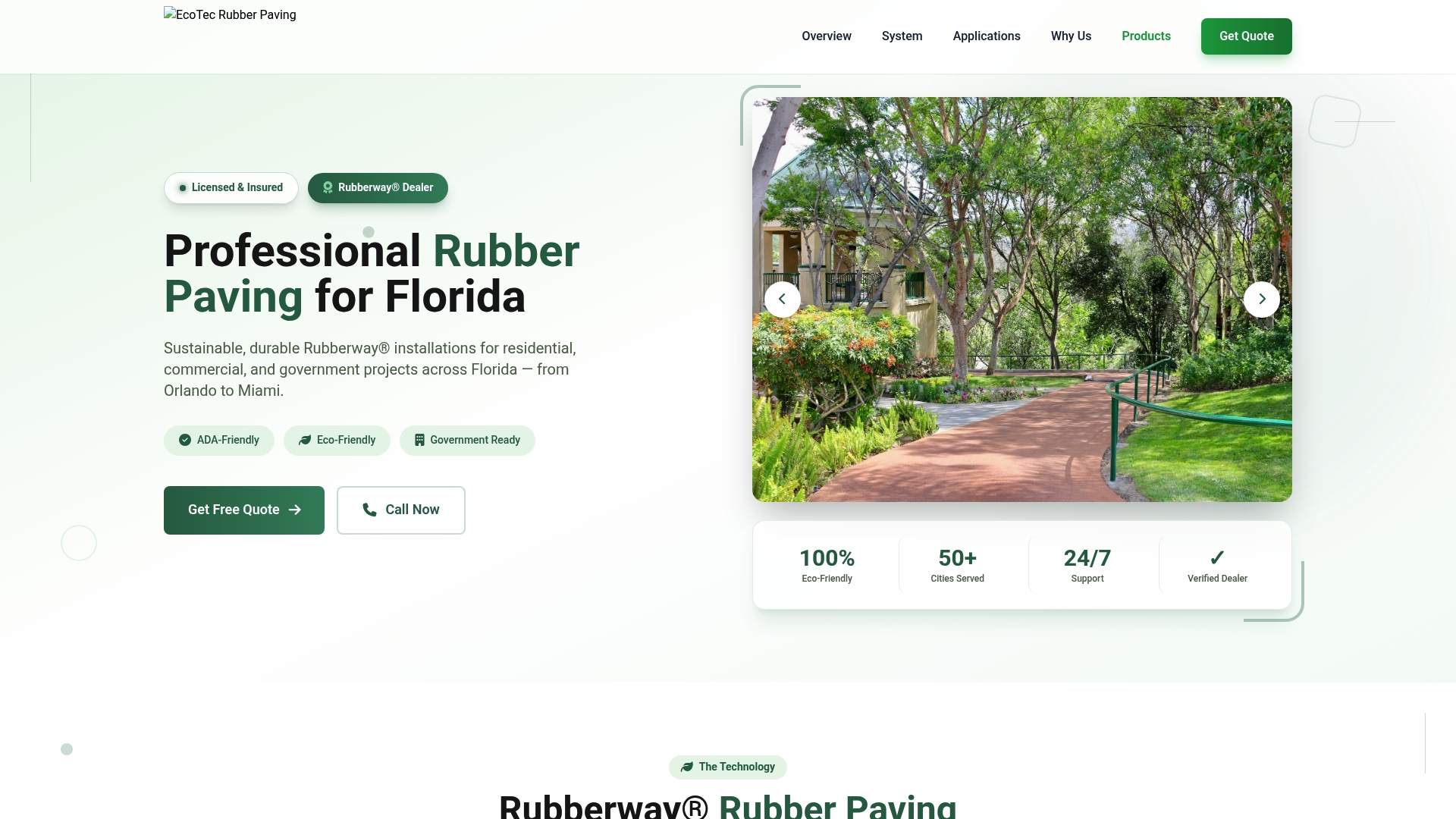
Ecotecrubber installs the Rubberway® paving system using recycled rubber materials that resist cracking, handle heavy use, and drain effectively. The system is ADA-compliant and designed specifically for Florida's heat and rainfall patterns. It works for commercial driveways, parking areas, pool decks, and municipal pathways. Ecotecrubber is licensed and insured, and every project focuses exclusively on rubber paving, which means no generalist contractors and no divided attention. Visit Ecotecrubber to request a consultation and get a site-specific recommendation.
FAQ
What is a traffic-rated pavement system?
A traffic-rated pavement system is a layered structure engineered to handle specific vehicle loads and use frequency without premature cracking or rutting. Design standards like AASHTO specify layer thickness and material requirements based on soil conditions and expected traffic type.
Which paving material lasts longest under heavy vehicles?
Stone matrix asphalt extends service life 20–30% beyond standard asphalt mixes due to its stone-on-stone aggregate skeleton and higher binder content. Concrete outperforms both in static load zones like forklift areas and loading docks.
How often should high-traffic pavement be maintained?
Proactive maintenance, including sealcoating and crack sealing, should follow a scheduled cycle rather than waiting for visible damage. Phased upkeep costs significantly less than full resurfacing and extends the pavement's service interval by years.
Can permeable paving handle heavy truck traffic?
Yes. Heavy-duty permeable systems made from recycled polymers withstand wheel loads up to 40 tonnes and meet SuDS drainage standards. They are suitable for HGV parking, emergency access routes, and commercial overflow areas.
What causes high-traffic pavement to fail early?
The most common causes are inadequate subgrade compaction, poor drainage design, and mismatched material selection for the actual vehicle types using the surface. Addressing all three during the design phase prevents the majority of premature pavement failures.