
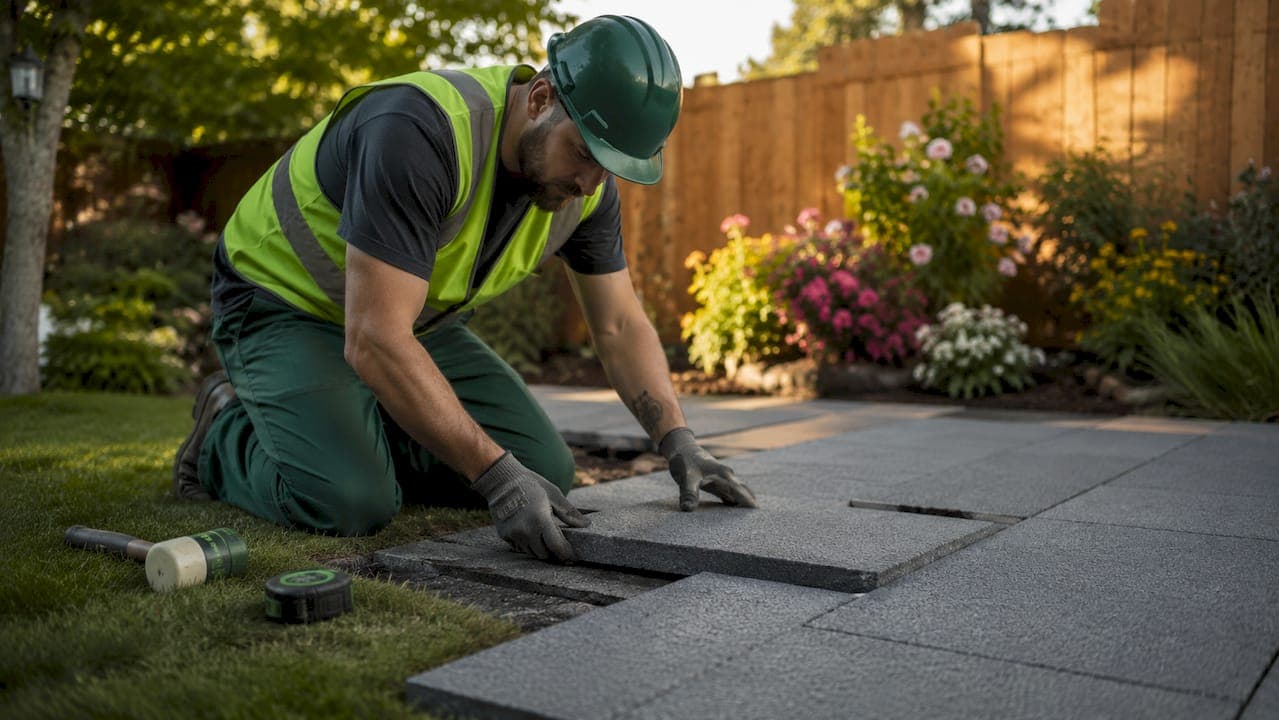
Permeable paving is defined as any pavement system engineered to allow stormwater to pass through its surface and into underlying layers, reducing runoff and improving drainage. Unlike standard asphalt or concrete, permeable surfaces use porous or spaced materials supported by engineered stone reservoirs beneath the ground. Developed urban areas often exceed 60% impervious surfaces, which accelerates flash flooding and water pollution. Permeable paving directly counters that problem. Materials like pervious concrete, porous asphalt, Belgard Aqua Dublin interlocking pavers, and resin-bound systems from Dream Pave all qualify as permeable pavement. The US EPA recognizes permeable paving as a core tool in low-impact development, or LID, for sustainable urban planning.
What is permeable paving and how does it work?
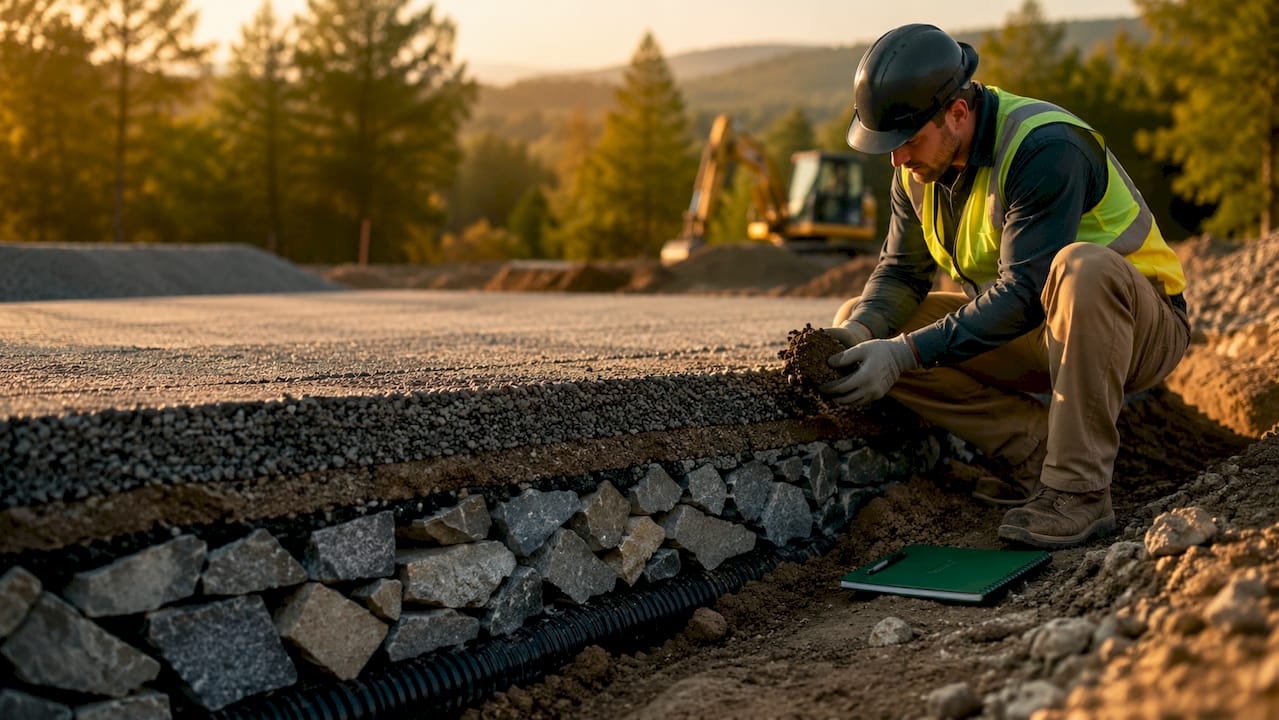
Permeable paving functions as a complete stormwater system, not just a surface material. Water enters through the porous or jointed surface layer, moves into a bedding stone layer, and then collects in a deeper aggregate reservoir before slowly infiltrating the native soil below. Some systems include an underdrain pipe at the base to discharge excess water when soil infiltration is too slow.
The surface layer is the most visible component, but it is not the most critical one. The sub-base stone reservoir is the true engine of the system. If that reservoir is undersized or improperly compacted, flooding occurs regardless of how porous the surface is.
Surface materials used in permeable systems
The most common permeable surface materials include:
- Pervious concrete: A mix with little to no fine aggregate, creating a network of interconnected voids
- Porous asphalt: Similar in concept to pervious concrete but uses bituminous binder instead of cement
- Interlocking concrete pavers: Solid units spaced with permeable joints filled with gravel or sand
- Resin-bound systems: Aggregate particles bound with clear resin, creating a fully porous surface
- Plastic grid pavers: Open-cell grids filled with gravel or grass, used in low-traffic areas
The sub-base: where the real work happens
A standard residential base requires roughly 6 inches of open-graded stone to store water during a rain event. That stone layer acts as a temporary reservoir, holding water until it can infiltrate the soil below. Commercial and municipal applications often require deeper reservoirs depending on local rainfall intensity and soil permeability.
Pro Tip: Never compact the aggregate sub-base with a vibratory plate compactor. Compaction crushes the void space that stores water, defeating the entire purpose of the system. Use a static roller or hand tamper instead.
How does permeable pavement perform vs. traditional pavement?
Performance is where permeable paving separates itself from conventional surfaces. High-performance resin-bound systems achieve flow rates of 90 liters per square meter per minute, with some engineered pavers exceeding surface infiltration rates of 500 inches per hour. That is far beyond what any natural rainfall event produces, meaning a properly designed system will never pond water under normal conditions.
Durability is equally strong. Flexible permeable pavement systems last 20–25 years when properly installed and maintained. That lifespan is competitive with traditional asphalt and often exceeds rigid concrete in environments with tree roots or shifting soils.
Permeable vs. impermeable paving: a direct comparison
| Feature | Permeable paving | Traditional impermeable paving |
|---|---|---|
| Stormwater runoff | Significantly reduced | Directed entirely to drains |
| Flood risk | Lower | Higher in urban areas |
| Water quality | Filters pollutants on-site | Carries pollutants to waterways |
| Tree root tolerance | High (flexible systems) | Low (roots cause cracking) |
| Service life | 20–25 years | 15–20 years (asphalt) |
| Maintenance | Periodic cleaning required | Crack sealing and resurfacing |
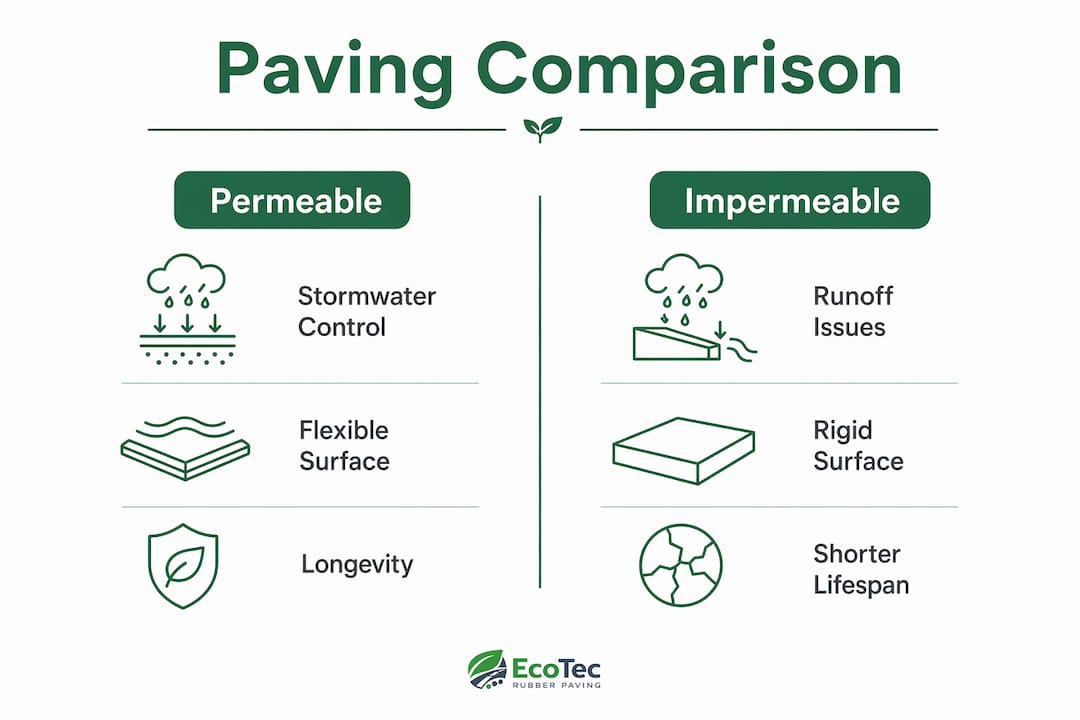
Flexible permeable materials adapt to shallow tree roots, avoiding the surface heaving and cracking that destroys rigid concrete over time. This makes flexible options the better choice for parks, tree-lined streets, and any site with established vegetation.
Pro Tip: When comparing lifecycle costs, factor in avoided stormwater infrastructure. A permeable parking lot may eliminate the need for a detention pond, saving tens of thousands of dollars in civil engineering costs.
What are the benefits of permeable paving for sustainable landscaping?
The EPA identifies permeable paving as a first line of defense for water quality management, filtering pollutants like oil, heavy metals, and nutrients before they reach streams or groundwater. That filtration happens passively, with no mechanical systems required. For sustainable landscaping and LEED-friendly construction, that passive performance is a major advantage.
The full list of benefits covers environmental, safety, and economic categories:
- Runoff reduction: Permeable surfaces absorb rain on-site, reducing peak flow to municipal storm drains and lowering flood risk
- Pollutant filtration: The aggregate layers trap sediment, oil, and heavy metals, improving water quality before it reaches aquifers
- Groundwater recharge: Water infiltrating through the system replenishes local groundwater tables, supporting vegetation and reducing drought stress
- Reduced ice formation: Permeable surfaces drain faster than solid pavement, reducing standing water that freezes overnight and creates slip hazards
- Lower long-term costs: Fewer repairs, no detention pond requirements, and potential stormwater fee credits reduce total ownership costs
- LEED and LID compliance: Permeable paving earns points under LEED rating systems and satisfies low-impact development requirements in many municipal codes
For permeable paving options on municipal walkways, the safety benefit deserves special attention. Pedestrian surfaces that drain instantly reduce liability from slip-and-fall incidents, a significant concern for city governments and property managers. Explore how stormwater paving solutions address these urban drainage challenges in more depth.
What permeable paving options are available?
The right permeable surface depends on the application, load requirements, and aesthetic goals. Each material type has a distinct performance profile.
- Pervious concrete works well for parking lots and driveways where load capacity matters. It handles heavy vehicles but requires careful mix design and is sensitive to freeze-thaw cycles in colder climates.
- Porous asphalt suits roads and parking areas in warmer climates. Florida's heat makes it a practical choice because the material stays flexible without cracking from thermal expansion.
- Interlocking pavers like Belgard Aqua Dublin fit commercial plazas, walkways, and residential patios where aesthetics matter. The individual units are replaceable if one section fails.
- Resin-bound systems from suppliers like Dream Pave deliver a smooth, decorative finish suited to pedestrian paths, pool surrounds, and accessible surfaces that must meet ADA standards.
- Plastic grid pavers are the lowest-cost option for overflow parking areas, fire lanes, and grass reinforcement where occasional vehicle traffic occurs.
For municipal sidewalks and park pathways, resin-bound and interlocking systems dominate because they balance aesthetics, ADA compliance, and drainage performance. Residential driveways most often use pervious concrete or porous asphalt for their load capacity and straightforward installation. You can review a full paving surface material comparison to weigh lifecycle and cost factors across all options.
Pro Tip: Always test native soil infiltration rates before selecting a system. Clay-heavy soils in Florida and the Southeast drain slowly, which means the sub-base reservoir must be sized larger or an underdrain must be added. Skipping this step is the most common design error.
How do you maintain a permeable paving system?
Maintenance is not optional for permeable systems. Sediment from adjacent areas clogs pores over time, reducing infiltration rates and eventually turning a permeable surface into an impermeable one. A consistent maintenance schedule prevents that outcome and protects the investment.
The standard maintenance process follows these steps:
- Inspect twice per year. Walk the surface after heavy rain events and check for ponding water, which signals clogged pores or a saturated sub-base.
- Vacuum sweep quarterly. Regenerative air sweepers or vacuum sweepers remove fine sediment from surface voids without flushing debris deeper into the system.
- Avoid sand in winter. Sand applied for traction in cold climates clogs permeable surfaces faster than almost any other material. Use fine gravel or heated surfaces instead.
- Power wash selectively. High-pressure washing can restore infiltration in moderately clogged areas, but it must be done carefully to avoid displacing joint material in paver systems.
- Replace the top layer if needed. In severe cases where clogging is irreversible, the surface layer can be removed and replaced without disturbing the sub-base, which is a significant cost advantage over full reconstruction.
Proper design reduces how often these steps are needed. Keeping uncontrolled runoff from adjacent landscaped areas off the permeable surface is the single most effective way to extend the cleaning interval. Strategies for reducing paving maintenance costs apply directly to permeable systems managed by businesses and municipalities.
Key takeaways
Permeable paving is the most practical tool available for managing stormwater on-site while meeting sustainability, safety, and compliance goals simultaneously.
| Point | Details |
|---|---|
| Definition and function | Permeable paving allows water to pass through its surface and into engineered subsurface layers, reducing runoff. |
| Sub-base is critical | The stone reservoir beneath the surface determines system performance; surface porosity alone is not enough. |
| Lifespan advantage | Flexible permeable systems last 20–25 years and outperform rigid concrete near tree roots or shifting soils. |
| Maintenance is required | Vacuum sweeping and sediment control are necessary to prevent clogging and maintain infiltration rates. |
| Wide application range | Pervious concrete, porous asphalt, interlocking pavers, and resin-bound systems each suit different load and aesthetic needs. |
Why the sub-base matters more than the surface
Most people shopping for permeable paving focus entirely on the surface material. That is the wrong place to start. After working with permeable systems across a range of climates and applications, I can tell you that the surface is almost never the reason a system fails. The sub-base is.
I have seen projects where a contractor installed beautiful interlocking pavers with permeable joints, only to compact the aggregate base with a vibratory plate. The surface looked perfect. Six months later, the parking lot flooded after every rain because the void space that was supposed to hold water had been crushed out of existence. The surface was doing its job. The base was not.
The other mistake I see consistently is ignoring soil infiltration rates. A permeable system built over clay soil in central Florida will fill its reservoir during a heavy storm and drain slowly. That is fine if the reservoir is sized correctly. If it is not, you get standing water and a frustrated client who thinks permeable paving does not work. It works. The design just has to match the site.
My honest recommendation: get a soil percolation test before any permeable paving project, residential or commercial. It costs very little and it determines everything about how the sub-base should be engineered. Skip it and you are guessing. Guess wrong and the system underperforms for its entire service life.
The flexibility advantage of rubber-based permeable systems is also worth taking seriously, especially in Florida where tree roots are aggressive and ground movement from moisture changes is constant. Rigid systems crack. Flexible systems adapt. That difference shows up in maintenance costs over a 20-year period in ways that are hard to ignore.
— Roger
Permeable paving solutions from Ecotecrubber in Florida
Ecotecrubber installs the Rubberway® permeable paving system across Sarasota and the Tampa Bay area, serving homeowners, municipalities, and commercial property owners who need drainage performance and durability in Florida's demanding climate. The Rubberway® system uses recycled rubber materials to deliver ADA-compliant, crack-resistant surfaces that drain effectively and hold up against heat, humidity, and root pressure. Every installation is handled by a licensed and insured team focused exclusively on rubber paving. If you are evaluating permeable surface options for a driveway, walkway, or municipal path, visit Ecotecrubber's professional paving services to learn what the Rubberway® system can do for your project. You can also browse the full Rubberway product catalog to find the right fit for your application.
FAQ
What is the permeable pavement definition?
Permeable pavement is any paved surface engineered with porous or spaced materials that allow stormwater to infiltrate through the surface and into underlying stone layers, reducing runoff and filtering pollutants.
How long does permeable paving last?
Properly installed flexible permeable pavement systems last 20–25 years, often outlasting rigid concrete in environments with tree roots or shifting soils.
Is permeable paving effective at reducing flooding?
Permeable paving is effective at reducing localized flooding because it captures and stores stormwater on-site rather than directing it to storm drains, which overflow during heavy rain events.
What maintenance does permeable paving require?
Permeable surfaces require vacuum sweeping at least quarterly and twice-yearly inspections to remove sediment that clogs pores and reduces infiltration over time.
What permeable paving options work best for municipal walkways?
Resin-bound systems and interlocking concrete pavers are the top choices for municipal walkways because they combine ADA compliance, aesthetic flexibility, and high drainage performance.