
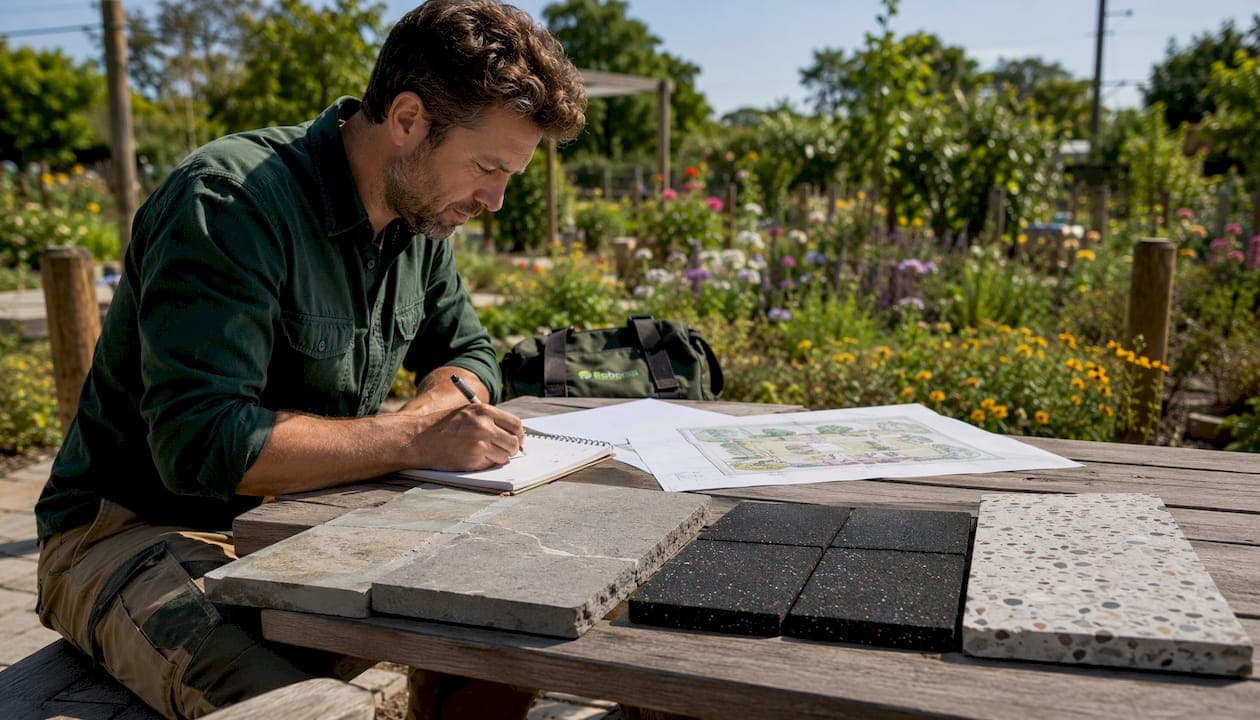
What are the top earthsurfaces.net alternatives for outdoor paving?
If you're searching for alternatives to Earth Surfaces for outdoor paving and surfacing, three providers stand out in the US market: Earth Surfaces of America, Inc., Borrowed Earth Collaborative, and Bullion Coatings. Each takes a distinct approach to materials, customization, and sustainability.
Earth Surfaces of America, Inc. is a Florida-based custom terrazzo manufacturer producing pavers, tiles, countertop slabs, and ADA-compliant architectural elements. Their products incorporate recycled aggregates like glass, shells, and marble chips within cementitious binders. Clients can specify color, size, and design additives, making them a strong pick for bespoke hardscape projects.
Borrowed Earth Collaborative curates dimensional natural stone panels and tiles, including Taj White Marble, Black Wave Marble, Lavender Hue Marble, and Crema Limestone. Their focus is on artisanal stone sourced for aesthetic character and environmental integrity, appealing to architects and designers who want materials with genuine provenance rather than manufactured uniformity.
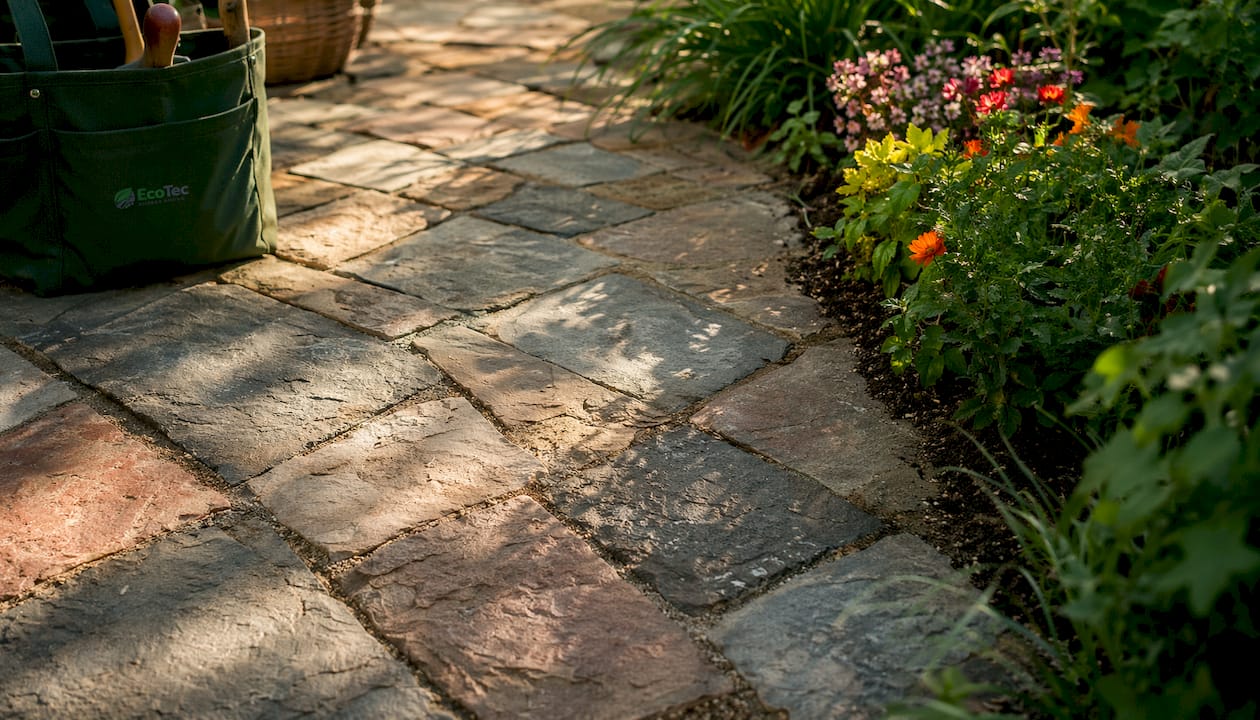
Bullion Coatings rounds out the top tier as a decorative concrete and protective surfacing specialist. They serve both residential and commercial clients across the US, covering applications from pool decks to commercial walkways with coatings that protect and finish existing concrete substrates.
All three providers operate in overlapping but distinct niches. Your best fit depends on whether your project calls for poured or precast terrazzo, raw natural stone, or a protective coating over existing concrete.
How do terrazzo, natural stone, and rubber paving actually compare?
The material you choose shapes every downstream decision: installation timeline, long-term maintenance, environmental footprint, and how the surface holds up in ten years. Here's how the three main categories stack up.
| Dimension | Cement terrazzo | Natural stone | Rubber paving |
|---|---|---|---|
| Surfacing type | Precast or poured-in-place concrete composite | Quarried stone slabs, panels, or tiles | Recycled rubber granules, bound and poured |
| Customization | High: color, aggregate, size, and pattern | Moderate: limited to natural variation and cut | Moderate: color blends and thickness options |
| Environmental impact | Good when recycled aggregates replace virgin material | Strong: low manufacturing energy, no synthetic binders | Excellent: diverts waste rubber from landfills |
| Durability and maintenance | Very durable; periodic sealing required | Extremely durable; some stone types need sealing | Flexible and crack-resistant; low maintenance |
| Typical applications | Pool decks, plazas, interior floors, countertops | Walls, floors, exterior cladding, pool coping | Walkways, playgrounds, pool surrounds, driveways |
Natural stone carries a lower manufacturing energy cost than synthetic or porcelain alternatives because it requires no kiln firing or resin casting. Natural stone's durability and aesthetic uniqueness also tend to add measurable property value over time. Cement terrazzo, when built with recycled glass or shell aggregates in a cementitious matrix rather than a resin binder, delivers a genuinely sustainable product. Resin-based terrazzo systems use high-VOC binders that undercut any environmental claim. Rubber paving sits in its own category: it repurposes post-consumer tire rubber, handles thermal expansion without cracking, and drains well, which matters enormously in climates with heavy rain or freeze-thaw cycles.
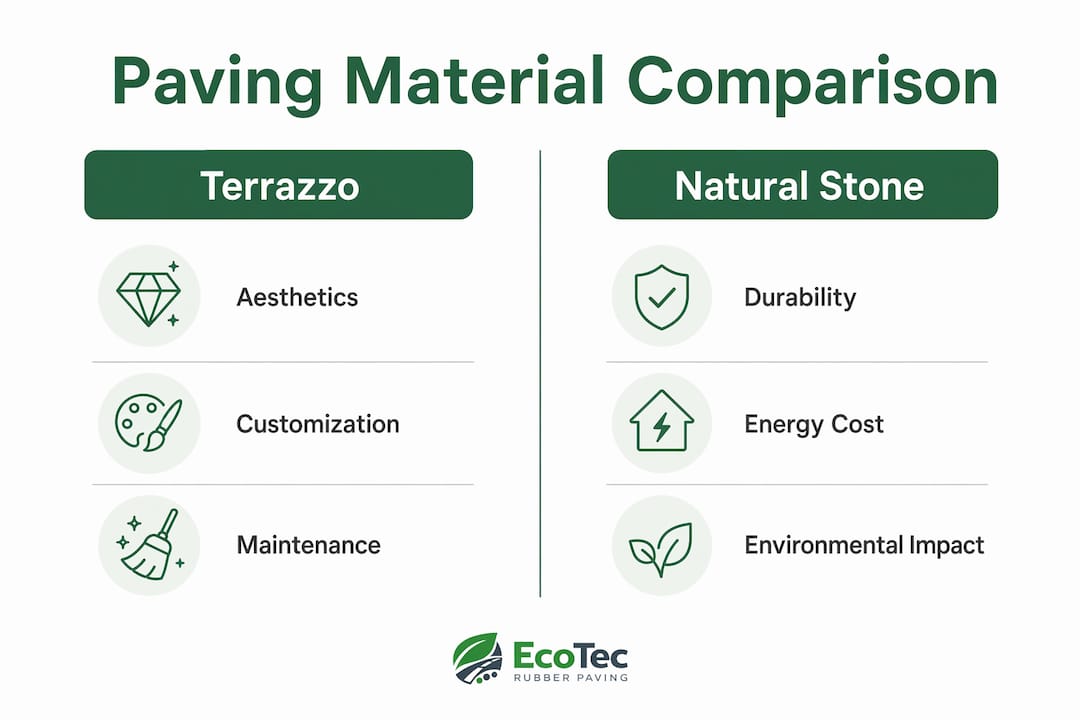
For a deeper look at how these materials perform side by side, the 2026 paving material guide covers specifications and real-world trade-offs in detail.
How do you choose the right outdoor surfacing provider in the US?
Picking a provider is not just about material preference. The wrong contractor with the right material still produces a failed project. Work through these criteria before signing anything.
- Verify licensed and insured status. Any provider working on your property should carry current contractor licensing for your state and general liability insurance. Ask for certificates, not just assurances.
- Assess material origin and quality. For natural stone, ask where the stone was quarried and how it was selected. For terrazzo, confirm whether the binder is cementitious or resin-based. Recycled aggregates in cement binders are the benchmark for genuine sustainability.
- Evaluate customization depth. Some providers offer color and size options; others can engineer a fully custom mix with specific aggregates. Know which level your project requires before comparing quotes.
- Scrutinize sustainability claims. "Eco-friendly" is easy to say. Ask specifically whether the product uses recycled content, what percentage, and whether any resin binders are involved. The National Terrazzo & Mosaic Association publishes technical guidance that helps you ask the right questions.
- Check installation expertise and lead times. Precast terrazzo ships from a factory and installs faster. Poured-in-place terrazzo requires skilled on-site labor and longer cure times. Lead times for natural stone can vary by quarry location and import logistics.
- Ask about warranty and after-sales service. A provider confident in their product offers a written warranty. Get the scope in writing: what's covered, for how long, and who handles repairs.
- Review customer feedback. Look beyond star ratings to the specifics: did projects finish on schedule, did the material perform as described, and how did the company respond when something went wrong?
Pro Tip: Ask every terrazzo provider whether they produce precast or poured-in-place product. Precast delivers factory-controlled consistency and faster site installation; poured-in-place allows seamless custom designs but demands more site preparation and skilled labor. Mixing up the two is one of the most common reasons project timelines slip.
For projects where stormwater drainage is a design requirement, permeable rubber paving and certain open-jointed stone systems outperform sealed terrazzo by a wide margin.
Why Ecotecrubber stands out as a sustainable paving alternative
Ecotecrubber brings a focused specialty that most general paving providers can't match: the Rubberway® system, a recycled-rubber paving solution engineered specifically for Florida's heat, humidity, and heavy rainfall. While terrazzo and natural stone providers serve broad markets, Ecotecrubber concentrates entirely on rubber paving, which means every installation reflects deep product knowledge rather than a generalist's approach.
Key features of Ecotecrubber's offering:
- Recycled rubber construction. The Rubberway® system uses post-consumer rubber, diverting waste from landfills and producing a surface with a smaller environmental footprint than virgin-material alternatives.
- ADA compliance. Rubber paving meets accessibility standards for slip resistance and surface stability. Architects and municipalities can review the technical details on ADA-compliant rubber paving to confirm specification requirements.
- Crack resistance and drainage. The material flexes with temperature changes rather than cracking, and its porous structure allows water to drain through rather than pool on the surface.
- Heat resistance. Florida's summer temperatures accelerate surface degradation in rigid materials. Rubber paving handles thermal cycling without the spalling or joint failure common in concrete pavers.
- Licensed and insured. Ecotecrubber carries full contractor licensing and insurance, meeting the same professional standard any responsible buyer should require of any provider.
- Single-specialty focus. Because Ecotecrubber installs only rubber paving, clients get a team that has solved every common installation problem specific to this material, not a crew that rotates between tile, stone, and concrete jobs.
Typical applications include pool surrounds, driveways, walkways, playgrounds, and commercial pathways where drainage, safety, and low maintenance are priorities. For projects where sustainable paving materials are part of a green building strategy, rubber paving's recycled content and permeability make it a credible option alongside terrazzo and stone.
What do customers say about alternative surfacing providers?
Customer satisfaction across the outdoor paving category tends to hinge on three things: whether the material performed as described, whether the installation went smoothly, and whether the provider was responsive after the job was done.
Earth Surfaces of America draws positive feedback for product quality and the depth of their customization options, particularly from Florida-based contractors and architects who work on high-end residential and commercial projects. Clients note that the terrazzo products are consistent in finish and hold up well in outdoor conditions. Borrowed Earth Collaborative earns strong marks from designers who value the provenance and visual character of their natural stone selections, with the curated collection approach appealing to clients who want materials that stand apart from standard distributor catalogs. Bullion Coatings is recognized in trade directories as a reliable choice for decorative concrete and protective surfacing, with community-driven rankings reflecting consistent performance across residential and commercial jobs.
For Ecotecrubber, the focused specialty model tends to produce high satisfaction among clients who specifically need rubber paving. When a provider does one thing exclusively, the learning curve is already behind them. Projects involving pool surrounds and accessible pathways in Florida's climate are where the Rubberway® system earns its strongest reviews, particularly from property managers and municipalities who track long-term maintenance costs.
If rubber paving fits your project requirements, Ecotecrubber's installations cover Florida from residential driveways to municipal pathways, with a licensed and insured team that specializes in nothing else. For exterior projects where material durability and sustainability credentials matter, you can also review J. Signor Exteriors' project portfolio for examples of how premium surfacing materials perform in real outdoor applications.
Key Takeaways
The best earthsurfaces.net alternative depends on your material priorities: terrazzo for custom aesthetics, natural stone for durability and provenance, and rubber paving for drainage, flexibility, and recycled content.
| Point | Details |
|---|---|
| Three main alternatives | Earth Surfaces of America, Borrowed Earth Collaborative, and Bullion Coatings each serve distinct niches in US outdoor paving. |
| Material choice drives everything | Cement terrazzo, natural stone, and rubber paving differ in environmental impact, durability, and maintenance requirements. |
| Verify sustainability claims | True eco-friendly terrazzo uses recycled aggregates in cementitious binders, not high-VOC resin systems. |
| Precast vs. poured-in-place matters | Precast terrazzo offers factory consistency and faster installation; poured-in-place allows seamless custom finishes but requires more site labor. |
| Ecotecrubber's specialty advantage | Ecotecrubber's Rubberway® system delivers recycled-rubber paving with ADA compliance, crack resistance, and drainage suited to Florida's climate. |