

Rubber paving meets ADA standards by delivering a firm, stable, and slip-resistant surface that passes ASTM F1951 for wheelchair accessibility, making it one of the most reliable choices for accessible outdoor spaces. Understanding how rubber paving meets ADA standards matters because non-compliant surfaces expose project owners to liability and exclude users with mobility challenges. Poured-in-place rubber and compacted rubber mulch both satisfy the Americans with Disabilities Act's surface requirements when installed correctly. Ecotecrubber's Rubberway® system is built specifically around these compliance benchmarks, giving architects and planners a tested, documented path to accessible outdoor design.
How rubber paving meets ADA standards: the technical criteria
ADA-compliant surfacing must be firm, stable, and slip-resistant under the ADA Standards for Accessible Design. Rubber paving satisfies all three criteria through its material composition and surface texture. The key test is ASTM F1951, which measures the force a wheelchair user must exert to travel in a straight line and to turn on a surface. Both poured-in-place rubber and 6–8 inch compacted rubber mulch pass this test, confirming they do not create excessive resistance for wheelchair users.
Poured-in-place rubber is a two-layer system: a base layer of recycled rubber crumb provides shock absorption, and a wear layer of finer EPDM rubber delivers traction and surface continuity. The seamless construction eliminates joints, gaps, and raised edges that create tripping hazards. That continuity is what allows the surface to meet ASTM F1814 for maintenance and marking as well.
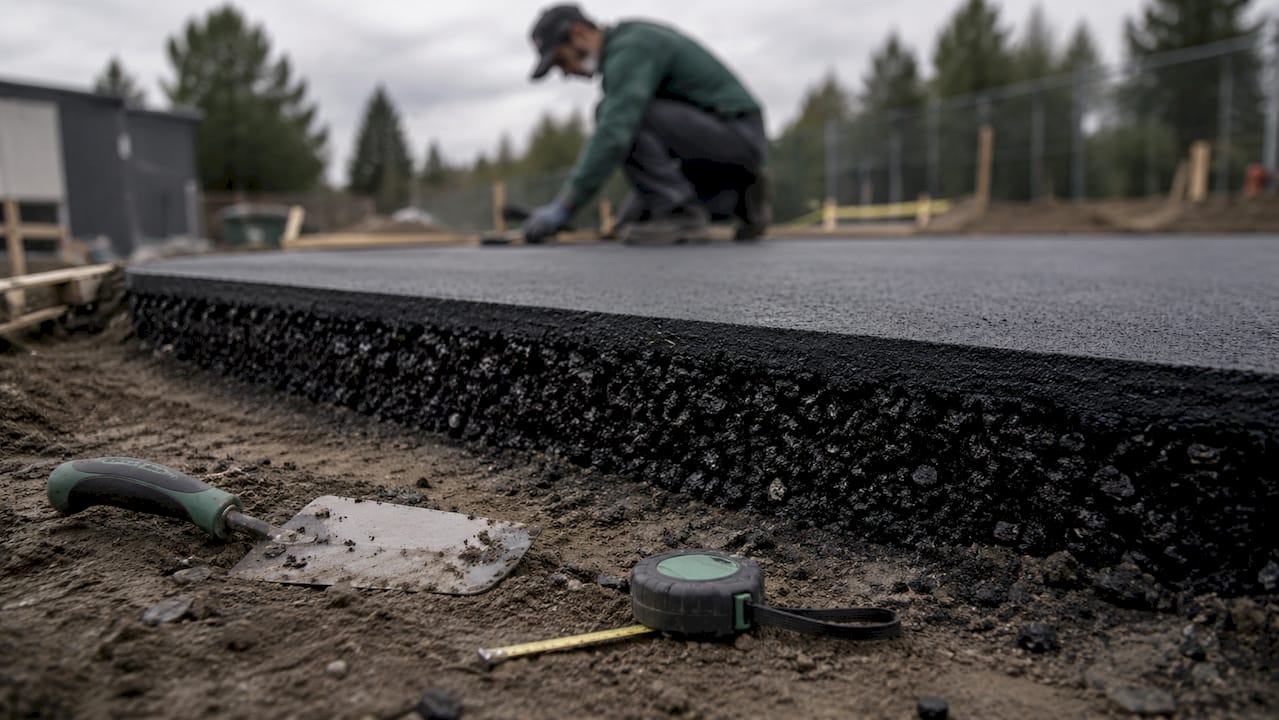
Slip resistance is a separate but equally critical requirement. Rubber's textured surface channels water away and maintains traction in wet conditions, where concrete becomes dangerously slippery. The ADA does not assign a single numeric slip-resistance value for outdoor surfaces, but the ASTM standards referenced above serve as the accepted benchmark for compliance documentation.
Surface continuity rules also govern gap size and transitions. The ADA limits surface openings to no more than half an inch in the direction of travel. Rubber paving's bonded or compacted structure keeps gaps well within that limit, provided installation follows correct subgrade preparation.
- ASTM F1951: Wheelchair work-of-propulsion test for straight travel and turning
- ASTM F1292: Impact attenuation test confirming fall safety
- ASTM F1814: Evaluates surface maintenance and marking durability
- Gap limit: Surface openings must not exceed 0.5 inches in the direction of travel
- Slope limit: Running slopes must not exceed 1:20 (5%) and cross slopes must not exceed 1:48 (2.08%)
Pro Tip: Always request ASTM F1951 test documentation from your rubber paving supplier before specifying the product. Test results vary by product formulation and installation depth, so a generic claim of "ADA compliant" is not sufficient for project documentation.
How does rubber paving compare with other surfaces for ADA compliance?
Choosing a surface material is not just a compliance checkbox. It is a long-term performance decision that affects maintenance budgets, user safety, and project liability.
| Surface | ASTM F1951 (Wheelchair) | ASTM F1292 (Fall Safety) | Wet Slip Resistance | Maintenance Burden | Long-Term Cost |
|---|---|---|---|---|---|
| Poured-in-place rubber | Passes | Passes | High | Low | Low |
| Rubber mulch (6–8 in.) | Passes | Passes | Moderate | Moderate | Moderate |
| Wood chips / engineered wood fiber | Passes when new | Passes when new | Low | High | High |
| Gravel / pea gravel | Fails | Fails | Low | High | High |
| Concrete | Passes | Fails (hard surface) | Low when wet | Low | Low |
| Asphalt | Passes | Fails (hard surface) | Low when wet | Moderate | Moderate |
| Artificial turf (infill systems) | Varies | Varies | Moderate | Moderate | Moderate |
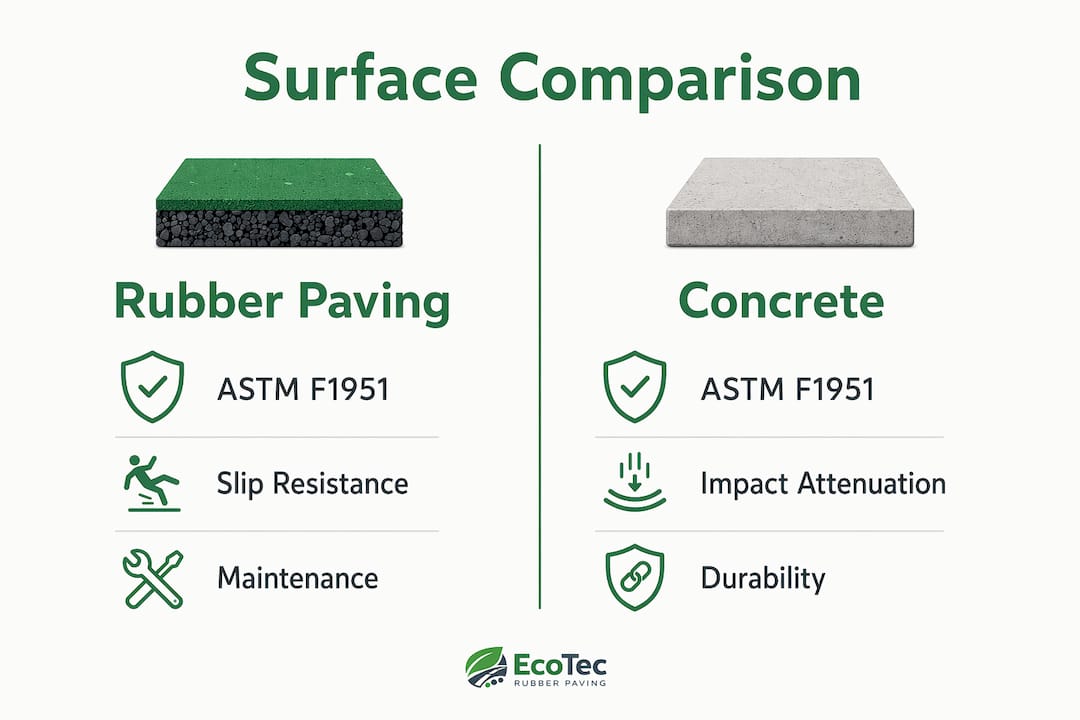
Wood chips and engineered wood fiber pass ASTM F1951 when freshly installed and properly maintained. The problem is that loose-fill surfaces compact, migrate, and decompose. Loose-fill surfaces require frequent top-ups and weed management to stay compliant, which drives up total cost of ownership over a 15–20 year project life. Rubber paving eliminates that cycle.
Concrete passes the wheelchair propulsion test but fails on impact attenuation. A fall onto concrete in a playground or public park produces injury forces far above what ASTM F1292 allows. Asphalt shares the same limitation. Neither material provides the cushioning that rubber delivers.
"Rubber paving requires a higher initial investment than loose-fill alternatives, but its lower maintenance demands and consistent compliance performance make it the more cost-effective choice over a 15–20 year project lifespan."
Rubber pavers test four times stronger in flexural strength than concrete. That structural advantage means rubber paving resists cracking under freeze-thaw cycles and heavy foot traffic, both of which degrade concrete's surface and create trip hazards that violate ADA standards.
Pro Tip: When comparing paving materials for a public project, request lifecycle cost analysis alongside initial bid pricing. A surface that costs more upfront but requires no annual top-offs or crack repairs often delivers a lower total cost per compliant year.
For a detailed side-by-side breakdown of paving options, the 2026 paving surface comparison from Ecotecrubber covers ADA compliance factors across all major material categories.
What are best practices for installing ADA-compliant rubber surfaces?
Correct installation is where compliance is won or lost. A product that passes ASTM F1951 in a lab will fail in the field if the subgrade is poorly prepared or drainage is ignored.
-
Compact the subgrade. The base layer must be compacted to prevent settling. Settling creates low spots that pool water, alter surface slopes beyond ADA limits, and eventually deform the rubber layer above. Thorough surface preparation, including compacted subgrade and edge containment, is the foundation of long-term ADA compliance.
-
Install edge containment. Rubber mulch migrates without physical borders. Timber, concrete curbing, or steel edging keeps the material at the required depth. For poured-in-place rubber, edge forms define the perimeter and prevent delamination at borders.
-
Verify drainage before pouring. ADA cross-slope limits are strict. A surface that drains poorly will develop standing water, which planners often try to correct by adjusting slope after the fact. That adjustment can push cross slopes above the 1:48 limit. Design drainage into the subgrade before any rubber goes down.
-
Install rubber mulch at 6–8 inches of compacted depth. A 6–8 inch depth over compacted subgrade is the documented threshold for passing both ASTM F1292 and ASTM F1951. Shallower installations may pass initially but lose compliance as the material compacts over time.
-
Document installation depth and slope at completion. Record compaction rates, pour thickness, and slope measurements at project closeout. This documentation supports ADA compliance claims and protects the project owner if the surface is ever challenged.
Pro Tip: Specify a minimum post-installation inspection at 90 days. Rubber mulch settles most in the first season. A 90-day check catches depth loss before it becomes a compliance issue, and a top-off at that stage is far cheaper than a full reinstall.
Routine inspections must check for settling, drainage failures, and environmental displacement that can develop non-compliant slopes or trip hazards over time. Unlike loose-fill surfaces, poured-in-place rubber requires less frequent intervention, but it still needs annual checks for surface delamination, joint separation at borders, and slope verification after major weather events.
For community and municipal projects, the maintenance advantages of rubber paving translate directly into reduced long-term upkeep costs compared to loose-fill alternatives.
What additional benefits does rubber paving offer for inclusive design?
ADA compliance is the floor, not the ceiling. Rubber paving delivers several performance advantages that go beyond the minimum legal requirement and support genuinely inclusive outdoor environments.
- Fall injury reduction. Poured-in-place rubber meets ASTM F1292 impact attenuation standards, meaning a fall from a specified height produces force levels below the injury threshold. Concrete and asphalt cannot make this claim.
- Thermal regulation. Rubber compounds absorb less heat than asphalt or concrete, keeping surfaces cooler in hot outdoor environments. In Florida's climate, that difference is meaningful for users who spend extended time on the surface.
- Sensory-friendly environments. Rubber surfaces support calmer environments beneficial for children with sensory sensitivities, which aligns with inclusive playground design goals beyond physical accessibility.
- Anti-fatigue properties. The slight give in rubber underfoot reduces joint stress for elderly users and people who stand or walk on the surface for extended periods.
- Customizable aesthetics. EPDM rubber wear layers are available in a wide range of colors and can be cut into patterns, wayfinding lines, and zone markers. Color contrast supports users with low vision, which is an ADA design consideration for accessible routes.
- Recycled material content. Rubber paving systems use recycled tire rubber, reducing landfill waste. That environmental benefit supports LEED credits and sustainability goals that many public projects now require.
Planners who specify rubber paving for ADA compliance often find that the performance and durability benefits are what keep the material in their standard specifications long after the compliance box is checked.
Key Takeaways
Rubber paving achieves ADA compliance through ASTM-tested firmness, slip resistance, and surface continuity, but long-term compliance depends equally on correct installation and routine inspection.
| Point | Details |
|---|---|
| Core compliance test | ASTM F1951 measures wheelchair propulsion force; both poured-in-place rubber and 6–8 inch rubber mulch pass. |
| Installation depth matters | Rubber mulch must be installed at 6–8 inches of compacted depth to satisfy ASTM F1292 and F1951 simultaneously. |
| Rubber outperforms loose-fill long term | Loose-fill surfaces lose compliance as they compact and migrate; rubber paving holds its depth and firmness with less intervention. |
| Maintenance is still required | Annual inspections for slope, settling, and drainage failures are necessary to maintain documented ADA compliance. |
| Benefits extend beyond compliance | Thermal regulation, fall attenuation, sensory comfort, and recycled content make rubber paving a stronger inclusive design choice than the ADA minimum requires. |
Why I think planners underestimate the maintenance side of ADA compliance
Most conversations about ADA-compliant surfacing stop at product selection. Architects specify a rubber surface, the contractor installs it, and everyone assumes compliance is locked in. That assumption is where projects get into trouble.
ADA compliance is not a one-time certification. It is a condition that must be maintained. A poured-in-place rubber surface installed perfectly in year one can develop non-compliant cross slopes by year three if drainage was not designed into the subgrade. Rubber mulch installed at the correct depth can drop below the threshold after one heavy-use season without a scheduled top-off.
The projects I have seen perform best over time share one characteristic: the architect built a maintenance plan into the project specification from day one. That means scheduled inspections, documented slope measurements, and a budget line for top-offs or repairs. Collaboration between the architect, the installer, and an accessibility consultant at the design phase prevents the reactive fixes that cost far more later.
Rubber paving is genuinely one of the best surfaces available for accessible outdoor design. Its combination of tested compliance, durability, and user comfort is hard to match. But specifying the right product is only half the job. The other half is making sure the installation and maintenance plan are as solid as the surface itself.
— Roger
Ecotecrubber's ADA-compliant rubber paving solutions for your next project
Ecotecrubber installs the Rubberway® rubber paving system across Florida, with every installation designed to meet ASTM F1951, F1292, and F1814 standards. The system uses recycled rubber materials, delivers excellent drainage, and resists the heat-induced cracking that degrades concrete and asphalt in Florida's climate.
For architects and planners specifying accessible outdoor surfaces, Ecotecrubber provides full project documentation, licensed and insured installation, and post-installation inspection support. Explore the full range of ADA-compliant rubber products or contact the Ecotecrubber team at ecotecrubber.com to discuss your project's compliance requirements and get a professional consultation.
FAQ
What ASTM tests does rubber paving need to pass for ADA compliance?
Rubber paving must pass ASTM F1951 for wheelchair accessibility, ASTM F1292 for impact attenuation, and ASTM F1814 for surface maintenance and marking. These three tests together confirm that a rubber surface is firm, stable, safe from falls, and durable over time.
What depth of rubber mulch is required for ADA compliance?
A compacted depth of 6–8 inches over a prepared subgrade is the documented threshold for passing both ASTM F1951 and ASTM F1292. Shallower installations may pass initially but lose compliance as the material settles.
How does rubber paving compare to concrete for ADA-compliant outdoor surfaces?
Concrete passes the wheelchair propulsion test but fails ASTM F1292 impact attenuation because it provides no cushioning from falls. Rubber paving passes both tests and maintains higher slip resistance in wet conditions than concrete.
How often does rubber paving need to be inspected to stay ADA compliant?
Annual inspections are the minimum standard practice. Inspections should check surface firmness, slope measurements, drainage performance, and any signs of settling or material displacement that could create trip hazards or non-compliant slopes.
Can rubber paving be used on slopes and still meet ADA standards?
Yes, provided the running slope does not exceed 1:20 (5%) and the cross slope does not exceed 1:48 (2.08%). Drainage must be designed into the subgrade to prevent water pooling that could alter effective slopes over time.