
What are the best heat resistant paving materials?
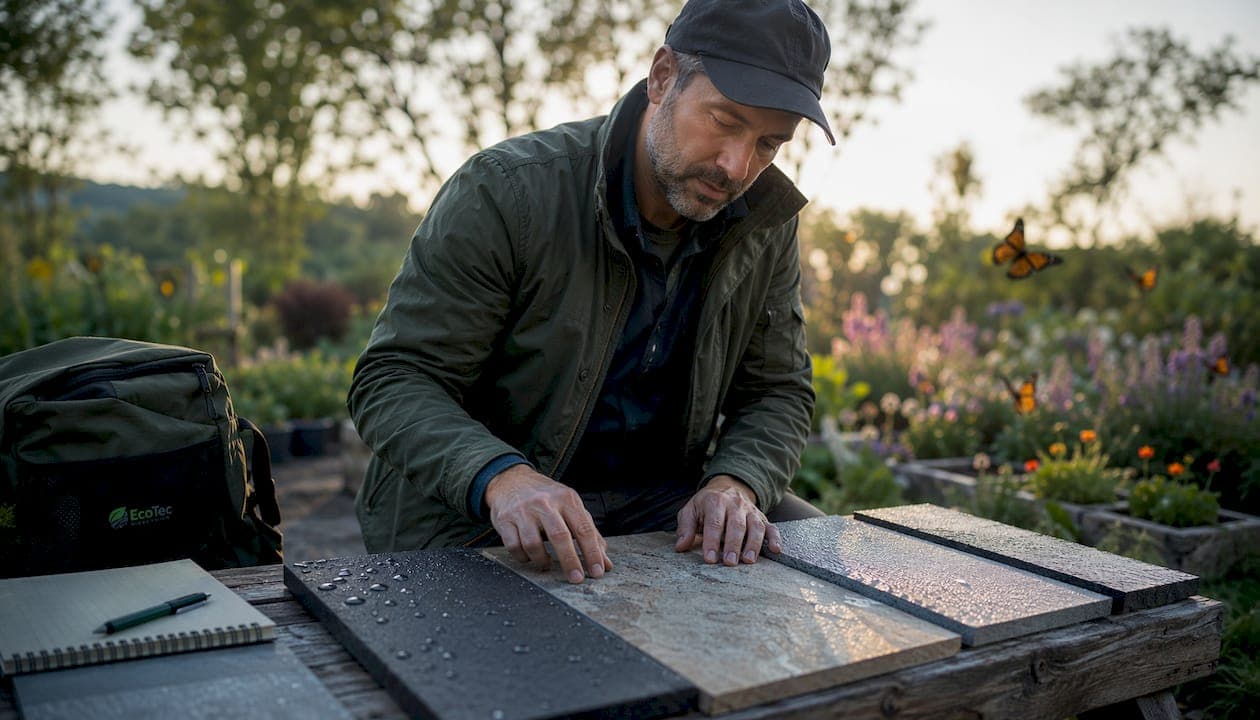
Porcelain pavers, light-colored concrete, clay brick, natural stone, and recycled rubber systems like Ecotecrubber's Rubberway® consistently outperform standard paving in hot climates. What separates them from ordinary surfaces comes down to two measurable factors: low thermal conductivity and high solar reflectance. Dense materials absorb heat slowly; light colors reflect sunlight instead of converting it to surface warmth. In Florida and similar Sun Belt climates, that combination is the difference between a patio you can walk barefoot on and one that burns at noon.
Top options at a glance:
- Porcelain pavers: Dense, low water absorption, stays cooler than darker stone or concrete
- Light-colored concrete: Versatile and heat resistant when finished in pale shades
- Clay brick pavers: Naturally heat tolerant, ideal for fire features
- Natural stone (travertine, limestone): High density, cools quickly in shade
- Rubberway® rubber paving: Recycled rubber, permeable, crack resistant, ADA compliant
Table of Contents
- How thermal properties determine which paving stays cool underfoot
- Why sustainable paving is the right call for hot U.S. climates
- Specialized paving technologies for thermal shock and fire safety
- Why Ecotecrubber stands out for heat resistant outdoor surfaces in Florida
- How do heat resistant paving materials compare on durability and maintenance?
- Where and how are these materials typically installed?
- What do heat resistant paving materials cost, and how long do they last?
- How do regional climate rules affect your paving choice?
- What's new in heat resistant paving technology for 2026?
- Ecotecrubber brings Rubberway® to Florida's toughest outdoor surfaces
- Key Takeaways
How thermal properties determine which paving stays cool underfoot
Material density and color are the two levers that control surface temperature. Dense materials like porcelain conduct heat slowly, so they warm up less during peak sun hours. Color compounds the effect: dark surfaces absorb solar radiation and convert it directly to heat, while lighter surfaces reflect it back.
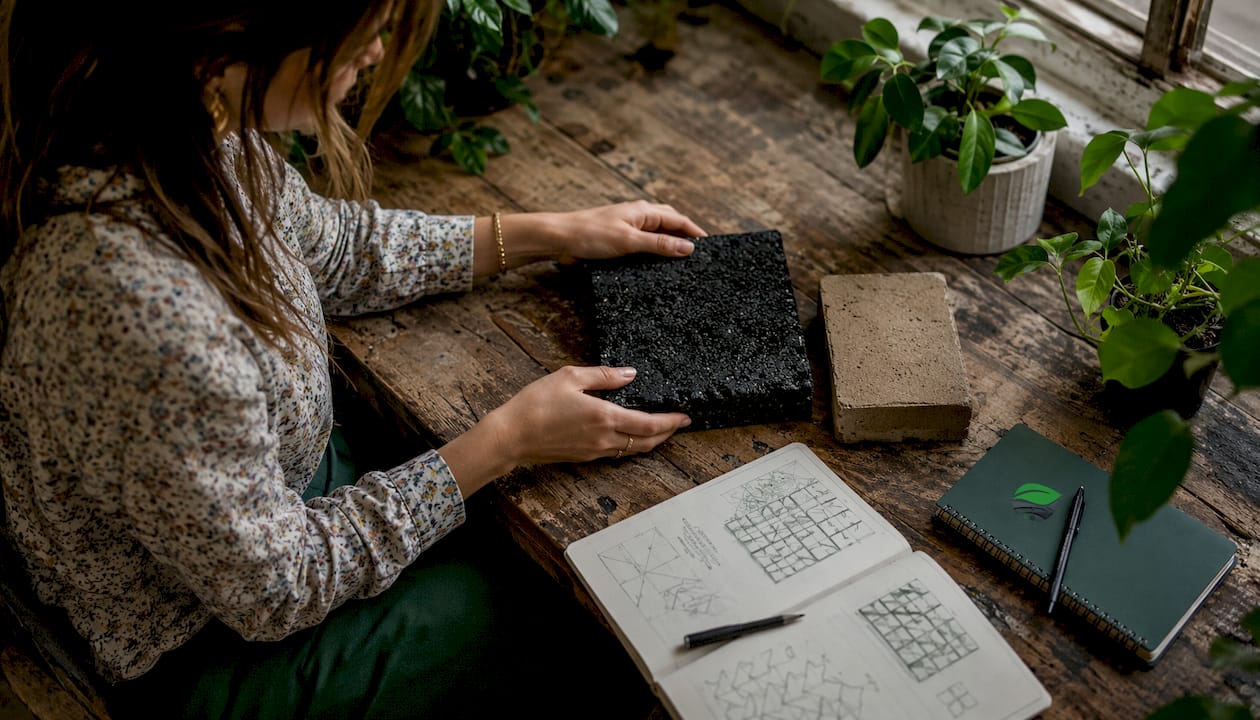
Porcelain pavers are manufactured at extremely high temperatures, producing a dense, nearly impervious structure with low water absorption. The Tile Council of North America notes that this composition makes porcelain less likely to absorb and retain heat than most alternatives. Concrete pavers are a solid second choice, though their thermal performance drops sharply in dark finishes. Natural stone options like travertine and limestone carry high density and tend to cool quickly once shaded, but darker varieties like slate absorb heat aggressively.
Clay brick pavers are naturally resistant to high temperatures and moisture, making them a reliable choice around fire features. Their fired clay composition handles thermal stress without the cracking risk that plagues cheaper alternatives.
Key thermal performance factors:
- Thermal conductivity: Lower means slower heat absorption
- Solar reflectance: Higher means less surface warming
- Water absorption rate: Lower means less retained heat from moisture cycling
- Surface texture: Slightly textured surfaces dissipate heat faster than smooth ones
Pro Tip: Color choice matters as much as material. Even highly heat-resistant materials become dangerously hot underfoot when installed in dark shades. Always pair your material selection with the lightest available color option.
Why sustainable paving is the right call for hot U.S. climates
Sustainability and thermal performance reinforce each other in ways that matter for Florida property owners. Permeable surfaces reduce standing water, which cuts the humidity-driven heat cycling that degrades traditional paving over time. Recycled materials reduce landfill waste while delivering durability that rivals conventional options.
Ecotecrubber's Rubberway® system uses recycled rubber to create permeable, crack-resistant, ADA-compliant surfaces built specifically for Florida's climate demands. The permeability addresses standing water directly, a persistent problem in high-rainfall regions, while the rubber composition resists the heat-induced cracking that shortens the life of rigid materials. For municipalities, homeowners, and commercial developers, that combination reduces long-term maintenance costs without sacrificing performance.
| Material | Permeability | Crack Resistance | ADA Compliant | Eco-Friendly |
|---|---|---|---|---|
| Rubberway® rubber paving | Yes | Excellent | Yes | Yes (recycled) |
| Porcelain pavers | No | High | Varies | Moderate |
| Concrete pavers | Partial | Moderate | Varies | Low |
| Clay brick | No | Moderate | Varies | Moderate |
| Natural stone | No | Moderate | Varies | Low |
For developers pursuing green building material options, rubber paving also contributes to reduced urban heat island effect, a growing concern in dense Florida metros like Tampa and Sarasota.
Specialized paving technologies for thermal shock and fire safety
Thermal shock is a different problem from general heat tolerance. It occurs when a surface experiences rapid temperature swings, such as a cold washdown on a hot surface, and it causes materials to crack or delaminate even when they handle steady heat fine. Standard rigid pavers often fail here.
Urethane-urea binder systems like Stonclad UT are engineered specifically for thermal cycling resistance. They handle extreme temperature changes from ovens, washdowns, and refrigeration without cracking, making them the go-to for food processing facilities and industrial floors exposed to aggressive cleaning chemicals.
For fire safety in asphalt and paved surfaces, inorganic flame retardant composites are the current research frontier. Hydrotalcite and montmorillonite composites reduce combustibility and improve thermal stability in bitumen pavements, particularly relevant for tunnel applications where fire hazard is severe. Research shows the most effective flame retardant performance comes from a MALC:MMT ratio of 2:1 at a 5% composite dosage.
Specialized materials for fire safety and thermal durability:
- Kiln-fired refractory bricks: Sintered at high temperatures to eliminate air bubbles; won't crack or burst around fire pits and outdoor ovens
- Durafloor II fireclay castable: Maintains strength from ambient temperatures to +1,800°F; cures to 7,000+ psi at 48 hours
- Pyrofloor 80 high-alumina tile: Typical service life of several years in molten metal splash areas; exceeds concrete and steel plate performance
- Bio-Flor E183 epoxy coating: 100% solids, high-gloss finish for oven floors, hot rooms, and warehouses
- Hydrotalcite/montmorillonite composites: Inorganic flame retardants for asphalt tunnel pavements
Why Ecotecrubber stands out for heat resistant outdoor surfaces in Florida
Florida's climate is a specific stress test: intense UV exposure, sudden heavy rain, high humidity, and surface temperatures that can exceed 140°F on dark pavement in July. Ecotecrubber is licensed and insured, with installations focused exclusively on rubber paving solutions, which means every project reflects deep, specialized knowledge rather than a generalist contractor's best guess.
The Rubberway® system addresses Florida's full range of outdoor challenges. It drains standing water, resists cracking from heat expansion and contraction, meets ADA compliance standards, and uses recycled materials that reduce environmental impact. For pool decks, walkways, and commercial plazas, that combination is hard to replicate with conventional rigid paving.
"The Rubberway® system was developed to meet the specific demands of Florida's outdoor environment, combining recycled rubber with a permeable, crack-resistant design that holds up through heat, rain, and heavy foot traffic while keeping surfaces ADA compliant and eco-friendly." — Ecotecrubber
For homeowners planning outdoor kitchen spaces or pool surrounds, rubber paving offers a surface that stays cooler underfoot than concrete or dark stone, with none of the cracking risk that plagues rigid materials after years of Florida sun.
How do heat resistant paving materials compare on durability and maintenance?
Porcelain requires almost no maintenance. It resists stains, salts, acids, and moss growth, and cleaning it takes nothing more than common detergent and water. Natural stone needs periodic sealing to maintain its thermal and stain resistance, particularly in high-rainfall climates. Concrete pavers are easy to replace individually when damaged, but they require resealing every few years to prevent moisture infiltration that accelerates heat-related cracking.
Rubber paving sits in a different category. It flexes rather than cracks under thermal stress, so it rarely needs individual unit replacement. Kiln-fired refractory bricks, once installed correctly around fire features, are essentially maintenance-free for their application. The trade-off is that they are not suitable for general foot traffic areas.
Where and how are these materials typically installed?
Porcelain pavers in 2CM thickness cover most residential applications: patios, pool decks, and walkways where foot traffic is the primary load. The 3CM variant handles outdoor kitchens and light commercial use; 5CM porcelain is engineered for driveways that need to support vehicle weight. All three thicknesses can be installed over a sand or gravel base.
Clay brick works best as a fire pit surround or outdoor fireplace base, installed in a bed of refractory mortar rather than standard setting compound. Rubber paving systems like Rubberway® are poured and compacted on-site, which allows them to conform to irregular shapes and grades, a real advantage on Florida properties where drainage slopes matter. For stormwater management, permeable rubber paving reduces runoff more effectively than any rigid alternative.
What do heat resistant paving materials cost, and how long do they last?
Porcelain pavers run higher upfront than concrete but last decades without significant degradation. Natural stone pricing varies widely by type, with travertine generally more affordable than granite. Concrete pavers offer the lowest entry cost among rigid options, though their lifespan in hot, wet climates depends heavily on the quality of installation and sealing. Rubber paving systems carry a mid-range installation cost, offset by low maintenance requirements and a lifespan that competes with premium rigid materials. Pyrofloor 80 refractory tile, used in industrial settings, delivers a typical service life of 5–10 years in the most demanding conditions, which exceeds concrete and steel plate in those environments.
For Florida homeowners comparing flooring options for humid climates, the total cost of ownership over 10–20 years often favors materials with lower maintenance demands, even when the upfront price is higher.
How do regional climate rules affect your paving choice?
Florida's building codes increasingly reflect urban heat island concerns, with some municipalities encouraging or requiring permeable paving in new construction to manage stormwater. ADA compliance is mandatory for commercial and public spaces, which rules out many natural stone options with uneven surfaces. In wildfire-adjacent regions of California and the Southwest, fire-rated paving materials are moving from best practice to code requirement, accelerating adoption of refractory and flame-retardant composites.
Sun Belt climates generally favor light-colored, dense, low-absorption materials. Coastal Florida adds salt resistance to the checklist, which further narrows the field toward porcelain and rubber paving over limestone or untreated concrete.
What's new in heat resistant paving technology for 2026?
The most active area of development is inorganic flame retardant composites for asphalt, driven by tunnel fire safety requirements in dense urban infrastructure. Hydrotalcite and montmorillonite composites represent a move away from halogen-based retardants toward materials with lower toxicity and better thermal stability. Urethane-urea flooring systems continue to expand from industrial into commercial food service applications, where thermal cycling resistance and hygiene requirements overlap. Mineral composite paving slabs using calcium silicate and mineral fiber are entering the market with A1 non-combustible fire ratings and projected long design lives, offering a new tier of fire-safe outdoor paving for high-specification projects.
Ecotecrubber brings Rubberway® to Florida's toughest outdoor surfaces
If you've weighed porcelain, concrete, and natural stone and still need a surface that flexes with Florida's heat, drains its rain, and holds up without constant maintenance, Rubberway® rubber paving is the answer. Ecotecrubber installs the Rubberway® system across Sarasota, Tampa Bay, and surrounding areas, bringing licensed, insured expertise to every project, whether it's a pool deck, commercial walkway, or municipal plaza.
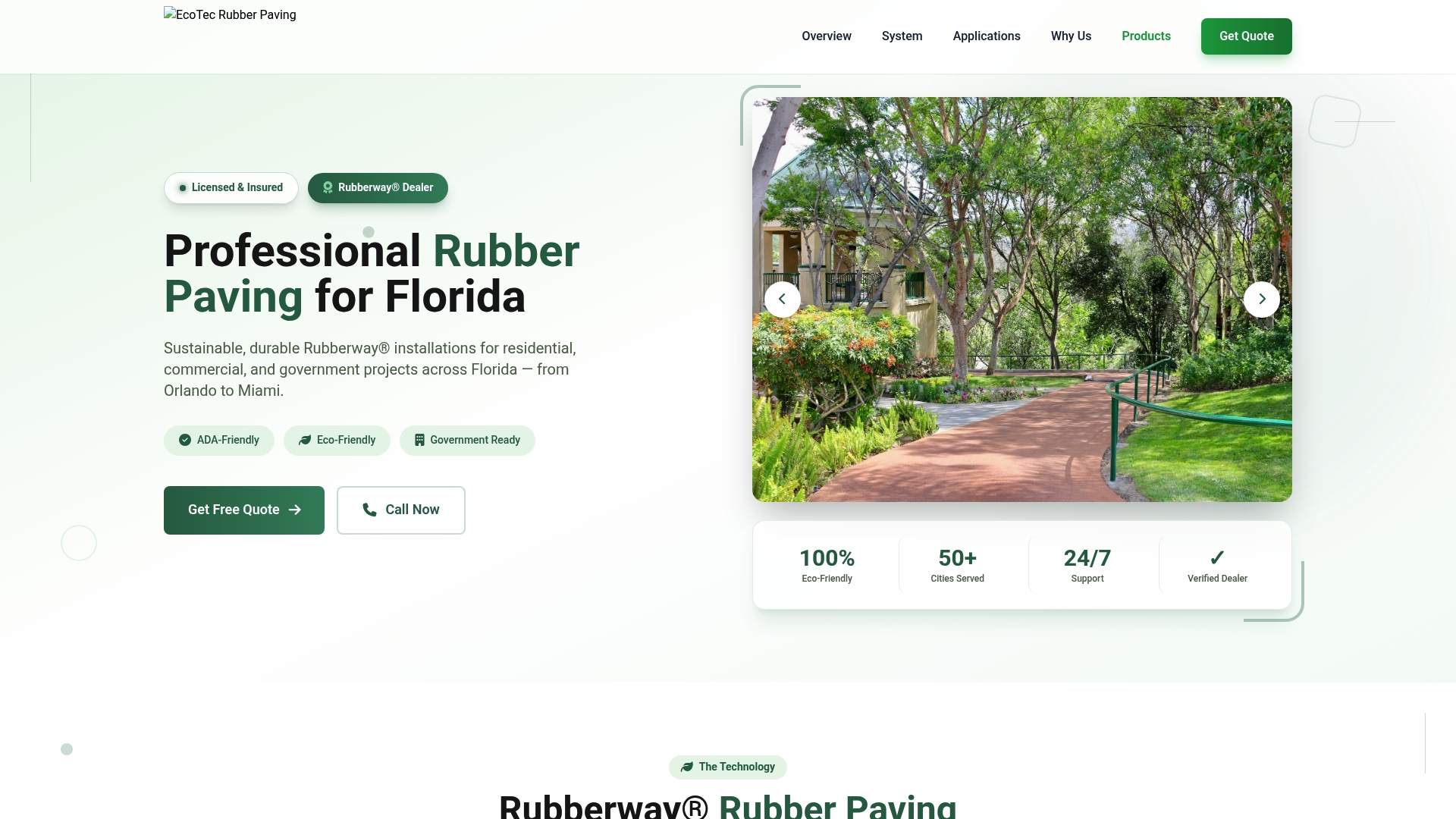
The practical advantages are concrete: recycled rubber composition, full permeability, crack resistance under thermal cycling, and ADA compliance built in from the start. No resealing schedule. No cracked units to swap out after a brutal Florida summer. Get a quote from Ecotecrubber and see what Rubberway® looks like for your specific project.
Key Takeaways
The most effective heat resistant paving materials combine low thermal conductivity with high solar reflectance, and color selection is as critical as material choice for keeping surfaces comfortable in hot climates.
| Point | Details |
|---|---|
| Material and color both matter | Light-colored, dense materials like porcelain stay cooler than dark stone or concrete in direct sun. |
| Thermal shock needs a different solution | Urethane-urea binder systems handle rapid temperature swings that crack standard rigid pavers. |
| Fire safety requires specialized materials | Kiln-fired refractory bricks and hydrotalcite/montmorillonite composites are built for fire exposure; standard pavers are not. |
| Sustainability and performance align | Permeable rubber paving reduces heat island effect, manages stormwater, and resists cracking without sacrificing durability. |
| Ecotecrubber's Rubberway® system | Delivers recycled rubber paving with permeability, crack resistance, and ADA compliance tailored for Florida's climate. |