
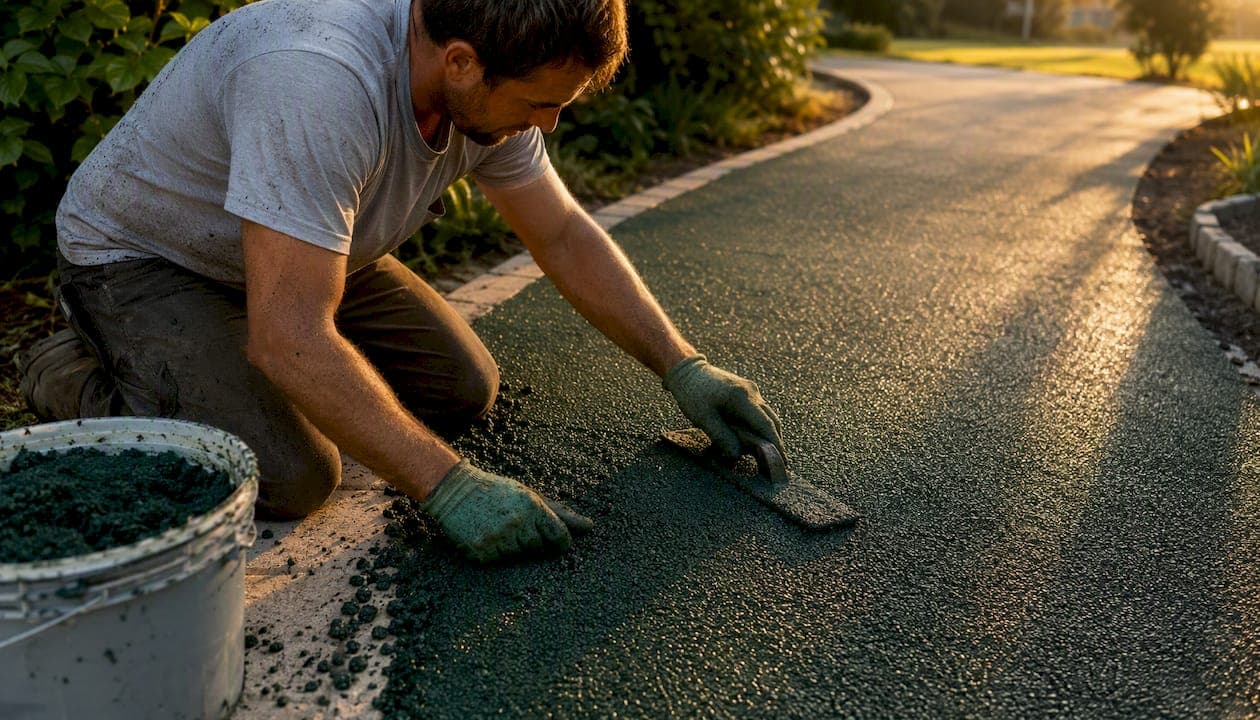
For Florida homeowners, HOA boards, commercial managers, and municipal buyers, Rubberway® poured recycled-rubber paving is the recommended choice. EcoTec Rubber Paving installs this system across Florida, and it handles the state's heat, UV exposure, and heavy rainfall better than conventional concrete or standard asphalt. The Rubberway® system drains rapidly, resists cracking, and meets ADA surface requirements. Schedule a site visit with Ecotecrubber before your next paving project.
Key Takeaways
Rubberway® poured recycled-rubber paving is the most climate-matched paving design for Florida properties, combining rapid drainage, crack resistance, and ADA compliance in a single-layer system.
| Point | Details |
|---|---|
| Florida climate fit | Rubberway® handles UV, heat, and heavy rain better than concrete or standard asphalt. |
| Service life | Manufacturer-stated 12+ years with routine low-pressure washing and annual inspection. |
| Cost planning | Budget 10–15% contingency above the base quote for subgrade surprises and permitting fees. |
| ADA and permits | Confirm slope, friction specs, and stormwater permits early; a licensed contractor handles documentation. |
| Ecotecrubber | Licensed and insured Rubberway® installer serving residential, HOA, commercial, and municipal clients across Florida. |
Table of Contents
- What does a Rubberway® rubber paving project actually cost?
- How do you maintain rubber paving in Florida's climate?
- Why a Florida specialist reduces risk and delivers better results
- Ecotecrubber installs Rubberway® systems across Florida
- Sources
What does a Rubberway® rubber paving project actually cost?
Pricing depends on surface area, site conditions, thickness, and color selection. Residential driveways and pool decks typically run lower per square foot than municipal trails or commercial walkways requiring engineered sub-bases. Budget for these line items beyond the base installation rate:
- Site preparation: grading, removal of existing material, and subgrade compaction add cost on uneven or root-damaged sites.
- Sub-base engineering: a permeable aggregate base is required for proper drainage; depth varies by traffic load and soil permeability.
- Color and customization: multiple color blends or logo inlays increase material cost.
- ADA compliance detailing: truncated dome panels, slope verification, and surface friction testing add scope on public-access projects.
- Permitting fees: municipal projects often require stormwater and ADA permit submissions; fees vary by Florida county.
- Contingency: plan for 10–15% above the base quote for unforeseen subgrade issues, especially on older Florida properties with root intrusion or drainage problems.
Request an itemized quote. A reliable estimate requires site photos, expected traffic type (pedestrian, light vehicle, or heavy), and your preferred finish.
How do you maintain rubber paving in Florida's climate?

Florida's combination of intense UV, humidity, and seasonal storms creates specific maintenance demands. The good news: Rubberway® systems require less upkeep than concrete or asphalt, with a manufacturer-stated service life of 12+ years.
Routine care:
- Rinse with a garden hose or low-pressure wash monthly to clear organic debris, mold spores, and sand.
- Avoid high-pressure washing above manufacturer limits; aggressive pressure strips the binder and degrades the surface texture.
- Inspect annually for edge lifting or binder wear, particularly after hurricane season.
- Reapply a UV-protective top coat every few years in high-sun areas like pool decks and south-facing driveways.
Florida's wet season accelerates organic growth in porous surfaces. A diluted bleach rinse (following manufacturer guidance) addresses mildew without damaging the rubber matrix. Weather and humidity directly affect cure times during installation, so scheduling matters too.
Why a Florida specialist reduces risk and delivers better results
Choosing a Florida-focused installer is not just a preference. It is a code and performance issue.
That makes it fundamentally different from rubber-modified asphalt. Florida DOT testing found handling and separation issues with asphalt-rubber binder (ARB) formulations, leading to a revised PG 76-22 (ARB) specification. A 2020 peer-reviewed review confirmed that recycled tire rubber improves rutting resistance and durability when properly designed. Rubberway® takes that material science further by eliminating the hot-mix process entirely.

For ADA surfaces, Rubberway® sidewalk documentation lists dry and wet coefficients of friction that meet pedestrian surface criteria. A licensed Florida contractor confirms slope compliance and provides the documentation procurement teams need for permit submissions and HOA board presentations.
Ecotecrubber installs Rubberway® systems across Florida
Florida properties deserve a paving solution built for Florida conditions. Ecotecrubber delivers exactly that: licensed and insured Rubberway® installations for residential driveways, pool decks, commercial walkways, municipal parks, and HOA common areas.
Every project starts with a site evaluation. Ecotecrubber's crews handle ADA-compliant design, engineered permeable sub-base construction, color selection, and warranty documentation. To get a reliable quote, have ready: site photos, expected traffic type, and your preferred color or finish. Browse Rubberway® product options or contact Ecotecrubber directly to schedule your site visit.
Sources
These sources support the claims in this article and give procurement teams, engineers, and public-works staff the documentation they need for RFPs, permit submissions, and board presentations.
- Use of recycled tire rubber in asphalt pavements: state of the art review (Sustainability)
- Pervious Rubber Pavement | Rubberway
Use these documents when preparing RFPs or HOA board presentations: the Rubberway® CSI specification and the Florida DOT ARB report carry the technical authority reviewers expect.