
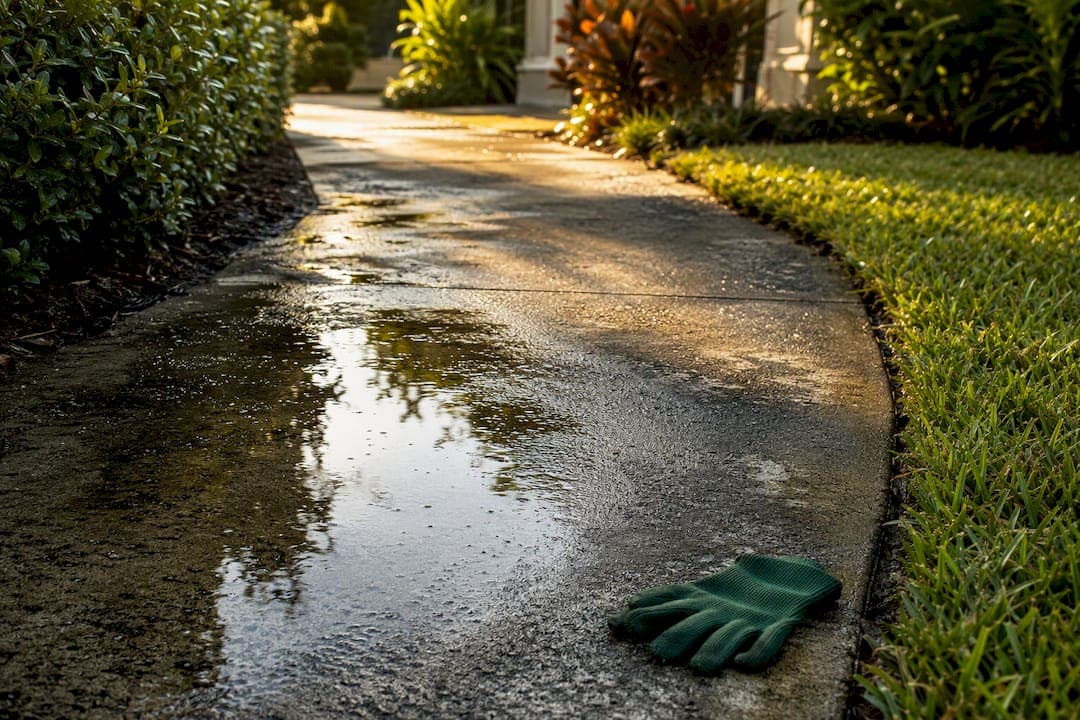
Clean off algae and mildew first, then broadcast coarse sand or apply anti-slip tape as a same-day fix. For a lasting solution, use a grit-added sealer or, for heavy foot traffic, mechanical texturing or a durable resurfacing option like rubber paving. Call a contractor when slipperiness persists after cleaning, when the area is large, or when the concrete itself has structural problems.
TL;DR:
- Applying a grit-added sealer or anti-slip tape provides immediate traction but requires reapplication more frequently in high-traffic or outdoor areas.
- Mechanical surface texture methods like grinding or shot blasting offer permanent traction improvements suitable for heavy-use or structurally compromised concrete.
- Drainage issues and surface wear are often the root causes of slipperiness, making proper drainage fixes and addressing concrete deterioration critical before surface treatments.
- Rubber paving made from recycled materials is a durable alternative that resists cracking and pooling, especially suitable for areas with drainage problems or freeze-thaw cycles.
- Regular maintenance, such as cleaning residue buildup and monitoring surface wear, prolongs the effectiveness of anti-slip treatments and delays costly resurfacing options.
Table of Contents
- Quick temporary fixes homeowners can do today
- Durable, long-term surface treatments that actually last
- How to prepare and apply an anti-slip treatment correctly
- Maintenance, lifespan, and when to redo the treatment
- Safety and accessibility: simple checks that matter as much as the surface
- When a concrete fix isn't enough and a professional should step in
- Choosing the right anti-slip solution based on climate and foot traffic
- Common causes of concrete walkway slipperiness besides algae
- Cost estimates and comparative pricing for different fix methods
- Long-term durability and impact of each fix method on concrete integrity
- Environmental considerations and safe product recommendations
- What actually matters when fixing a slippery walkway
- EcoTec Rubber Paving: a durable resurfacing alternative
- Sources
- FAQ
Quick temporary fixes homeowners can do today
Before any long-term treatment, get the surface safe now. Organic growth is the most common culprit behind slick concrete, and cleaning it removes the problem at its source rather than masking it, according to the Access Board's guidance on floor and ground surfaces.
- Scrub the walkway with a commercial algaecide or a 1:3 bleach-to-water mix, then rinse thoroughly.
- Power wash on a wide fan setting to avoid gouging the surface, holding the nozzle at least a foot away.
- Broadcast coarse sand or fine gravel over damp or newly cleaned concrete for immediate grip.
- In winter, combine sand with a concrete-safe ice melt rather than rock salt, which can pit the surface over repeated seasons, according to ConcreteDecor.
- Stick down anti-slip tape or set rubber stair treads and mats on stairs, ramps, and other high-risk spots.
Pro Tip: Anti-slip tape loses its grip below freezing temperatures, so check the manufacturer's temperature rating before relying on it through winter.
These fixes buy time but don't fix the underlying texture. Sand washes away, tape peels, and mats shift underfoot. Treat them as a bridge to a permanent treatment, not a replacement for one.
Durable, long-term surface treatments that actually last
Once the surface is clean, the real decision is what kind of permanent traction to add. Sealers with grit additives are the most common fix for decorative or plain concrete because they add texture without a full resurfacing job.
- Polymer grit, usually clear polyethylene, stays suspended evenly in the sealer and comes in different particle sizes, so it adds traction without clouding the concrete's color, per ConcreteNetwork.
- Silica sand and aluminum oxide grit are heavier, cheaper alternatives, but they tend to settle unevenly and can dull decorative finishes.
- Textured sealers come in clear and pigmented versions, letting you match an existing color scheme or refresh a faded walkway at the same time.
For concrete that stays slippery after sealing, or for commercial and municipal walkways with constant foot traffic, mechanical texturing changes the surface itself. Grinding, shot blasting, and scabbling cut a permanent profile into the concrete, while chemical etching opens the surface pores so a subsequent sealer bonds better. These methods cost more and typically need equipment rental or a contractor, but the texture doesn't wear off the way a topical coating does.
When the concrete is cracked, spalled, or aesthetically outdated rather than just slick, resurfacing or an overlay solves both problems in one project. This is also the point where some homeowners look at alternatives to concrete altogether, since a full overlay costs about as much as switching materials entirely. Our guide to resurfacing options covers this trade-off in more detail.
How to prepare and apply an anti-slip treatment correctly
Skipping prep is the most common reason a grit sealer or coating fails early. Work through these steps before opening a single can of sealer.
- Inspect the walkway for cracks, settling, and level changes; a transition greater than a quarter inch is a recognized trip hazard, according to the CDC/NIOSH walkway checklist.
- Clean and fully dry the surface. Sealer applied over damp concrete traps moisture and fails within a season.
- Mix grit into the sealer using a mechanical mixer at the ratio the manufacturer recommends, commonly 5 to 15% by sealer solids, according to ConcreteDecor.
- Apply with a roller, then broadcast additional grit by hand into wet sealer for extra traction in high-wear spots. Never spray a grit-loaded sealer: the grit clogs spray equipment and settles unevenly, per ConcreteNetwork's gritty sealer guide.
- Let the sealer cure fully before foot traffic, then walk the surface wet to test grip before calling the job done.
Pro Tip: Coat a small, out-of-the-way section first as a sample patch. It's the easiest way to check color, texture, and grip before committing to the whole walkway, and contractors recommend it for exactly that reason.
Weather matters as much as technique. Sealers need a dry window with moderate temperatures to cure properly, so check the forecast before starting a weekend project.

Maintenance, lifespan, and when to redo the treatment
Grit sealers wear the same way a rug wears in a hallway: slowly, then all at once in the highest-traffic path. Watch for a smooth, shiny patch developing where grit has thinned out, since that's the visual cue that traction is dropping.
- Sweep or rinse the walkway regularly to prevent algae and mildew from regrowing on the sealed surface.
- Rinse off de-icing salt residue promptly each spring, since repeated exposure can break down some coatings faster than plain weathering.
- Expect to recoat more often on south-facing or high-UV walkways, since sunlight degrades sealer resin over time, according to CleanerTimes.
- Heavy foot traffic areas, like a front entry or a shared community path, will need recoating sooner than a rarely used side path.
Reapplication schedules depend on all these factors together, so there's no single number that fits every walkway. Check the surface each spring and fall and recoat as soon as you notice smoothing rather than waiting for it to become slippery again.
Safety and accessibility: simple checks that matter as much as the surface
Surface treatment solves only part of the problem. Fix trip hazards first: any abrupt level change greater than a quarter inch should be ground down or ramped, since it's a recognized hazard on its own regardless of how grippy the surface is, per the CDC/NIOSH checklist. Add or upgrade lighting along the path, clear away planters, hoses, and other clutter, and set up barriers or drainage fixes around spots that pool water or collect leaf litter.
For properties that need to meet accessibility standards, the Access Board's Chapter 3 guidance requires walking surfaces to be stable, firm, and slip-resistant, but it doesn't set one universal numeric friction value to test against. That means compliance comes down to choosing proven materials and finishes rather than chasing a single lab number. Our ADA-compliant walkway guide walks through the materials that hold up to inspection.
When a concrete fix isn't enough and a professional should step in
Call a contractor when a walkway stays slippery after thorough cleaning, when the job covers a large commercial or municipal area, or when the concrete needs structural leveling before any surface treatment makes sense. ADA compliance projects also warrant professional input, since a licensed and insured contractor is expected to document material compatibility and provide a sample patch before full application.
Ask any contractor for proof of licensing and insurance, and don't skip the sample patch step. It's the same low-cost check homeowners use before a DIY job, just verified by someone accountable for the result.
Choosing the right anti-slip solution based on climate and foot traffic
The right fix depends less on the concrete itself and more on what's walking over it and what the weather does to it. A quiet backyard path in a mild, dry climate can often get by with a basic grit sealer and occasional cleaning. A shaded, humid walkway that grows algae every few weeks needs a more aggressive cleaning schedule paired with a sealer, since the underlying moisture problem will keep returning no matter what coating sits on top.
High foot traffic changes the math entirely. A front entry, a commercial sidewalk, or a shared community path wears through topical grit faster than a rarely used side path, which pushes the decision toward mechanical texturing or a full resurfacing since those methods change the surface itself instead of sitting on top of it.
Freeze-thaw climates add another layer. Water that seeps into concrete and refreezes expands and cracks the surface over repeated winters, and de-icing salt accelerates that damage while also wearing down sealers faster. In that kind of climate, a porous or well-draining surface matters as much as the traction treatment, since standing water that freezes overnight is often a bigger hazard than the concrete's base texture.
Matching the fix to both factors, climate and traffic, avoids the common mistake of treating every walkway the same way. A sealer that works well on a shaded porch may need recoating twice as often on a sunbaked commercial entry.

Common causes of concrete walkway slipperiness besides algae
Algae and mildew get most of the attention, but they aren't the only reason a walkway turns slick. Water pooling is one of the most overlooked causes: a slight dip or poor grading lets water sit on the surface long after rain, and standing water on any concrete, treated or not, is slippery underfoot. Fixing the drainage problem, not just the surface, is often the more permanent solution.
Wear is another factor that builds slowly. Foot traffic polishes concrete's surface texture down over years, especially on smooth-troweled finishes that were never particularly grippy to begin with. A walkway that felt fine when it was poured can turn slick a decade later simply from repeated use smoothing out its natural profile.
Soap and cleaning product residue left on a surface, oil or grease drips from parked vehicles, and even fine dust or pollen buildup can each add a thin, slick film to concrete. None of these require algae to make a surface dangerous, and none of them are fixed by an anti-slip treatment alone if the underlying residue isn't cleaned first.
Recognizing which of these is actually driving the slipperiness changes the fix. A drainage problem calls for regrading or better runoff, while worn concrete calls for texturing or resurfacing, and residue calls for a cleaning routine before anything else.
Cost estimates and comparative pricing for different fix methods
Costs vary widely depending on the method, the size of the area, and whether the work is DIY or contracted. Temporary fixes like sand, tape, or mats are the cheapest option, usually requiring only the price of the material itself from a hardware store. Grit-added sealers cost more than plain sealer because of the additive, but remain one of the more affordable permanent options for a homeowner willing to do the application themselves.
Mechanical texturing methods, grinding, shot blasting, and scabbling, cost significantly more because they require specialized equipment and usually a contractor, particularly for anything beyond a small patio. Chemical etching sits somewhere in between, since it can sometimes be done with retail products but works best under professional application for consistent results.
Full resurfacing or an overlay is typically the most expensive route, since it involves removing or covering the existing surface entirely rather than treating what's already there. Rubber paving installation falls into a similar cost category as concrete overlays, since both require removing the old surface treatment approach and starting fresh, though pricing depends on the property and is best confirmed with a direct quote rather than assumed from a general range.
For most homeowners, the practical approach is to start with the cheapest fix that addresses the actual cause, cleaning and a grit sealer, and only move up to mechanical or resurfacing costs when that doesn't hold up under the traffic and climate the walkway sees.
Long-term durability and impact of each fix method on concrete integrity
Every fix interacts differently with the concrete underneath it, and that matters for how long the results last. Grit-in-sealer treatments sit on top of the concrete as a coating. They don't change the substrate, which means they're reversible and low-risk, but it also means the grit wears down over time and needs periodic recoating rather than lasting indefinitely.
Mechanical texturing methods work the opposite way: grinding, shot blasting, and scabbling change the concrete's surface profile permanently. That makes the traction improvement far more durable since there's no coating to wear off, but it's a one-way process. Once the surface is textured, it can't be smoothed back without another round of grinding or an overlay.
Chemical etching falls somewhere in between. It opens the surface pores of the concrete slightly to improve grip and sealer adhesion, which is less aggressive than grinding but still a permanent change to the surface chemistry rather than a removable coating.
Resurfacing and overlays replace or cover the existing surface, which resets the durability clock but also depends heavily on how well the new layer bonds to the old concrete. A poorly bonded overlay can delaminate over a few years, while a properly prepared one can last as long as the original slab.
Rubber paving takes a different approach entirely: instead of treating or covering concrete, it replaces it with a porous rubber surface that resists cracking from freeze-thaw cycles and heat, since it flexes rather than fractures. That makes it a durability play more than a texture fix, worth considering when concrete keeps cracking or crumbling regardless of how it's treated.
Environmental considerations and safe product recommendations
Not every anti-slip product is equally kind to the yard, storm drains, or the people applying it. Bleach solutions used for algae cleanup are effective but can harm nearby plants and enter storm drains if not rinsed and contained properly, so use the smallest effective concentration and avoid runoff into gardens or waterways. Commercial algaecides marketed for exterior use are generally a gentler option on surrounding landscaping than straight bleach, though they still call for keeping pets and children off the surface until it dries.
Sealers vary in their environmental footprint depending on their solvent base. Water-based sealers generally produce fewer fumes and are easier to clean up than solvent-based ones, which matters both for the person applying them and for anyone sensitive to strong chemical odors nearby. Whichever product you choose, follow the label's ventilation and disposal instructions rather than pouring leftover material down a drain.
For homeowners who want to reduce long-term chemical use altogether, less frequent but more durable fixes cut down on repeated product application over the years. A mechanically textured surface, for instance, doesn't need recoating with sealer every couple of seasons the way a topical grit sealer does. Rubber paving surfaces, built from recycled tire material, also sidestep the repeated sealing cycle entirely since the surface itself provides the grip rather than a coating layered on top.
Whatever product you settle on, read the manufacturer's safety data sheet before mixing or applying anything, and keep runoff away from storm drains and garden beds.
What actually matters when fixing a slippery walkway
Most advice on this topic treats cleaning and sealing as the whole answer, but the bigger issue is usually drainage and wear, not just algae. A walkway that keeps growing slick film every few weeks almost always has a water problem underneath it, and no amount of grit sealer fixes that permanently. Homeowners who skip straight to a coating without addressing why water sits on the surface end up recoating every year and wondering why it never sticks.
The other overlooked point is that DIY grit sealers are genuinely good for light residential use, but they're not a fair comparison to mechanical texturing or resurfacing for anything with real foot traffic. Comparing a $50 bag of sealer additive to a full resurfacing job misses that they solve different problems at different scales.
Start with the cheapest fix that addresses the actual cause. If drainage or wear keeps undoing that fix, that's the signal to consider a permanent change to the surface itself rather than another round of sealer.
— Roger
EcoTec Rubber Paving: a durable resurfacing alternative
If your concrete keeps cracking, pooling water, or growing algae no matter how often you clean and reseal it, replacing the surface entirely may cost less over time than fighting the same problem every season. EcoTec Rubber Paving installs the Rubberway® system using recycled rubber materials, built with a porous design that drains instead of pooling and flexes instead of cracking under heat and freeze-thaw cycles.
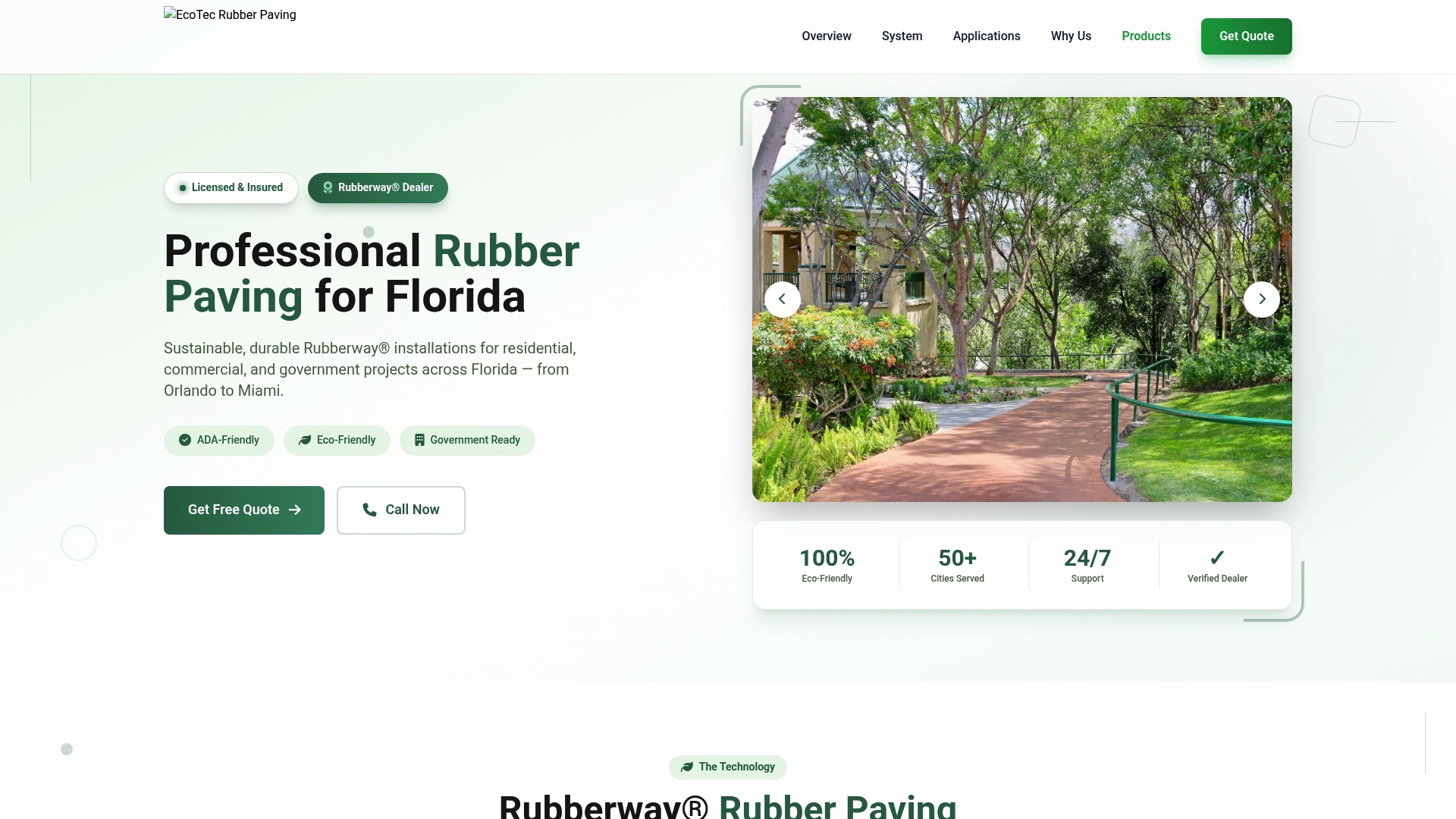
- Rubber paving options can offer ADA-compliant, slip-resistant surfaces in various colors.
- Rubber paving is suitable for sites with drainage challenges, recurring algae issues, and areas affected by freeze-thaw cycles.
- Some contractors provide licensing, insurance, and documentation services for municipal and HOA projects.
If your walkway falls into any of those categories, request a site assessment or browse the Rubberway product lineup to see which system fits your property.
Sources
Review the Access Board's ADA surface guidance and ConcreteNetwork's sealer guide, and always follow manufacturer mixing instructions with a sample patch first.
FAQ
Is there a way to make concrete less slippery?
Yes. Cleaning off algae and residue, then applying a sealer with a grit additive, is the most common permanent fix for typical residential concrete, according to ConcreteNetwork. Heavier traffic areas may need mechanical texturing instead, since a topical coating wears down faster under constant use.
What can I spray on concrete to make it less slippery?
Plain sealers can be sprayed on, but a sealer that includes grit additive should never be sprayed, since the grit clogs spray equipment and settles unevenly, per ConcreteNetwork's gritty sealer guide. Apply grit-loaded sealer with a roller and broadcast technique instead for even coverage.
What is the best anti-slip coating for concrete?
For decorative or colored concrete, a clear polyethylene grit sealer is generally preferred because it adds traction without clouding the surface's appearance, according to ConcreteNetwork. Silica sand or aluminum oxide grit works too but tends to settle unevenly and can dull the finish.
Can you put a thin coat of concrete over existing concrete?
A thin overlay can be applied over existing concrete, but it depends on the slab being structurally sound and properly cleaned first, since a poorly bonded overlay can delaminate within a few years. For concrete that's cracked or shifting, addressing the structural issue or considering a full resurfacing option is more reliable than a thin overlay alone.
How often do anti-slip sealers need to be reapplied?
There's no fixed schedule since it depends on foot traffic, sun exposure, and climate, but grit wears fastest in high-traffic and high-UV areas, according to CleanerTimes. Check the surface each spring and fall for smoothing or shine, and recoat as soon as that wear becomes visible.