
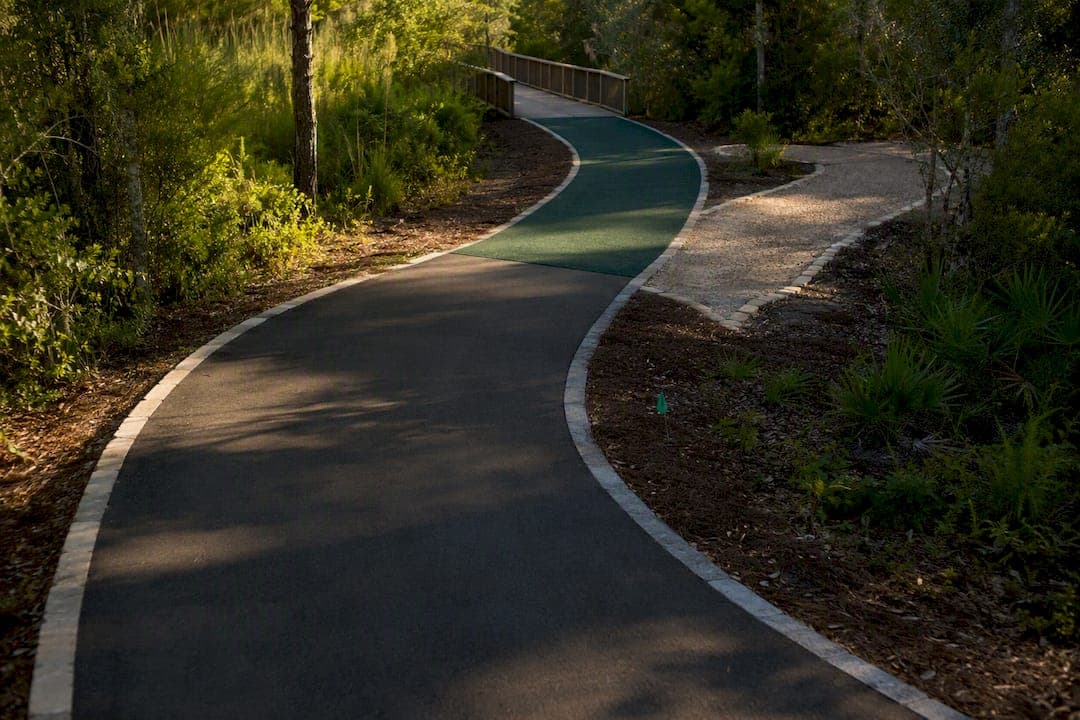
For multiuse paths on Florida's Shared-Use Nonmotorized Trail Network, hard surfaces like asphalt or concrete are the default, and often the legal requirement. Crushed stone works for lower-budget multiuse segments, soft surfaces suit low-traffic footpaths, and elevated boardwalks handle wetland crossings. Drainage and maintenance capacity, not upfront cost, usually decide which one actually lasts.
TL;DR:
- Hard surfaces like asphalt and concrete are required for high-traffic, wheelchair-accessible multiuse trails, especially in the Florida SUN Trail network.
- Pervious pavements, recycled rubber, and other permeable options offer stormwater management benefits but require proper sub-base treatment and regular maintenance.
- Concrete often lasts 25 to 30 years with less routine upkeep, while asphalt needs seal coats every five to seven years and overlay every 15 to 20 years.
- Soft surfaces like crushed stone or mulch are suitable for low-traffic, natural trails but tend to degrade faster under Florida’s humidity and rainfall.
- Starting with a detailed maintenance plan and phased material upgrades helps manage costs and adapt trail features over time.
Table of Contents
- Community Trail Material Florida Options: A Quick Map
- Asphalt, Concrete, and Permeable Hard Surfaces
- Crushed Stone, Mulch, and Other Soft Surfaces
- Permeable Pavement and Recycled Material Choices
- What Trail Maintenance Actually Costs Over Time
- Florida Rules and Design Standards Planners Need to Know
- Where Rubberway® Fits Into Florida Trail Projects
- What I'd Tell Any Trail Committee Before They Vote
- Get a Site Assessment for Your Trail Project
- Sources
- FAQ
Community Trail Material Florida Options: A Quick Map
Florida trail planners really choose among five material families, and each one answers a different question. Hard surfaces (asphalt, concrete, and their permeable cousins) handle heavy foot and bike traffic and meet accessibility codes without much fuss. Improved unpaved surfaces, think compacted crushed stone or limestone, split the difference between cost and durability. Soft surfaces like mulch or natural tread work for nature trails where speed and wheelchairs aren't the priority. Boardwalks solve the wetland problem entirely differently, by lifting the path above the water table. Permeable and recycled options, including rubber systems, sit alongside the hard-surface category but add stormwater performance.
Four questions narrow the choice fast:
- Who uses the trail? Wheelchairs, strollers, and bikes need continuous hard or hard-permeable surfaces.
- How much traffic? High-volume community loops wear out soft surfaces within a season or two.
- How sensitive is the site? Wetlands, floodplains, and sandy soils change everything about sub-base design.
- What can the community actually maintain? A crushed stone trail nobody grades twice a year turns to ruts.
Florida's climate compounds every one of these decisions, as detailed in this Praxisguide to wetterfeste Möbel, which explores materials designed to withstand intense UV and weather exposure. Intense UV degrades asphalt binders and untreated wood faster than in temperate states, while heavy seasonal rainfall exposes any surface with weak drainage within a single wet season.
Asphalt, Concrete, and Permeable Hard Surfaces
Asphalt remains the most common choice for Florida shared-use paths because it's smooth, ADA-friendly, and relatively cheap to install per linear foot. The tradeoff shows up in year eight or so, when UV oxidation and heat cycling start cracking the surface, typically requiring a seal coat around year five to seven and a full overlay by year fifteen to twenty. Porous asphalt swaps in an open-graded aggregate mix that lets water pass through instead of pooling, a real advantage on flat Florida terrain where standing water is a constant headache.
Concrete costs more upfront but tends to outlast asphalt, often reaching 25 to 30 years before major work is needed. Its main weak points are joint maintenance and heaving from tree roots or expansive soils. Precast concrete boardwalk systems have emerged as a strong alternative to traditional wood for wetland crossings, with design life examples ranging from 50 to 75 years and far less routine upkeep than timber.
Where hard surfaces earn their cost:
- Any segment classified as part of Florida's SUN Trail network
- High-traffic connectors between neighborhoods, schools, or parks
- Sites where ADA compliance is non-negotiable
Pervious concrete and porous asphalt both need a properly engineered sub-base, often a deep stone reservoir layer, plus periodic vacuum sweeping to keep pores from clogging with Florida's fine sandy sediment.
Crushed Stone, Mulch, and Other Soft Surfaces
Crushed stone and compacted limestone give planners a middle path when a full asphalt or concrete build is out of budget. Properly compacted and edge-restrained, these surfaces handle moderate foot and bike traffic reasonably well, though they're a poor fit for wheelchairs and require periodic regrading as ruts and washouts develop.
Mulch and wood chip trails cost the least and can often be installed by volunteer crews in a weekend. They're a natural fit for nature loops and low-traffic segments, but Florida's humidity and rainfall break down organic material faster than in drier climates, meaning refresh cycles come around more often than most committees expect.
A few middle-ground options worth knowing:
- Soil cement stabilizes native soil with a cement additive, giving more structure than raw gravel at a fraction of concrete's cost.
- Resin-bound surfaces bind aggregate with a permeable resin, offering a firmer, more consistent tread than loose stone.
- Natural tread (compacted native soil) works only where drainage is naturally good and traffic stays light.
The Rails-to-Trails Conservancy's surfaces guidance treats these as legitimate long-term choices for low-to-moderate-use trails, not just stopgaps, provided the maintenance commitment is realistic from day one.
Permeable Pavement and Recycled Material Choices
Permeable paving and landscaping options exist specifically to solve Florida's drainage problem at the source rather than routing water elsewhere. Porous asphalt, pervious concrete, and open-grid pavers all let stormwater infiltrate through the surface instead of running off, and some correctly built systems allow infiltration of up to roughly 80% of annual rainfall. That matters in a state where afternoon downpours are a daily summer event, not an occasional storm.
Recycled rubber paving, made largely from reclaimed tire material, adds another layer to this category. It flexes rather than cracks under heat cycling and drains through its porous structure, which suits playground connectors and shared paths where a softer, more forgiving surface adds value. Long-term performance data on rubber trail surfaces is still thinner than for decades-old asphalt and concrete, so it pays to treat vendor durability claims with reasonable skepticism and confirm warranty terms in writing.
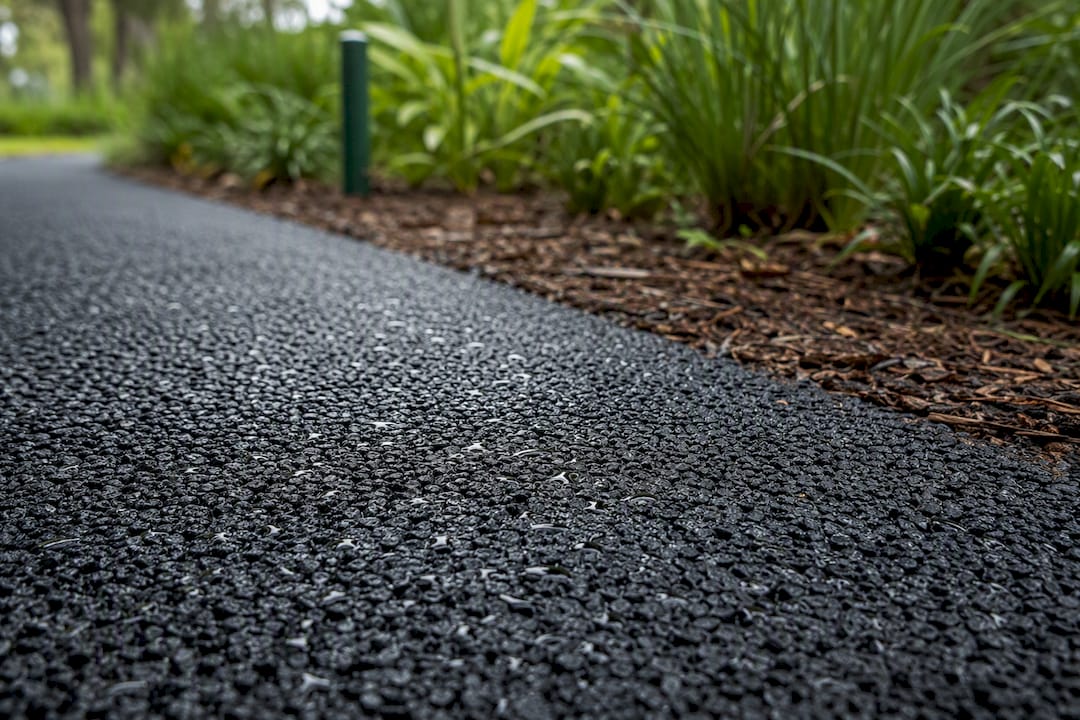
Pro Tip: Any permeable system, rubber or otherwise, needs pretreatment for sediment and a sub-base built for local percolation rates. Skip that step and clogging shows up within a year or two, not a decade.
What Trail Maintenance Actually Costs Over Time
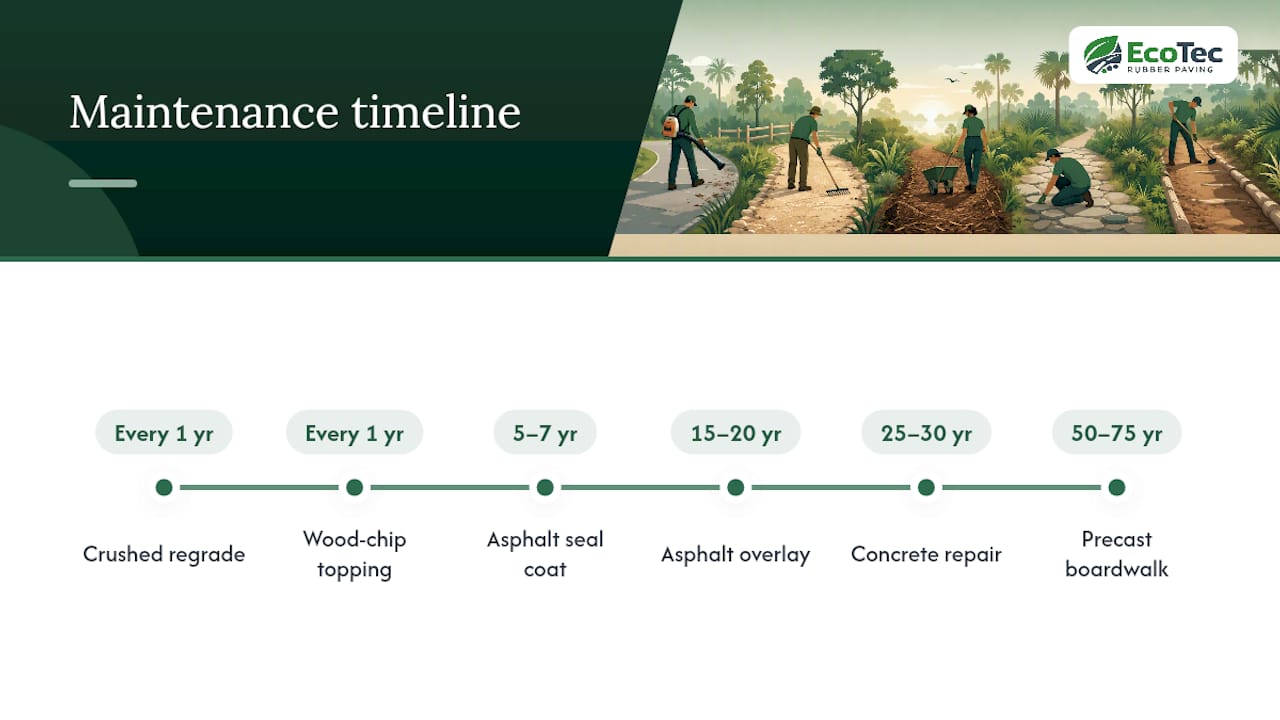
The sticker price on a trail surface tells you almost nothing about what it costs over 20 years. Asphalt needs seal coating roughly every five to seven years and a full overlay around the 15 to 20 year mark. Concrete needs far less routine attention but comes due for joint repair or slab replacement closer to the 25 to 30 year point. Crushed stone needs regrading once or twice a year depending on rainfall and traffic. Wood chip trails need topping off annually. Timber boardwalks need plank replacement on a rolling basis as sun and moisture take their toll, while precast concrete boardwalks push that capital expense out toward the 50 to 75 year range.
Permeable systems, rubber included, need periodic vacuum sweeping or pressure cleaning to keep the pore structure open.
A pattern worth internalizing: soft surfaces shift cost toward frequent, low-dollar maintenance, while hard surfaces shift it toward infrequent, high-dollar capital renewal. HOA boards and municipal planners without a dedicated maintenance crew often do better with hard surfaces, even at a higher upfront cost, simply because nobody has to remember to regrade gravel every spring. Compare surface tradeoffs in more depth in this paving material comparison guide.
Florida Rules and Design Standards Planners Need to Know
Any segment intended as part of Florida's Shared-Use Nonmotorized Trail Network falls under Florida Statute s.339.81, which requires those multiuse paths to be physically separated from motor vehicle traffic and built with a hard surface, asphalt, concrete, or a comparable material. That single statute eliminates gravel and mulch as options for any trail claiming SUN network status, regardless of budget preferences.
Beyond the statute, Florida DEP's trail design guidance sets practical parameters: cross-slope and crown in the 2% to 5% range for proper drainage, defined tread-width recommendations by use level, and specific triggers for when a wetland crossing needs a boardwalk instead of fill.
Before breaking ground, most Florida projects need to work through:
- A soils and percolation test at the actual build site, not a nearby parcel.
- A floodplain and wetland determination for any low-lying or coastal segment.
- Coordination with the relevant water management district and local planning office.
- A drainage plan matched to the site's crown and cross-slope requirements.
- An ADA accessibility review for any segment marketed as multiuse.
The Florida Trail Association's trail manual offers sample boardwalk and puncheon designs worth reviewing before finalizing wetland crossing plans, and see this ADA compliance paving guide for accessibility specifics.
Where Rubberway® Fits Into Florida Trail Projects
Ecotecrubber's Rubberway® system was built around exactly the problems Florida trails create: standing water, UV-driven cracking, and a growing preference for recycled materials over virgin asphalt. The pervious rubber surface drains through its structure instead of pooling, resists the heat-cycle cracking that shortens asphalt's lifespan, and comes in ADA-compliant configurations.
It's not the right call for every mile of trail. A long-distance backcountry connector rarely needs it. But for playground connectors, HOA shared paths, short municipal links, and pool-adjacent walkways where drainage and softer footing both matter, it's a legitimate alternative worth evaluating alongside traditional hard surfaces. More on the design side is available in this rubber paving design guide and the Rubberway® product lineup.
What I'd Tell Any Trail Committee Before They Vote
Start with a maintenance plan, not a material. A crushed stone trail with a committed volunteer crew beats a concrete path nobody budgeted to repair. Most successful Florida trails I've seen on paper follow a phased path: soft or improved surface first, upgrading to hard or permeable sections as usage and funding both grow. That sequencing matches spending to actual demand instead of guessing at year one what year ten will look like.
— Roger
Get a Site Assessment for Your Trail Project
If your project needs a permeable, crack-resistant surface for a playground connector, pool-adjacent walkway, or short community path, Ecotecrubber's Rubberway® system solves the drainage and heat-cracking problems traditional asphalt struggles with in Florida's climate, without giving up ADA compliance.
That said, be honest about scope. Long trail corridors and high-load vehicle-adjacent paths still often call for traditional asphalt or concrete, and a good contractor should tell you that upfront rather than push rubber everywhere. A fully licensed and insured contractor can provide government-ready documentation, drainage notes, an ADA compliance checklist, and maintenance recommendations with every proposal. If a section of your trail sounds like a fit, request a site assessment through Ecotecrubber and get a straight answer on whether rubber paving makes sense for your specific segment.
Sources
- Florida Statutes §339.81 — Florida Shared-Use Nonmotorized Trail Network (2026)
- Surfaces — Rails-to-Trails Conservancy
- Soak Up the Rain — Permeable Pavement, U.S. EPA
FAQ
What Is the Best Material for a Community Walking Trail?
It depends on use: hard surfaces like asphalt or concrete suit multiuse paths with bikes and wheelchairs, while crushed stone or natural tread works for low-traffic nature walks. Wetland crossings generally call for elevated boardwalks rather than any ground-level surface.
What Are Some Good Trail Towns in Florida?
Florida has numerous trail-oriented communities along its extensive multiuse network, often clustered near state parks and greenway corridors where local governments have invested in SUN Trail connections. Check the Florida Trail Association for current regional trail listings.
Where Does the Florida Trail Begin and End?
The Florida National Scenic Trail runs from Big Cypress National Preserve near the Everglades in the south to Gulf Islands National Seashore near Pensacola in the north.
How Many People Have Completed the Florida Trail?
Exact completion figures aren't publicly tracked in a single authoritative count, so specific numbers vary by source and year. The Florida Trail Association maintains records for certified thru-hikers who report their completions directly.
Does Rubber Paving Meet Florida's Hard-Surface Trail Requirements?
Rubberway® pervious rubber systems are designed as a hard, ADA-compliant surface option suited to shared paths, playground connectors, and similar segments, though suitability for SUN Trail network classification should be confirmed against your specific project's requirements under Florida Statute s.339.81.