
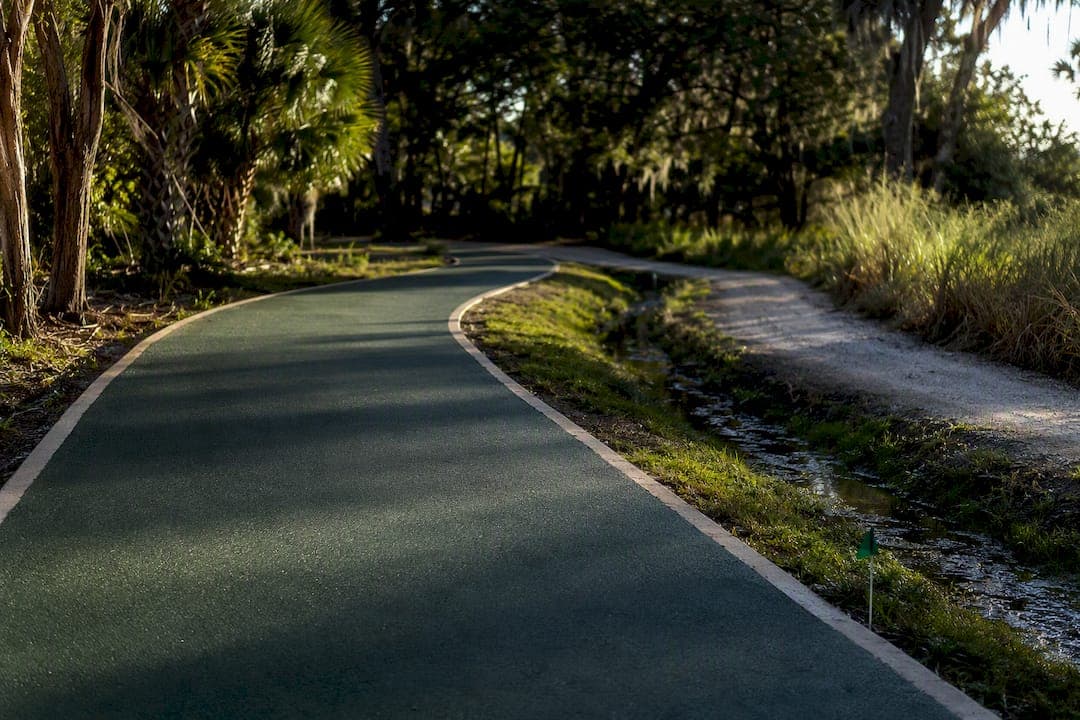
The right choice usually comes down to three questions: who's walking or rolling on it, how wet does the site get, and how much upkeep can you afford. Hard pavements like concrete, asphalt, or permeable concrete win on accessibility and drainage-challenged sites. Bound aggregates and rubberized surfaces split the difference between comfort and cost. Crushed stone and decomposed granite fit low-traffic recreational trails, boardwalks solve wetland crossings, and mulch or dirt work only where wheelchair access isn't a requirement.
TL;DR:
- Hard-surface trails like concrete and asphalt are best for high accessibility, durability, and drainage, especially in frequently wet or heavily used sites.
- Permeable concrete and rubberized systems work well in stormwater-prone areas but require higher maintenance and specialist installation to prevent clogging and ensure longevity.
- Crushed stone and decomposed granite fit low-traffic, natural settings but need regular regrading, especially when mixed with fines, to stay firm and stable.
- Paver and flagstone options offer aesthetic appeal and easy repairs but are generally unsuitable for high-traffic or high-visibility routes due to leveling and accessibility challenges.
- The choice of surface should be driven by site-specific drainage issues, climate, user needs, lifecycle costs, and installer expertise to avoid repeated costly upgrades.
Table of Contents
- Comparing Park Path Surface Options for Accessibility and Cost
- Concrete and Permeable Concrete
- Asphalt and Chip-Seal
- Crushed Stone, Crusher Fines, and Decomposed Granite
- Resin-Bound Aggregates and Permeable Pavers
- Rubberized Surfaces: Wetpour, Tiles, and Recycled Rubber
- Pavers, Brick, and Flagstone
- Boardwalks and Structural Decking
- Mulch, Wood Chips, Turf, and Dirt
- How to Choose the Right Surface: A 6-Step Checklist
- Where Rubber Paving Fits: A Practitioner's View
- Balancing What Residents Want With What the Site Needs
- Get a Rubberway® Estimate for Your Park Path
- Sources
Comparing Park Path Surface Options for Accessibility and Cost
Every park path surface option trades off against three things: how firm and stable it stays under a wheelchair or stroller, how well it sheds or absorbs water, and how much it costs you over 15 or 20 years, not just on installation day. The Rails to Trails Conservancy puts it plainly: hard-surface trails support the widest range of users and mobility devices, while soft, natural surfaces prioritize blending into the landscape and keeping the initial bill low. Neither is universally "better." A commuter bike path and a quarter-mile nature loop through a wetland have almost nothing in common as engineering problems, even though both get called a "park path."
That's really the standard industry framing worth knowing before you pick anything: surface selection isn't about finding the single best material, it's about matching a surface's firmness, drainage behavior, and maintenance demand to what the path actually needs to do.

Concrete and Permeable Concrete
Concrete remains the benchmark for durability. A properly installed slab lasts many years with routine sealing and joint maintenance, and it holds up to ADA firmness and stability standards better than almost anything else on this list. That said, expansion joints matter more than most planners expect. Poorly spaced or poorly finished joints create a rhythmic jolt for cyclists and a real tripping hazard for anyone using a cane or walker.
Permeable concrete solves the runoff problem standard concrete creates, letting water pass through instead of sheeting off into storm drains. It's considered ADA-compliant in many installations, but the voids that make it porous also clog with sediment over time, so it demands more frequent vacuuming or pressure washing than a standard slab.
- Standard thickness typically runs 4 to 6 inches over a compacted subbase.
- Permeable mixes need a deeper stone reservoir base to actually manage stormwater.
- Skip permeable concrete on shorelines or low spots that flood regularly. The voids fill with silt fast.
Asphalt and Chip-Seal
Asphalt is the default surface for shared-use and bike commuter paths because it's flexible, relatively cheap to install at scale, and easy for most paving contractors to source and place. Its downside shows up on the maintenance schedule. Asphalt typically lasts several years before it needs an overlay, and it's prone to cracking from tree roots, frost heave, and prolonged sun exposure.
Chip-seal is the budget alternative: a layer of asphalt emulsion topped with compacted aggregate chips. It costs less than a full asphalt mat but rides rougher, and in some climates it develops washboarding as loose chips shift under repeated wheel traffic.
- Asphalt suits paths anticipating occasional maintenance-vehicle or emergency-vehicle access.
- Chip-seal works best on lower-traffic connector trails where a slightly coarser texture is acceptable.
- Both need a properly compacted aggregate subbase; skipping this step is the number one cause of early cracking.
Crushed Stone, Crusher Fines, and Decomposed Granite
This is the category most people get wrong on the first try. Crushed stone only works as a walking surface if it contains fines, the fine particulate that fills gaps between larger stones and lets the material compact into a firm crust. Washed or screened stone, the kind sold for drainage beds, has no fines and stays loose forever. It's genuinely unsuitable for wheeled traffic of any kind.
Ask your supplier for "crusher run," "crush and run," or "decomposed granite fines," never washed gravel, if the goal is a walkable, wheelchair-passable tread.
Bonded crushed stone, where a resin or polymer stabilizer locks the fines and aggregate together, extends the surface's working life significantly and improves firmness. The National Trail Surfaces Study found that some stabilizer treated and polymer treated aggregates held "very firm" and "very stable" ratings across multi-year monitoring, putting them close to hard-surface performance without looking like a paved trail.
- Best suited to rural, recreational, and nature-trail contexts where a natural look matters.
- Cheaper upfront than concrete or asphalt, but needs periodic regrading and refresh of fines.
- Many parks use it as a phase-one surface, upgrading to asphalt or concrete later once traffic volume justifies the cost.
Pro Tip: Before ordering crushed stone, ask your supplier for the exact fines percentage in the mix, not just the aggregate size. A mix with too few fines will never compact into a stable tread, no matter how much you roll it.
Resin-Bound Aggregates and Permeable Pavers
Resin-bound surfacing blends aggregate with a clear binder, producing a smooth, uniform finish that reads as more upscale than crushed stone while remaining permeable to water and featuring specialty aggregates like glass sand for enhanced bonded surfaces. It's a strong fit for park plazas, entry points, and short connector paths where appearance carries real weight, but it typically requires a specialist installer familiar with mixing ratios and cure times, which narrows your contractor pool and raises cost.
Permeable pavers, meanwhile, capture stormwater between units filled with open-graded aggregate. They handle water well, but the joints between units can create a bumpier ride for long-distance wheelchair or stroller use than a monolithic surface would. Permeable pavement designs can reduce demand on stormwater infrastructure, but they cost more to install and aren't a great match for flood-prone or sediment-heavy sites.
- Resin-bound: best for stormwater-sensitive plazas and short, high-visibility connectors.
- Permeable pavers: strong drainage performance, higher price, rougher ride over distance.
- Both need routine maintenance to keep pore spaces from clogging.
For a deeper look at how these systems handle runoff and what maintenance they actually demand, see this breakdown of permeable paving benefits, types, and cost.
Rubberized Surfaces: Wetpour, Tiles, and Recycled Rubber
Rubber surfacing covers more ground than most people realize. Wetpour rubber is poured and cured on site into a seamless mat. Rubber tiles are prefabricated and installed like pavers. Bonded, porous systems like the Rubberway® system bind recycled rubber granules with a permeable binder that lets water pass straight through instead of pooling on the surface.

The core advantages are shock absorption, a wide range of color options, and genuine crack resistance in climates that put concrete and asphalt through repeated heat expansion and contraction cycles. That crack resistance matters more in Florida than almost anywhere else in the country, where summer surface temperatures and afternoon downpours stress rigid pavements hard.
The trade-off is upfront cost. Rubber surfacing generally costs more per square foot to install than asphalt or standard concrete, and if a system isn't specified correctly for heat, it can retain warmth longer than a lighter-colored hard surface. Get the porosity and color specification right, though, and you get a surface that drains fast, resists the cracking that plagues traditional pavement in extreme heat, and holds up well where standing water is a recurring headache.
- Best fit: playground connector paths, flood-prone segments, and municipal sites specifically seeking a recycled-material solution.
- Porous rubber systems drain faster than sealed rubber tiles.
- ADA compliance is achievable with proper installation, but always confirm firmness testing with your installer.
Rubber's resistance to heat-driven cracking is one of the more underappreciated numbers in this category. Rigid pavements fail from thermal cycling far more often in hot, humid climates than in temperate ones, which is exactly why a flexible, porous surface earns its premium in places like Central Florida.
Pavers, Brick, and Flagstone
Interlocking pavers are the repair-friendly option in this whole list. Crack one unit and you swap it out in minutes, no patching, no color mismatch scarring the surface for years afterward. Many paver systems can also be installed with open joints for permeability, giving you a decorative surface that still manages some stormwater.
Flagstone and natural stone flagging bring a rustic, high-end look that reads well in formal gardens and historic districts, but the irregular shapes and joint widths make them harder to keep level, which becomes an accessibility problem fast if the installer isn't careful.
- Edge restraint is non-negotiable. Without it, pavers shift and joints widen within a couple of seasons.
- Proper subbase compaction determines whether the surface stays flat or develops dips.
- Best suited to decorative promenades, plaza entries, and low-to-moderate traffic connectors, not high-volume commuter routes.
Boardwalks and Structural Decking
Some sites simply can't be paved at grade. Wetlands, marsh crossings, and areas where excavation would damage root systems or hydrology call for a raised structural surface instead. The National Park Service notes that boardwalks are the standard solution for marshy ground, and they can meet accessibility standards when the design accounts for width, railings, and gap tolerances between deck boards.
Material choice comes down to timber versus composite decking. Timber costs less initially but needs regular resealing and eventually rots. Composite costs more upfront but resists moisture damage for decades with minimal upkeep.
- Slip resistance matters even more here than on ground-level surfaces, since boardwalks often sit above water.
- Deck board gaps must stay within ADA tolerances to avoid catching canes, crutch tips, or narrow wheels.
- Expect boardwalks to be your most expensive per-foot option, justified only when grade-level surfacing isn't feasible.
Mulch, Wood Chips, Turf, and Dirt
These are the lowest-cost surfaces you can build, and that's really their only selling point. Mulch and wood chips need replenishing every year or two as they decompose and compact, and none of these organic options meet ADA firmness or stability thresholds for wheelchair or stroller use.
They still have a place. A parallel soft tread alongside a paved main path gives runners and dog walkers a softer option without sacrificing accessibility on the primary route. Interpretive nature trails with light foot traffic are another good fit, especially where a paved surface would feel out of place ecologically.
- Lowest upfront cost of any surface on this list, by a wide margin.
- Works well for volunteer-maintained trails since the material and labor are simple.
- Erosion control matters on slopes. Add water bars or terracing before the mulch washes out after the first heavy rain.
How to Choose the Right Surface: A 6-Step Checklist
Picking a park path surface option isn't a gut call, it's a short sequence of decisions that narrows the field fast if you work through it in order.
-
Define your users and the path's primary function. A path serving wheelchairs, strollers, and cyclists as daily transportation needs a firm, stable, ADA-compliant surface from day one. A nature loop meant for occasional recreational walking has far more flexibility. Set your accessibility target before you look at a single material sample.
-
Evaluate site drainage, soil type, and climate. Sites with poor drainage, high water tables, or frequent flooding rule out standard crushed stone and push you toward permeable concrete, porous rubber, or a raised boardwalk. Hot, humid climates with big daily temperature swings favor flexible, crack-resistant surfaces over rigid ones that expand and contract.
-
Estimate lifecycle cost, not just installation cost. A cheaper surface that needs annual regrading or frequent patching can cost more over 15 years than a pricier surface installed once and maintained lightly. Run the lifecycle cost math before comparing quotes side by side.
-
Confirm material availability and installer expertise in your area. Resin-bound surfacing and specialty rubber systems require installers who've actually worked with the material before. A contractor's first attempt at a system they've never installed is a real risk on a public-facing park asset.
-
Build a short contractor questionnaire before you sign anything. Ask for references from projects at least three years old, ask how warranties handle cracking or settling, and ask specifically how they'll prepare the subbase and test compaction. Vague answers here predict problems later.
-
Watch for red flags during bidding. No mention of subbase depth, no compaction testing, or warranty language that's deliberately fuzzy about what's actually covered are all signs to get a second bid. For a side-by-side look at how different materials stack up on cost, durability, and maintenance before you finalize a shortlist, this comparison of paving surface options is worth reviewing.
Pro Tip: Ask every bidding contractor the same question: "What's your compaction testing method, and can I see the results in writing?" Contractors who skip compaction testing are the ones whose surfaces fail early, and it's the easiest red flag to catch before you sign.
Where Rubber Paving Fits: A Practitioner's View
Ecotecrubber installs the Rubberway® system using recycled tire materials, engineered for porous drainage and built to resist the cracking that heat and humidity cause in rigid pavements. Installations are typically handled by licensed and insured crews focused solely on rubber paving.
That specialization matters more than it sounds like it should. A contractor who installs rubber surfaces occasionally, alongside asphalt and concrete work, doesn't develop the same feel for binder ratios, cure times, and porosity specification as one who does nothing else.
Rubberway® tends to make the most sense in a few recurring situations: sites with a documented drainage or standing-water problem, playground connector paths where shock absorption matters for young users, and municipal projects specifically looking for a recycled-material solution that reduces landfill waste from scrap tires.
A path that cracks every dry season isn't a maintenance quirk, it's a design mismatch between the material and the climate it's sitting in. Matching the surface to the site's actual drainage and heat profile up front costs less than re-paving it twice in a decade.
None of this makes rubber the right call everywhere. A quiet nature trail with light foot traffic and no drainage issues has no real need for a rubberized surface. The fit depends on what the site is actually fighting against, heat, water, or heavy repeated impact, not on rubber being inherently superior to concrete or crushed stone.
Balancing What Residents Want With What the Site Needs
Every park project eventually hits the same tension: residents show up to public meetings asking for a "natural looking" path, and the site's drainage report says otherwise. I've seen this play out enough times to trust two simple rules over any amount of debate.
First, ask what "natural" actually means to the people requesting it. Usually they mean color and texture, not literal dirt. A tinted rubberized surface or a bonded crushed-stone tread can look earthy while still meeting ADA firmness standards, which resolves the conflict without a real trade-off.
Second, never let aesthetic preference override a documented accessibility or drainage requirement. If the site floods twice a year, no amount of community preference for a rustic look changes the physics of standing water on an unstabilized surface. Present the technical constraint plainly, then offer the closest aesthetic match that still performs. That's usually enough to move a stalled decision forward.
— Roger
Get a Rubberway® Estimate for Your Park Path
For park paths fighting standing water, heat cracking, or ADA firmness requirements all at once, Ecotecrubber installs the Rubberway® system using recycled rubber materials engineered for porous drainage and long-term crack resistance in Florida's climate. Requesting an estimate typically starts with a site visit where the team assesses your soil, existing drainage patterns, and subbase condition, then walks you through color and finish options that fit the setting, whether that's a municipal trail, an HOA walkway, or a commercial plaza. Every installation is handled by a licensed and insured crew focused solely on rubber paving. If you want to see the material options and finishes available before your visit, browse the Rubberway® product line and request references from completed projects in your area.
Sources
- Surfaces - Rails to Trails Conservancy | Rails to Trails Conservancy
- VDOT trail type and surface selection guidance (Appendix K)
- Types of trails - National Park Service