

For high-traffic corridors carrying maintenance equipment, choose concrete or asphalt. For drainage-sensitive zones or slopes prone to erosion, decomposed granite or bound aggregate handles moderate loads at a lower cost. For paths where water pooling, noise, or ADA compliance drive the decision, porous rubber systems solve problems hardscapes can't. The right call depends on traffic, slope, and drainage, covered in detail below.
TL;DR:
- Concrete offers the longest durability but has the highest upfront cost and poor heat performance in warm climates.
- Rubber paving systems are ideal for drainage-sensitive or shaded paths, as they drain instantly and resist cracking from freeze-thaw cycles.
- Proper base preparation, including a compacted subgrade and edge restraints, is critical to prevent early path failure regardless of material choice.
- Asphalt requires a higher binder mix specifically designed for low-volume traffic to avoid raveling and surface wear.
- Matching material choice to traffic loads, slope, water flow, visibility, and maintenance capacity avoids costly repairs and extends path lifespan.
Table of Contents
- Golf Cart Path Materials Compared: Which Type Fits Your Course?
- How Do You Choose the Right Cart Path Material?
- What Base Preparation Do Cart Paths Need?
- How Long Do Golf Cart Paths Actually Last?
- Where Porous Rubber Systems Actually Earn Their Cost
- What Should You Ask Contractors Before Signing a Bid?
- Why Mixed Materials Often Beat a Single Solution
- Get a Rubber Paving Estimate for Your Course
- Sources
Golf Cart Path Materials Compared: Which Type Fits Your Course?
Every superintendent eventually faces the same fork in the road: pour something permanent, spread something loose, or install something engineered to drain. Each path (literally) has trade-offs.
Concrete lasts longest, often 20 to 30 years with proper joints and base work, but it costs the most upfront and reflects heat brutally in Florida summers. Specify a minimum 4 inch slab over compacted base for cart-only traffic, thicker if maintenance trucks will use the same route.
Asphalt costs less than concrete and installs faster, but it demands a richer hot mix asphalt (HMA) with higher binder content for low-volume paths, since standard road mixes raveled under repeated turning stress don't hold up the same way. The Illinois Asphalt Pavement Association recommends adjusting mix design specifically for cart and pedestrian traffic rather than borrowing a highway spec.
Loose aggregates like decomposed granite and crusher fines look natural and cost the least to install. They also migrate, rut, and generate dust unless a course commits to regular re-grading and edge maintenance.
Aggregate with polymer or wax binders splits the difference: it locks fines in place, resists erosion better than loose material, and keeps a natural look, though it costs more than plain aggregate and needs periodic reapplication.
Porous rubber systems, including bound rubber mulch and engineered products like Rubberway's rubber paving systems, drain almost instantly, resist cracking, and use recycled tire material. They cost more than gravel but less than full ADA-compliant concrete retrofits in many cases.
- Concrete: highest durability, highest cost, poor heat performance
- Asphalt: moderate cost, needs enriched mix design for low-volume use
- Decomposed granite: cheapest, highest maintenance burden
- Wax-polymer aggregate: better erosion control than loose fines, added maintenance step
- Porous rubber: strong drainage and ADA fit, mid-to-high cost
Wood chips and turf-matrix systems work for low-traffic maintenance trails, and engineered subsurface products like Capillary combine structural support with a grass or gravel top layer, an option worth knowing about even if it stays a niche choice on most courses.
How Do You Choose the Right Cart Path Material?
Material selection comes down to five practical questions, and skipping any one of them tends to show up as a maintenance headache within a year or two.
- What's actually driving on it? A path serving carts alone tolerates thinner sections than one also carrying triplex mowers, aerators, or dump trucks.
- How steep is the grade? Slopes over 8 to 10 percent shed loose aggregate fast; structural materials or reinforced binders become necessary, not optional.
- Where does the water want to go? Paths that intercept runoff or sit in low points benefit from permeable materials or dedicated subsurface drainage rather than fighting standing water after the fact.
- What do golfers see? A bright white concrete ribbon through a wooded hole reads differently than a muted, natural-toned surface, and golfer perception affects pace of play and complaints.
- What can your crew actually maintain? A material that's cheap to install but needs monthly regrading may cost more in labor over five years than a pricier surface installed once correctly.
The USGA Green Section Record frames this as balancing durability against drainage and aesthetics rather than chasing the lowest bid.
What Base Preparation Do Cart Paths Need?
No material performs well on a bad base. Subgrade compaction should hit standard Proctor density targets before any surface goes down, and skipping this step is the single most common reason paths fail early.
For asphalt and concrete on low-volume cart paths, plan on a compacted aggregate base at least 4 to 6 inches deep, adjusted upward on sandy or poorly draining soils. Loose aggregate and rubber systems both benefit from a geotextile fabric layer between subgrade and surface material, which stops fines from migrating downward and keeps the base intact through repeated wet seasons.
- Compact subgrade to specified Proctor density before base installation
- Use geotextile fabric under aggregate and rubber systems to prevent intermixing
- Install edge restraints (concrete curbing, metal edging, or compacted shoulders) to stop lateral material loss
- Build in 2 percent crossfall minimum for positive surface drainage
- Add perforated pipe or French drains where paths cross low points or capture hillside runoff
Steep grades and runoff-heavy routes need integrated drainage planning built into the design phase, not added after the first washout. Anyone tying path drainage into broader site runoff management can borrow a lot from residential drainage upgrade practices, since the underlying principle, moving water away from the surface before it pools, applies just as much to cart paths as to rooflines.
Pro Tip: Schedule paving installation for your driest shoulder season and stage construction in segments so carts and mowers always have an alternate route. Full-course shutdowns cost more in member complaints than the paving itself.
How Long Do Golf Cart Paths Actually Last?
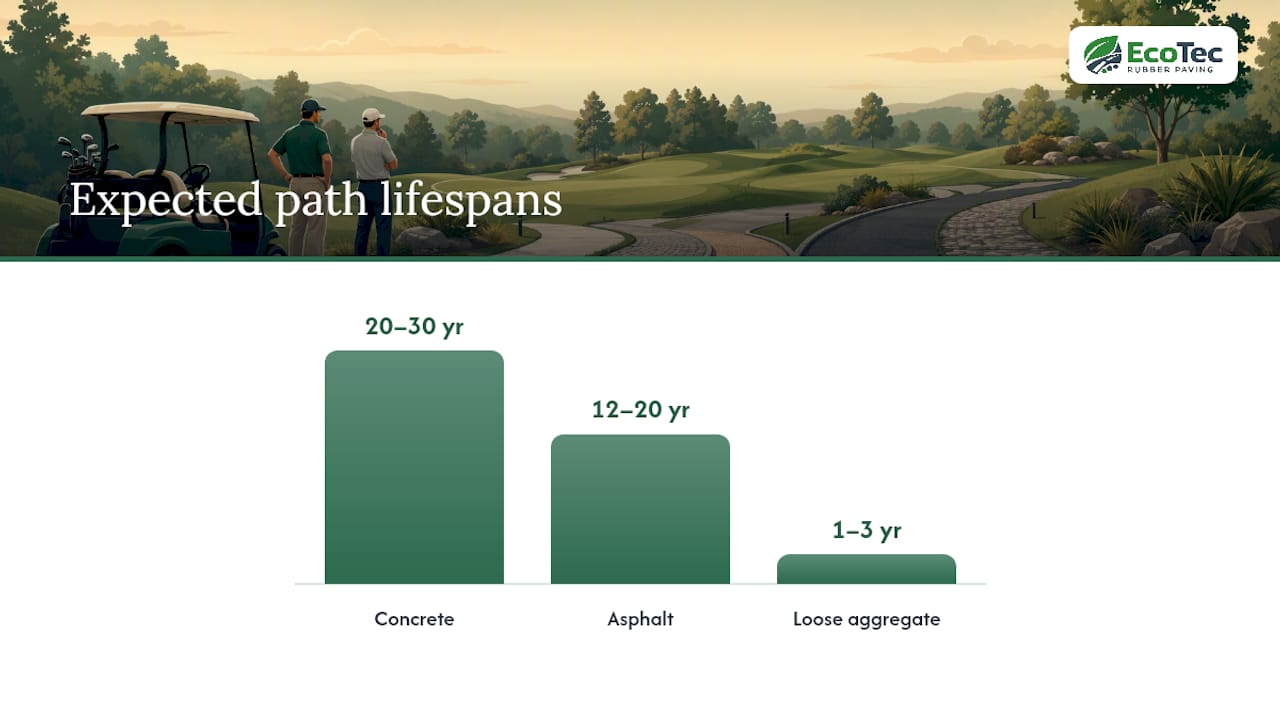
Concrete typically runs 20 to 30 years before major work is needed. Asphalt lands in the 12 to 20 year range, shorter in freeze/thaw climates or where tree roots heave the base. Loose aggregate needs regrading every one to three years depending on traffic and rainfall. Bound rubber systems commonly run for many years with minimal structural maintenance.
Watch for these early warning signs before they become expensive:
- Alligator cracking or edge crumbling on asphalt, often a base failure signal, not just surface wear
- Standing water after light rain, pointing to inadequate crossfall or a clogged subsurface drain
- Aggregate ruts or exposed geotextile fabric, meaning it's time to re-top before erosion accelerates
- Root heaving near mature trees, which no surface material fully prevents without a root barrier
Plan a surface refresh (resealing asphalt, re-topping aggregate) on a predictable cycle rather than waiting for failure. Full replacement makes sense once base failure, not surface wear, is the actual problem.
Where Porous Rubber Systems Actually Earn Their Cost
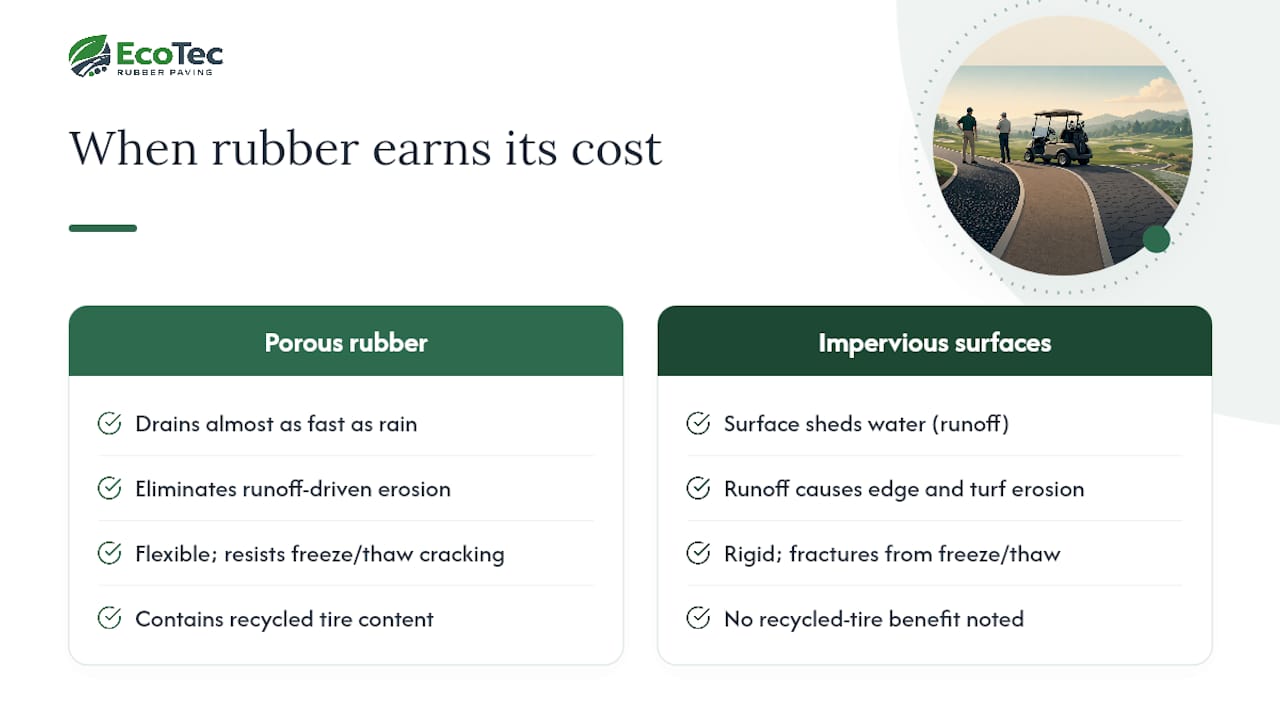
Rubber paving isn't the right call everywhere, but it solves specific problems better than anything else on this list. Rubberway's porous rubber systems drain water almost as fast as it falls, which matters on shaded paths that stay damp for hours after impervious surfaces have already dried.
A surface that drains through itself rather than across itself doesn't just dry faster. It eliminates the runoff-driven erosion that eats away at path edges and adjacent turf year after year.
Rubber's crack resistance comes from flexibility rather than rigidity, so it handles freeze/thaw cycling and minor ground movement that fractures asphalt and concrete over time. Recycled tire content, the core material behind certain Rubberway® installations, means these paths also divert waste tires from landfills while delivering an ADA-compliant, non-slip surface.
Installation calls for a compacted base similar to asphalt, typically finished with a rubber surface layer engineered for cart weight distribution, detailed at the edges to prevent lifting. It costs more than gravel and often more than standard asphalt, and that premium buys drainage and durability performance most impervious materials can't match on their own. For deeper detail on load handling, see how rubber paving handles golf cart weight.
What Should You Ask Contractors Before Signing a Bid?
A good bid answers questions before you have to ask them. A vague one leaves gaps that surface as change orders mid-project.
- What subgrade compaction spec and testing method will you use, and will you document Proctor test results?
- What exact mix design or binder product goes into the surface, and why is it appropriate for cart traffic specifically?
- What warranty applies, and does it cover base failure or only surface defects?
- Can you provide references from completed golf course installations, not just general paving work?
- Are you licensed and insured for this scope, and what permits does this project require?
Pro Tip: Ask every bidder for the same base thickness and compaction spec in writing before comparing prices. A number that looks lower often reflects a thinner base, not better efficiency.
Red flags include vague material descriptions, no golf-specific references, and warranties that exclude drainage or base issues entirely.
Why Mixed Materials Often Beat a Single Solution
Most courses don't need one material everywhere. High-traffic corridors near the clubhouse justify concrete or rubber. Shaded, drainage-prone stretches often perform better in rubber than asphalt ever will. Low-visibility maintenance trails rarely need anything beyond compacted aggregate.
The instinct to standardize on one material across an entire course usually costs more in the long run than matching material to each segment's actual demands.
— Roger
Get a Rubber Paving Estimate for Your Course
Rubberway® systems can be specified to address drainage, heat, and traffic challenges courses face in climates like Florida. Where asphalt cracks under freeze/thaw stress or standing water pools on shaded corridors, a porous rubber surface drains through itself, resists cracking, and meets ADA slip-resistance standards without the maintenance cycle loose aggregate demands.
Rubberway® installations use recycled tire material, come in a range of finish colors, and can be specified for various loads from carts and maintenance equipment, whether for a single corridor or a full-course renovation. Browse available Rubberway® finishes and specifications to see color and texture options, then request a project estimate to get a base design and thickness recommendation matched to your course's soil and drainage conditions.
Sources
For technical specs, the USGA Green Section Record and the Illinois Asphalt Pavement Association's design guidance remain the standard references. Superintendents comparing real installations often turn to the GCSAA community forum for peer experience, and Ecotecrubber's resurfacing options guide covers implementation detail beyond this overview.
- Choosing Cart Path Materials — USGA Green Section Record
- Asphalt design for bike, pedestrian, and golf cart paths — Illinois Asphalt Pavement Association