
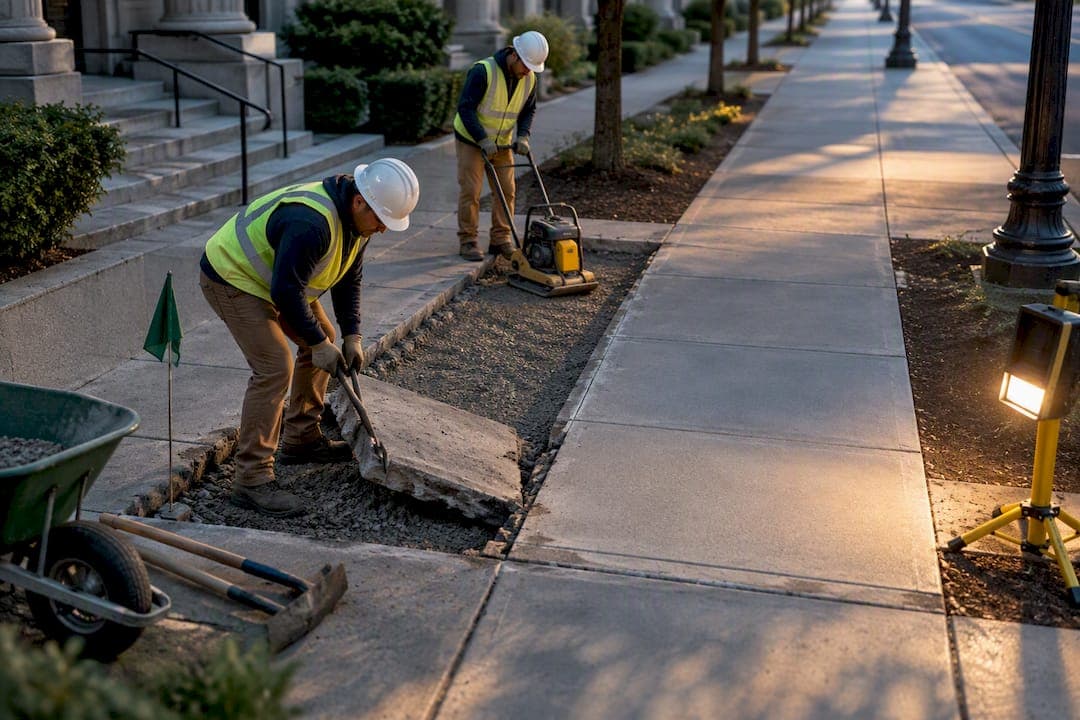
Most U.S. cities place sidewalk maintenance duty on the adjacent property owner, even though the sidewalk sits in the public right of way. If a slab is cracked, heaved, or ponding water, report it to your city's public works department or 311 line today and pull up the local ordinance before you assume who foots the bill. Funding rules, inspection thresholds, and repair timelines vary block by block, so local code has the final word.
TL;DR:
- Many cities finance sidewalk repairs through multi-year programs or assessments, not individual complaints, with repair methods varying based on inspection data.
- Property owners usually maintain sidewalks in front of their lots, but funding models differ, including shared costs, installments, or city-funded programs, with liability exceptions for utility damage or city-caused issues.
- Reporting hazards is straightforward via 311, but repairs depend on specific criteria like displacement over half an inch or ponding, with deadlines and appeals available for property owners.
- Permits and contractor licensing are mandatory for legal, ADA-compliant repairs, and repair costs vary from days for patches to months for comprehensive resurfacing projects.
- Alternatives like rubber and pervious pavement can offer better drainage and crack resistance for storm-prone areas, with trial installations recommended before citywide adoption.
Table of Contents
- How Municipal Sidewalk Resurfacing Programs Actually Work
- Who's Responsible, and How Funding Actually Works
- Reporting a Hazard and What Happens During Inspection
- Permits, ADA Standards, and Contractor Requirements
- What Resurfacing Actually Costs and How Long It Takes
- Tree Roots, Settlement, and Choosing the Right Repair Method
- Sustainable Resurfacing: When Rubber or Pervious Systems Make Sense
- Keeping Residents in the Loop During a Resurfacing Project
- Managing Safety and Traffic Flow on an Active Job Site
- Fixing Sidewalks in Historic Districts Without Losing Their Character
- What I'd Prioritize if I Ran a City Sidewalk Program
- Where EcoTec Rubber Paving Fits Into Your Resurfacing Plan
- Where to Verify the Details Before You Commit
- Sources
- FAQ
How Municipal Sidewalk Resurfacing Programs Actually Work
Cities rarely fix sidewalks one complaint at a time. Most run annual replacement programs that cycle through neighborhoods on a multi-year schedule, flagging panels for either full replacement or lighter repair based on inspection data. Madison, Wisconsin, for example, marks segments with paint codes that tell contractors whether a panel gets saw-cut and ground down or torn out entirely, and runs separate contracts for each type of work.
Some municipalities organize resurfacing through Sidewalk Improvement Districts (SIDs), which spread costs across a defined area instead of billing one homeowner for an entire slab replacement. Rochester, Minnesota's SID model spreads sidewalk repair costs across the community, converting large individual bills into more manageable annual assessments.
Between scheduled cycles, cities also handle urgent spot repairs. A trip hazard reported through 311 might get a temporary asphalt patch or a quick grind within days, long before it qualifies for permanent concrete work in the next capital cycle. Berkeley's public works pages describe this kind of temporary make-safe repair as a stopgap, not a substitute for the real fix.
Who's Responsible, and How Funding Actually Works
The legal default in most states traces back to a simple rule: the property owner maintains the sidewalk fronting their lot, even though the city owns the right of way. MRSC's guidance on sidewalk maintenance lays out how state statutes and local ordinances typically assign that duty, while leaving cities room to soften the burden through cost-sharing.
That's where funding models diverge. Some cities split repair costs 50/50 with the property owner. Others bill the full amount but let owners pay in installments rather than one lump sum. SIDs, as mentioned above, convert individual repair bills into a shared annual assessment. A handful of cities tap general funds or ADA transition-plan levies to cover ramp upgrades citywide, since federal accessibility mandates apply to the public right of way regardless of who owns the adjacent parcel.
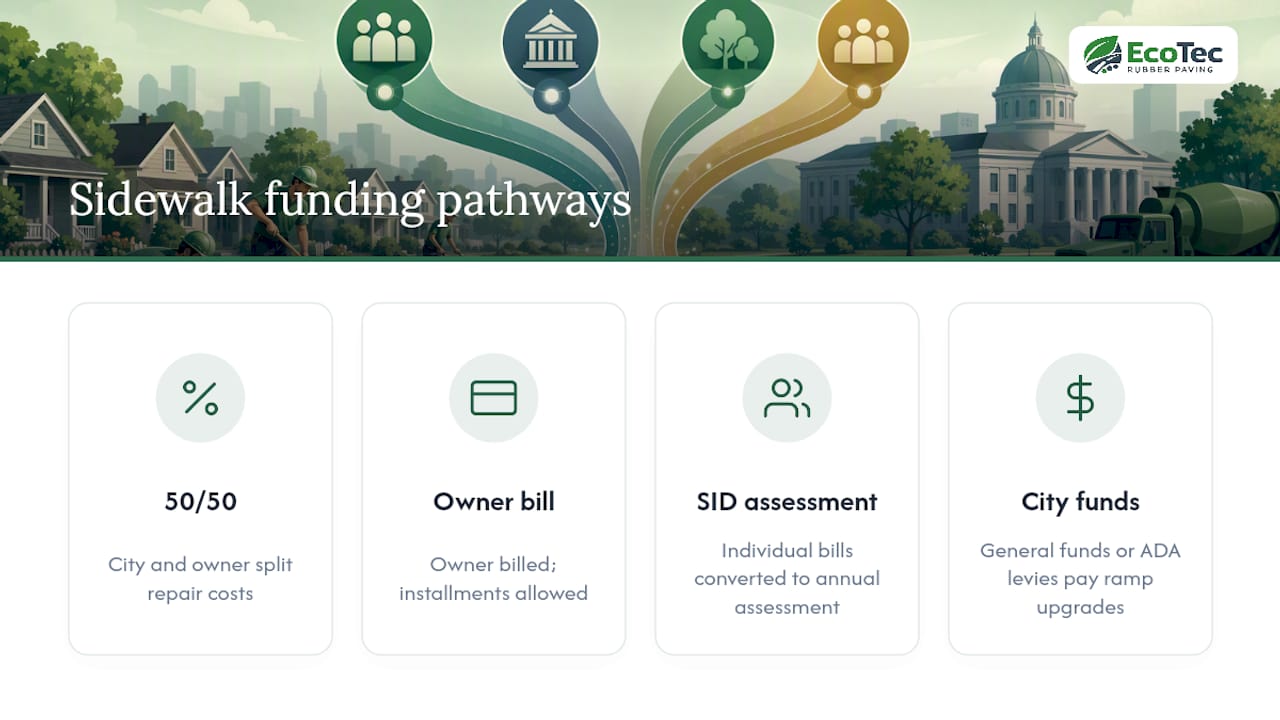
Exemptions exist too. Damage caused by a city water main break, a municipal tree planted in the parkway strip, or a utility cut usually shifts liability back to the city or the utility. When an owner ignores a valid repair notice, though, cities have real teeth: unpaid bills can become liens against the property, collected the same way as delinquent taxes.
Reporting a Hazard and What Happens During Inspection
Reporting a bad sidewalk panel is usually the easy part. Most cities accept reports through 311, an online public works form, or a phone call to the sidewalk maintenance division. A useful report includes the exact address, a photo of the defect, and a rough measurement if you have a tape measure handy.
Once a report comes in, an inspector evaluates the panel against specific criteria, not gut feeling. Common triggers include:
- Vertical displacement of a certain threshold (often around half an inch), a common benchmark cities use to flag a tripping hazard
- Standing water or ponding that suggests a settled or improperly sloped panel
- Cracks wide enough to catch a wheelchair caster or cane tip
- Root heave severe enough to create a lip between adjoining slabs
Sacramento's process illustrates what follows: an inspector generates a Preliminary Inspection Report, the city issues a notice, and the owner gets a defined window to complete repairs before the city steps in and bills the work back. NYC works similarly, giving owners 75 days from a Notice of Sidewalk Violation to fix the defect or face city-performed repairs and a bill. Most jurisdictions also allow a formal appeal if you think the report is wrong.
Permits, ADA Standards, and Contractor Requirements
Don't assume you can hire your nephew's landscaping crew to pour a new slab without a permit. Almost every city requires an encroachment or construction permit before any sidewalk work happens in the public right of way, whether the city does it or the owner hires it out. Sacramento requires owners to pull a permit and follow city specifications, and will reject nonconforming work and redo it at the owner's expense.
Standards you'll run into typically include:
- City-specific construction specs covering slab thickness, expansion joints, and curing time
- ADA requirements for ramp slope, landing size, and detectable warning surfaces at intersections
- State manuals like the California MUTCD for signage and traffic control during the work
Many cities also require a licensed, bonded, and insured contractor for anything beyond minor patching, both for liability reasons and to guarantee the finished surface meets ADA tolerances. Verifying a contractor's license before signing anything protects you from redo costs down the line.
What Resurfacing Actually Costs and How Long It Takes
Temporary make-safe patches typically happen within days of a report. A single concrete panel replacement usually runs one to five days once scheduled, factoring in demolition, forming, pouring, and curing. Citywide capital programs, by contrast, stretch across months as crews move block by block through a marked zone.
Cities generally price resurfacing by square footage or by panel, with separate rates for driveway aprons, curb ramps, and standard walk sections since each has different forming and labor requirements. A detailed breakdown of resurfacing costs is worth reviewing if you're budgeting a specific project.
Billing follows a predictable pattern: an itemized invoice, interest if unpaid past a deadline, and eventually a lien if the bill goes unresolved. Most programs also offer installment plans, and nearly all allow a formal appeal before enforcement escalates.
Tree Roots, Settlement, and Choosing the Right Repair Method
Root uplift is the most common cause of sidewalk failure in older neighborhoods, followed by soil settlement, freeze-thaw cycling in colder climates, and utility cuts that never got properly compacted afterward. Each cause points toward a different fix.
Grinding or saw-cutting handles minor lips where the slab itself is sound. Partial slab replacement fixes a single cracked panel without disturbing its neighbors. Full replacement or an overlay makes sense when multiple adjoining panels have failed or root damage runs deep.
Before cutting any root over a certain size, most cities require sign-off from a city arborist to protect tree health, and utility work nearby needs its own separate permit. Our guide to tree root sidewalk repair covers how to navigate that coordination without losing a mature tree or a repair deadline.
Sustainable Resurfacing: When Rubber or Pervious Systems Make Sense
Concrete isn't the only option on the table anymore, and for certain corridors it isn't even the best one. Rubber and pervious pavement systems trade some upfront cost for drainage performance and crack resistance that concrete struggles to match in hot, storm-prone climates. Porous rubber surfaces let water pass through instead of pooling, which cuts down on the ponding that triggers so many hazard reports in the first place.
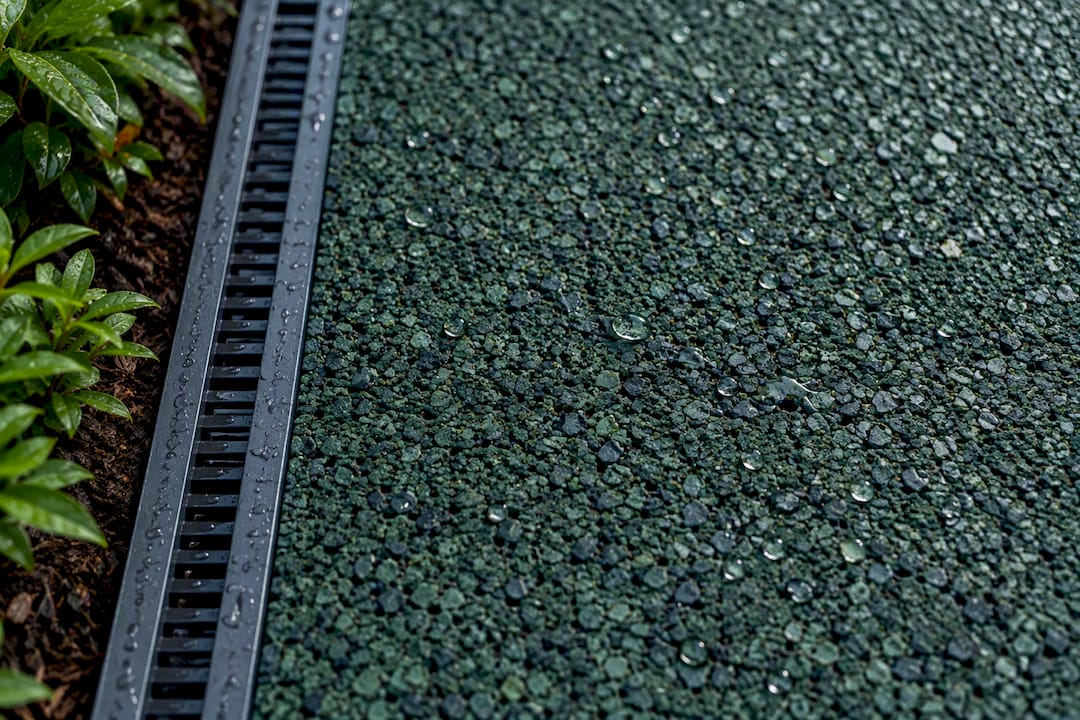
These systems tend to fit best on park paths, boulevard medians, and trail corridors where stormwater management and heat-cracking are recurring headaches rather than concrete plazas needing heavy vehicle load capacity. Procurement teams evaluating an alternative surface should confirm ADA slip-resistance and slope compliance, ask for a documented maintenance plan, and request a warranty in writing before committing budget to a pilot stretch.
Pro Tip: Request a small pilot installation, even a single block, before specifying a new surface material citywide. A real-world test through one wet season and one heat wave tells you more than any spec sheet.
Keeping Residents in the Loop During a Resurfacing Project
Nothing generates angrier phone calls to a city council office than a homeowner discovering orange paint on their sidewalk with zero warning. Communication has to start well before the crew shows up.
Most successful programs send a written notice at least two to three weeks ahead of construction, spelling out the scope of work, the expected duration, and whether the homeowner owes anything. That notice should also explain the appeal window, since owners who think their panel was flagged in error need a clear, low-friction way to challenge it before concrete gets poured.
Door hangers on the day work begins, a project page with a block-by-block schedule, and a dedicated phone line or email for questions all reduce the volume of confused 311 calls during active construction. Cities that skip this step tend to see the same complaint repeatedly: residents assumed the work was a scam, a utility mistake, or an HOA issue rather than a legitimate city program.
For business districts, advance notice matters even more, since blocked sidewalks can cut into foot traffic and revenue for weeks. Some cities post project timelines on their public works website and send updates to neighborhood associations directly, which cuts down on the "why is my street torn up" emails considerably.
The lesson holds across every case study worth citing: the complaint volume during a project correlates almost directly with how early and how specifically residents were told what to expect.
Managing Safety and Traffic Flow on an Active Job Site
A sidewalk crew working next to a live traffic lane needs more than a couple of orange cones. Cities typically require a traffic control plan before permits get issued, spelling out how pedestrians get detoured, where signage goes, and how long a lane closure can legally run.
Pedestrian detours need to stay ADA-accessible themselves, which means a temporary ramp or a marked, obstruction-free path rather than just directing wheelchair users into the street. Flaggers or automated signals typically manage vehicle traffic where the work zone narrows a lane, and reflective barricades stay up overnight if the concrete needs to cure before foot traffic resumes.
Curing time is its own safety issue. Fresh concrete looks walkable within hours but often needs several days before it can bear regular foot traffic without damage, so barricades and "wet concrete" signage have to stay in place longer than most residents expect. Crews that pull barricades too early end up repouring panels, which costs the city twice.
Night work near school zones and high-traffic commercial corridors adds another layer: lighting requirements, noise ordinance limits, and often a police detail if a full lane closure is involved. None of this is optional paperwork. A poorly managed work zone is where cities pick up the kind of liability claims that dwarf the cost of the sidewalk repair itself.
Fixing Sidewalks in Historic Districts Without Losing Their Character
Resurfacing gets complicated fast in historic districts, where the sidewalk itself might be part of what a preservation board protects. Original brick, stamped concrete, or granite curbing can't simply get ripped out and replaced with standard gray slabs without triggering a review process, and that review can add weeks to a project timeline.
The core tension is almost always the same: ADA compliance is non-negotiable, but historic character matters to residents and preservation commissions alike. Cities handle this by using ADA-compliant materials that mimic the original look, such as concrete stamped to resemble brick pavers, or by salvaging original materials and resetting them on a compliant sub-base.
Root damage is worse in historic districts too, simply because the trees are older and the roots run deeper. That often means a longer arborist review before any cutting happens, since a mature street tree in a historic corridor tends to carry more protection than a young park tree elsewhere.
Utility conflicts show up more often as well. Century-old water and gas lines sitting shallow under historic sidewalks limit how deep a new sub-base can go, sometimes forcing engineers to redesign a standard repair on the fly. None of these challenges are reasons to skip the work. They're reasons to budget more time and bring the preservation board in early, rather than after the concrete truck is already scheduled.
What I'd Prioritize if I Ran a City Sidewalk Program
If I were managing a citywide cycle, ADA ramps and the highest foot-traffic corridors would get fixed first, full stop. Everything else can wait a season. I'd also mail owners a plain-language notice covering cost, timeline, and appeal rights well before any paint hits the sidewalk. Consistent markings and real signage on-site, not vague warnings, cut complaint calls dramatically.
— Roger
Where EcoTec Rubber Paving Fits Into Your Resurfacing Plan
If your city is weighing concrete replacement against a longer-lasting alternative for a park path, boulevard, or drainage-troubled corridor, Ecotecrubber offers a different starting point: a porous, ADA-compliant surface built specifically for climates where standing water and heat cracking wear out concrete faster than budgets can keep up.
Ecotecrubber installs rubber paving systems including Rubberway® Pervious Pavement and other product lines, with installations managed by licensed and insured crews specializing in rubber paving. That focus matters for municipal projects, where documentation, ADA sign-off, and consistent quality control carry real weight during review. Officials evaluating a pilot stretch, and property owners tired of repouring the same cracked driveway apron, can request product specs, sample panels, or a pilot proposal through the product catalog or directly through Ecotecrubber's project team.
Where to Verify the Details Before You Commit
Local code always overrides general guidance, so check these sources for your jurisdiction. MRSC explains the legal framework behind owner responsibility. NYC DOT, Sacramento, and Madison publish real program procedures, inspection thresholds, and permit steps worth comparing against your own city's public works page before you file a report or hire a contractor.
Sources
- MRSC - Sidewalk construction, maintenance, and repair
- Sidewalks, Curbs & Gutters | City of Sacramento
- NYC DOT - Sidewalks
- Sidewalk Replacement Program | Engineering | City of Madison, WI
- Sidewalk Repair | City of Berkeley
FAQ
Can a concrete sidewalk be resurfaced instead of replaced?
Yes, grinding and saw-cutting can fix minor lips and cracks without a full slab replacement, and some cities specifically budget for this lighter repair category. Full replacement becomes necessary once multiple panels have failed or root damage runs too deep for a surface fix.
Will homeowners insurance pay for sidewalk repair?
Standard homeowners policies typically don't cover routine sidewalk wear, since that falls under maintenance rather than sudden damage. Coverage sometimes applies if a specific covered event, like a falling tree, caused the damage, but check your policy's exclusions before assuming coverage.
Do I need a permit to redo a sidewalk?
In nearly every city, yes. Sacramento's program requires owners to pull a permit and follow city specs before doing any sidewalk repair themselves, and cities can reject and redo nonconforming work at the owner's cost.
Does NYC pay for sidewalk repair?
Generally no. NYC places maintenance duty on the property owner and issues a Notice of Sidewalk Violation giving a 75-day window to complete repairs. If the owner doesn't act, the city performs the repair and bills the owner afterward, with a lien possible if the bill goes unpaid.