

Budget allocation for sustainable paving projects is the process of distributing funds across materials, installation, maintenance, and contingency reserves to maximize pavement lifespan while minimizing environmental impact. The challenge for public agencies and private property managers alike is that sustainable choices often carry higher upfront costs but deliver lower lifecycle expenses. Knowing how to allocate budget for sustainable paving projects means understanding lifecycle cost analysis, proactive maintenance scheduling, and the grant programs that can close funding gaps. This guide gives you a practical framework for each phase.
What costs should you consider when budgeting for sustainable paving projects?
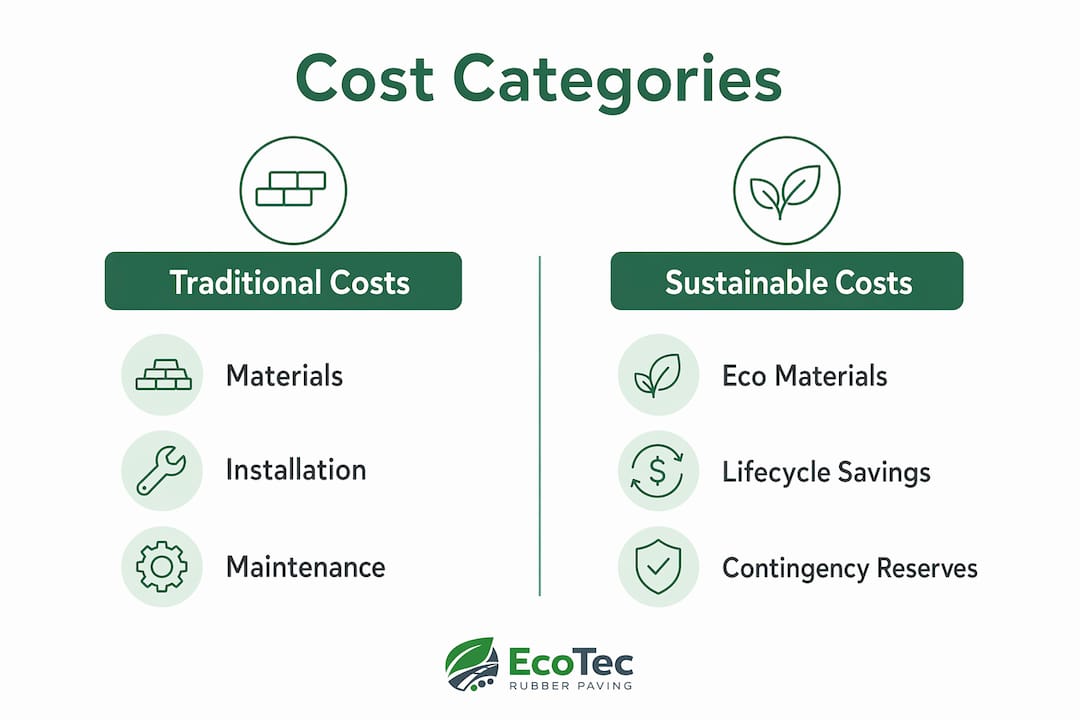
Sustainable paving budgets cover four distinct cost categories: materials, installation, maintenance, and contingency. Getting each category right from the start prevents the budget overruns that force reactive, expensive repairs later.
Material costs: traditional vs. sustainable options
Traditional asphalt and concrete remain the default in most procurement cycles, but recycled alternatives now compete on price and outperform on lifespan. Recycled asphalt pavement (RAP), warm mix asphalt (WMA), and tire-derived rubber products all reduce raw material demand. Using up to 50% ground-granulated blast furnace slag and 30% recycled aggregates cuts infrastructure costs by 5–15% and embodied carbon by 20–30%. That cost reduction compounds over a 20-year pavement lifecycle.
Tire-derived rubber paving, such as the Rubberway® system used by Ecotecrubber, adds crack resistance and drainage performance that reduces repair frequency. Fewer repairs mean lower cumulative spending, even if the per-square-foot installation price sits above standard asphalt.
Maintenance and lifecycle costs
Pavement maintenance costs range from $0.10 per sq ft for sealcoating to $10.00 per sq ft for full reconstruction. That 100x gap is the core argument for proactive maintenance. Sustainable surfaces with better drainage and flexibility, like rubber paving, extend the window between major interventions and keep spending at the lower end of that range.
Capital vs. operating expenses
Effective pavement budgeting separates operating expenses (annual preventive maintenance) from capital budget (major rehabilitation), and each carries different tax treatment. Mixing the two in a single line item creates accounting confusion and makes it harder to defend budget requests to boards or city councils.
Contingency reserves
Climate-related pavement deterioration from freeze-thaw cycles and extreme heat makes contingency reserves non-negotiable. Budget 10–15% above your base estimate to cover unexpected damage, material price swings, and scope changes. Florida stakeholders face heat-induced cracking and standing water as primary risk drivers, making that reserve especially critical.
Pro Tip: Build your contingency reserve as a separate line item in your budget, not a percentage folded into material costs. Separate visibility makes it easier to defend and harder to raid for unrelated expenses.
| Cost Category | Typical Range | Sustainable Impact |
|---|---|---|
| Sealcoating | $0.10/sq ft | Extends pavement life, low carbon input |
| Overlay or resurfacing | $1.00–$3.00/sq ft | RAP and WMA reduce material costs |
| Major rehabilitation | $5.00–$8.00/sq ft | Recycled aggregates cut costs 5–15% |
| Full reconstruction | Up to $10.00/sq ft | Highest carbon and cost; avoid with proactive maintenance |
| Contingency reserve | 10–15% of total budget | Covers climate damage and price volatility |
How to prioritize and allocate funds across project phases
Phased budget allocation is the standard approach in pavement asset management. The goal is to spend small amounts consistently on prevention rather than large amounts reactively on reconstruction.
Use PCI scores to guide spending
The Pavement Condition Index (PCI) is the industry standard metric for rating pavement health on a 0–100 scale. PCI-driven budgeting moves agencies away from reactive spending and toward maximizing pavement lifecycle and cost-to-benefit ratios. A pavement scoring 70–85 needs preventive treatment. A pavement scoring below 40 needs rehabilitation or reconstruction. Spending $0.50 per sq ft on a 75-PCI surface now prevents a $7.00 per sq ft reconstruction in five years.
Build a multi-year budget plan
Rolling three-year or ten-year pavement management plans smooth out budget spikes. The City of Sammamish's 2026 Pavement Management Strategic Plan uses condition data to sequence projects so no single year carries a disproportionate capital load. Private property managers with multiple sites can apply the same logic: assess all surfaces, rank by PCI, and schedule treatments in order of urgency.
The numbered sequence below reflects the standard phasing approach used by public agencies and large property portfolios:
- Condition assessment. Survey all pavement assets and assign PCI scores. This is the data foundation for every spending decision.
- Preventive maintenance phase. Address surfaces scoring 70 and above with sealcoating, crack filling, and minor patching.
- Rehabilitation phase. Surfaces scoring 40–69 receive overlays or mill-and-fill treatments using RAP or WMA where available.
- Reconstruction phase. Surfaces below 40 require full replacement. Prioritize sustainable materials and apply for grant funding to offset costs.
- Post-project monitoring. Re-survey treated surfaces annually to update PCI scores and feed the next budget cycle.
| Approach | Trigger | Cost Range | Sustainability Fit |
|---|---|---|---|
| Preventive maintenance | PCI 70–100 | $0.10–$0.50/sq ft | High: low material use, low carbon |
| Rehabilitation | PCI 40–69 | $1.00–$3.00/sq ft | Medium: RAP and WMA applicable |
| Reconstruction | PCI below 40 | $5.00–$10.00/sq ft | Low unless recycled materials specified |
What sustainable materials and techniques deliver cost savings?
Sustainable material selection is where green paving project financing pays off most clearly. The right material choice reduces both embodied carbon and long-term maintenance spending.
Recycled and low-carbon materials
Ground-granulated blast furnace slag (GGBS) replaces a portion of Portland cement in concrete paving. Combined with recycled aggregates, GGBS blends reduce embodied carbon by 20–30% compared to conventional mixes. That carbon reduction also translates directly to lower material procurement costs of 5–15%. For public agencies facing sustainability reporting requirements, the carbon benefit strengthens the case for budget approval.

Tire-derived rubber products take recycled material use further. Ecotecrubber's Rubberway® installations use recycled rubber to create surfaces that resist cracking under Florida's heat and flex under freeze-thaw stress in northern climates. The commercial sustainability benefits include reduced drainage infrastructure costs because rubber paving handles stormwater without additional retention systems.
Operational economic benefits beyond construction
Most lifecycle cost studies miss operational economic benefits like reduced fuel consumption from smoother surfaces and flood mitigation savings from permeable designs. Those benefits are real budget line items for municipalities. A road that reduces flooding events saves emergency repair costs that never appear in the original pavement budget but drain the same municipal account. Building those avoided costs into your funding justification strengthens grant applications and internal budget requests.
Pro Tip: When preparing a budget justification for sustainable paving, include a line for avoided costs: flood damage repairs, drainage infrastructure, and emergency patching. These numbers often exceed the premium paid for sustainable materials.
What funding sources exist for sustainable paving projects?
Grant programs and alternative financing reduce the net cost of sustainable construction budgeting. Knowing where to look and how to align your project with grant criteria is as important as the budget itself.
Government grant programs
Georgia's Environmental Protection Division awarded $2,636,387 through the FY26 Tire Grant to 16 projects that incorporated tire-derived materials into paving. That single program demonstrates that state-level funding for rubber and recycled paving is active and competitive. Similar programs exist at the federal level through the Federal Highway Administration (FHWA) and at the state level across most U.S. states.
Key funding sources worth pursuing include:
- State tire grant programs. Georgia's FY26 program is a model; most states with tire recycling mandates run comparable programs.
- FHWA Surface Transportation Block Grant Program. Federal funds available to states and localities for road and pavement projects, including sustainable material specifications.
- EPA Brownfields and infrastructure grants. Applicable when paving projects are part of broader site remediation or green infrastructure work.
- Local government sustainability funds. Many municipalities have dedicated sustainability or climate resilience budgets that fund pavement upgrades.
For local governments, rubber paving grant funding examples show how agencies have successfully aligned project scopes with grant criteria to cover a significant share of project costs.
Aligning your project with grant criteria
Grant applications succeed when the project scope matches the funder's stated goals. Tire grant programs require documented use of tire-derived materials. FHWA programs favor projects with measurable sustainability outcomes, such as reduced stormwater runoff or lower lifecycle carbon. Build those metrics into your project plan before the application, not after. When evaluating eco-friendly vendor bids, require vendors to provide material certifications and carbon data that can be used directly in grant documentation.
Key Takeaways
Allocating budget for sustainable paving projects requires separating cost categories, using condition data to sequence spending, selecting recycled materials that reduce both carbon and lifecycle costs, and securing grant funding to offset higher upfront investment.
| Point | Details |
|---|---|
| Separate cost categories | Split operating expenses from capital budget and hold a 10–15% contingency reserve. |
| Use PCI scores | Condition assessments direct spending to where prevention delivers the highest return. |
| Choose recycled materials | GGBS and recycled aggregates cut costs 5–15% and embodied carbon by 20–30%. |
| Pursue grant funding | State tire grant programs and FHWA block grants can offset significant project costs. |
| Account for avoided costs | Include flood mitigation and fuel savings in your budget justification to strengthen funding requests. |
What I've learned about procurement being the real barrier
The technical case for sustainable paving is settled. Recycled materials perform well, cost less over time, and reduce carbon. The barrier is almost never the material. Procurement processes that prioritize the lowest upfront bid systematically exclude sustainable options, even when those options save money over a 10-year horizon.
I've seen public agencies reject a rubber paving bid that was $0.30 per sq ft higher than standard asphalt, only to spend $4.00 per sq ft on emergency repairs three years later. The math was never close. The problem was that the procurement document weighted initial cost at 80% and lifecycle cost at 20%. Flip those weights and the sustainable option wins every time.
The fix is procedural. Procurement documents need to weight environmental criteria and whole-life value heavily enough to support decisions based on total cost rather than lowest price. That requires budget managers to educate procurement officers and, sometimes, elected officials. It is slower than just picking the cheapest bid. It is also the only approach that actually saves money.
Data-driven condition assessments make this argument easier. When you can show a PCI score, a projected deterioration curve, and a cost comparison between proactive treatment and deferred reconstruction, the numbers speak for themselves. Build that case before budget season, not during it.
— Roger
Ecotecrubber's Rubberway® system for budget-conscious paving
Budget-conscious stakeholders managing sustainable paving projects need a material that delivers on both cost and performance. Ecotecrubber's Rubberway® installations use recycled rubber to create ADA-compliant, crack-resistant surfaces that handle Florida's heat and drainage challenges without the recurring repair costs of standard asphalt.
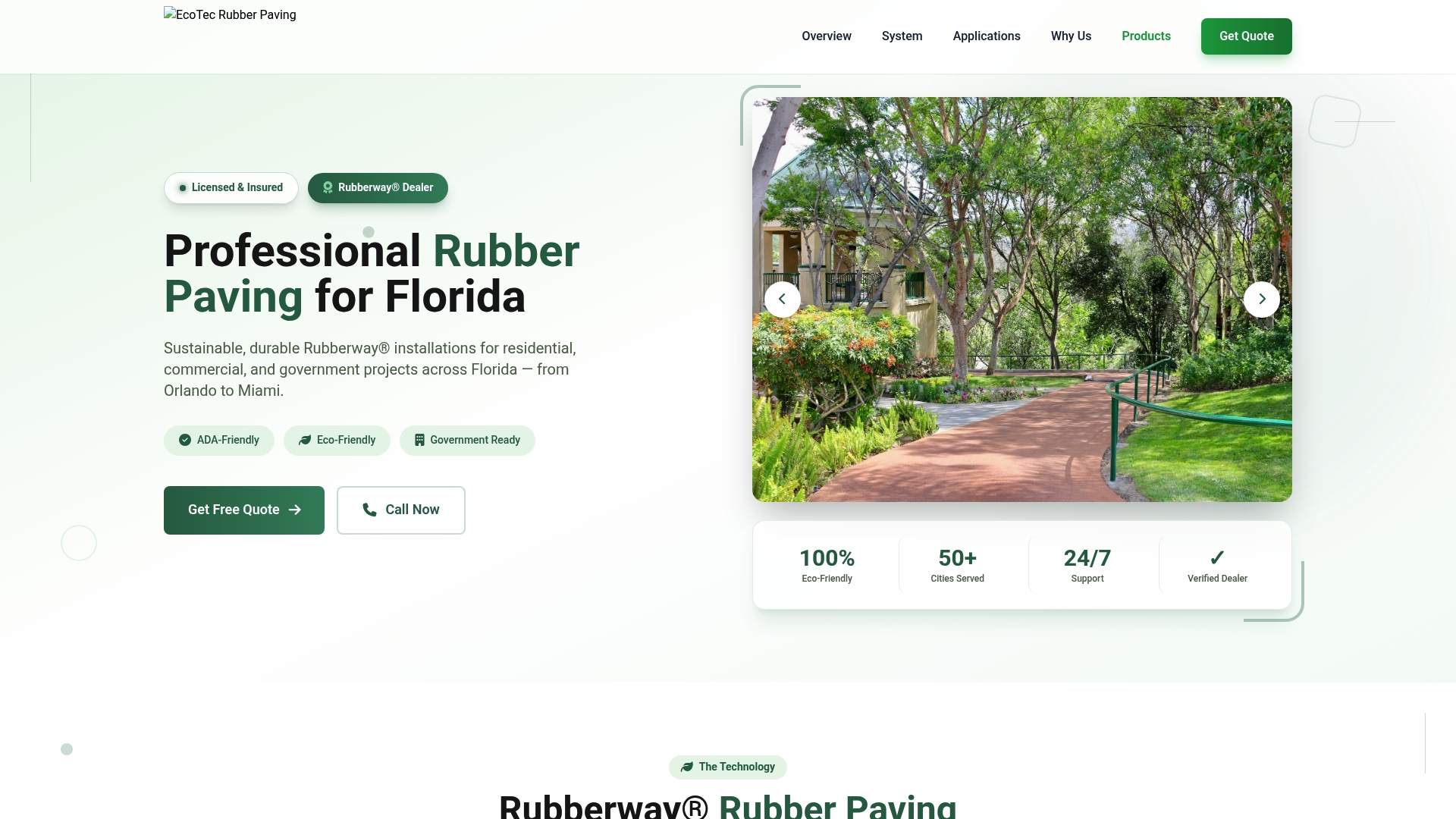
Ecotecrubber is licensed, insured, and focused exclusively on rubber paving, which means every project benefits from specialized expertise rather than a generalist contractor's divided attention. Their rubber paving products are designed for municipalities, commercial properties, and homeowners who need durable, eco-friendly surfaces that hold up over time. If you are building a sustainable paving budget and want a material that reduces long-term maintenance costs, Ecotecrubber is worth putting on your bid list.
FAQ
What does it mean to allocate budget for sustainable paving?
Budget allocation for sustainable paving means distributing funds across materials, installation, maintenance, and contingency reserves with the goal of minimizing lifecycle costs and environmental impact. It requires separating operating expenses from capital spending and using condition data to sequence investments.
How much should I set aside as a contingency for paving projects?
Budget a contingency reserve of 10–15% above your base project estimate to cover climate-related damage, material price fluctuations, and unexpected scope changes.
What is a PCI score and why does it matter for budgeting?
The Pavement Condition Index (PCI) rates pavement health on a 0–100 scale. PCI-driven budgeting directs spending to surfaces where preventive treatment delivers the highest return, reducing the frequency of expensive reconstruction.
Are there grants available for sustainable paving projects?
Yes. Georgia's FY26 Tire Grant awarded $2,636,387 to 16 projects using tire-derived paving materials. Federal programs through the FHWA and state-level sustainability funds offer additional sources for qualifying projects.
Do sustainable paving materials actually cost less over time?
Using recycled aggregates and GGBS reduces infrastructure costs by 5–15% and cuts embodied carbon by 20–30%. When operational savings from reduced flooding and smoother surfaces are included, the lifecycle cost advantage over conventional materials is clear.