
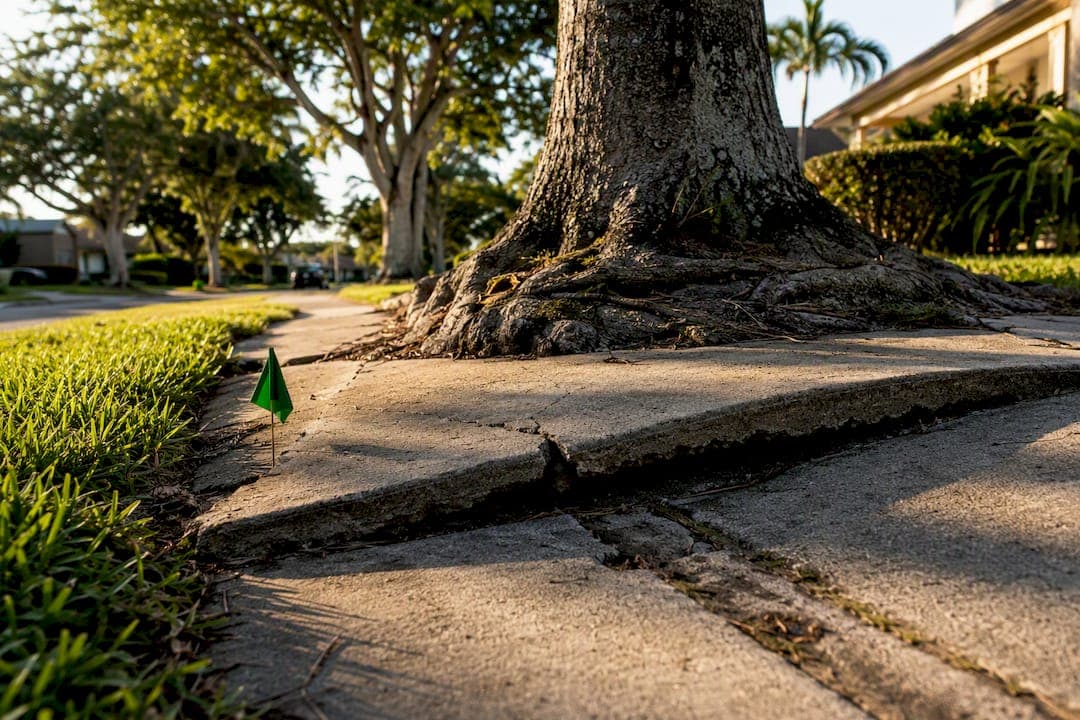
Make the sidewalk safe first, then figure out who owns the problem. If a slab is lifted more than an inch, block it off or add a temporary ramp today, photograph the damage, and check whether the tree or sidewalk sits on city property before anyone touches a root. Never let a contractor cut major roots without a certified arborist's sign off, and confirm permit requirements before any concrete work begins.
TL;DR:
- Repair methods like slab replacement over engineered bases or rubber paving are most effective for long-term sidewalk stability near mature trees.
- Costs vary from low-cost grinding or patching to more expensive, durable solutions such as full slab replacement with root barriers or bridging.
- Responsibility for sidewalk repairs depends on local ordinances, with some cities covering tree-related damage if it affects pedestrian safety.
- Proper coordination with certified arborists and obtaining necessary permits are crucial to prevent tree destabilization and avoid costly mistakes.
- Using flexible, permeable surfaces helps absorb ground movement caused by roots, significantly reducing the likelihood of cracks and trip hazards over time.
Table of Contents
- Immediate Steps to Take This Week for Tree Root Sidewalk Repair
- Who Is Responsible: City or Homeowner?
- What Repair Methods Actually Work?
- Design Choices That Prevent the Next Repair
- Who to Hire and What It Costs
- Why Rubber and Permeable Paving Handle Root Movement Better
- Balancing Tree Preservation With Sidewalk Safety
- A Tree-Friendly Alternative Worth Considering
- Where to Verify These Rules Locally
- Sources
- FAQ
Immediate Steps to Take This Week for Tree Root Sidewalk Repair
A lifted slab is a liability the moment someone trips on it, so speed matters more than perfection in the first few days. Work through this order:
- Secure the hazard. Set out cones, sandbags, or a temporary asphalt wedge ramp over any noticeably raised edge.
- Document everything. Take dated, well-lit photos from multiple angles, including a tape measure against the lift height.
- Check ownership. Look up your property survey or call public works to confirm whether the sidewalk falls within the city right-of-way or your own lot line.
- Call a certified arborist. Get a written root assessment before anyone prunes or grinds near the tree.
- Line up a licensed contractor if you need permanent repair. They should pull permits as part of the job, not after the fact.
Pro Tip: Keep every photo and inspection report in one folder. If the city ends up responsible, that timestamped record becomes your evidence for a reimbursement claim or insurance dispute.
Who Is Responsible: City or Homeowner?
Sidewalks usually sit inside the public right-of-way, but maintenance duty varies by city ordinance. Some municipalities repair anything caused by a city-owned street tree; others push the cost back onto the adjacent homeowner regardless of who planted the tree. The only reliable way to know is to pull your property survey or call your public works department directly.
Cities that do take responsibility typically rank requests using a few criteria:
- Severity of the lift and whether it's a fall risk for pedestrians
- Volume of foot traffic on that stretch of sidewalk
- Condition and value of the tree causing the damage
New York City's sidewalk and tree repair program, for example, prioritizes qualifying one- to three-family residential properties and issues tree work permits with a defined validity window before work has to start. Most cities require two separate permits: one for any tree root work and a separate sidewalk construction permit, each tied to an inspection sign-off. If you already paid out of pocket for repairs caused by a city tree, ask public works about a reimbursement or claim process before assuming it's a lost cause.
What Repair Methods Actually Work?
Not every fix belongs in every situation, and picking the wrong one means paying twice. Here's how the main options stack up:
- Grinding or wedge ramps. Fast, cheap, and strictly temporary. These shave down a lip or smooth a transition but don't address the root pushing from underneath.
- Mudjacking or polyurethane leveling. Pumps material under a sunken or tilted slab to relevel it. Works well for settling, but a growing root underneath will often re-lift the same slab within a few seasons.
- Slab replacement with a root-excluding base. Pulling the old slab and rebuilding over at least 4 inches of washed coarse gravel, or two glued 2-inch foam boards, gives roots somewhere else to grow and is the most durable concrete fix.
- Bridging or raised sections. Building the walkway up and over exposed roots instead of cutting them. Effective near mature trees, but the transition slope has to stay within ADA limits.
- Root shaving versus cutting. Arborists generally shave the top of a root rather than sever it, and avoid cutting anything within three times the trunk's diameter without a full structural review, since that kind of cut can destabilize a mature tree.
- Flexible surfacing. Interlocking pavers or rubber paving flex with minor ground movement instead of cracking outright.
Grinding buys you a temporary reprieve. A concrete slab poured over shaved roots with no engineered base underneath is likely to crack again over time, because the root simply resumes growing along the path of least resistance. Peer-reviewed comparisons of under-pavement treatments found that vertical barriers and engineered base layers measurably changed root architecture and reduced surface conflicts compared with standard construction. If your contractor suggests leveling alone as a permanent fix, ask what's happening to the root underneath.
Design Choices That Prevent the Next Repair
The cheapest fix is the one you never have to make twice, and most repeat sidewalk failures trace back to skipping these steps the first time around.
- Root barriers. Install panels at least 18 inches deep, with the top edge sitting slightly above the soil so roots can't simply grow over them.
- Engineered base layers. Use at least 4 inches of coarse washed gravel, or the equivalent in glued foam board, under any new slab near a tree.
- Species and clearance planning. Larger species need more setback from the sidewalk edge; if space is tight, narrow the tree lawn rather than the walkway, since ADA minimum widths for sidewalks aren't negotiable.
- Plan at planting, not after. Species selection and wider tree lawns prevent conflicts decades before they'd otherwise force a repair.
Pro Tip: If you're planting a new street tree, ask your municipality's forestry office for a species list rated "sidewalk-safe." Many cities maintain one, and it saves a repair bill ten years later.
Who to Hire and What It Costs
Three different specialists usually touch a root-related sidewalk repair, and skipping one is the most common way projects go sideways. A certified arborist assesses root health and issues a written recommendation before anyone cuts anything. A licensed concrete contractor handles slab removal, base prep, and pours. A paving specialist gets involved if you're considering pavers or a flexible surface instead of poured concrete.
Costs scale with how permanent the fix is:
- Grinding or patching runs the lowest cost, but it's a stopgap, not a solution.
- Slab replacement with a root-excluding base costs more upfront because of the excavation and gravel or foam layer, but it lasts significantly longer.
- Bridging or full reinstallation near a mature tree sits at the high end, since it involves engineering the grade change and coordinating tree protection.
Before signing anything, ask for proof of license and insurance, a written permit plan naming who's pulling which permit, a warranty on the work, and confirmation that an arborist signed off on any root work. Walk away from anyone pushing to cut large structural roots without that written arborist assessment. Homeowners insurance typically won't help here either. Standard policies exclude gradual damage from tree roots as a maintenance issue, treating it the same way they'd treat a foundation slowly settling over time.
Why Rubber and Permeable Paving Handle Root Movement Better
Rigid concrete cracks the moment a root pushes hard enough from below; flexible surfacing absorbs that same movement instead of fracturing. Rubber and permeable paving systems flex slightly as the ground shifts, which means fewer emergency repairs and fewer trip hazards over the life of the surface.
A few reasons this matters for sidewalks near trees:
- Interlocking rubber surfaces tolerate the kind of differential lift that cracks poured concrete outright.
- Porous designs drain water through the surface instead of pooling on top, cutting down on the slip risk that comes with standing water near tree roots.
- Properly installed rubber surfacing can meet ADA slope and slip-resistance requirements the same way concrete does.
- These surfaces work best paired with an engineered base rather than as a substitute for one.
If your goal is preserving a mature tree while keeping the walkway usable long term, permeable paving is worth comparing against a straight concrete rebuild before you commit.
Balancing Tree Preservation With Sidewalk Safety
A hundred-year-old oak isn't a nuisance. It's shade, property value, and stormwater control the whole block depends on. The instinct to just grind out the roots and pour fresh concrete solves today's trip hazard and guarantees next year's. The better path costs a little more patience: get the arborist's assessment, coordinate with the city inspector, and let the engineering, not the chainsaw, do the work.
— Roger
A Tree-Friendly Alternative Worth Considering
Concrete leveling and root-excluding bases solve a lot of problems, but they still leave you with a rigid surface that can crack again the next time a root pushes back. Ecotecrubber installs Rubberway® rubber paving as a flexible alternative for sidewalks, walkways, and pool decks that sit near mature root systems. The surface is porous and ADA-compliant, designed for residential and municipal installations in various locations.
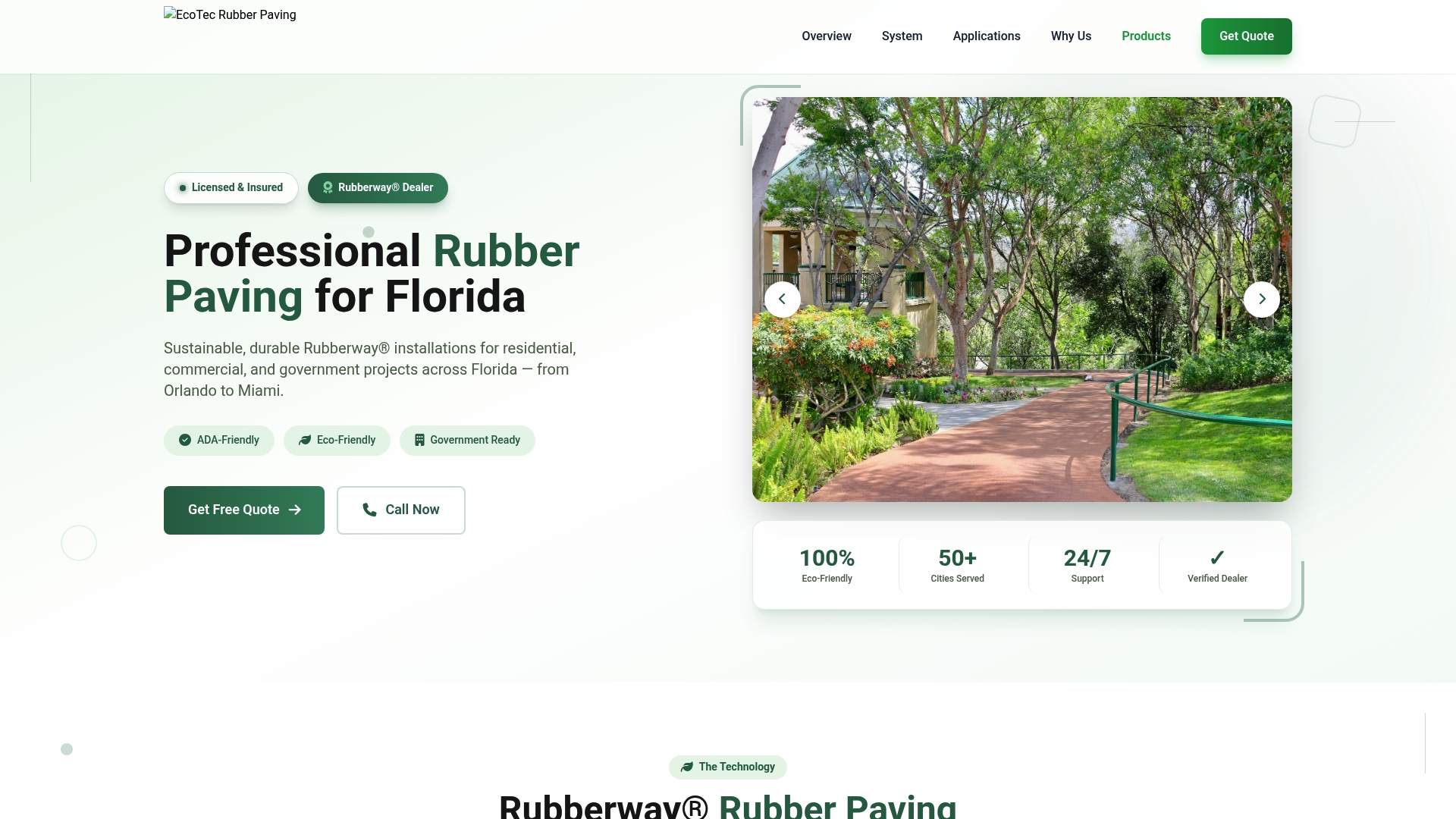
It's the right fit for homeowners who'd rather preserve a mature tree than fight it every few years with a jackhammer. A site assessment looks at your existing tree canopy, root spread, and drainage before recommending a layout, so you're not guessing at whether rubber paving actually fits your yard. Browse the Rubberway® product specifications or request a consultation to get a straight answer on whether it's the better long-term move for your sidewalk.
Where to Verify These Rules Locally
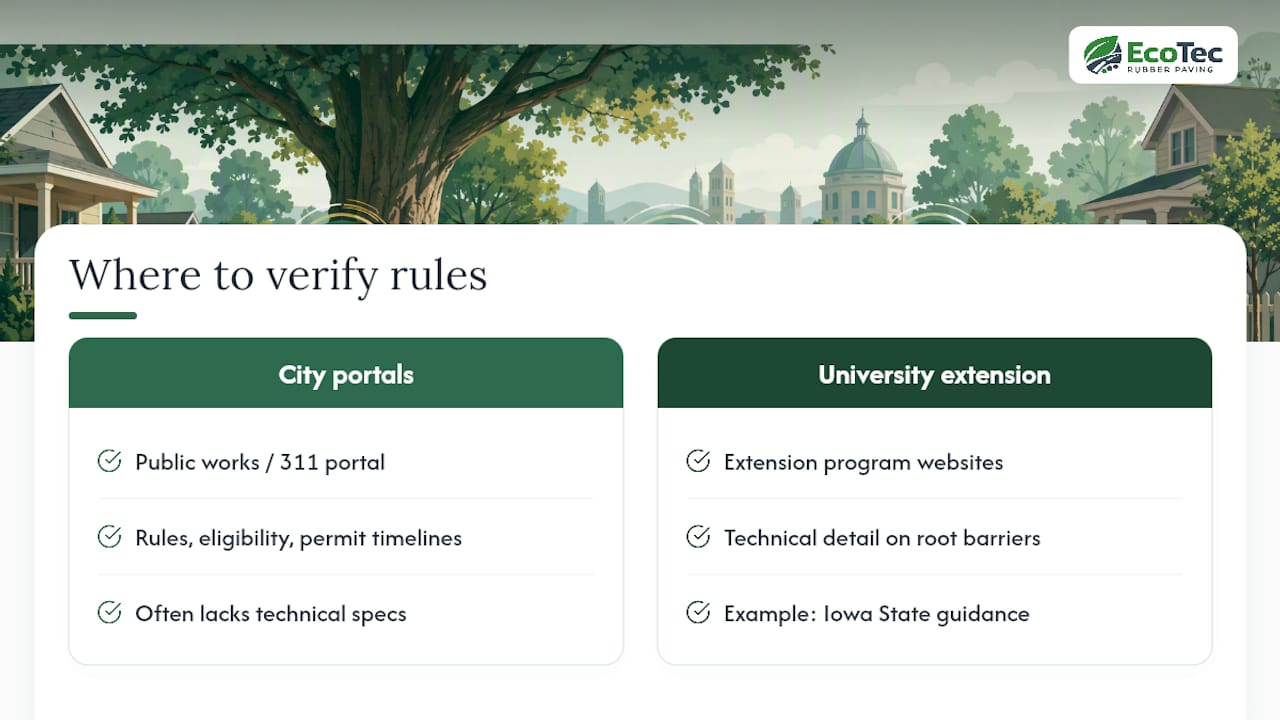
Check your city's public works or 311 portal for sidewalk and tree program rules, since eligibility and permit timelines vary by jurisdiction. University extension programs, like Iowa State's guidance on trees near sidewalks, offer technical detail on root barriers and base specs that most city pages skip.
Sources
- Trees and Sidewalks Repair · NYC311 - NYC.gov
- How to Manage Trees Near Sidewalks — Iowa State Extension (Yard & Garden)
- What to Do About a Sidewalk Damaged By Tree Roots — Today's Homeowner
- Comparison of Methods to Reduce Sidewalk Damage from Tree Roots — E.T. Smiley et al.
FAQ
Will Homeowners Insurance Pay for Sidewalk Repair?
Usually not. Standard policies exclude gradual root damage as a maintenance issue, though sudden damage from a fallen tree may be treated differently.
Who Is Responsible for Trees on Sidewalks?
It depends on your city's ordinance and where the tree and sidewalk sit relative to the property line. Check with your public works department, since some cities cover repairs caused by city-owned street trees while others assign the cost to the adjacent homeowner.
Does Homeowners Insurance Cover Damage Caused by Tree Roots?
Generally no, because slow root growth is classified as gradual, preventable damage rather than a sudden covered loss.
Can You Pour Concrete Over Dead Tree Roots?
You can, but a dead root will decompose and leave a void underneath, so an engineered base of coarse gravel or foam board is still recommended to prevent future settling.
Is Rubber Paving a Good Option Near Tree Roots?
Yes, for homeowners who want to keep a mature tree while reducing repeat cracking. Rubberway® rubber paving flexes with minor ground movement and drains through the surface, which helps it hold up better than rigid concrete under ongoing root pressure.