
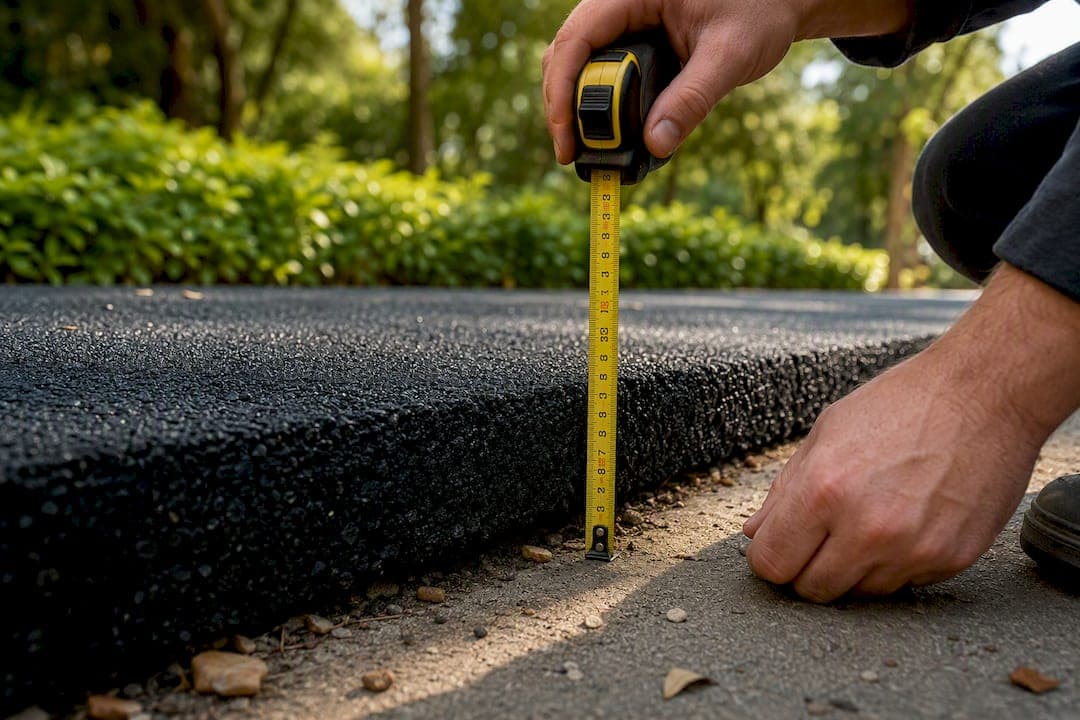
A vertical change of 1/4 inch or more between adjacent walking surfaces generally qualifies as a trip hazard under ADA guidance, and it warrants action now. Measure it with a straightedge, photograph it with something for scale, log the exact location, and mark the spot until it's fixed. If you've already received a complaint or a notice of claim, aim to complete remediation promptly and keep a written record of every step you take.
TL;DR:
- Any sidewalk with a vertical change of 1/4 inch or more between surfaces requires immediate repair, with adjustments permitted only up to 1/2 inch if beveled at a 1:2 slope.
- Fixes should match the cause and severity; grinding is suitable for small ridges below one inch, while full replacement is necessary for structurally compromised slabs.
- Regular inspection, proper documentation, and addressing underlying issues like roots and drainage are essential to prevent recurring hazards.
- Contractors should provide detailed measurement records, warranties, and proof of insurance before starting repairs; beware of bidders hesitant to commit in writing.
- Alternatives like rubber paving systems offer flexible, drainage-friendly solutions for sites with repeated problems caused by root heave, freeze-thaw, or poor soil conditions.
Table of Contents
- Sidewalk Trip Hazard Repair Standards: ADA Thresholds and Bevel Rules
- How Do You Properly Measure a Sidewalk Trip Hazard?
- Which Repair Method Fixes Which Type of Sidewalk Damage?
- How Do You Choose the Right Sidewalk Trip Hazard Repair?
- How Do You Stop the Same Sidewalk Hazard From Coming Back?
- What a Paving Contractor Actually Weighs on Repeat-Problem Sites
- A Longer-Term Fix for Sidewalks That Keep Failing
- Where to Verify These Standards Before You Sign a Contract
- Sources
Sidewalk Trip Hazard Repair Standards: ADA Thresholds and Bevel Rules
Federal accessibility guidance draws a hard line at 1/4 inch. Anything below that is considered a normal surface irregularity. Anything at or above it is treated as a hazard that needs a fix, and the specific correction required depends on how far out of level the panel actually is.
The math works like this:
- Under 1/4 inch: generally acceptable, no action required
- 1/4 inch to 1/2 inch: permitted only if beveled at a 1:2 slope (one inch of horizontal run for every half inch of rise), per ADA accessibility thresholds and trip/fall guidance
- Above 1/2 inch: must be corrected outright, no bevel exception applies
Beyond the vertical differential, accessible routes have slope limits. Running slope and cross slope affect whether a walkway counts as an accessible route, independent of any single trip point. A sidewalk can pass the 1/4 inch test and still fail on cross slope if water has washed out the base beneath one edge.
These numbers matter beyond compliance paperwork. Municipal codes frequently mirror or reference the same thresholds, and many cities layer on their own posting and repair requirements, as detailed in the Portland sidewalk repair manual. OSHA's general walking surface rules can also apply on commercial property, which means a single hazard can trigger overlapping obligations from three different sources at once. For a fuller breakdown of how these standards intersect with commercial design requirements, see this ADA compliance paving guide.
How Do You Properly Measure a Sidewalk Trip Hazard?
You don't need a structural engineer to run a credible sidewalk safety assessment. You need a handful of cheap tools and a routine you repeat the same way every time, because consistency is what makes your documentation hold up later.
Tools worth keeping in a truck or maintenance closet:
- A 4-foot metal straightedge or carpenter's level
- A tape measure and a feeler gauge or folded index card for fine measurements
- A smartphone camera and a tape measure or coin for scale in photos
- A simple log sheet or spreadsheet template for recurring entries
Here's the actual measurement sequence:
- Walk the panel and find the highest point of the raised edge by eye, then confirm it with the straightedge laid flat across the joint.
- Slide the feeler gauge or card into the gap at the highest point and read the perpendicular difference, not a diagonal measurement.
- Check whether an existing bevel is present and estimate its slope; a rough eyeball at this stage is fine since a contractor will confirm it later.
- Photograph the hazard with the straightedge in frame, note GPS or a fixed address reference, and record the date, measurement, and suspected cause (root heave, settlement, drainage).
Set an inspection schedule rather than waiting for a complaint to prompt one. Quarterly walks for high-traffic commercial frontage and semiannual walks for lower-traffic residential paths catch most problems before they escalate. For a documentation format you can reuse across sites, this sidewalk crack repair compliance checklist covers what to log and how long to keep it.
Cones and warning signs buy you time, not cover. Courts and risk managers don't treat a cone as proof of compliance, and a marked hazard left unrepaired for months can actually strengthen a negligence claim rather than weaken it.
Pro Tip: Keep a printed measurement log in your vehicle even if you also track digitally. A phone that's dead or lost during an incident review is a bad time to discover your only records lived on it.
Which Repair Method Fixes Which Type of Sidewalk Damage?
No single method handles every hazard, and picking the wrong one wastes money on a fix that won't last. Match the method to the cause and the severity, not to whichever crew happens to answer the phone first.
Concrete grinding shaves down a raised lip to bring it flush or within bevel tolerance. It's fast, usually completed in one visit, and cheap per linear foot. Practitioner guidance on the technique puts its practical ceiling around one inch of differential, and it works best when the underlying soil has stabilized. Grind a panel sitting on active root heave and you'll likely be back within a year or two, according to practical grinding guidance from ShunTool.

Precision cutting and resetting removes the displaced panel edge with specialized saws and resets it to create a true zero differential rather than a beveled compromise. It preserves the surface texture of the original slab, often runs at a fraction of full replacement cost, and gets pedestrians back on the walkway almost immediately, per Precision Concrete Cutting's overview of ADA-compliant methods. This has shifted the default recommendation for many raised-panel hazards away from tear-out replacement.
Slab jacking and foam injection address sunken panels rather than raised ones. A contractor pumps grout or expanding polyurethane foam beneath a settled slab to lift it back to grade. It's a strong fix when the cause is soil consolidation or a void from erosion, but it does nothing for a panel that's cracked or structurally compromised.

Patching and epoxy fills cover small surface spalls and minor edge chips. Treat these as cosmetic or short-term measures, not solutions for anything with a measurable vertical differential.
Full replacement becomes necessary when a slab is cracked through, structurally unsound, or displaced too far for cutting to correct. Expect multi-day cure times before the section can safely reopen to foot traffic, which complicates routing on an accessible path, according to PCC's guide on uneven sidewalk repair. Permitting requirements are also more likely to apply.
Every one of these methods generates concrete dust, and grinding is the worst offender for airborne silica. Contractors should run HEPA vacuum attachments, use water suppression where local rules allow it, and have crews in proper respirators, a cost item that's frequently underbudgeted at bid time.
How Do You Choose the Right Sidewalk Trip Hazard Repair?
Start with three questions: how bad is the differential, how much foot traffic crosses it, and what caused it in the first place. A 3/8 inch bump on a quiet residential cul-de-sac carries different urgency than the same measurement outside a grocery store entrance.
- Severity and traffic drive priority. Rank hazards above 1/2 inch and anything near an entrance, transit stop, or accessible parking route at the top of your repair list regardless of budget cycle.
- Underlying cause determines whether a quick fix will hold. Grinding near a mature tree root system is a stopgap at best; settlement from a drainage failure needs the drainage fixed first or the same spot reappears.
- Cost and timeline vary by method. Grinding and precision cutting run cheaper and faster; full replacement sample estimates for a 100 square foot section land in the rough $800 to $1,500 range regionally, with several days of cure time before it can carry pedestrian traffic, per PCC's cost comparison data.
- Contract terms should specify exact measurements corrected, an ADA compliance guarantee, substrate stabilization work if roots or drainage are involved, a written warranty period, and proof of active insurance before work starts.
Vet bidders with direct questions: What's your typical turnaround from measurement to completed repair? Do you warranty against recurrence if the cause is root related? Can you show a certificate of insurance and a sample of your post-repair documentation? A contractor who hedges on any of these, or who can't produce a written warranty, is a red flag worth walking away from. For municipal procurement specifically, a public paving procurement checklist covers the additional bidding and documentation steps agencies typically require.
Pro Tip: Ask every bidder for their measurement of the hazard before they quote a price. If their number doesn't match yours within a reasonable margin, get a third opinion before signing anything.
How Do You Stop the Same Sidewalk Hazard From Coming Back?
Fixing the surface without fixing the cause is the single most common reason sidewalk repairs fail within a year or two. Root-first strategy matters most where mature trees sit close to the walk: if root mass is extensive, plan for slab removal, root pruning, and a physical root barrier rather than repeated grinding on the same panel, based on Portland's urban forestry guidance on root damage. Grinding around large roots is a stopgap, not a solution.
Drainage is the other repeat offender. Regrading to shed water away from the walk, adding edge drains, or switching to a permeable surface all reduce the soil erosion and freeze-thaw cycling that cause settlement in the first place.
A few things worth building into any maintenance program:
- A fixed inspection cadence, not just reactive walks after a complaint
- A prioritized, written repair list ranked by severity and traffic
- A capital budget line specifically for sidewalk maintenance, separate from general grounds upkeep
Property managers who treat this as an ongoing asset-management line item rather than a one-off fire drill see meaningfully lower long-term repair costs, a pattern documented in guidance on proactive maintenance for property managers. For the longer view on why this pays off, see long-term paving maintenance benefits.
What a Paving Contractor Actually Weighs on Repeat-Problem Sites
Every hazard gets triaged the same way in the field: severity first, traffic second, cause third. A 1/2 inch lip outside a daycare entrance jumps the queue over a similar lip at the back of a warehouse lot, no matter which one came in first on the work order.
Documentation is what separates a contractor you can trust from one you should avoid. A written measurement, a dated photo, and a signed warranty aren't paperwork for its own sake. They're what keeps a property owner out of a courtroom and what keeps a repair honest about whether it actually solved the underlying cause or just bought six months.
The sites that keep coming back are almost always the same profile: mature root systems, chronic drainage problems, or heavy freeze-thaw exposure. Standard concrete keeps losing that fight because the material itself has no give. A surface built to flex with the ground instead of fighting it changes that equation entirely, and that's the case worth making to any property owner tired of paying for the same repair twice.
— Roger
A Longer-Term Fix for Sidewalks That Keep Failing
If you've patched the same stretch of sidewalk more than once, the problem usually isn't the repair crew. It's the material. Standard concrete has almost no flexibility, so root heave, freeze-thaw cycling, and drainage failures keep winning the same fight year after year. Ecotecrubber's Rubberway® system uses a porous, recycled rubber surface that flexes instead of cracking, drains instead of pooling, and installs with ADA-compliant transitions from day one.
It's a genuine option for the sites that keep landing back on your repair list: root-heavy tree lawns, low spots that never drain right, and high-traffic walkways where you need slip resistance that concrete can't match. Every installation is licensed, insured, and coordinated end to end, so you're not managing separate crews for demolition, base work, and finish. If a section of your property has failed concrete repair more than once, request an evaluation of your site conditions or browse the Rubberway® product details to see whether a rubber surface fits your next repair budget instead of your next lawsuit.
Where to Verify These Standards Before You Sign a Contract
The ADA guidance on walking surface thresholds is the baseline reference for the 1/4 inch and 1/2 inch rules cited throughout this guide, and it's worth reading directly if you're drafting internal policy language.
Municipal manuals fill in local specifics that federal guidance leaves open, including permit triggers and posting requirements. The Portland sidewalk repair manual is a useful model even outside Oregon, since many cities structure their own manuals similarly.
For the mechanics of specific repair techniques, grinding technique, dust control, and PPE requirements are covered in detail in this practitioner repair guide, and landscape-adjacent compliance questions, particularly where trees and grading intersect with ADA routes, are addressed in this ADA landscape compliance resource.
Sources
- ADA accessibility thresholds and trip/fall guidance (overview)
- Portland sidewalk repair manual (municipal specifications and posting/repair criteria)
- How to fix concrete trip hazards — practitioner guide