
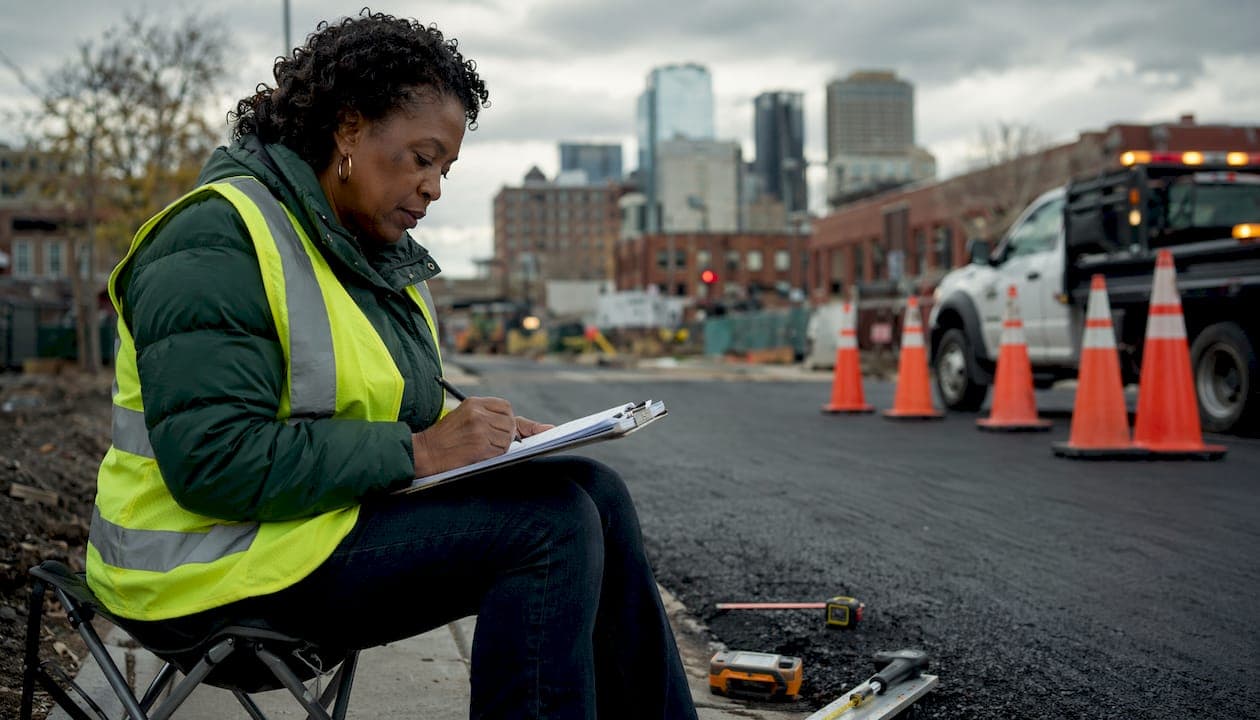
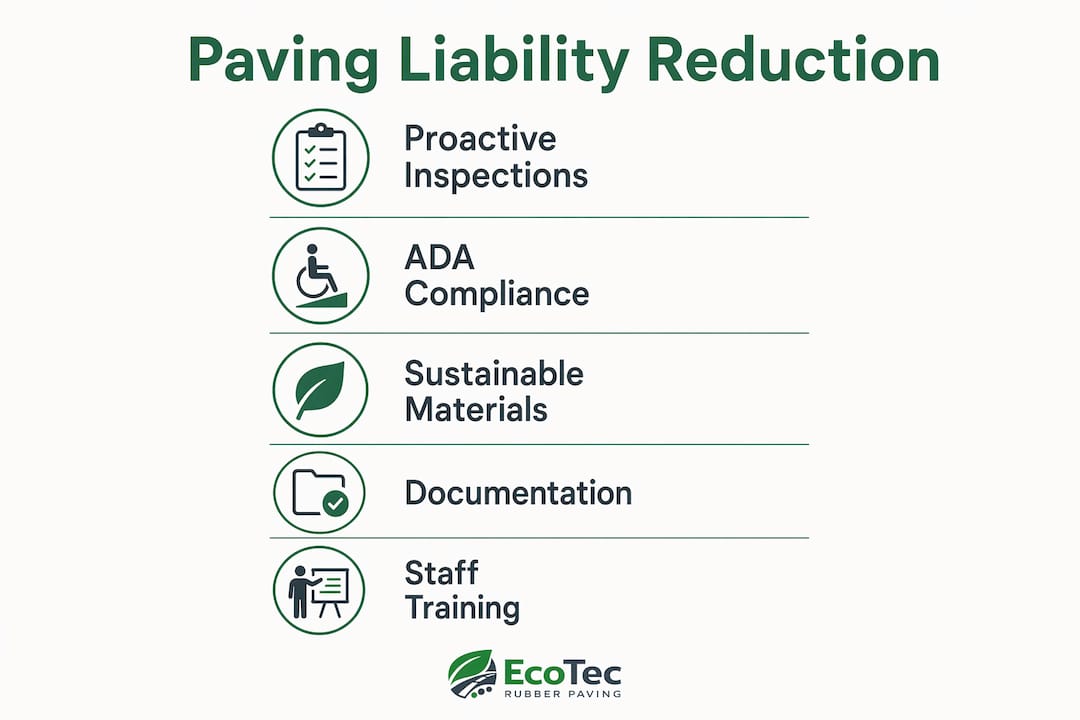
Municipalities that reduce municipal paving liability risks don't do it by fixing every crack the moment it appears. They do it by building a system: scheduled inspections, documented repairs, ADA-compliant design, and materials that hold up over time. The difference between a dismissed claim and a six-figure settlement often comes down to one thing, defensible data such as geo-tagged photos and timestamped inspection logs. Here is what that system looks like in practice.
- Schedule recurring hazard inspections with geo-tagged photo documentation
- Maintain digital work orders and repair logs to prove timely response
- Build ADA-compliant slopes and drainage into every project from the start
- Use durable, sustainable materials like the Rubberway® system from Ecotecrubber
- Train staff and contractors on hazard identification and safety protocols
- Communicate proactively with the public through signage and incident reporting
1. How to set up proactive inspections that actually protect you
Proactive loss control with recurring, documented hazard inspections is the most effective method to protect taxpayer assets and defend against negligence claims in municipal paving. Reactive maintenance, fixing things only after complaints arrive, leaves a legal gap that opposing counsel will exploit.
Set up automated recurring inspection schedules tied to asset priority. Sidewalks and high-traffic pedestrian zones warrant weekly or monthly checks; lower-risk assets can be reviewed quarterly. Train personnel on hazard identification using mobile inspection apps that log GPS coordinates and timestamps automatically, since GPS-verified records significantly improve a municipality's defense compared to manual logs.
- Assign severity levels to each identified hazard so repair crews know what to prioritize
- Post public signage at known hazard locations immediately after identification
- Document turnaround times from hazard detection to repair completion
Pro Tip: Record inspections that find no issues. Courts treat "no defect found" logs as proof of ongoing vigilance, and that documentation can be just as valuable as a repair record.
2. Why ADA compliance and proper design reduce your legal exposure
Meeting ADA standards from the start of a project costs far less than retrofitting after an accessibility lawsuit. Failure to comply can result in costly lawsuits and mandated reconstructions that disrupt entire corridors.
Proper slope and drainage design prevents water pooling, which turns into ice hazards in cooler months and accelerates surface degradation year-round. Sidewalks and crosswalks must meet strict design and slope standards, and those specifications need to be locked in during the design phase, not corrected after a pedestrian falls. Refer to the ADA compliance guide for current slope thresholds and surface texture requirements.
- Use rubber safety ramps at exposed pavement edges to reduce vehicle damage claims and contractor liability during milling operations
- Require licensed and bonded contractors trained in ADA standards and safety protocols on every project
- Address edge and interface details at utility boxes and catch basins, which are among the most common sources of tripping and vehicle damage claims
3. How the Rubberway® system helps municipalities mitigate paving liability
Sustainable rubber paving systems like Ecotecrubber's Rubberway® system provide enhanced drainage and crack resistance, which contributes to lower liability risks and longer pavement life. The surface is ADA-compliant and minimizes both trip hazards and vehicle damage claims compared to traditional asphalt, particularly in Florida's heat-intensive climate where conventional pavement degrades faster.
Rubberway® installations use recycled materials, which supports municipal environmental policies while delivering a surface that resists the cracking and pooling that generate most pedestrian injury claims. Ecotecrubber is licensed and insured, meaning every installation carries the professional accountability that municipalities need when defending a claim. That accountability matters: a city that hires unlicensed workers faces compounded liability if injuries occur due to substandard workmanship.
Pro Tip: Ask your installer for written documentation of ADA compliance testing on the finished surface. That record belongs in your maintenance file, not just the contractor's project folder.
- Rubberway® surfaces resist heat-induced cracking, reducing the frequency of emergency repairs that create short-term hazard windows
- Recycled rubber absorbs impact, lowering the severity of slip-and-fall incidents at pedestrian crossings and park pathways
- Professional installation by a licensed, insured contractor provides a documented chain of accountability from design through completion
Local authority facilities managers dealing with similar public infrastructure maintenance challenges recognize that material selection and contractor accountability are inseparable from long-term liability management.
4. Documentation practices that defend against paving liability claims
Routine, documented pavement maintenance and repair greatly reduce personal injury claims and property damage lawsuits by proving municipalities met their duty of care. Courts, insurers, and legal teams rely heavily on evidence of a proactive routine maintenance schedule, not on a municipality's word that it was diligent.
One municipality implemented a digital maintenance platform and saw repair turnaround times drop significantly, liability premiums reduced, and some frivolous lawsuits dismissed immediately. The platform gave staff instant retrieval of a five-year inspection history and automated alerts for high-priority hazards.
- Record both "hazard found" and "no hazard found" results with geo-tagged photos and timestamps
- Maintain digital work orders that show the date a hazard was identified, the date repair was assigned, and the date it was completed
- Store all records in cloud-based systems so they never degrade or get lost before a claim surfaces years later
- Apply incident reporting procedures consistently so every citizen complaint generates a documented response
Documented due diligence, not perfection, is what courts and insurers actually reward. A municipality that can produce a continuous, timestamped record of inspections and repairs is far better positioned than one that fixed every defect but kept no paper trail.
5. Training staff, managing contractors, and communicating with the public
Staff training and public communication are the two most underfunded parts of paving liability management, and they are often what separates a dismissed claim from an expensive one. Personnel who cannot identify a hazard correctly, or who fail to log it properly, create the same evidentiary gap as no inspection at all.
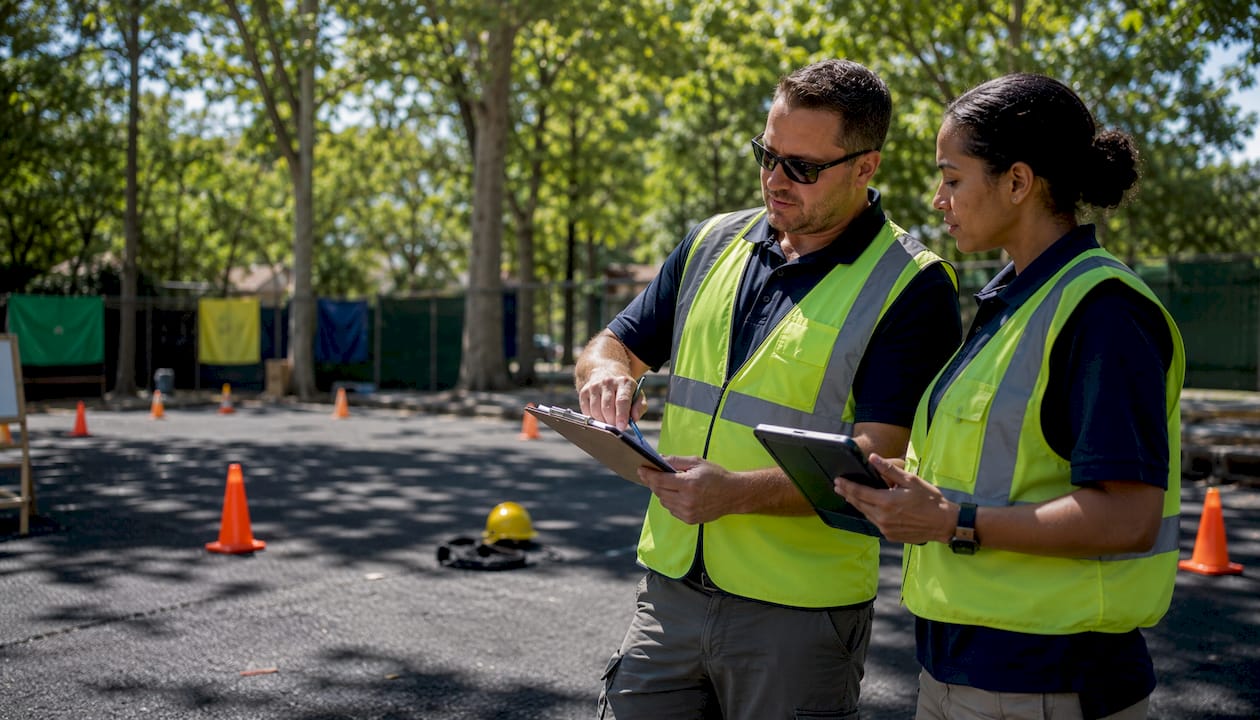
Train crews on hazard identification using standardized checklists, and require mobile app sign-off so every inspection is GPS-verified rather than self-reported. Contractors need the same orientation: bonded paving contractors provide a financial guarantee that protects taxpayer funds if a project defaults, and their surety bonds shift financial risk away from the municipality. Review the public paving procurement checklist before any new contract is awarded.
Public communication closes the loop. Place clear signage at active work zones and known hazard locations. Establish an incident reporting line so residents can flag issues, and document every report with a timestamped response. That transparency builds community trust and creates a paper trail showing the municipality acted on public input promptly.
Key Takeaways
Proactive documentation and ADA-compliant design are the foundation of effective paving liability management; durable materials like the Rubberway® system reduce the frequency of hazards that generate claims in the first place.
| Point | Details |
|---|---|
| Documentation is your legal shield | Geo-tagged, timestamped inspection logs are what courts and insurers use to dismiss or settle claims. |
| ADA compliance from day one | Early integration of slope and drainage standards prevents costly retroactive modifications and accessibility lawsuits. |
| Digital platforms cut premiums | One municipality reduced liability premiums and cut repair turnaround times significantly after switching to digital maintenance records. |
| Licensed, bonded contractors matter | Surety bonds protect taxpayer funds and shift financial risk away from the municipality if a contractor defaults. |
| Ecotecrubber's Rubberway® system | ADA-compliant, crack-resistant rubber paving reduces trip hazards and vehicle damage claims compared to conventional asphalt. |
Ecotecrubber offers a durable path to lower paving liability
Municipalities and property owners who want fewer claims, lower premiums, and surfaces that hold up in Florida's climate have a concrete option in Ecotecrubber's Rubberway® installations. The Rubberway® system is ADA-compliant, uses recycled materials, and resists the heat-induced cracking and drainage failures that generate most pedestrian injury claims. Every project is handled by a licensed and insured team, which means the documentation trail starts at installation and supports your liability defense from day one.
Ecotecrubber works with municipalities, public works managers, and property owners across Florida who need paving that performs and protects. Get in touch to request a project consultation and see how rubber paving fits your risk management goals.