
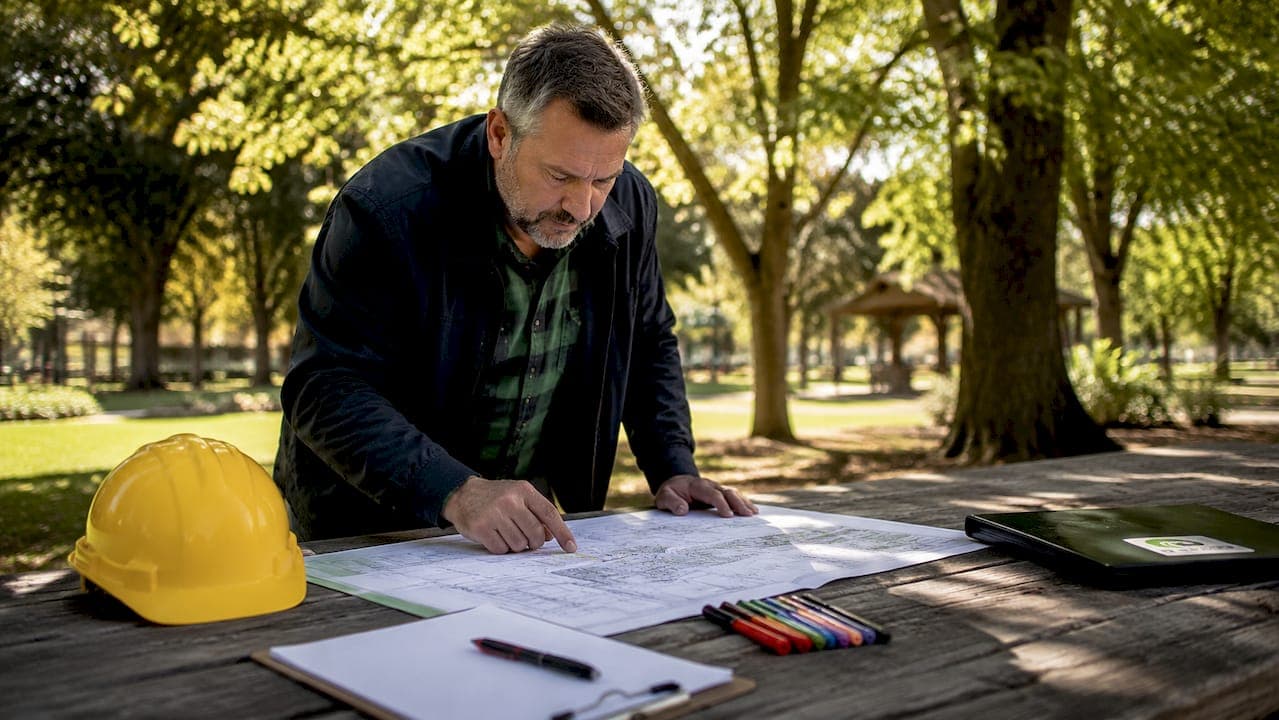
A licensed paving contractor is a construction professional authorized by state and local governments to perform paving work that meets safety, quality, and regulatory standards. The role of licensed contractor in paving goes far beyond showing up with asphalt and equipment. It covers legal compliance, material verification, site evaluation, risk management, and project accountability. Homeowners, businesses, and municipal officials who skip this step often pay for it twice: once for the original work, and again to fix what went wrong.
What legal and licensing requirements must paving contractors meet?
Licensing in the paving industry is a government-enforced minimum standard, not a marketing credential. Most jurisdictions require specific contractor licenses for paving work, and operating without one on projects above $500 is a criminal misdemeanor in states like California. That threshold is lower than most property owners expect. A single driveway repair can cross it easily.
The legal consequences go beyond fines. Contracts signed with an unlicensed contractor are often unenforceable in court. That means if the work fails, you may have no legal recourse at all.
License classification matters just as much as having a license. A general contractor license alone frequently does not cover paving work. In California, for example, the C-12 trade classification is required specifically for paving, and using a contractor without it can invalidate insurance claims even when the contractor appears legitimate on paper.
Key legal requirements for licensed paving contractors typically include:
- A state-issued contractor license specific to paving or earthwork trades
- Proof of general liability insurance and workers' compensation coverage
- Compliance with local building codes and permit requirements
- Registration with the state contractor licensing board
- Adherence to OSHA safety standards on job sites
Pro Tip: Verify a contractor's license directly with your state licensing board's online database. Do not rely on a license number printed on a business card or estimate sheet.
How do licensed paving contractors contribute to project quality and durability?
Quality in paving starts before the first load of material arrives. A licensed contractor evaluates site-specific conditions including drainage patterns, soil stability, and grading requirements. These factors directly affect pavement longevity. A surface installed over poor drainage will crack and heave within a few years regardless of material quality.
Material selection is the next critical step. Licensed contractors specify materials according to ASTM standards and test them before installation. Material testing before installation functions as insurance, confirming that particle size, infiltration rate, and porosity meet design intent. Skipping this step is one of the most common causes of premature pavement failure.
"Hiring licensed contractors is a risk-management strategy that addresses liability, compliance, and project performance, especially regarding site drainage and grading crucial for pavement longevity."
The installation process itself requires coordination of skilled labor, specialized equipment, and quality control checkpoints. Licensed contractors manage all of this. They set compaction targets, monitor lift thickness, and verify that subbase preparation meets spec before any surface layer goes down.
A structured installation process from a licensed contractor typically follows these steps:
- Site assessment and soil testing to establish bearing capacity
- Subbase preparation including grading and compaction verification
- Material procurement with ASTM-compliant testing documentation
- Base course installation with thickness and compaction checks
- Surface course application with temperature and density monitoring
- Final inspection and documentation for warranty purposes
Pro Tip: Ask your contractor for compaction test results and material delivery tickets. Legitimate licensed contractors keep these records and share them without hesitation.
Why is hiring a licensed paving contractor vital for risk management and liability protection?
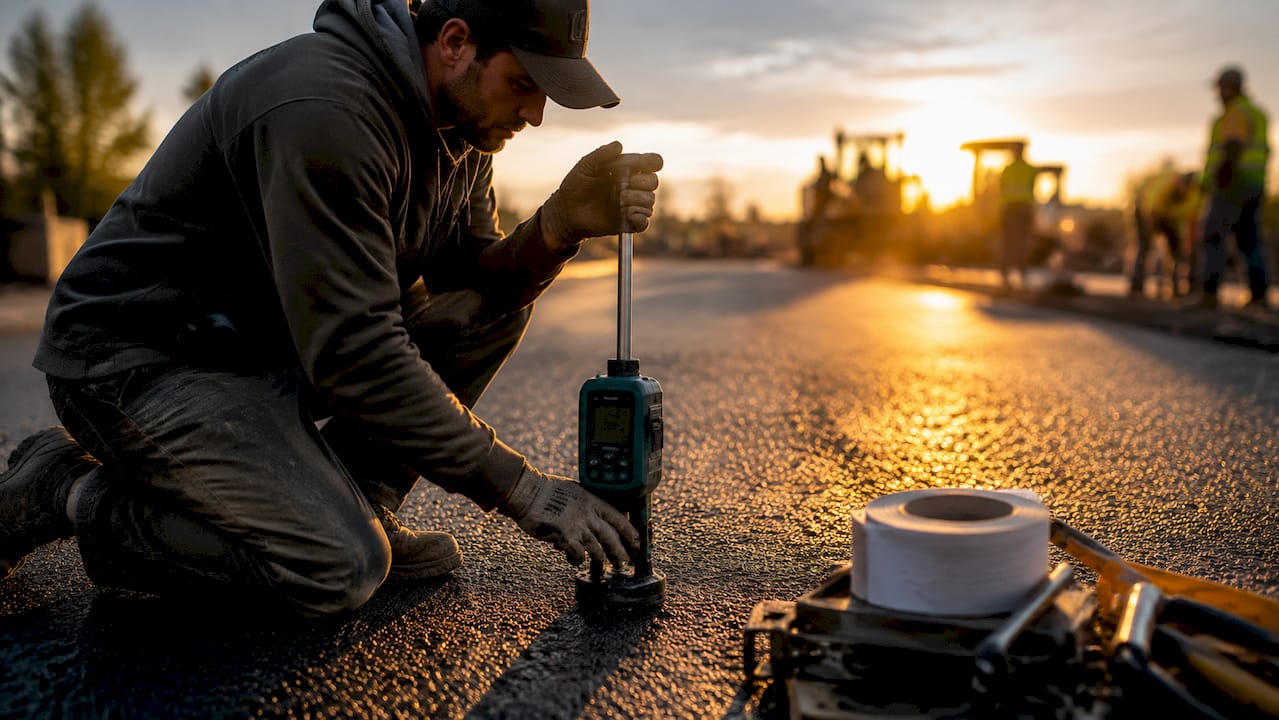
Unlicensed paving work creates financial exposure that most property owners do not anticipate until a claim is denied. Reputable paving contractors carry at least $1 million in general liability insurance and workers' compensation coverage. That coverage protects you if a worker is injured on your property or if the finished surface causes damage to a vehicle or a person.
The risk is even sharper for HOAs and municipal bodies. HOAs that use unlicensed vendors may breach their fiduciary duty to residents, exposing board members to personal liability and voiding the association's insurance coverage. A slip-and-fall on an improperly paved walkway becomes a personal financial problem for board members when the contractor was never properly licensed.
Key liability risks from hiring unlicensed paving contractors include:
- Workers injured on site with no workers' compensation coverage, leaving the property owner responsible
- Insurance claims denied because the contractor lacked the required trade license
- No legal recourse when work fails, since the contract may be unenforceable
- Municipal fines for work performed without proper permits
- Personal liability for HOA board members who approved unlicensed vendors
Licensed contractors also provide a clear chain of accountability. When a project fails, there is a licensed professional, a bonding company, and an insurance carrier involved. That structure gives property owners real options. Unlicensed work leaves you with a phone number that may stop working after the check clears.
For municipalities, the stakes extend to public safety. Roads, parking lots, and pedestrian paths that fail due to poor installation create ADA compliance issues and injury liability. Choosing rubber paving for liability risk reduction is one approach, but the contractor's license status remains the foundational protection regardless of material choice.
How to effectively select and vet licensed paving contractors for your project?
Contractor selection is where most project problems begin or get prevented. The process requires more than checking a license number. It requires comparing detailed bids, verifying insurance directly, and assessing experience on projects similar to yours.
Experts recommend obtaining at least three written, itemized quotes that specify gravel base depth, asphalt or surface material thickness, and exact materials by type and grade. Vague quotes that list only a total price make it impossible to compare value. A lower bid that omits base preparation is not a bargain.
| Evaluation criterion | What to look for |
|---|---|
| License verification | Confirm active status directly with the state licensing board |
| Insurance certificates | Call the insurer directly to verify coverage is current |
| Bid detail | Itemized materials, depths, and installation methods listed |
| Project experience | Comparable jobs: HOA, municipal, or commercial scale |
| References | At least three recent clients willing to speak by phone |
| Warranty terms | Written warranty covering both materials and workmanship |
When evaluating bids for eco-friendly paving projects, the same principles apply. Material specifications, installation methods, and license status all require the same scrutiny.
Insurance certificates must be verified directly with the issuing insurer. Forged certificates are a documented problem in the paving industry. A phone call to the insurance carrier takes five minutes and confirms whether the policy is active and covers the scope of work you are hiring for.
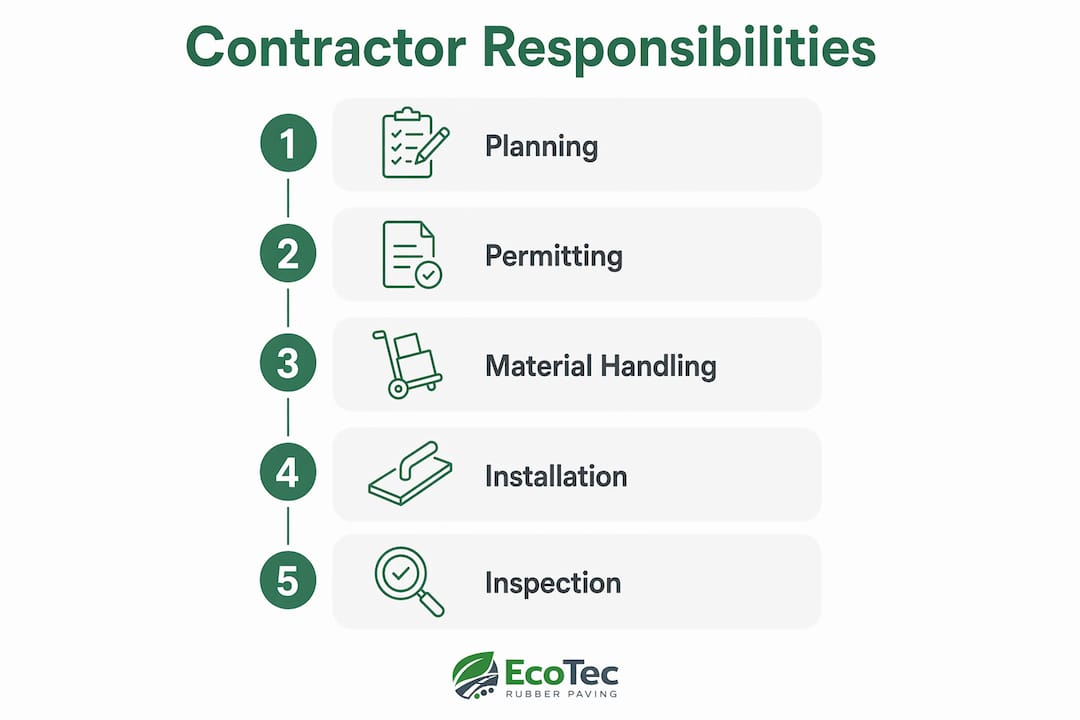
What are the key responsibilities a licensed paving contractor manages throughout a project?
A licensed paving contractor's responsibilities span the full project lifecycle, from planning through final inspection. Understanding these duties helps property owners set expectations and hold contractors accountable at each phase.
The full scope of paving contractor responsibilities includes:
- Project planning: Developing scope, timeline, and budget based on site conditions and regulatory requirements
- Permit acquisition: Pulling all required permits from local authorities before work begins
- Regulatory compliance: Confirming the project meets local building codes, ADA requirements, and environmental regulations
- Subcontractor management: Hiring, supervising, and paying any specialty subcontractors involved in the project
- On-site safety: Maintaining OSHA-compliant conditions throughout the project duration
- Material verification: Confirming delivered materials match specifications and testing documentation
- Quality control: Conducting compaction tests, thickness checks, and surface inspections at each phase
- Inspection coordination: Scheduling and passing required municipal inspections
- Warranty documentation: Providing written warranty terms and maintenance guidance at project close
For HOA paving projects specifically, the contractor also manages communication with the board, coordinates access for residents, and documents compliance for the association's records. Municipal projects add public notice requirements and often require prevailing wage compliance. A licensed contractor understands these layers. An unlicensed one typically does not.
Reviewing sustainable paving installation practices alongside contractor responsibilities gives property owners a fuller picture of what compliant, quality installation actually looks like from start to finish.
Key Takeaways
A licensed paving contractor is the single most important factor in whether a paving project delivers durable, compliant, and legally protected results.
| Point | Details |
|---|---|
| Licensing is a legal requirement | Operating without a license on projects above $500 risks criminal charges and unenforceable contracts. |
| Insurance must be verified directly | Call the insurer to confirm coverage; forged certificates are a known industry problem. |
| Material testing prevents failure | ASTM-compliant testing before installation confirms materials meet design intent and reduces long-term costs. |
| HOAs face personal liability | Board members can be held personally liable when unlicensed vendors cause damage or injury. |
| Itemized bids enable real comparison | Three written quotes with material and depth specifications allow accurate evaluation of project value. |
What I've learned from watching licensed contractors get overlooked
The most expensive paving mistakes I've seen share one common factor: the property owner chose the lowest bid without verifying the contractor's license or insurance. Every time. The savings at signing looked real. The repair costs two years later were not.
License verification takes less than ten minutes using your state's online contractor database. Most property owners skip it because they assume a professional-looking proposal means a licensed contractor. That assumption is wrong often enough to matter.
The other pattern I've noticed is that HOA boards treat paving as a commodity purchase rather than a regulated construction project. They compare total prices and pick the lowest number. Fiduciary duty for HOAs requires hiring licensed and insured contractors. That is not a suggestion. It is a legal obligation that board members carry personally.
What actually separates good licensed contractors from the rest is not just the license itself. It is the documentation they produce without being asked: compaction reports, material test results, permit copies, and inspection sign-offs. If a contractor cannot produce these, the license may be real but the work quality is not guaranteed.
Hiring a licensed contractor is the baseline, not the finish line. Verify the specific trade classification, confirm the insurance directly, and require itemized proposals. That process takes more time upfront and saves significant money over the life of the pavement.
— Roger
Ecotecrubber: licensed rubber paving for Florida properties
Ecotecrubber installs Rubberway® rubber paving systems across Florida as a licensed and insured contractor. Every project meets state licensing requirements, carries full general liability and workers' compensation coverage, and uses recycled rubber materials tested for drainage, crack resistance, and ADA compliance.
Florida's heat and rainfall demand paving solutions that handle both. Ecotecrubber's rubber paving installations address standing water, surface cracking, and slip hazards that traditional asphalt surfaces develop under Florida conditions. Homeowners, HOAs, and municipalities can review available rubber paving products and request a detailed, itemized quote directly from the Ecotecrubber team.
FAQ
What does a licensed paving contractor do?
A licensed paving contractor plans, permits, installs, and inspects paving projects in compliance with local building codes, safety regulations, and material standards. Their license authorizes them to perform this work legally and backs their accountability with bonding and insurance.
Why does contractor license classification matter for paving?
A general contractor license does not always cover paving work. Specific trade classifications, such as California's C-12, are required for paving projects, and using a contractor without the correct classification can void insurance claims and make contracts unenforceable.
How do I verify a paving contractor's license?
Check your state's contractor licensing board website directly using the contractor's name or license number. Do not rely on the license number printed on an estimate. Confirm the license is active, covers the correct trade, and matches the contractor's legal business name.
What insurance should a licensed paving contractor carry?
Licensed paving contractors should carry at least $1 million in general liability insurance and active workers' compensation coverage. Verify both policies by calling the insurer directly, since forged certificates are a documented problem in the paving industry.
What risks do HOAs face when hiring unlicensed paving contractors?
HOA boards that hire unlicensed paving vendors may breach their fiduciary duty to residents, void the association's insurance coverage, and expose individual board members to personal liability if damage or injuries occur on the improperly paved surface.