

Permeable driveways typically run in the range of several dollars to about twenty-five dollars per square foot installed, depending on material, with loose gravel and plastic grid systems at the low end and hand-set permeable pavers at the high end, according to national cost data from Arawda. For a standard single-car driveway (roughly 320 square feet), that translates to $2,600 to $8,000 installed. A two-car driveway around 640 square feet lands between $5,000 and $12,000, with a national average near $7,500, per HomeAdvisor.
Here's how the main materials stack up on price per square foot:
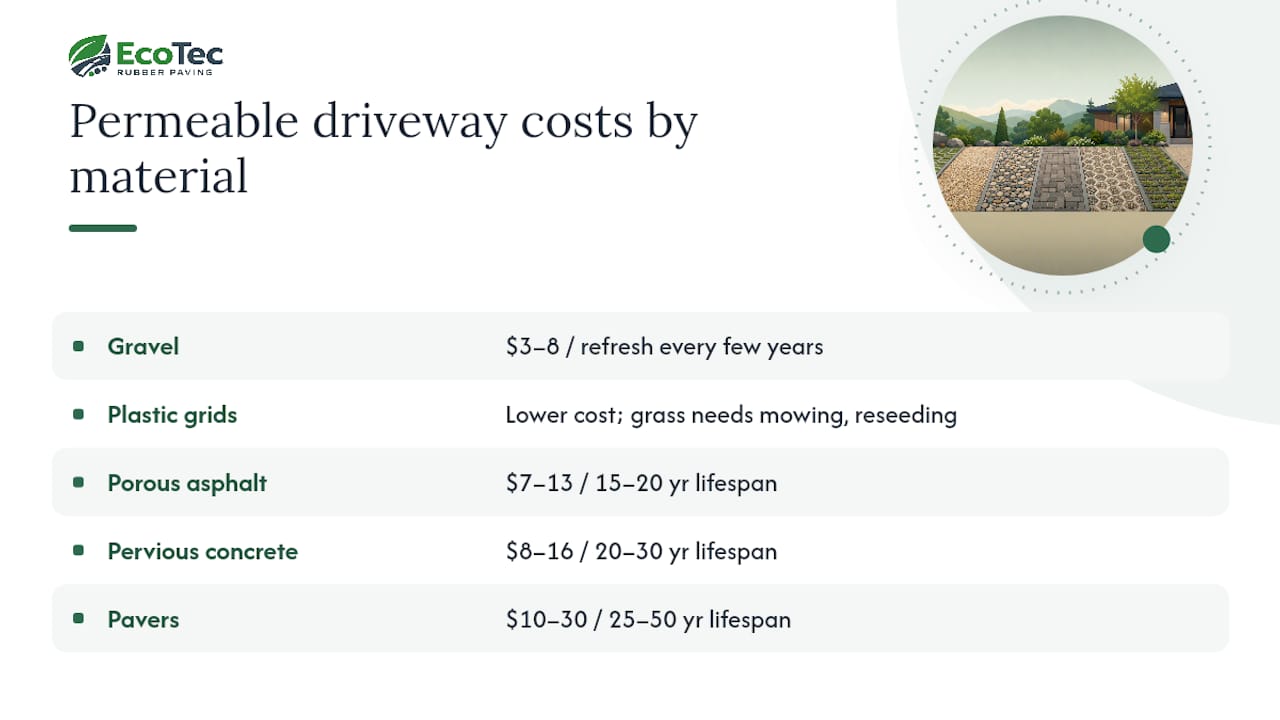
- Loose gravel / reservoir systems: roughly $3 to $8 per square foot, the cheapest option upfront
- Plastic or concrete grass grid systems: roughly $5 to $10 per square foot
- Porous asphalt: $7 to $13 per square foot, per HomeGuide
- Pervious concrete: $8 to $16 per square foot
- Permeable pavers: $10 to $30 per square foot, the highest cost but longest lifespan and best curb appeal
Your actual quote will move up or down that range based on three things almost every contractor mentions first: how well your existing soil drains, how deep the gravel base needs to be, and whether old pavement needs to come out before anything new goes in. A driveway on sandy Florida soil with no demolition needed costs far less than a clay-heavy lot in the Midwest that requires an underdrain system.
TL;DR:
- Costs vary significantly based on material, ranging from $8 to $30 per square foot, with pavers and permeable concrete at the higher end due to labor differences.
- Site conditions, especially soil drainage and the need for extensive base depth or demolition, can increase total costs by several thousand dollars.
- Installing a two-car driveway typically costs around $7,500 on average, but can exceed $10,000 if using high-end pavers or complex layouts.
- Proper soil infiltration testing and careful bid comparison are essential to avoid overspending on unnecessary base or underdrain systems.
- Rubber paving systems like Rubberway® are especially suited for hot, flood-prone areas, offering heat resistance, durability, and compliance with ADA standards.
Table of Contents
- Permeable Driveway Cost by Material Type
- Real Project Budgets: What Common Driveway Sizes Actually Cost
- What Actually Drives Your Quote Up or Down
- The Installation Process, Phase by Phase
- Maintenance and Lifespan: The Cost After Installation
- How to Lower Your Permeable Driveway Cost Without Losing Performance
- Where Rubberway® Porous Rubber Fits Into the Picture
- Key Takeaways
- Sources
Permeable Driveway Cost by Material Type
The material you choose accounts for more of the final bill than almost anything else, so it's worth understanding what you're actually paying for in each option.
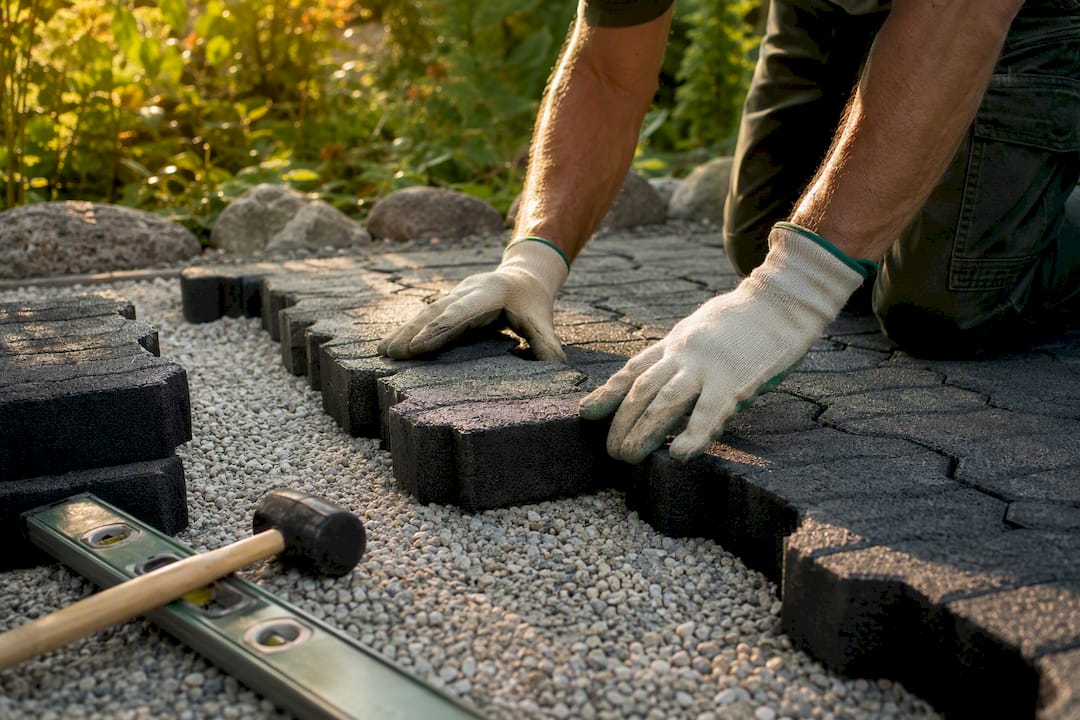
Permeable pavers sit at the top of the price range, and labor is usually the reason why. BobVila notes that labor often outweighs material cost on paver jobs because crews hand-set each unit and spend significant time compacting the base beneath them. Concrete or clay pavers run toward the lower end of the $10 to $30 per square foot range, while natural stone options like granite or bluestone push costs toward the top. Pavers last 25 to 50 years with reasonable care, which is longer than any other permeable option, and they come in enough colors and patterns that most homeowners can match their home's existing style without sacrificing drainage.
Pervious concrete and porous asphalt both depend heavily on specialized equipment and crews who know how to place them correctly. Pervious concrete needs a particular mix design and curing process, and it runs $8 to $16 per square foot. Porous asphalt is generally the cheaper of the two, at $7 to $13 per square foot, because asphalt crews and equipment are more widely available than pervious concrete specialists in most markets. Both surfaces trade some visual flexibility for a smoother, more traditional driveway look. Pervious concrete lasts 20 to 30 years, while porous asphalt tends to need resurfacing sooner, often within 15 to 20 years, especially in climates with heavy freeze-thaw cycles.
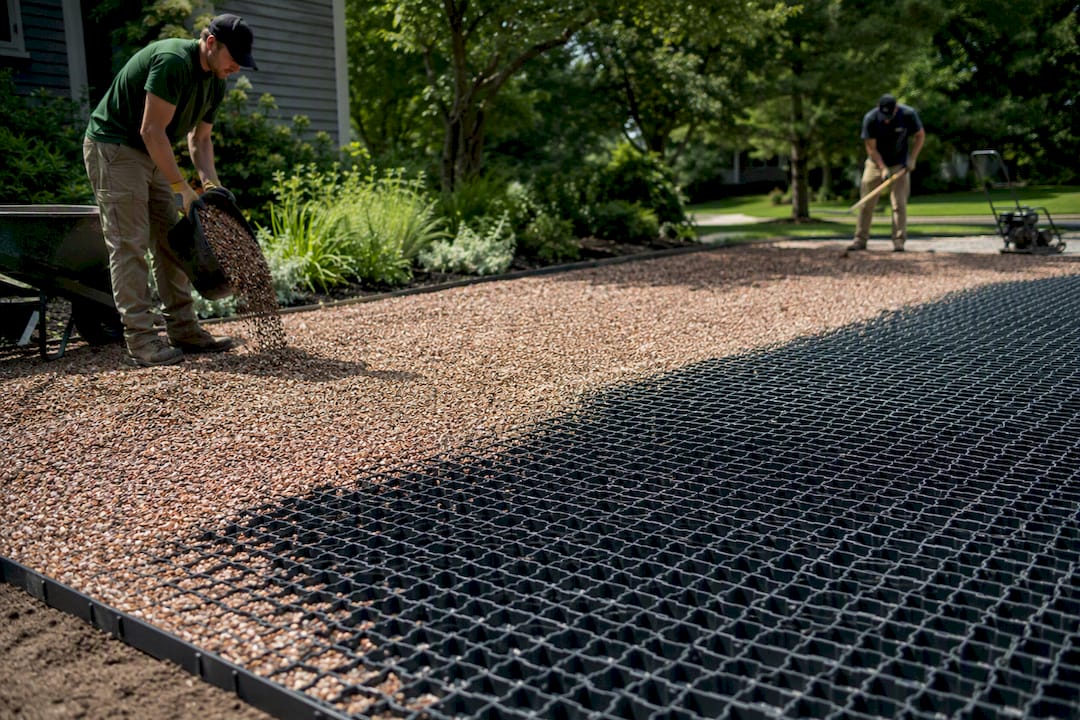
Grid systems, whether plastic or reinforced concrete, cost less to install because they use less specialized labor. You're essentially placing a honeycomb structure and filling the cells with gravel or turf. Grass grids in particular need mowing and occasional reseeding, and turf performance suffers under heavy, repeated vehicle traffic. Plastic grids filled with gravel handle traffic better but never look quite as finished as a paver or concrete surface.
Loose gravel with a proper reservoir base is the cheapest way to get permeable performance, often $3 to $8 per square foot. The tradeoff shows up over time: gravel migrates, ruts form in high-traffic zones, and you'll be adding fresh stone every couple of years to keep it looking and draining well.
One number worth remembering: HomeGuide's cost data shows pervious concrete and porous asphalt occupying a narrow midrange band, while pavers can cost nearly four times more than basic gravel setups for the same square footage. That spread is exactly why material selection deserves more attention than most homeowners give it before requesting quotes.
Real Project Budgets: What Common Driveway Sizes Actually Cost
Per-square-foot pricing only means something once you attach it to your actual driveway. Here's how the math plays out for the sizes most U.S. homes need:
- Single-car driveway (around 320 sq ft): Gravel or grid systems run $960 to $2,560. Porous asphalt or pervious concrete land between $2,240 and $5,120. Permeable pavers push the range to $3,200 to $9,600.
- Two-car driveway (around 640 sq ft): HomeAdvisor's normal range for a project this size is $5,120 to $9,600, with a national average close to $7,500. Paver installations at this size commonly exceed $10,000 once you factor in labor-intensive base prep.
- Larger or circular driveways (1,000+ sq ft): Costs scale roughly linearly with material, but labor efficiency sometimes improves slightly on bigger jobs since crews aren't constantly repositioning equipment for small sections.
Retrofitting an existing driveway adds a layer of cost that new construction skips entirely. Demolition and haul-off of old asphalt or concrete typically adds $1 to $3 per square foot before any permeable work even begins, and that number climbs if the old surface is reinforced concrete or sits on a compacted base that resists breaking up.
Layout complexity matters more than most homeowners expect going in. A flat, rectangular driveway with a single simple paver pattern is the cheapest configuration to install. Add a slope, and you introduce erosion control needs and possibly terracing. Add curved edges, borders in a contrasting material, or a herringbone paver pattern, and you're paying for more cutting, more waste, and more skilled labor hours. Edging alone, whether concrete curbing or steel restraint, can add several dollars per linear foot depending on material.
What Actually Drives Your Quote Up or Down
Two homeowners with identical square footage can get wildly different bids, and it almost always comes down to a handful of site-specific factors.
Soil infiltration rate is the big one. Sandy, well-draining soil common across much of Florida needs a shallower gravel base and rarely requires an underdrain. Clay-heavy soil, common in parts of the Southeast and Midwest, drains poorly and often needs a deeper reservoir base plus a perforated underdrain pipe tied into the storm system, which adds both material and labor cost.
Base depth multiplies fast. A base that needs to go from 6 inches to 12 inches doesn't just double the stone, it also doubles excavation time and hauling costs for the material.
- Sites with poor drainage typically need 8 to 12 inches of open-graded aggregate base versus 4 to 6 inches on sandy soil
- Difficult site access (narrow side yards, no room for a mini excavator) can add mobilization and hand-labor charges
- Demolition of existing concrete or asphalt is billed separately from new installation
- Local labor rates and permit or inspection fees vary by municipality and can shift a bid by hundreds of dollars
Labor itself averages $5 to $11 per square foot nationally for permeable installations, according to BobVila's cost breakdown, and that range widens further in areas with high demand for specialty paving crews.
Pro Tip: Ask any contractor bidding your job for a soil infiltration test result before they finalize a base design. A percolation test costs a small amount upfront but can save you from paying for an oversized reservoir base you don't actually need, or from discovering mid-project that you do.
The Installation Process, Phase by Phase
A permeable driveway build follows a fairly predictable sequence, and knowing what happens at each stage helps you read a contractor's quote line by line instead of taking a lump sum on faith.
- Site prep and demolition. Crews remove existing pavement, grass, or topsoil down to subgrade. This phase includes haul-off costs for old material, which is where retrofit projects pick up extra expense compared to new construction on bare ground.
- Base and aggregate reservoir. This is the engineering heart of a permeable system. Open-graded stone, usually crushed angular aggregate rather than rounded gravel, gets compacted in lifts to create a reservoir that holds and slowly releases stormwater. Depth here depends directly on the soil infiltration rate you tested earlier, and it's typically the single largest material line item on the invoice.
- Bedding, surface installation, and compaction. A leveling layer of smaller aggregate goes down next, then the surface material itself, whether that's pavers set by hand, poured pervious concrete, or laid porous asphalt. Compaction equipment runs over the surface (or the layer beneath it, for concrete and asphalt) to lock everything in place without closing the pore structure that makes the whole system work.
- Drainage tie-ins, edging, and final grading. Contractors connect any underdrain to the municipal storm system if one is required, install edge restraints to keep the base from spreading under vehicle weight, and grade the surrounding landscape to direct excess water where it belongs. The EPA's guidance on permeable pavement treats this final grading step as essential to the system functioning as intended, not just a cosmetic finish.
Most residential permeable driveway installations take one to two weeks from breaking ground to final walkthrough, longer if demolition, underdrain installation, or weather delays are involved.
Maintenance and Lifespan: The Cost After Installation
Permeable surfaces need more upkeep than a standard poured driveway, but the tasks are manageable and the costs are modest compared to installation.
Routine maintenance for pavers and pervious concrete centers on keeping the pore structure clear. That means periodic vacuum sweeping or pressure washing, generally once or twice a year for most homes, plus joint replenishment for pavers every few years as jointing material washes out or compacts. HomeAdvisor's cost guide notes these maintenance visits run at modest per-square-foot rates compared to the initial installation, making annual upkeep a small fraction of what you paid upfront.
- Vacuum sweeping or pressure washing: one to two times per year for most driveways
- Paver joint sand replenishment: every three to five years
- Grass grid mowing and reseeding: seasonal, similar to lawn care costs
- Sealcoating or resurfacing for porous asphalt: typically every 10 to 15 years
Climate changes the math. In hot, humid states like Florida, sediment and organic debris (pollen, leaf litter, algae growth) clog pores faster, which means more frequent sweeping. In northern climates, freeze-thaw cycles stress porous asphalt and pervious concrete more than they stress pavers, often shortening asphalt lifespan compared to the same material installed in a warmer region.
How to Lower Your Permeable Driveway Cost Without Losing Performance
You don't have to choose between an affordable driveway and one that actually drains. A few practical moves cut cost while keeping the stormwater benefits intact.
- Shrink the paved footprint. Ribbon driveways or a single narrower lane instead of a full-width slab reduce square footage, which is the single biggest cost lever you control.
- Choose simpler layouts. A basic running-bond paver pattern costs less to install than a herringbone or circular design with lots of cuts.
- Consider gravel or grid systems for secondary areas like a parking pad or RV pad, saving pavers for the visible, high-traffic entry.
- Phase the project. Install the base and drainage infrastructure now, then upgrade the surface material later once the budget allows.
- Check local stormwater rebate programs before signing a contract. Some municipalities offer credits or per-square-foot rebates for approved permeable installations, but many require pre-approval before construction starts, per Rainplan's research on rebate programs. Our guide to stormwater ordinances breaks down how these local rules affect eligibility.
Where Rubberway® Porous Rubber Fits Into the Picture
Ecotecrubber installs permeable driveways using the Rubberway® system, which uses recycled tire rubber to build a porous surface rather than stone aggregate, concrete, or asphalt. The rubber matrix drains water through the surface itself while resisting the cracking that heat and repeated freeze-thaw cycles cause in conventional pavement.
Rubber paving makes the most sense in a few specific situations:
- Hot, humid climates where asphalt softens and cracks under sustained heat, a common problem across much of Florida
- Flood-prone areas that need reliable infiltration without the maintenance burden of gravel
- ADA-compliant surfaces, since Rubberway® installations meet accessibility requirements for slip resistance and even footing
- Homeowners who prioritize recycled materials and want a driveway that diverts tires from landfills
A driveway surface that resists cracking under Florida heat while still meeting stormwater infiltration goals solves two problems most conventional materials only address one at a time.
Ecotecrubber is licensed and insured, and every project is coordinated specifically around rubber paving rather than treated as one add-on service among many. Before committing to any permeable material, including rubber paving, get a soil infiltration test done and collect at least two or three quotes so you're comparing base designs on equal footing, not just sticker prices.
Balancing Cost, Durability, and What Your Soil Actually Needs
The homeowners who end up happiest with a permeable driveway are the ones who resist picking a material before they know their soil's infiltration rate. Cheap gravel on clay soil often means standing water and constant re-grading within two years, which erases whatever you saved upfront. Spend the modest cost of a percolation test before you commit to anything.
Get at least three local quotes, and insist each one itemizes the base depth and aggregate type separately from surface material. Two bids that look similar on the surface can hide a six-inch difference in base depth, which is where most of the long-term performance actually lives. Check your city's stormwater rebate program before signing anything, since many require pre-approval.
— Roger
Get a Rubberway® Estimate for Your Driveway
If your driveway sits under Florida's sun most of the year, you're weighing a real tradeoff most cost guides skip: gravel and grid systems are cheap but need constant upkeep, while pavers and pervious concrete cost more and can still crack under sustained heat. Ecotecrubber installs Rubberway® porous rubber driveways built from recycled tire material, designed specifically to resist heat cracking while meeting ADA compliance and stormwater drainage goals in one surface.
This approach fits homeowners who want a driveway that won't develop the heat fractures common to asphalt within a few Florida summers, and who'd rather not deal with gravel migration or grass grid mowing. Ecotecrubber is licensed and insured, and every installation is planned around rubber paving exclusively, not squeezed in alongside unrelated concrete or landscaping work. Visit the Ecotecrubber landing page to request a free assessment, or browse Rubberway® product specifications to see how the material performs before you request your estimate.
Key Takeaways
Permeable driveway cost ranges from $8 to $25 per square foot installed, with material choice and soil infiltration rate driving most of the variation between quotes.
| Point | Details |
|---|---|
| National cost range | Expect $8 to $25 per square foot depending on material, base depth, and site conditions. |
| Two-car driveway average | A 640-square-foot driveway typically costs $5,000 to $12,000, averaging near $7,500. |
| Material hierarchy | Gravel and grid systems cost least; pervious concrete and porous asphalt sit midrange; pavers cost most. |
| Test soil before quoting | Infiltration testing determines base depth and whether an underdrain adds to your total. |
| Rubber paving as an alternative | Ecotecrubber's Rubberway® system offers heat and crack resistance with ADA compliance for hot, humid climates like Florida. |
Sources
For design principles behind permeable pavement as a stormwater practice, the EPA's Soak Up the Rain program covers the basics of how these systems manage runoff at the municipal level. The USGS study on permeable pavement benefits offers research-based findings on infiltration and runoff reduction that back up why cities increasingly require or incentivize these installations. For current national pricing benchmarks by size and material, HomeAdvisor's cost guide and HomeGuide's per-square-foot breakdown remain two of the most frequently updated resources for homeowners building a budget. For a deeper look at permeability itself before you compare contractor bids, see our own guide to permeable paving benefits and types.
- Soak Up the Rain: Permeable pavement | U.S. EPA
- Permeable Pavement Cost | 2026 Cost Guide | HomeAdvisor
- How Much Do Permeable Pavers or Pervious Concrete Cost? (2026) | HomeGuide