
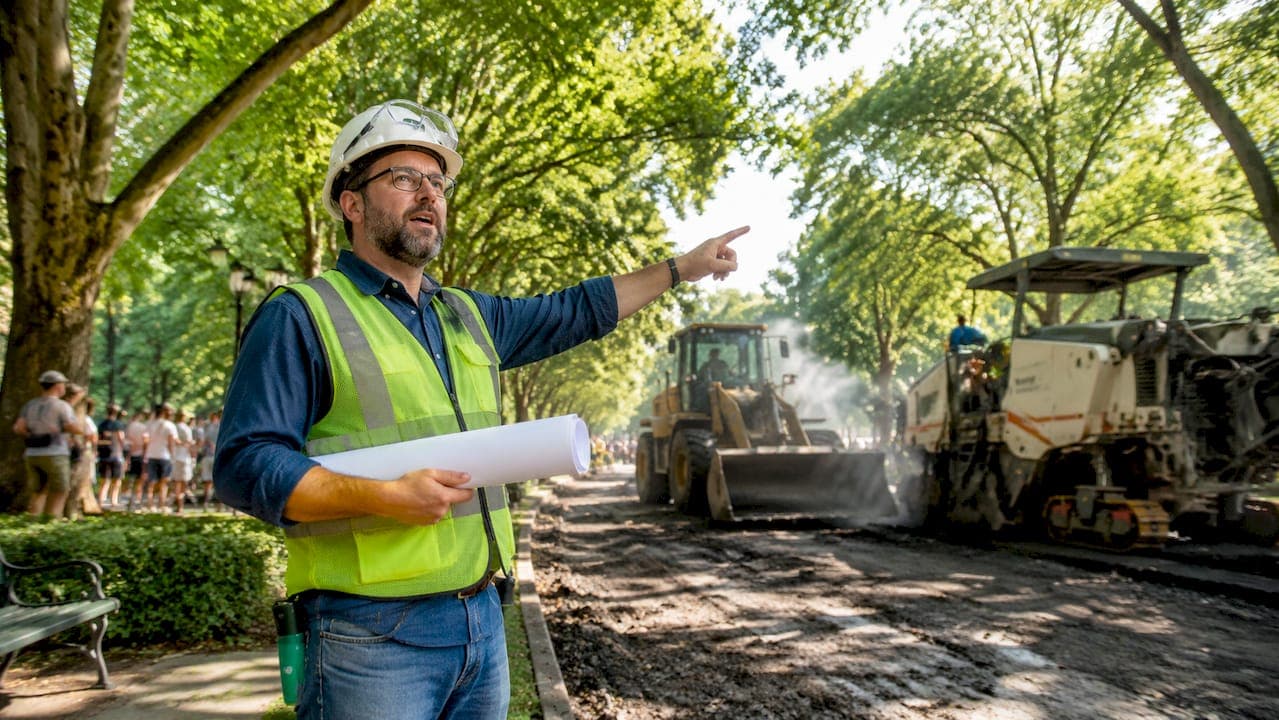
A recycled material paving project workflow is a structured sequence of planning, material processing, installation, and maintenance steps designed to maximize sustainability and efficiency across outdoor paving environments. The industry term for this practice is sustainable pavement recycling, and it covers materials from reclaimed asphalt pavement (RAP) to recycled concrete aggregates, plastic grid pavers, and permeable surfaces. Contractors and project managers who follow a defined workflow reduce material waste, cut costs, and meet increasingly strict stormwater regulations. This guide covers every phase, from site assessment through long-term maintenance, with specific tools, testing protocols, and scheduling tactics built in.
What are the essential prerequisites for a recycled paving project workflow?
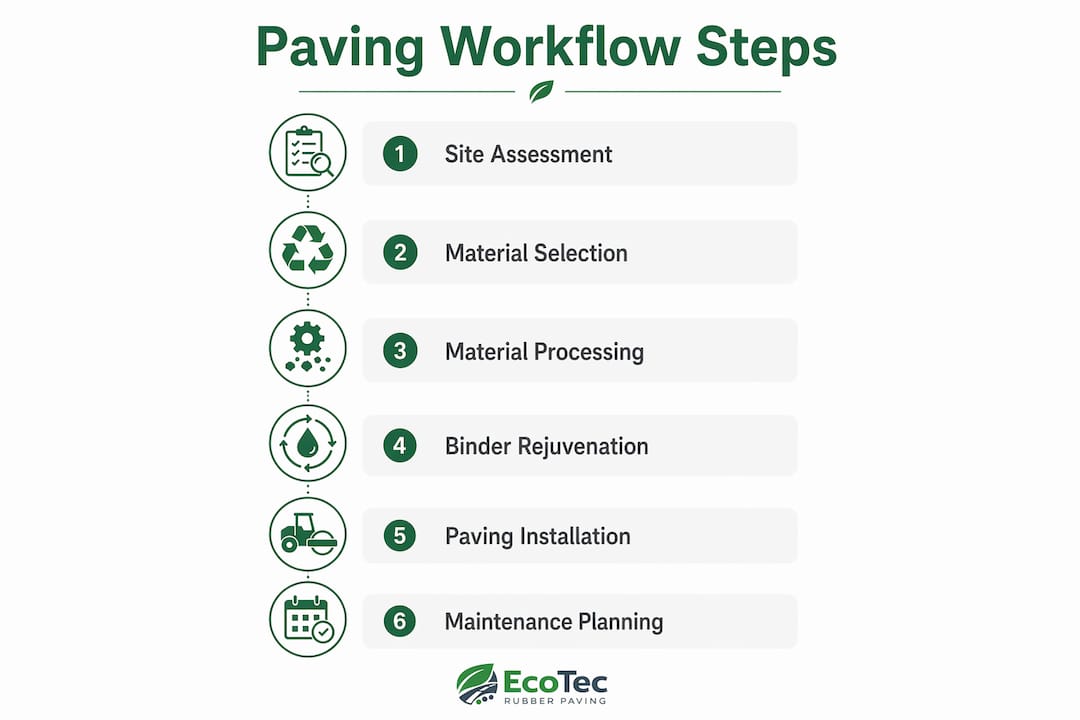
Solid paving project management starts before a single machine arrives on site. Accurate site assessment, including subgrade evaluation, existing pavement condition scoring, and drainage pattern mapping, prevents costly errors downstream. Skipping this step is the single most common cause of premature pavement failure on recycled material projects.
Material selection
The right sustainable paving material depends on traffic load, climate, and drainage requirements. RAP works well for high-traffic roadways and parking lots because it retains binder chemistry from the original mix. Recycled concrete aggregates suit base layers where load distribution matters more than surface finish. Plastic grid pavers and permeable pavement types suit low-speed surfaces like pedestrian paths, overflow parking, and bioretention areas because they allow rainwater infiltration, reduce runoff, and filter pollutants. Understanding recycled content percentages for each material helps you hit green building certification thresholds before procurement.
Equipment and permitting checklist
Every workflow for eco-friendly paving requires the right equipment staged at the right time. Gather the following before mobilization:
- Milling machines sized to the target depth (typically 3/4 to 2 inches for RAP recovery)
- Screening and crushing units for mobile RAP processing
- Asphalt emulsion applicators and rejuvenating binder tanks
- Pavers, steel drum rollers, and pneumatic tire rollers
- Vacuum sweepers for post-installation cleanup and ongoing maintenance
- Infiltration testing equipment for permeable surface acceptance
Permitting requirements for using recycled materials in paving vary by state and municipality. Florida projects, for example, must comply with FDOT specifications for RAP content limits and stormwater management credits. Pull permits early and confirm that your material certifications align with local mix design approval processes.
Pro Tip: Schedule your permitting review in parallel with material procurement, not after it. A two-week permit delay that stalls a staged milling operation costs far more than the time spent on early coordination.
Phase your project schedule to minimize disruptions. Sequence milling, processing, and paving as a continuous chain rather than discrete stops. Workflow coordination across milling, processing, mixing, paving, and compaction is the central driver of efficiency on RAP projects.
How do you process and prepare recycled materials for paving?
Material preparation is the technical core of any recycled paving process. Poor processing at this stage creates problems that no amount of skilled installation can fix.

Mobile RAP processing steps
The mobile RAP processing workflow follows this sequence:
- Selective milling. Mill the existing pavement to the specified depth. Depth control matters because inconsistent milling produces RAP with variable gradation.
- Primary screening. Remove oversized chunks and debris before crushing. This protects crusher wear parts and improves output consistency.
- Crushing. Reduce milled material to target aggregate size. Jaw crushers handle large chunks; impact crushers refine gradation.
- Secondary screening. Confirm gradation compliance against the project mix design specification. Gradation compliance acts as a workflow gate: material that fails screening goes back through the crusher, not into the mix.
- Transfer to mixing plant. Convey processed RAP to the hot mix or warm mix plant for blending with virgin aggregate and rejuvenating emulsion.
| Processing step | Key quality check | Failure consequence |
|---|---|---|
| Milling | Depth consistency | Variable RAP gradation |
| Primary screening | Oversize removal | Crusher damage |
| Crushing | Target gradation | Mix rejection at plant |
| Rejuvenation blending | Binder viscosity | Premature cracking |
Rejuvenation and binder restoration
Aged RAP binder loses flexibility over time. Rejuvenating emulsions restore viscosity and extend pavement life. The Hot-In-Place Recycling (HIR) method takes this further: HIR heats asphalt to 250–300°F, mills 3/4 to 2 inches, mixes with rejuvenating emulsion, repaves, and compacts in a single continuous pass. Traffic can reopen within about 1 hour. Heating in stages during HIR prevents premature oxidation and improves the long-term performance of the recycled layer.
Pro Tip: Test binder viscosity on RAP samples before finalizing your rejuvenator dosage rate. Overdosing softens the mix and causes rutting under heavy loads. Underdosing leaves the binder brittle and prone to cracking.
What are the step-by-step installation procedures for recycled paving?
Installation quality determines whether a recycled pavement performs for decades or fails within a few seasons. Follow these steps in order.
- Grade and prepare the subgrade. Confirm subgrade bearing capacity with a proof roll. Address soft spots with subgrade stabilization before placing any recycled base material.
- Place and compact recycled base aggregate. Spread recycled concrete aggregate or crushed RAP base in lifts no thicker than 6 inches. Compact each lift to 95% of maximum dry density before placing the next.
- Apply tack coat. Use a recycled asphalt emulsion tack coat on the compacted base. This bonds the surface course and prevents slippage under traffic.
- Pave the surface course. Place the recycled asphalt mix at the specified temperature. Use a paver with automatic screed controls to maintain consistent thickness and cross-slope.
- Compact the surface. Follow the rolling pattern specified in the mix design: breakdown roller first, then intermediate, then finish. Achieve the target air void content before the mat cools below compaction temperature.
- Verify quality. Take cores at specified intervals to confirm thickness and density. For permeable surfaces, conduct infiltration testing immediately after compaction.
Permeable pavement installation specifics
Permeable surfaces require extra care during installation. Construction-phase protection is non-negotiable: install permeable pavement as the last step on site, or cover installed sections with geotextile fabric until all earthwork is complete. Soil tracking from active construction zones clogs the void structure immediately and creates maintenance burdens before the project even reaches handover.
Common installation challenges on recycled permeable projects include:
- Uneven aggregate distribution causing low-infiltration zones
- Over-compaction that crushes aggregate and closes voids
- Sediment contamination from adjacent grading work
- Inadequate edge restraints that allow lateral spreading under load
Address each of these during the pre-installation briefing with your crew. A 30-minute toolbox talk before paving starts prevents hours of remediation after.
How do you maintain recycled material pavements for long-term performance?
Maintenance planning must begin at project initiation, not after handover. Maintenance from project start is critical for recycled permeable pavements to retain infiltration rates and regulatory compliance. This is the insight most project managers learn the hard way.
Vacuum sweeping schedule
Sediment clogging is the primary failure mode for permeable recycled pavements. Vacuum sweeping at least twice yearly prevents clogging that can cause system failure within 2–5 years. The standard commercial schedule runs once after winter (to remove sand and salt residue) and once after autumn leaf fall. High-traffic sites or locations near bare soil need more frequent sweeping.
| Maintenance action | Frequency | Trigger condition |
|---|---|---|
| Vacuum sweeping | Twice yearly minimum | After winter, after leaf fall |
| Joint aggregate replenishment | As needed | Visible joint voids |
| Infiltration rate testing | Annually | Post-sweeping or after storm events |
| Full restoration sweep | When infiltration drops below threshold | Below 10 in/hr or 50% of baseline |
Infiltration testing and compliance
Post-installation infiltration testing and maintenance documentation are required to demonstrate compliance and maintain stormwater performance credits. Permeable interlocking concrete pavements target a minimum 10 in/hr infiltration rate or a 50% increase over pre-maintenance readings, tested per ASTM standards. Document every test result and maintenance action in a project log. Regulators and stormwater permit holders increasingly require this record as proof of ongoing compliance.
Pro Tip: Build your maintenance agreement into the project contract before construction starts. Specify vacuum sweeping frequency, infiltration test intervals, and who bears the cost of restoration if rates drop below the permit threshold. Ambiguity here creates disputes.
For stormwater management on permeable surfaces, the maintenance log is also your defense if a regulatory inspection questions system performance. A complete record of sweeping dates, infiltration readings, and aggregate replenishment events demonstrates due diligence.
Key Takeaways
A successful recycled material paving project workflow requires synchronized planning, material processing, installation discipline, and proactive maintenance from day one.
| Point | Details |
|---|---|
| Start with site assessment | Evaluate subgrade, drainage, and existing pavement before selecting any recycled material. |
| Use gradation as a quality gate | RAP that fails screening goes back through the crusher, not into the mix. |
| Protect permeable surfaces during construction | Install permeable pavement last or cover it to prevent clogging before handover. |
| Schedule vacuum sweeping twice yearly | Permeable pavements fail within 2–5 years without regular sediment removal. |
| Document every maintenance action | Infiltration test records and sweeping logs are required for stormwater permit compliance. |
What I've learned from watching recycled paving projects succeed and fail
Most recycled paving failures I've seen share one root cause: the workflow was treated as a series of independent tasks rather than a connected chain. A contractor mills RAP to the wrong depth, the gradation is off, the plant rejects the mix, and the schedule collapses. The fix was never the milling machine. It was the absence of a quality gate between milling and processing.
The other pattern I see consistently is maintenance neglect. Project managers spend months on material selection and installation precision, then hand over a permeable pavement with no maintenance plan attached. Two years later, the infiltration rate has dropped below the permit threshold and nobody knows who is responsible for the restoration sweep. Building the maintenance agreement into the contract before construction starts is not bureaucracy. It is the only way to protect the performance you paid to install.
The projects that run well share a different habit: they treat eco-friendly paving vendor selection as a workflow decision, not just a procurement decision. The right vendor brings equipment, testing protocols, and maintenance capacity together. That integration is what separates a pavement that performs for 20 years from one that needs remediation in year three.
— Roger
Ecotecrubber's rubber paving solutions for recycled material projects
Ecotecrubber installs the Rubberway® system across Florida using recycled rubber materials that deliver excellent drainage, crack resistance, and ADA-compliant surfaces. The system addresses the two most common Florida paving problems directly: standing water and heat-induced surface degradation. Every project is licensed, insured, and managed by specialists focused exclusively on rubber paving, which means you get a coordinated workflow without the coordination overhead. For project managers and contractors looking to add a proven recycled rubber paving option to their material mix, Ecotecrubber offers consultation and professional installation across the region. Contact the team to discuss your project requirements and get a workflow-aligned installation plan.
FAQ
What materials qualify as recycled in a paving project?
Reclaimed asphalt pavement (RAP), recycled concrete aggregates, plastic grid pavers, and permeable interlocking concrete pavers all qualify as recycled paving materials. Each material suits different traffic loads, drainage requirements, and surface applications.
How does Hot-In-Place Recycling differ from standard RAP processing?
HIR is a continuous on-site process that heats existing asphalt to 250–300°F, mills, rejuvenates, and repaves in a single pass, reopening to traffic within about 1 hour. Standard RAP processing mills material off-site, processes it through a plant, and installs it as a new mix.
How often does permeable pavement need maintenance?
Permeable pavements require vacuum sweeping at least twice yearly, typically after winter and after autumn leaf fall. High-traffic or high-sediment sites need more frequent sweeping to prevent infiltration failure within 2–5 years.
What is gradation compliance and why does it matter?
Gradation compliance confirms that crushed RAP meets the particle size distribution required by the mix design. Material that fails gradation testing gets rejected at the mixing plant, which stalls the entire paving workflow.
Do recycled paving projects require special permits in Florida?
Florida projects using RAP must comply with FDOT specifications for recycled content limits and stormwater management requirements. Permeable pavement installations also require documentation of infiltration rates for stormwater permit compliance.