
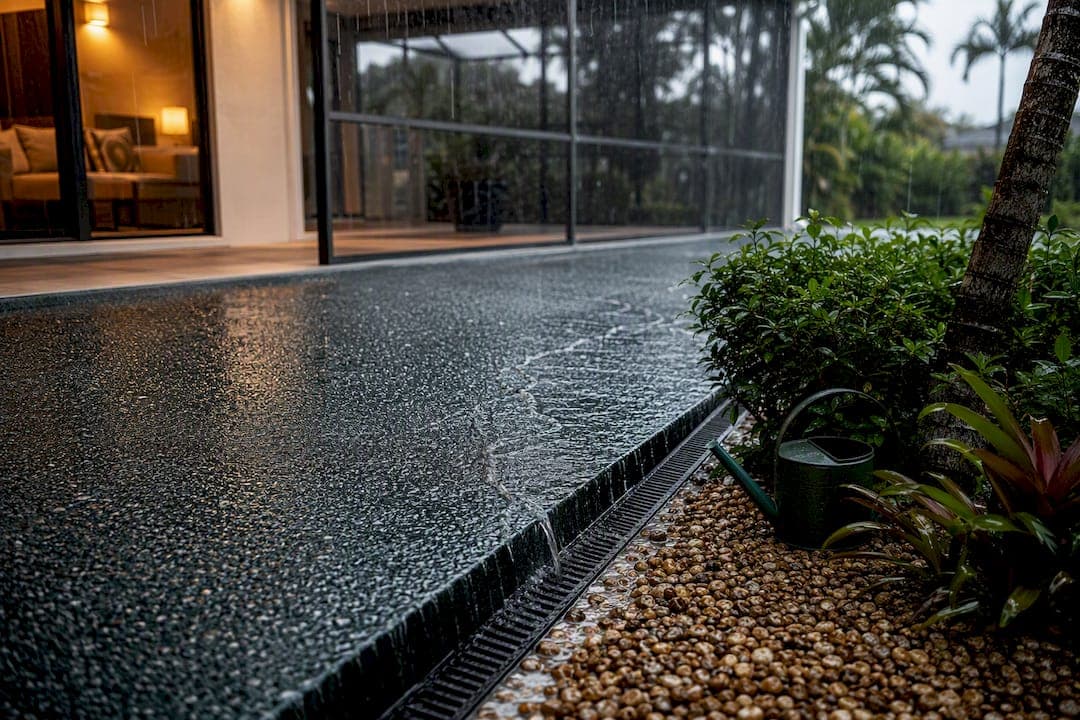
A rubber patio surface is the right call for pool decks, play areas, and any patio where you're tired of cracking, mold, and skinned knees, but the tradeoff is heat retention and a look that reads more "recreation deck" than "flagstone terrace." Recycled rubber systems like Rubberway® solve most of that with better drainage and slip resistance than concrete. Installed costs typically run from a few dollars up to the mid-teens per square foot, and a well-built surface can last over ten years.
TL;DR:
- Rubber patio surfaces provide slip resistance and shock absorption, significantly reducing injury risk around pools and play areas, and are durable against ground movement.
- Costs range from $4 to $15 per square foot, with mid-range projects typically costing about $6.50 to $9.50, and proper installation can last over 10 years with minimal maintenance.
- Poured overlays and thick interlocking tiles are best for drainage, fall height needs, and ADA compliance, while DIY is suitable only for simple interlocking tiles in good existing conditions.
- Surface prep must include cleaning, leveling, and crack repair; deep cracks or improper slopes should prompt professional assessment before installation.
- Recycled tire materials dominate the market, offering an environmentally friendly option that handles Florida’s heat and humidity better than traditional concrete or pavers.
Table of Contents
- What Types of Rubber Patio Surfaces Are Available?
- What Are the Pros and Cons of a Rubber Patio?
- What Does a Rubber Patio Cost, and How Long Does It Last?
- How Is a Rubber Patio Installed?
- How Do You Clean and Maintain a Rubber Patio?
- How Do You Choose the Right Rubber Surface for Your Situation?
- How Does Rubberway® Solve Common Patio Problems?
- Should You DIY Rubber Tiles or Hire a Pro for an Overlay?
- Get a Rubberway® Quote for Your Patio
- Sources
What Types of Rubber Patio Surfaces Are Available?
Rubber patio surfaces come in four main forms, and picking the wrong one for your situation is the most common regret homeowners report after the fact.
- Interlocking tiles: Dry-lay panels, usually 2 feet by 2 feet, that snap together without adhesive. Good for renters or anyone who might relocate the patio later.
- Glue-down tiles: Same basic tile format, but bonded permanently to the substrate for a surface that won't shift underfoot.
- Poured-in-place overlay: A seamless rubber membrane troweled on-site, the category Rubberway® falls into. No seams means no weak points for water or weeds.
- Molded rubber pavers and roll goods: Pavers mimic stone or brick patterns; roll goods work well for long, narrow spaces like walkways or lap-pool surrounds.
Interlocking rubber patio tiles typically run about 1.25 inches thick, though 3/4-inch options exist for lighter foot traffic. A pool deck usually wants tiles or an overlay for maximum drainage. A rooftop patio favors lightweight interlocking tiles because poured systems add dead load. Play areas almost always call for poured overlay because there are no seams for small fingers or toys to catch on.
What Are the Pros and Cons of a Rubber Patio?
The safety case for rubber is strong, and the numbers back it up. Many rubber patio products test at 0.65 to 0.85 DCOF wet, comfortably above common accessibility thresholds for slip resistance, and thicker tiles measurably cut the impact force of a fall compared with concrete or pavers.
Benefits:
- Slip resistance that holds up wet, unlike sealed concrete or smooth pavers
- Shock absorption that reduces injury severity around pools and play equipment
- Crack resistance through freeze-thaw cycles and ground settling
- Recycled content that keeps old tires out of landfills
Drawbacks:
- Dark recycled-crumb surfaces get hot in direct sun; light-color EPDM blends run 20 to 30 degrees Fahrenheit cooler than black crumb.
- New installations can carry a faint rubber odor for a period, more noticeable with crumb-only tiles than EPDM-topped ones
- The look skews utilitarian unless you invest in color flecks, borders, or a stone-pattern paver style
What Does a Rubber Patio Cost, and How Long Does It Last?
Budget $4.00 to $15.00 per square foot installed, with most mid-range residential projects landing between $6.50 and $9.50 per square foot. EPDM-topped systems cost more than pure crumb rubber but hold color longer and off-gas less, which matters if the patio sits right outside a bedroom window.
Price swings come from four places: substrate condition (a cracked slab needs repair before anything goes down), adhesive type, labor rates by region, and disposal fees for removing an old surface. Permits rarely apply to a simple resurfacing job but can add cost on new construction.

A properly installed rubber surface lasts 10 to 20-plus years with routine cleaning and an occasional reseal. Budget a modest amount over several years for basic upkeep, generally far less than the repair cycle concrete usually demands.
How Is a Rubber Patio Installed?
Installation sequence depends entirely on which product you picked.
- Floating interlock: Level the base, lay a compacted gravel or paver-base layer for drainage, then snap tiles together. Usable almost immediately.
- Glue-down tiles: Clean and prime the substrate, apply adhesive in the pattern the manufacturer specifies, set tiles, and roll out air pockets. Light foot traffic within hours.
- Poured overlay: Prep and prime the base, mix rubber granules with binder, trowel to a consistent depth, and cure. Overlays typically need 24 to 48 hours before light use, longer in cool or humid weather.
Surface prep makes or breaks every one of these methods. That means cleaning, leveling, and repairing existing cracks, sloping slightly for water runoff, and choosing a permeable base for pavers versus full adhesive coverage for roll goods. Polyurethane-based adhesives are the standard recommendation for glue-down work because they flex with temperature swings instead of cracking.
Pro Tip: If your existing slab has deep cracks wider than a quarter inch, or the patio pitches toward the house instead of away from it, stop and call a professional before you buy a single tile. Those issues telegraph through almost any rubber overlay within a year.
Watch for red flags: standing water after rain, visible foundation settling, or a slope steeper than what the manufacturer's spec sheet allows for your product.
How Do You Clean and Maintain a Rubber Patio?
Weekly upkeep is simple: sweep debris and hose down the surface. For an annual deep clean, a pressure washer on a wide fan setting at moderate pressure lifts grime without gouging the rubber.
- Spot-clean stains with mild dish soap and water; avoid solvent-based cleaners, which can break down the binders holding crumb rubber together
- Reseal or recolor EPDM surfaces roughly every 5 to 7 years depending on sun exposure, at a modest per-square-foot cost
- Pull weeds along edges promptly. Roots rarely penetrate the rubber itself but can work into unsealed seams
- Routine cleaning keeps lifecycle costs down compared with concrete's periodic sealing and crack repair
Over five years, expect total maintenance spend in the low hundreds of dollars for a typical residential patio, not counting an optional recolor.
How Do You Choose the Right Rubber Surface for Your Situation?
Match the product to the job, not the other way around. A pool deck wants poured overlay or thick interlocking tile for drainage and bare-foot comfort. A play area under swing sets needs enough thickness to meet fall-height guidance for the equipment's maximum height. A rooftop patio needs the lightest option that still passes structural load calculations.
- Choose EPDM over pure crumb rubber if the patio gets full sun most of the day. The heat and odor difference is noticeable by midsummer.
- Confirm the thickness matches your fall-height needs; ADA-compliant surfaces also require a firm, stable, slip-resistant finish, not just cushioning.
- Before hiring anyone, ask for the manufacturer's warranty length, the UV rating on colored surfaces, published DCOF slip numbers, an on-site material sample, and a written scope covering substrate prep.
How Does Rubberway® Solve Common Patio Problems?
Standing water, heat cracking, and inconsistent slip resistance are the three complaints that come up most with older concrete patios. The Rubberway® system is built specifically around solving those three, using a porous poured design that channels water through rather than letting it pool.
- Continuous drainage that eliminates the puddling common on flat concrete slabs
- Crack resistance engineered for Florida's heat and humidity swings, not adapted from a cooler-climate product
- ADA-compliant finish options for HOA common areas, municipal walkways, and commercial properties
- Recycled tire material in every installation, cutting waste that would otherwise go to a landfill
Surface prep is where installations succeed or fail, and it's the reason professional poured overlay work tends to outperform big-box tile kits over time. Licensed, insured crews control curing conditions and binder ratios in ways a weekend DIY project generally can't replicate.
Pro Tip: Ask any contractor bidding a poured overlay how they handle drainage slope calculations before they pour. If they can't answer specifically, that's a sign they're used to tile work, not overlay systems.
Should You DIY Rubber Tiles or Hire a Pro for an Overlay?
Interlocking tiles are a legitimate weekend project for a small patio with good existing drainage, and I'd tell any confident DIYer to go for it. Once you're dealing with a pool deck, an HOA common area, or anything where ADA compliance or heavy water flow is a factor, hire a professional overlay installer. The seam-free result and proper drainage engineering are worth the premium, and a quick consultation costs you nothing but a phone call.
— Roger
Get a Rubberway® Quote for Your Patio
Ecotecrubber built the Rubberway® system specifically to solve the drainage, cracking, and slip-resistance problems that plague standard concrete and off-the-shelf rubber tiles in Florida's climate. Every installation uses recycled tire material, meets ADA-compliant standards where required, and comes from a licensed and insured crew that handles nothing but rubber paving.
If your current patio pools water after every storm or has started cracking along old expansion joints, that's exactly the problem Rubberway® installations are engineered around. Visit the EcoTec Rubber Paving site to see project examples and request a quote for your driveway, pool deck, or community walkway.
Sources
- Rubber Stone Cost Guide for U.S. Buyers – Current Cost
- Rubber Patio Flooring: Pros, Cons, and Buying Guide - D and G Flooring
- What Are Rubber Patio Tiles & How Can You Use Them Effectively? – Greatmats