
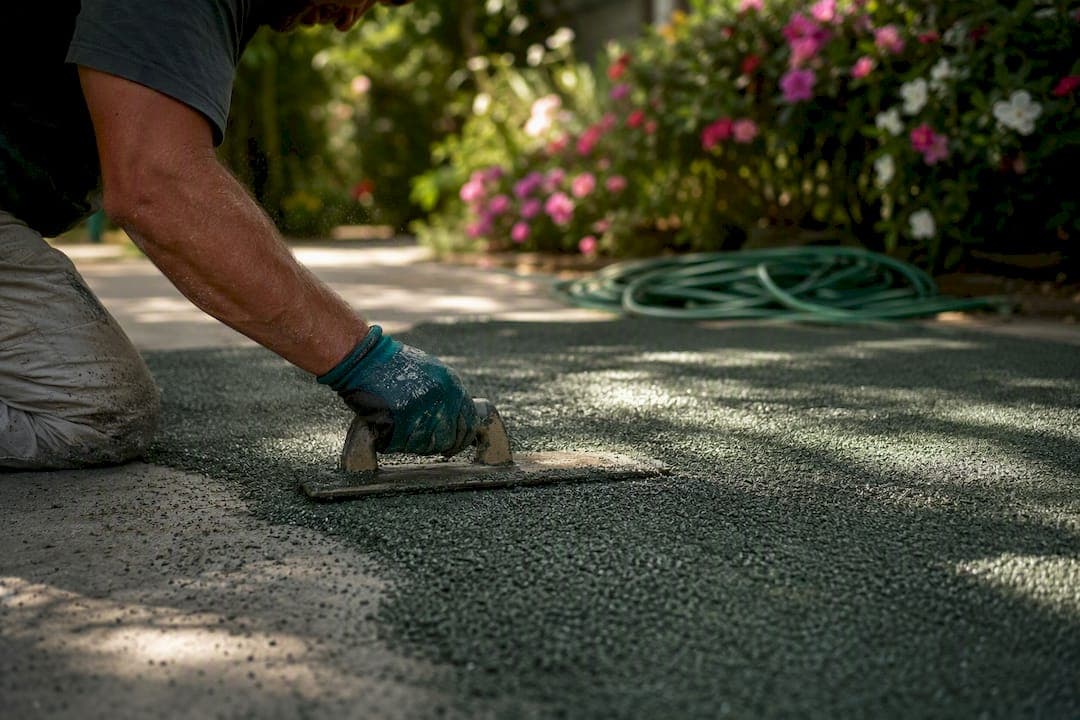
Rubberway® rubber patio resurfacing typically installs for $9 to $18 per square foot, with most homeowners landing near $12 to $14 once site prep and color choices are factored in. Poured-in-place tends toward the higher end; tile systems run closer to $10 to $15 installed. What moves your number most:
- Site prep and existing surface condition
- Wear-layer thickness and safety rating
- Color blends versus standard black EPDM
Get an on-site estimate before budgeting anything firm. Slope, drainage, and substrate condition swing the price more than any brochure range can capture.
Key Takeaways
Rubberway® rubber patio resurfacing installs for $9 to $18 per square foot in most U.S. markets, with site prep and color choices driving the biggest swings.
| Point | Details |
|---|---|
| Installed cost range | Budget $9 to $18 per square foot, with most patios landing near $12 to $14 installed. |
| Sub-base drives overruns | Aggregate prep adds $3 to $6 per square foot and is the top source of unexpected cost increases. |
| Size affects rate | Patios over 1,000 square feet often see a lower per-square-foot rate than small 150 square foot jobs. |
| Maintenance stays light | Expect a reseal cycle every 5 to 7 years at roughly $2 to $4 per square foot, far below concrete repair costs. |
| Get a written, itemized quote | EcoTec Rubber Paving provides on-site Rubberway® estimates with licensed, insured installation across Florida. |
Table of Contents
- What Drives Patio Resurfacing Cost Per Square Foot
- Which Choices Change Your Quote the Most?
- Sample Budgets for Small, Medium, and Large Patios
- How Long Does Installation and Cure Time Take?
- What Does Maintenance Cost Over the Life of the Surface?
- How Do You Get an Accurate On-Site Estimate?
- Author and Brand Background
- Where Do Cost Overruns Usually Come From?
- What's the Full Cost Range With Extras Included?
- When Rubber Resurfacing Makes the Most Financial Sense
- Get an On-Site Quote From EcoTec Rubber Paving
- Sources
What Drives Patio Resurfacing Cost Per Square Foot
Every rubber patio quote breaks down into the same handful of line items, even when contractors present it as one lump number. Knowing them lets you spot a lowball bid before it becomes a change-order nightmare.
Materials run $2.50 to $9.50 per square foot depending on whether you choose poured-in-place (PIP) wear layers or precast tiles. PIP surfacing alone commonly lands between $9 and $18 per square foot installed, while tile systems settle around $10 to $15 installed. A product like a 4.25 inch commercial rubber tile can run about $12.50 per square foot on its own, before labor or base work.

Labor for certified installers varies by complexity and method, generally adding a moderate cost per square foot. PIP work costs more because it requires trained crews mixing and troweling on-site, while tile installation tends to be less expensive per square foot.
Sub-base preparation is where budgets get surprised. Aggregate base work commonly adds $3 to $6 per square foot, depending on depth, compaction needs, and whether the existing surface needs grinding first.
Here's the rough anatomy of an installed quote:
- Materials: $2.50 to $9.50 per square foot
- Sub-base and prep: $1 to $6 per square foot
- Labor: $2.50 to $9.00 per square foot
- Adhesives, sealants, edging, delivery, and disposal: smaller line items, but easy to overlook when comparing bids
Statistic Callout: Combined, these components put most U.S. installed jobs in the $4 to $15 per square foot range for general applications, climbing toward $18 for premium poured-in-place work with custom color blends.
Permits vary by municipality and aren't always required for a patio resurface, but always confirm with your local building department before work starts.
Which Choices Change Your Quote the Most?
A few decisions swing your total more than anything else in the proposal.
- Project size and shape. Larger jobs spread fixed mobilization costs over more square footage, which is why projects over 1,000 square feet often see a lower per-square-foot rate than a small 150 square foot patio. Irregular curves and tight corners raise labor time regardless of total area.
- Thickness and impact rating. Standard patio use doesn't need the same fall-height certification as a playground, but pool decks and HOA common areas sometimes do. Thicker, ASTM-rated tiles cost more but matter for liability-sensitive sites.
- Color and customization. Standard black EPDM blends are the budget baseline. Custom color mixes typically add a modest per-square-foot premium over black.
- Existing surface condition. A cracked concrete slab needing grinding or a yard with poor drainage adds prep cost before the rubber ever goes down.
Pro Tip: Ask your installer to quote color-blend and standard-black pricing side by side. The difference is usually smaller than homeowners expect, and it helps you decide fast without re-scoping the whole bid.
Sample Budgets for Small, Medium, and Large Patios
Real numbers help more than percentage ranges. Here's how the math typically plays out at three common patio sizes, assuming standard prep and mid-grade material selection.
- Small patio (about 150 square feet): Expect roughly $1,350 to $2,700 total, or $9 to $18 per square foot. Small jobs carry the highest per-foot cost because mobilization and setup don't get spread over much area.
- Medium patio (350 to 500 square feet): Totals commonly fall between $3,500 and $7,500, averaging around $10 to $15 per square foot as fixed costs get absorbed into a larger footprint.
- Large patio (1,000+ square feet): Expect $9,000 to $16,000 or more, often at the lower end of the per-square-foot range thanks to volume efficiencies on prep and mobilization.
Irregular shapes, integrated walkways, or connecting a patio to a pool deck add labor time even within these size bands. Ask your installer to price the walkway separately so you can see whether it's driving the bulk of the increase.
How Long Does Installation and Cure Time Take?
Most residential rubber patio jobs run two to four days total, depending on size and whether the existing surface needs demolition first.
- Site prep: One to two days for grinding, grading, or laying aggregate base.
- Installation: One day for most patios; larger or PIP jobs may need two.
- Cure before light foot traffic: Typically 24 hours.
- Cure before furniture or heavy use: Often 48 to 72 hours, longer in humid or cool conditions.
Temperature and humidity affect cure speed significantly across U.S. climates. Florida's heat and humidity generally speed surface cure but can complicate working conditions during peak summer afternoons. Schedule installs for cooler morning hours or shoulder seasons when possible, and always build in a rain buffer since wet weather during install or early cure compromises adhesion.
What Does Maintenance Cost Over the Life of the Surface?
Rubber paving's real savings show up over years, not on installation day. Routine care is light: periodic rinsing and a visual check for edge lifting or debris buildup, usually a few times a year.
Statistic Callout: Most rubber surfaces need a reseal or refresh cycle every 5 to 7 years, at roughly $2 to $4 per square foot when performed, a fraction of a full tear-out and repour.

Compare that to concrete, which cracks under Florida's freeze-thaw swings and root intrusion, or pavers, which shift and need regular resetting. Rubber's porous design and crack resistance mean fewer emergency repairs, better slip resistance when wet, and in some cases contribution toward green-building credit programs for municipal or HOA projects seeking sustainability recognition.
How Do You Get an Accurate On-Site Estimate?
A written quote should never be a single number on a napkin. It needs line items you can check against your own math.
- Substrate prep plan, with depth and material specified
- Wear-layer thickness and whether it meets any required fall-height or ADA standard
- Warranty length and exactly what it covers
- Proof of license and insurance
- Timeline from prep through cure
Ask contractors these questions directly:
- Is your PIP crew certified, given that poured-in-place work requires specialized technique that most DIY crews can't replicate?
- What happens if the sub-base needs more prep than the quote assumed?
- Can I see references from a similar-sized project?
Walk away from any bid that skips substrate detail entirely, offers no warranty, or quotes a price well below the market range without ever visiting the site. When comparing two quotes, normalize them to a per-square-foot number and check that both itemize prep the same way. For a deeper procurement checklist, EcoTec's sustainable paving best-practices guide covers what a thorough written estimate should include.
Author and Brand Background
EcoTec Rubber Paving specializes in Rubberway® installations across Florida, using recycled tire materials engineered for drainage, crack resistance, and ADA-compliant surfaces. The company operates licensed and insured, focused solely on rubber paving work rather than general contracting.
This guide was written by Roger, who has published multiple cost and lifecycle-cost guides on sustainable paving.
Where Do Cost Overruns Usually Come From?
Most patio resurfacing budgets don't blow up because of the rubber itself. They blow up because of what's underneath it.
The single biggest overrun risk is substrate condition discovered mid-project. A quote based on a quick walk-through often assumes a stable base. Once crews start grinding, they sometimes find soft soil, poor drainage, or a cracked slab that needs full removal instead of a light grind. That can add $3 to $6 per square foot or more beyond the original prep estimate.
Drainage remediation is another common surprise. If your yard already pools water after storms, a contractor may need to regrade or add drainage channels before the rubber layer goes down. This isn't usually included in a base quote unless the estimator walked the site during or right after rain.
Weather delays cause budget creep less directly but still matter. A rained-out install day pushes labor crews to another job, and rescheduling during peak season sometimes means paying rush rates to keep your project on track.
Smaller overruns come from underestimated edging, transitions to existing hardscape, or disposal fees for tear-out material. None of these individually breaks a budget, but stacked together they can add 10 to 15 percent to a quote that looked clean on paper.
The fix is simple: insist on a physical site walk before any final number, and ask what happens contractually if hidden substrate issues appear once work begins.
What's the Full Cost Range With Extras Included?
Once you add the features homeowners actually want, a patio resurfacing budget usually settles somewhere between the base per-square-foot number and a meaningfully higher total.
Standard black EPDM rubber at $9 to $15 per square foot installed is your floor for a straightforward, well-prepped patio. Custom color blends add a modest per-square-foot premium on top of that. Decorative patterns, borders, or multi-color designs push costs higher still, largely from added labor time rather than material.
Lighting integration is a common add-on for pool decks and evening entertaining spaces. Embedded or edge-lit fixtures require electrical coordination during the install phase, which adds both material and labor beyond the paving itself, and pricing depends heavily on the electrical scope rather than the rubber surface.
For a typical mid-size patio with a color upgrade and modest decorative border, expect a total landing in the upper half of the $9 to $18 per square foot range rather than the floor. Add lighting, and the paving portion of your budget stays roughly the same while the electrical work becomes its own separate line item worth quoting independently.
The takeaway for anyone budgeting: get the base rubber quote first, then price extras as add-ons rather than assuming they're baked into a single number.
When Rubber Resurfacing Makes the Most Financial Sense
Rubber resurfacing pays back fastest where safety and maintenance costs are highest: pool decks, HOA walkways, and municipal park surfaces prone to slip claims. If your subgrade has failed structurally, fix that first; resurfacing over broken ground wastes money. HOAs and municipalities should weigh warranty scope and maintenance planning over the lowest bid.
— Roger
Get an On-Site Quote From EcoTec Rubber Paving
Ecotecrubber is the direct route to Rubberway® installation in Florida, not a general contractor subbing out the paving work. Every project uses recycled rubber materials, meets ADA compliance standards, and comes from a team licensed and insured specifically for rubber paving, not general hardscaping.
An EcoTec on-site estimate walks your actual patio, checks substrate condition and drainage, and returns a written quote broken into prep, materials, labor, and timeline, the same line items covered above, so you're comparing real numbers instead of guesses. If you want to see color options and technical specs before that visit, browse the Rubberway® product lineup first. When you're ready to see what your patio actually costs, request a quote from EcoTec Rubber Paving and get a number based on your site, not a national average.
Sources
- Rubber Surfacing Cost: The Real 4-Factor Guide
- Rubber Stone Cost Guide for U.S. Buyers – Current Cost
- How much are outdoor pavers? (Greatmats)