

Paving vendor certifications are official credentials that confirm a contractor's technical expertise, legal compliance, and field experience to perform paving work. The industry recognizes several distinct credential types, from national programs like the APWA Certified Public Infrastructure Inspector (CPII) and the Asphalt Institute's Paving Inspector Certification (PIC) to local municipal prequalification requirements. Choosing a certified vendor is not just a quality preference. It is a risk management decision that directly affects project timelines, safety outcomes, and legal exposure. This guide breaks down the most relevant types of paving vendor certifications so you can evaluate vendors with confidence.
Types of paving vendor certifications: national programs
National certifications are the most widely recognized credentials in the paving industry. They signal that a vendor has met standardized benchmarks for experience, knowledge, and ongoing education.
-
APWA Certified Public Infrastructure Inspector (CPII). The APWA CPII requires a minimum of five years of field experience before a candidate can sit for the exam. That threshold filters out contractors who have book knowledge but lack real project exposure.
-
Asphalt Institute Paving Inspector Certification (PIC). The PIC program includes 16 hours of instruction covering materials, mix production, and compaction. That depth of technical content makes it one of the most thorough entry points into asphalt quality assurance.
-
ICPI Certification. The Interlocking Concrete Pavement Institute requires candidates to demonstrate expertise through at least five completed projects before applying. Recertification requires continuing education credits every two years, which keeps certified vendors current on materials and methods.
-
MAPA Quality Paving Certificate. This certificate is one of the more accessible national options, with a non-member cost of approximately $150 as of early 2026. It works well as a baseline credential for smaller contractors entering the market.
-
CalAPA Quality Contractor Certification. This California-based program involves rigorous assessments including self-evaluation and comprehensive exams. It sets a high bar for contractor excellence and is worth recognizing even outside California as a model for quality verification.
Pro Tip: Ask every vendor candidate for their recertification date, not just proof of initial certification. An expired credential offers no assurance of current competence.
Local and municipal certification requirements

General contractor licenses do not cover paving in most jurisdictions. Many municipalities require specific paving contractor prequalification that goes well beyond a standard business license.
What city paving vendor certification typically requires
Municipal prequalification programs follow a consistent pattern across most US cities. Here is what the process typically involves:
-
Proof of liability insurance. Local prequalification commonly requires at least $1 million in liability coverage. That threshold protects the municipality from cost exposure if a project goes wrong.
-
Surety bonds. Bond requirements confirm the vendor has financial backing to complete contracted work. Missing this document disqualifies most applicants immediately.
-
Background checks. Approval timelines for background checks typically run 4 to 6 weeks. Plan vendor qualification well ahead of project bid deadlines.
-
ADA certification. Local paving categories often require current ADA certification from an accredited agency. This applies specifically to sidewalks, ramps, and any surface that must meet federal accessibility standards.
-
Project volume history. Vendors must document completed projects, often with square footage records, to qualify for higher project tiers. This separates contractors with real capacity from those who overstate their experience.
-
Re-examination fees. Failing a city paving license exam typically carries a $50 retake fee. That cost is minor, but the scheduling delay can push a vendor out of eligibility for an active bid cycle.
Certification requirements vary significantly by jurisdiction. A credential that satisfies one city's prequalification may not transfer to the next county. Research local rules before assuming a vendor's existing credentials are sufficient.
Specialized installer certifications and skills verification
Specialized certifications go deeper than general vendor qualifications. They verify hands-on installation skill with specific materials and construction methods.
-
Certified Concrete Paver Installer (CCPI). This ICPI credential requires passing written and practical exams along with documented installation experience. It is the clearest signal that a vendor knows interlocking concrete pavement from the ground up, not just in theory.
-
Belgard Master Craftsman. This advanced credential recognizes contractors who have completed extensive training and demonstrated superior craftsmanship across multiple installation types. It carries weight with clients who want documented proof of skill, not just a license number.
-
Combined written and practical exams. Technical certifications combine written and hands-on components that must be completed within the same calendar year. Missing the practical exam window can delay a vendor's project eligibility by months.
-
Documented project records. Specialized programs require vendors to log completed projects with square footage totals. That documentation creates a verifiable track record that you can request and cross-check before signing a contract.
-
Sustainability certifications. Credentials tied to eco-friendly paving practices are growing in relevance, especially for municipal and commercial clients with environmental requirements. Vendors who hold these credentials understand recycled materials, drainage performance, and ADA-compliant surface design.
Pro Tip: Request a vendor's project log, not just their certificate. A CCPI holder who has installed 10,000 square feet of pavers is a different hire than one who barely cleared the minimum to qualify.
How to evaluate vendors based on their certifications
Certification is a baseline, not a guarantee. Municipal project managers treat certification as the minimum threshold for technical competence and regulatory compliance. You should too.
Start by matching the vendor's credentials to your project type. A vendor certified in asphalt inspection is not automatically qualified for interlocking concrete work. Credentials are material-specific and scope-specific.
Verify that every certification is current. Certified companies maintain skills through continuing education credits required for recertification every two years. An expired credential means the vendor has not kept pace with updated standards.
Watch for red flags. A vendor without the required liability insurance, a lapsed bond, or an expired ADA certification is a compliance risk on any municipal or commercial project. Certified paving companies are better equipped to handle project challenges and reduce the risk of delays caused by non-compliance. Non-certified vendors create that risk for you.
Multiple credentials matter more than a single prestigious one. A vendor holding both a national certification and the relevant local prequalification is far more project-ready than one who has only cleared a national exam. When evaluating eco-friendly paving bids, look for vendors whose credentials cover both technical installation and sustainability compliance.
Key Takeaways
Paving vendor certifications are the most reliable way to verify that a contractor has the technical skill, legal standing, and field experience to deliver quality work without compliance failures.
| Point | Details |
|---|---|
| National certifications set the baseline | APWA CPII, Asphalt Institute PIC, and ICPI credentials confirm experience and technical knowledge. |
| Municipal prequalification is separate | City projects require insurance, bonds, ADA certification, and background checks beyond any national credential. |
| Specialized credentials verify hands-on skill | CCPI and similar installer certifications prove material-specific expertise through exams and project records. |
| Verify currency, not just existence | Certifications expire; confirm recertification dates and continuing education credits before hiring. |
| Multiple credentials reduce project risk | Vendors with both national and local credentials are more project-ready and less likely to cause compliance delays. |
Why I think contractors underestimate local certification requirements
Most contractors I talk to focus almost entirely on national certifications when they vet paving vendors. That instinct makes sense. National credentials are easy to recognize and easy to compare. The problem is that national certifications do not satisfy local prequalification requirements, and local requirements are what actually determine whether a vendor can legally work on your project.
I have seen projects stall because a vendor held a respected national credential but had not completed the city's prequalification process. The background check alone takes 4 to 6 weeks. Add the time to gather bond letters and insurance certificates, and you are looking at a two-month delay before a vendor is even eligible to bid.
My practical advice: build certification review into your vendor qualification checklist before you issue a bid invitation. Confirm the national credential, then confirm the local prequalification status, and then check the expiration dates on both. That three-step check takes 20 minutes and can save months of project disruption.
Certifications are not bureaucratic formalities. They are the clearest signal you have that a vendor understands the materials, the methods, and the legal obligations of the work you are hiring them to do.
— Roger
Ecotecrubber's certified approach to rubber paving
Ecotecrubber holds the professional licenses and insurance coverage that municipal and commercial clients require, including the credentials that support its Rubberway® installations across Florida. Every project is ADA-compliant by design, using recycled rubber materials that address standing water, heat-induced cracking, and surface durability in Florida's climate.
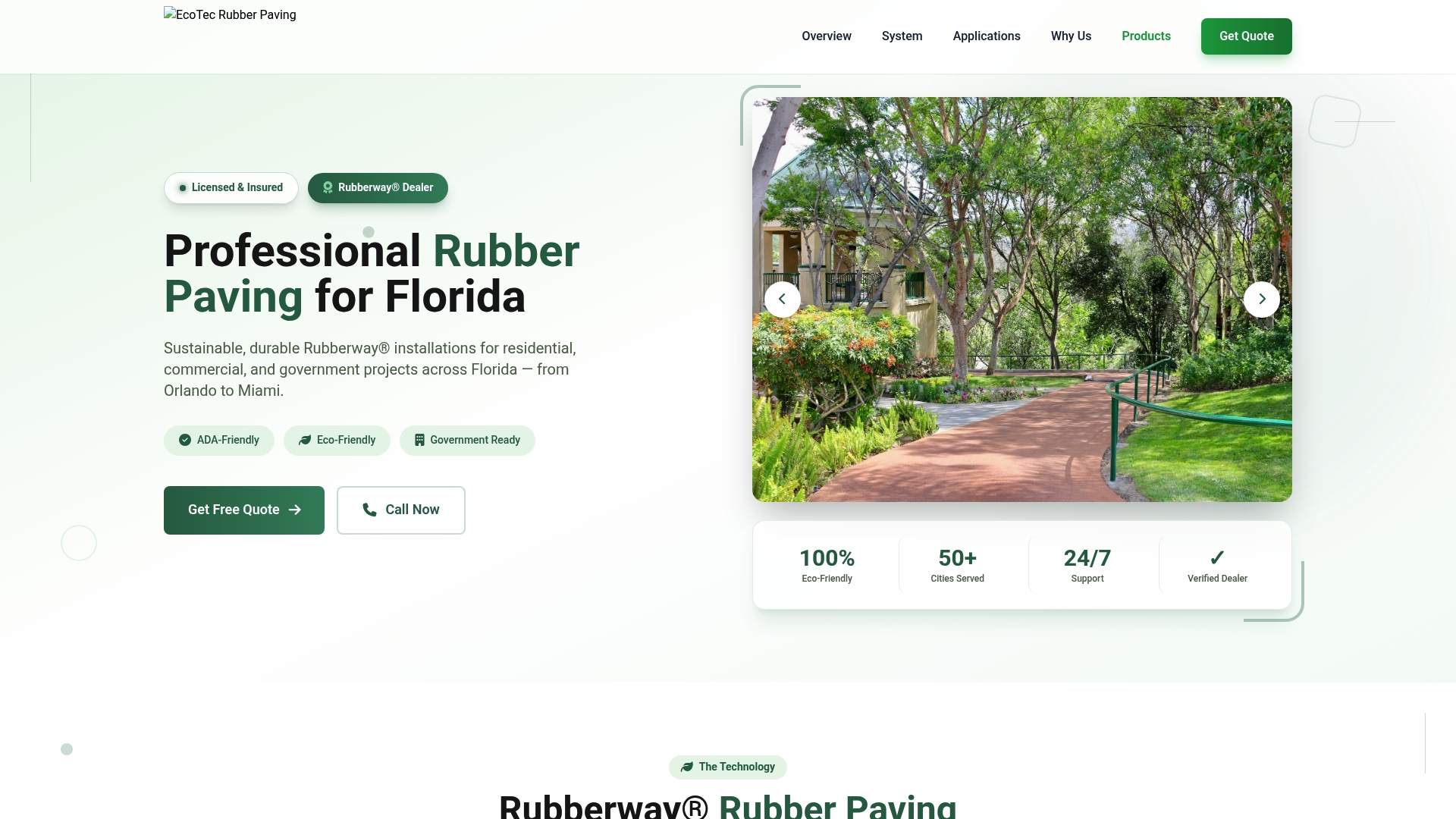
For business owners and contractors who need a certified, insured paving vendor with a documented track record in sustainable surfaces, Ecotecrubber delivers exactly that. Visit Ecotecrubber's website to review credentials and request a project consultation.
FAQ
What does a national paving vendor certification require?
National certifications like the APWA CPII require a minimum of five years of field experience and a passing exam score. Programs like the Asphalt Institute PIC add 16 hours of technical instruction covering materials, mix production, and compaction.
What does city paving vendor certification require?
Municipal prequalification typically requires $1 million in liability insurance, surety bonds, a background check, ADA certification, and documented project history. Approval timelines commonly run 4 to 6 weeks.
Does a general contractor license cover paving work?
A general contractor license does not cover paving in most jurisdictions. Most municipalities require a separate paving contractor prequalification that includes specific documentation and compliance checks beyond a standard business license.
How often do paving certifications need to be renewed?
Most paving certifications require recertification every two years, with continuing education credits as a condition of renewal. Expired credentials mean the vendor has not met current standards and should not be treated as fully qualified.
What is the difference between a national and a specialized paving certification?
National certifications verify general technical knowledge and field experience across paving disciplines. Specialized credentials like the Certified Concrete Paver Installer confirm hands-on proficiency with a specific material or installation method, verified through both written and practical exams.