
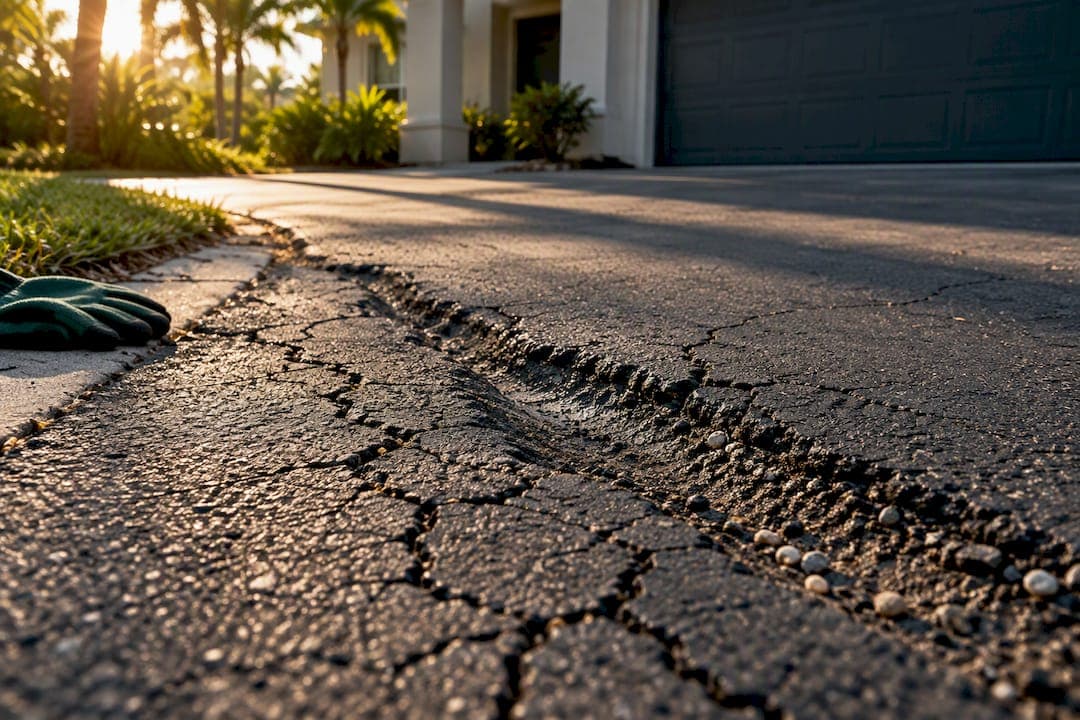
If your driveway is soft, rutting, or bleeding after heat exposure, keep vehicles off the affected area and choose patching or full resurfacing depending on whether the base has failed. Small hairline cracks can be sealed right away without waiting for cooler weather. The right fix depends entirely on how deep the damage goes, so start by grading the severity before you call anyone or buy anything.
TL;DR:
- Repairing small cracks early with crack sealing can last up to 9 years if inactive and properly installed.
- Base failure signs, such as widespread soft spots or deep rutting, require resurfacing or full replacement rather than patching.
- Hot patching extends lifespan to roughly 2 to 5 years when the underlying base remains intact, but shorter if damage is extensive.
- Proper drainage and regrading are the most critical factors influencing repair longevity and preventing recurring damage.
- EcoTec Rubber Paving's Rubberway® system offers a durable alternative for areas with persistent pooling or heat-related stress, emphasizing drainage and flexibility.
Table of Contents
- Action-first verdict and immediate next steps
- How to inspect and classify heat-related asphalt damage
- Practical repair options for heat-damaged asphalt
- DIY repair steps and when to call a contractor
- Typical costs and how long repairs last
- Maintenance plan to reduce heat-related failure
- When to choose a durable alternative to standard asphalt
- A field-tested rule for triage and repair sequencing
- Get a durability-focused assessment from EcoTec Rubber Paving
- Sources
- FAQ
Action-first verdict and immediate next steps
Minor damage, hairline cracks under a quarter inch, needs only crack sealing and can wait a week. Moderate damage, bleeding asphalt, small ruts, or a discrete pothole, calls for patching now and a permanent hot patch or overlay soon after. Severe damage, soft spots across large areas, deep rutting, or raveling, means the base has likely failed and needs resurfacing or replacement, not another patch.

How to inspect and classify heat-related asphalt damage
Heat softens asphalt binder, and once temperatures climb, traffic pushes that softened surface into ruts and shoves instead of holding its shape. Laboratory aging tests show that heat and UV exposure together accelerate rutting while making the binder more brittle and prone to cracking over time, a combination that shows up differently depending on how long the damage has been building.
Before deciding on a repair, walk the driveway and look for these signs:
- Bleeding or tracking: shiny, sticky patches where binder has risen to the surface and picks up on shoes or tires.
- Rutting or shoving: depressions or ripples where the surface has deformed under repeated weight.
- Raveling: loose aggregate and a rough, crumbly texture, often where UV oxidation has dried out the binder.
- Alligator cracking: a web of interconnected cracks that usually signals base or subgrade failure, not just surface wear.
Press a screwdriver or similar tool into any soft-looking spot. If it sinks with light pressure, the binder is compromised below the surface. Check nearby drainage too: standing water after rain, a flat or negative slope toward the house, or erosion channels along the edge all point to a base problem rather than a cosmetic one. As a decision rule, if cracking is isolated and the surface underneath feels firm, surface treatments are enough. If softness, rutting, or cracking spans large sections, the base has likely failed and needs more than a patch.
Practical repair options for heat-damaged asphalt
Cold patch is the fastest and cheapest fix, poured cold and tamped by hand. It works as an emergency measure for potholes but has a shorter useful life than hot mix repairs, so treat it as a stopgap rather than a permanent solution.
Hot patch and hot in-place recycling rebond the surface by heating and scarifying it, typically to a depth of about 20 to 50 millimeters, with surface temperatures reaching 230 to 302 degrees Fahrenheit. This method suits raveling, minor rutting, and surface cracking, but it requires equipment that controls temperature precisely, since overheating damages the binder further.
Crack sealing versus crack filling depends on whether a crack is still moving. Rubberized sealants for active, working cracks can last 5 to 9 years, while emulsion or asphalt cement fillers for stable, non-working cracks typically last 2 to 4 years when installed correctly.

Sealcoating, chip seals, and thin overlays serve different purposes. Sealcoating is preventive, protecting the surface from UV and moisture rather than fixing structural problems. Chip seals and thin hot-mix overlays are more restorative and often outperform slurry seal and crack seal for reducing rutting and roughness.
Statistic callout: Rubberized crack sealants installed on working cracks can last 5 to 9 years compared to 2 to 4 years for standard fillers, a gap that makes material choice worth getting right the first time.
When damage includes widespread rutting, alligator cracking, or soft spots that keep reappearing after patching, the base has likely failed. At that point, resurfacing or full replacement is the only repair that addresses the actual problem.
DIY repair steps and when to call a contractor
Small cracks and shallow potholes are reasonable DIY projects if you work in moderate temperatures, since installing sealants on very hot surfaces causes tracking and poor adhesion.
- Clean the crack or pothole of debris and vegetation.
- Let the area dry completely.
- Insert a backer rod for cracks wider than half an inch.
- Fill with a rubberized crack sealant or cold patch material.
- Compact the patch firmly with a tamper.
- Let it cure fully before driving on it.
Pro Tip: Work early morning or evening in warm climates so the patch material sets before surface temperatures soften it again.
Hire a contractor when you see base failure, drainage problems that keep recurring, or damage large enough to need infrared repair, hot in-place recycling, or a full overlay. Warranty-backed work also requires a licensed installer.
Typical costs and how long repairs last
Cost depends on square footage, how deep the base damage goes, site access, and material choice, so any number should be treated as a ballpark rather than a quote. Lifespan expectations vary by method:
- Cold patch: months to 1 to 2 years, meant as a temporary fix.
- Hot patch or spot repairs: roughly 2 to 5 years or more with proper bonding.
- Crack sealing: 2 to 8 years depending on the material and how well it was installed.
- Overlays: 5 to 15 years depending on thickness and mix quality.
Heat and UV exposure shorten all of these ranges, and poor drainage compounds the damage once the binder is already weakened. Polymer-modified binders like HiMA have shown improved rutting resistance in hot-climate case studies, extending life beyond standard mixes when installed correctly.
Maintenance plan to reduce heat-related failure
Drainage is the single biggest factor in how long any repair lasts. Water that pools on a compromised surface accelerates oxidative breakdown far faster than heat and UV alone, according to laboratory aging research.
- Check that the driveway's crown and slope still direct water away from the surface and toward proper drainage, regrading or adding drainage where pooling persists.
- Sealcoat every 2 to 3 years, but avoid application when the surface is hot enough that the material tracks instead of curing.
- Consider polymer-modified mixes in areas that keep failing, since standard binders may not hold up to repeated heat cycles.
- Inspect the driveway after any heat wave for new soft spots, bleeding, or cracks before they widen.
Persistent puddling after a storm is often the first sign that drainage, not just the surface, needs attention, and addressing it early prevents a much larger repair later.
When to choose a durable alternative to standard asphalt
Repeated patching that keeps failing in the same spots usually means the surface material itself is fighting the climate, not just a workmanship problem. EcoTec Rubber Paving's Rubberway® system uses a porous design built for better drainage, along with flexibility that resists the cracking and rutting that heat cycles cause in standard asphalt.
This kind of surface tends to make sense for:
- Driveways or walkways with recurring softening or rutting despite regular patching.
- Areas with persistent pooling that standard regrading hasn't solved.
- Projects where ADA compliance and surface color or texture also matter, such as HOA common areas or commercial walkways.
Before hiring anyone for a resurfacing project, ask about licensing and insurance, warranty terms, drainage performance data, and available color or texture samples, along with a realistic installation timeline. Homeowners and property managers ready to compare options can review Rubberway® product details directly.
A field-tested rule for triage and repair sequencing
Fix drainage and base problems first, patch the surface second, and only then consider a full resurface if failures keep recurring. Skipping straight to patching without correcting the base wastes money, since preventive maintenance done in the right order remains the most cost-effective way to slow heat-accelerated aging.
— Roger
Get a durability-focused assessment from EcoTec Rubber Paving
If your driveway keeps failing in the same spots no matter how many times it's patched, a standard asphalt repair may not be the right long-term fix. Rubberway® systems are built around drainage performance and flexibility, providing a surface designed to handle heat cycles rather than just patch around them.
A consultation typically includes:
- An on-site inspection of current drainage and base condition.
- A review of where standing water or repeated softening has caused damage.
- A durability plan matched to your property's traffic and climate exposure.
Ready to stop patching the same spot every year? Request a quote from EcoTec Rubber Paving and get a plan built for the long term.
Sources
For readers who want the underlying research, FHWA's hot in-place recycling guidance covers repaving depths and temperatures cited above, while FHWA's crack sealing manual details material selection and service life. The laboratory study on heat, UV, and moisture aging supports the mechanism behind rutting and raveling described throughout this article. Stormwater maintenance practices relevant to drainage upkeep are covered in this partner guide to stormwater pit cleaning.
- Investigation of the Rheological Properties and Chemical Structure of Asphalt under Multiple Aging Conditions of Heat, UV and Aqueous Solution
- Hot in-place recycling (FHWA chapter)
- Materials and Procedures for Sealing and Filling Cracks in Asphalt-Surfaced Pavements (FHWA-RD-99-147)
FAQ
What is the cheapest way to repair a driveway?
Cold patch is the cheapest option for small potholes, since it requires no heating equipment and can be applied by hand. It's meant as a temporary fix rather than a lasting repair, so budget for a permanent solution afterward.
How long does hot patch asphalt last?
Hot patch repairs typically last 2 to 5 years or more when the base underneath is sound and the material is applied with proper temperature control. Lifespan drops significantly if the surrounding base has already started to fail.
Can a crumbling asphalt driveway be repaired?
Crumbling or raveling asphalt can often be repaired if the base underneath is still solid, using hot patch, infrared treatment, or a thin overlay depending on the extent of damage. If crumbling covers large areas or the base has failed, resurfacing or replacement is the more reliable fix.
Can a damaged concrete driveway be repaired?
Concrete driveways can be repaired for surface cracking and minor spalling, but heat and UV damage in concrete usually shows up as surface deterioration rather than the softening seen in asphalt. Deep structural cracks or sinking sections typically need professional evaluation before any patch is applied.