
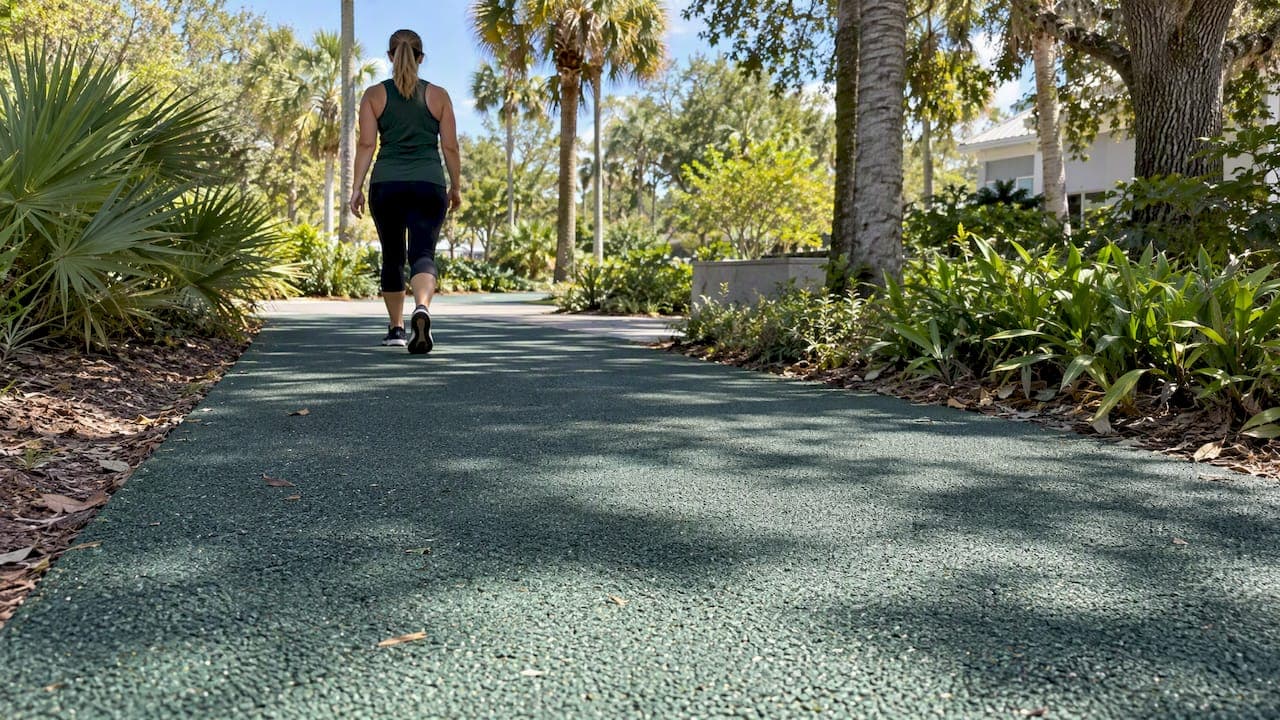
For most properties, a heat reflective walkway surface should be moderately reflective and permeable, and our Rubberway pervious rubber offers a permeable option. The main trade-off is that a brighter surface runs cooler underfoot but can bounce more radiation toward pedestrians. Before choosing materials, check sun exposure, foot-traffic patterns, and drainage on your site.
TL;DR:
- Use reflective pavement in open, low traffic areas; narrow street canyons and unshaded plazas can increase radiant heat, so add trees or canopies.
- Specify moderate reflectance, favor near infrared performance when glare matters, and require aged reflectance, permeability, and slip resistance in bid documents.
- Reflectance declines with dirt, wear, and oxidation, so request climate relevant third party aging tests plus written maintenance and warranty terms before signing.
- Compare total project costs, including excavation, grading, accessibility details, and drainage; coatings may need recoating, while permeable rubber typically needs less upkeep.
Table of Contents
- What materials make a walkway heat reflective?
- Where do reflective walkways help, and where do they backfire?
- What specs should you write into a walkway bid?
- How does reflectivity change as a walkway ages?
- What drives cost and installation on a walkway project?
- Why is Rubberway a fitting walkway solution?
- Why I favor moderate reflectance and pervious designs
- Ready to price a cooler, safer walkway?
- FAQ
- Sources
What materials make a walkway heat reflective?
Heat resistant walkway surface options fall into a few real categories, and each affects temperature and drainage differently. The EPA describes cool pavements as those with raised solar reflectance or permeable designs, and notes that solar reflectance is the main determinant of maximum surface temperature.
- High-albedo coatings and seal coats: a retrofit option for existing walkways that raises reflectance without tearing out the base.
- Light-colored or colored concrete: a good fit for new pours, where the mix itself sets the reflectance.
- Permeable pavements: porous asphalt, pervious concrete, and permeable pavers cool through moisture evaporation while handling stormwater.
- Clear-binder and cool-colored systems: LBNL's Heat Island Group explains that clear binders exposing light aggregate or cool-colored coatings raise reflectance without a bright white look, which suits walkways.
- Pervious rubber: our Rubberway family gives you a porous surface.
The right pick depends on whether you are retrofitting or building new, and on how much water the site needs to shed.
Where do reflective walkways help, and where do they backfire?
Location decides whether reflectivity helps or hurts. Guidance synthesized from Arizona studies recommends limited, context-aware use of reflective pavement, with the best results in open, low-rise areas and parking zones.
- Best fit: open corridors, low-foot-traffic paths, and walkways beside parking areas, where reflected radiation can escape upward and surface cooling benefits the surrounding microclimate.
- Use caution: narrow, canyon-like spaces and midday-heavy plazas. Modeling work on high-albedo materials in street canyons indicates reflected radiation can raise the mean radiant temperature people feel.
- Add shade: simulations of a Los Angeles neighborhood found cool pavements helped in shaded spots but could worsen comfort in unshaded locations. Pairing a surface with trees or canopies protects pedestrians.
Nearby façades matter too. The effect of pavement reflectivity on pedestrian comfort depends on surrounding surfaces and urban geometry.
What specs should you write into a walkway bid?
Aim for moderate solar reflectance rather than the highest albedo on the market. Practitioners summarized in evidence-based guidance for Arizona note that higher reflectivity can raise glare and radiant temperature at pedestrian height, so a balanced target protects comfort while still cutting surface heat.
- Reflectance: specify a moderate solar reflectance target, and ask for the aged value, not only the new-product number.
- Spectral choice: favor near-infrared reflectance over visible whiteness when glare is a concern. Field observations in Pacoima, California indicate that spectral signatures can affect cool-pavement outcomes.
- Texture and slip resistance: keep the finish compliant with ADA and slip standards regardless of color.
- Permeability: state the porosity or void ratio and the base-layer build for pervious systems so drainage works as designed.
- Substrate and transitions: define surface prep, thickness, and edge details separately for retrofit and new work.
Pro Tip: Ask every bidder for the same three numbers: initial reflectance, aged reflectance, and permeability rate. It makes proposals comparable at a glance.
For deeper drainage detail, see our guide to stormwater management paving solutions. Base compaction matters just as much, and this practical base-prep article covers it for gravel work.

How does reflectivity change as a walkway ages?
Reflectivity fades. The EPA compendium notes that reflectivity typically decreases over time because of soiling, and the City of Phoenix pilot saw surface reflectivity decline over months of monitoring. That is why aged reflectance matters more than a showroom number.
- Soiling and wear: dirt, tire marks, foot traffic, and oxidation all darken a surface.
- Routine care: regular cleaning slows the loss, and coatings eventually need recoating.
- Durable systems: permeable, resin, and rubber surfaces generally avoid the recoat cycle that thin coatings require, though they still benefit from cleaning to keep pores open. Our outdoor paving drainage guide covers upkeep.
- Vendor proof: the EPA advises prioritizing products with third-party, climate-relevant testing data, since there is no single standard definition of cool pavement.
Request long-term test results and written maintenance and warranty terms before signing.
What drives cost and installation on a walkway project?
Budgets follow a handful of drivers, and knowing them lets you ask contractors sharper questions.
- Material type: coatings, new concrete, permeable systems, and rubber differ widely in upfront cost.
- Site prep and drainage work: excavation, base depth, and grading often cost as much as the surface itself.
- ADA detailing: ramps, transitions, and slip-resistant finishes add scope.
- Installation conditions: coatings need clean, sound substrates, pervious systems need a proper base and bedding, and cure times depend on weather windows.
- Lifecycle trade-off: cheaper coatings mean periodic recoats, while permeable or rubber systems cost more at the start and typically need less upkeep afterward.
Think in total cost of ownership across maintenance, repairs, and thermal benefits. Pricing for our installations is available on request after a site assessment.
Why is Rubberway a fitting walkway solution?
Rubberway checks the boxes laid out above. Our Rubberway family includes Rubberway® Pervious Pavement, Rubberway Rubberrock 6000, Rubberway EVOLUTION, and the Rubberway Sidewalk System. Contact us for product details, including material, drainage, heat performance, accessibility, and color options.
- Drainage: a pervious structure sheds water instead of pooling it.
- Comfort: consider how the surface’s color and finish may affect glare.
- Uses: residential walkways, pool surrounds, HOA paths, and municipal sidewalks where comfort and drainage lead.
- Sustainability: recycled content keeps waste out of landfills.
In an initial proposal, ask us for an on-site assessment, reflectance and porosity data, ADA compliance documentation, and color samples. Our heat-resistant paving guide adds background on rubber in hot climates.
Why I favor moderate reflectance and pervious designs
Chasing the highest albedo is the wrong goal for a place people walk. A walkway should be judged by how it feels at ankle and face height, not by a lab number, so I prefer moderate reflectance paired with permeability and shade. Before you commit, run this checklist:
- Map sun exposure through the day.
- Record peak pedestrian times and patterns.
- Inspect drainage and soil permeability.
Then ask suppliers for third-party reflectance and aging data.
— Roger
Ready to price a cooler, safer walkway?
Our Rubberway pervious rubber systems are presented as a walkway option with drainage and color choices. Ask us for product details and accessibility documentation. When you reach out, ask for:
- A site assessment
- Reflectance and porosity test results
- Color samples
- A written installation timeline
Request a quote or schedule an assessment and we will walk your site with you.
FAQ
Is a heat reflective walkway surface always better?
No. A reflective surface runs cooler, but it can raise the radiant heat people feel at walking height. It works best in open, low-traffic areas and is strongest when paired with shade.
How much cooler can a reflective surface get?
Results depend on the material and site. The City of Phoenix pilot found cool pavement surfaces averaged 10.5–12°F lower than traditional asphalt at noon, though reflectivity declined over months of monitoring.
What is the best material for a heat resistant walkway surface?
There is no single winner. Permeable and moderately reflective surfaces can balance cooling, drainage, and comfort, and our Rubberway pervious rubber offers a pervious option.
How do I know a product's reflectivity claim is real?
Ask for third-party testing relevant to your climate. The EPA recommends this because there is no single standard definition of cool pavement, so marketing claims alone are not enough.
Sources
- Cool Pavements | Heat Island Group
- Reducing Urban Heat Islands: Compendium of Strategies, Cool Pavements
- Using Cool Pavements to Reduce Heat Islands | US EPA