

A paving system warranty is a contractual promise that covers specific defects in paving materials and installation workmanship for a defined period. Understanding what does paving system warranty mean separates homeowners who protect their investment from those who discover too late that their coverage was narrower than expected. The industry distinguishes two core warranty types: workmanship warranties, which cover installation errors, and material warranties, which cover product defects. Knowing which type applies to your project, and what each excludes, is the first step toward making a confident paving decision.
What does a paving system warranty actually cover?
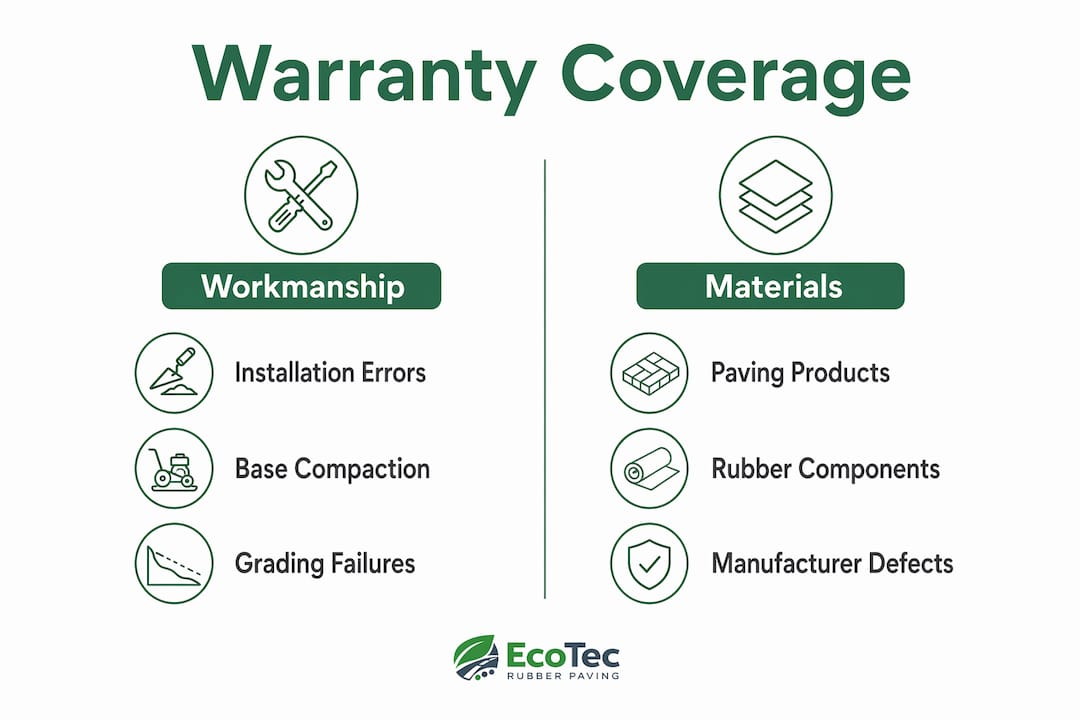
A paving system warranty covers two distinct categories: workmanship and materials. These are not the same thing, and conflating them is the most common mistake property owners make.
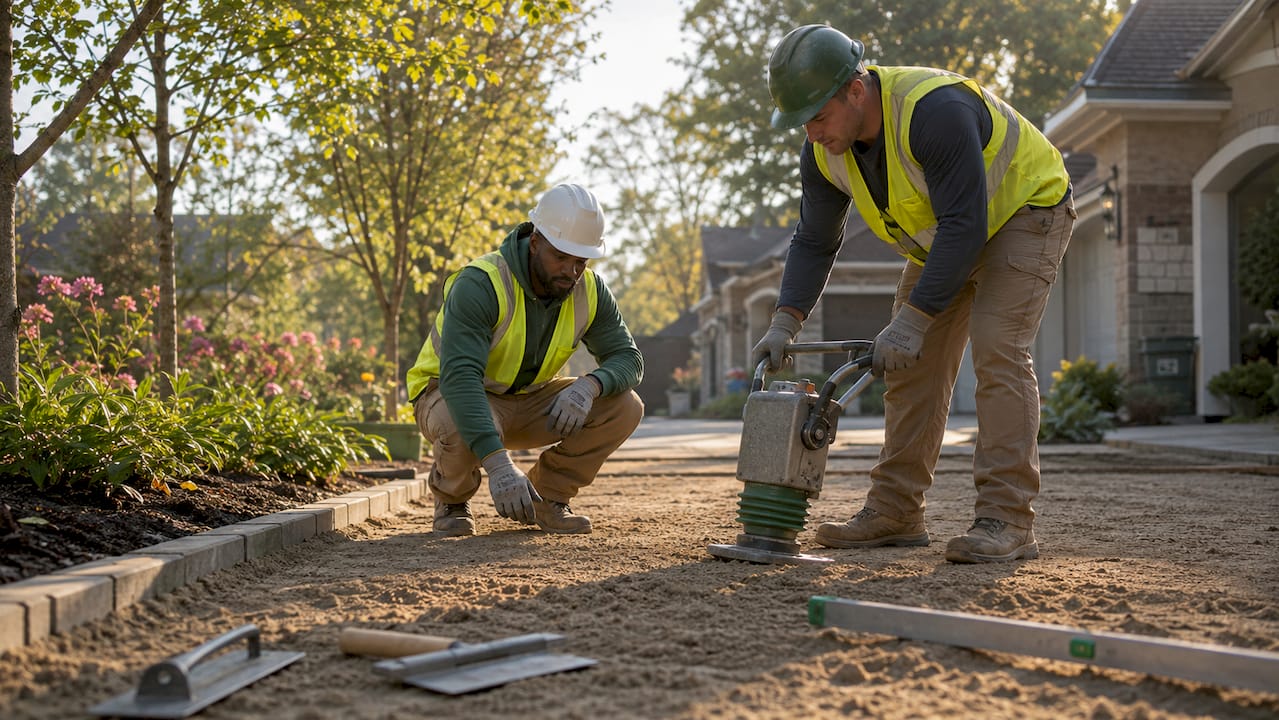
Workmanship warranties cover installation errors made by the contractor. Common examples include improper base compaction, grading mistakes, and edge restraint failures that cause the surface to shift or crack prematurely. If the contractor installed the base layer incorrectly and the surface buckles within the warranty period, the workmanship warranty obligates the contractor to repair it. Residential workmanship warranties typically run 1–2 years, while commercial projects often carry 1–3 years of coverage, and some public infrastructure projects extend to 5–20 years.
Material warranties cover product defects, such as cracking or deterioration caused by manufacturing flaws rather than installation errors. These warranties come from the manufacturer, not the contractor. A rubber paving product like the Rubberway® system, for example, carries its own material warranty separate from the installer's workmanship guarantee. Material warranties often run longer than workmanship warranties because product defects can take years to surface.
Here is what a standard paving warranty typically covers:
- Base compaction failures: Settling or sinking caused by the contractor's failure to compact the subbase correctly
- Grading errors: Poor slope that causes water to pool instead of drain away from the surface
- Edge restraint failures: Borders that shift or separate because of improper installation
- Material defects: Cracking, delamination, or deterioration tied to a product flaw rather than use
- Drainage system failures: Improper drainage installation that leads to standing water and surface damage
Pro Tip: Ask your contractor to provide two separate documents: one for workmanship coverage and one for material coverage. Receiving a single vague document labeled "warranty" is a red flag that the terms may not hold up.
What do paving warranties usually exclude?
Paving system guarantees have clear limits, and most property owners do not read the exclusions carefully enough before signing. Most paving warranties exclude normal wear and tear, surface oxidation, damage from snow removal equipment, and environmental effects like UV fading. These are considered predictable outcomes of normal use, not contractor or manufacturer failures.
The exclusions that surprise property owners most are the ones tied to ground conditions. Site-related issues like soil instability, poor drainage, and root intrusion are excluded from coverage in nearly every standard warranty. That means if tree roots crack your new driveway from below, or if the soil beneath shifts due to poor drainage, the warranty will not cover the repair. These are ground engineering problems, not paving defects.
The following exclusions appear in most standard paving contracts:
- Normal wear and tear: Surface scuffing, minor fading, and texture changes from regular foot or vehicle traffic
- Weather and environmental damage: UV degradation, freeze-thaw cycles, and storm-related surface damage
- Ground movement: Settling, heaving, or cracking caused by soil instability or natural ground shift
- Root intrusion: Damage from tree or plant roots growing beneath the surface
- Neglected maintenance: Voided coverage when the owner fails to perform required upkeep like sealcoating or crack filling
- Overloading: Damage from vehicles or equipment heavier than the surface was designed to support
Pro Tip: Before signing, ask the contractor to walk you through every exclusion clause out loud. Contractors who refuse to explain their warranty language clearly often signal limited buyer protection.
How do warranty terms affect your maintenance and claim process?
A paving warranty is not passive protection. Paving warranties often require active owner maintenance, including sealcoating, crack filling, and drainage care. Failing to perform these tasks can void the warranty entirely. That means the coverage you paid for disappears the moment you skip a required maintenance step.
Routine maintenance also creates the paper trail you need if a claim arises. Property owners who document their upkeep with dated photos, receipts, and contractor invoices have a far stronger position when disputing a warranty claim. Without records, a contractor can argue that neglect caused the failure rather than a workmanship or material defect.
Here is what to keep on file throughout the warranty period:
- Installation photos: Dated images taken immediately after installation showing the surface condition
- Maintenance receipts: Invoices for sealcoating, crack filling, and any professional inspections
- Contractor contact records: Emails and written communications about any concerns or repairs
- Original contract and warranty documents: The signed agreement, warranty terms, and any product spec sheets
Warranty transferability also affects property resale value. Some workmanship warranties transfer to new owners; others do not. If you plan to sell the property during the warranty period, confirm in writing whether the coverage transfers and what documentation the new owner will need to make a claim. A transferable warranty adds measurable value to a property listing.
When submitting a claim, document the defect with photos and a written description, then notify the contractor in writing. Most contracts specify a response window. If the contractor does not respond, your next step is to consult your state's contractor licensing board.
How does ground preparation affect warranty validity?
Ground preparation is the single biggest factor in whether a paving surface performs well and whether warranty claims get honored. Proper base preparation and drainage are foundational to valid warranty coverage. A surface installed over an unstable or poorly drained subbase will fail regardless of how good the paving material is.
The role of surface prep goes beyond aesthetics. Subsurface stability, soil compaction depth, and drainage slope all determine whether the paving system performs as designed. Contractors who cut corners on base prep often hide behind warranty exclusions when failures occur, arguing that ground conditions caused the problem. Demanding documented prep standards before work begins closes that loophole.
| Preparation Factor | Impact on Warranty |
|---|---|
| Subbase compaction depth | Covered under workmanship if contractor fails to meet spec |
| Drainage slope and grading | Covered if contractor installed incorrectly; excluded if pre-existing |
| Soil stability assessment | Owner's responsibility to address before installation |
| Root and debris removal | Excluded if roots were present before installation |
| Drainage system installation | Covered under workmanship if improperly installed by contractor |
Vague warranty language that references "industry standards" without specifying material thickness, base depth, or product brands gives contractors room to deny claims. Insist on precise written specifications before signing. A contractor confident in their work will not hesitate to document it.
Key Takeaways
A paving system warranty covers only specific defects in workmanship and materials, not every future failure, making it critical for property owners to read exclusions, maintain their surface, and document everything.
| Point | Details |
|---|---|
| Two warranty types exist | Workmanship covers installation errors; material warranties cover product defects from the manufacturer. |
| Exclusions are extensive | Normal wear, ground movement, root intrusion, and neglected maintenance are excluded from most warranties. |
| Maintenance keeps coverage active | Sealcoating, crack filling, and drainage care are often required to keep the warranty valid. |
| Documentation wins claims | Dated photos, receipts, and written records are your strongest tools in any warranty dispute. |
| Ground prep determines validity | Failures linked to poor subbase preparation may fall under workmanship coverage or be excluded entirely. |
What I've learned after years of watching warranty disputes play out
The most expensive mistake property owners make is treating a paving warranty like a blanket guarantee. Warranties are not insurance policies. They cover a defined set of defects tied to contractor labor or material faults, nothing more. Every time I see a homeowner frustrated by a denied claim, the root cause is the same: they never read the exclusions.
The second pattern I see constantly is owners who void their own coverage through neglect. Skipping one sealcoating cycle or ignoring a small drainage issue can give a contractor legal grounds to deny a repair. The warranty document is a two-way agreement, and the owner's obligations are just as binding as the contractor's.
My honest advice: before you sign any paving contract, ask the contractor to explain every exclusion in plain language. If they hesitate or use phrases like "industry standards" without defining them, push back. A contractor who stands behind their work will welcome the specificity. One who deflects is telling you something important about what happens when things go wrong.
Ecotecrubber's approach to long-term paving maintenance reflects this philosophy. Clear documentation, defined specs, and transparent warranty terms are not extras. They are the baseline for any project worth doing.
— Roger
Ecotecrubber's warranty-backed paving for Florida property owners
Ecotecrubber installs the Rubberway® rubber paving system across Florida with a focus on professional standards, clear documentation, and defined warranty coverage from the start.
Every Ecotecrubber project is completed by a licensed and insured team that documents base preparation, drainage grading, and material specifications before the job closes. That documentation protects you if a claim ever arises. The Rubberway® system is built for Florida's heat, humidity, and heavy rain, addressing the drainage and crack resistance issues that void warranties on conventional surfaces. Property owners who want warranty-backed rubber paving with ADA-compliant results and recycled materials can contact Ecotecrubber directly for a project consultation. For details on specific product coverage, the Rubberway® product line outlines material specifications and warranty information.
FAQ
What does a paving system warranty cover?
A paving system warranty covers defects in contractor workmanship, such as base compaction errors and grading failures, and product defects covered by the manufacturer's material warranty. It does not cover normal wear, weather damage, or ground movement.
How long do residential paving warranties last?
Residential workmanship warranties typically last 1–2 years, while material warranties from manufacturers may run longer. Commercial projects often carry 1–3 years of workmanship coverage.
Can neglecting maintenance void a paving warranty?
Yes. Most paving warranties require owners to perform routine maintenance, including sealcoating and crack filling. Skipping required upkeep gives the contractor grounds to deny a warranty claim.
Are ground movement and soil instability covered?
No. Soil instability, root intrusion, and poor drainage are excluded from nearly all standard paving warranties. These are site conditions the owner must address before installation begins.
Does a paving warranty transfer to a new owner?
Some workmanship warranties transfer to new owners; others do not. Confirm transferability in writing before signing the contract, and keep all documentation to support any future claim by the new owner.