
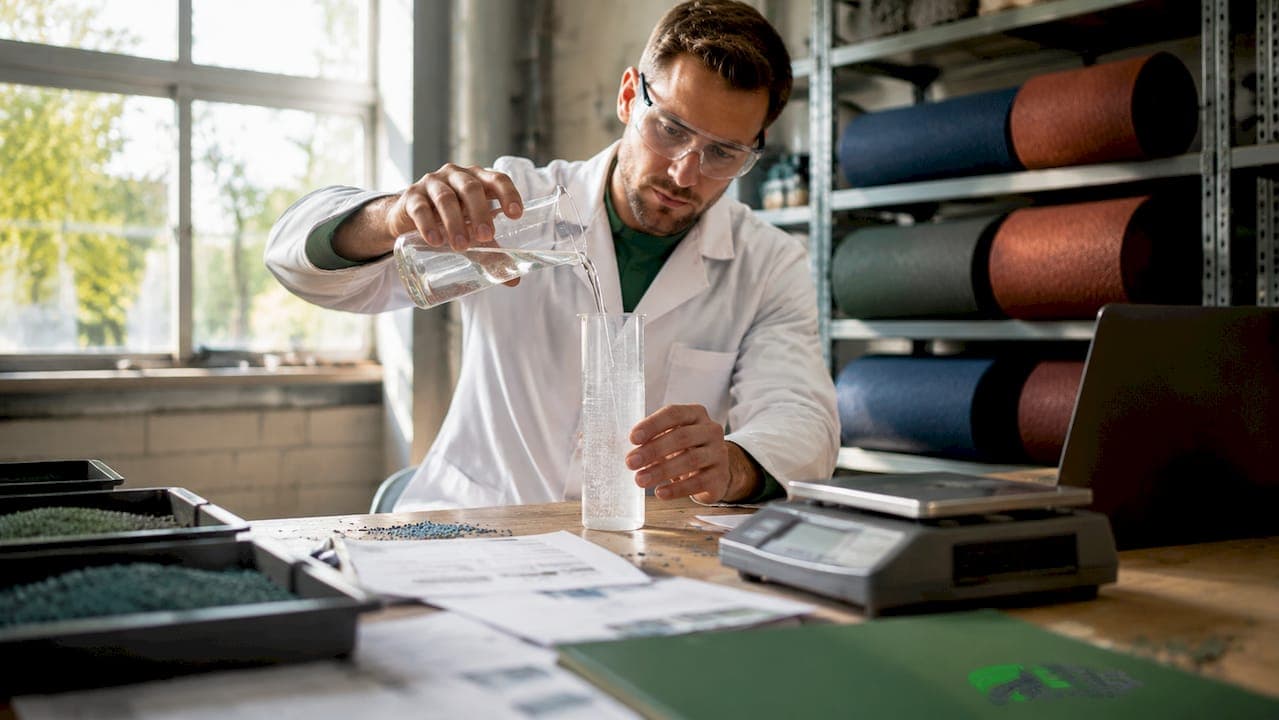
The binder in rubber paving systems is a polyurethane (PU) adhesive that encapsulates rubber granules at 15–25% by weight, creating a flexible, elastic matrix that holds the surface together under load, weather, and repeated impact. Without it, rubber granules have no structural relationship to each other. The binder is the single component that converts loose recycled rubber into a durable, ADA-compliant paving surface. Construction and landscaping professionals who treat the binder as a secondary material consistently produce surfaces that fail early. Those who prioritize binder selection and application technique produce surfaces that last.
What is the role of binder in rubber paving systems?
The binder functions as both adhesive and structural agent. It coats each rubber granule and chemically bonds the mass into a unified surface layer. That bonding action delivers the flexibility, shock absorption, and crack resistance that make rubber paving superior to rigid alternatives.
Premium PU binders resist UV radiation, moisture, and temperature extremes, preventing the cracking and hardening that lower-grade binders cause over time. This matters especially in climates like Florida, where intense sun and humidity accelerate surface degradation. Ecotecrubber's Rubberway® system is built around this principle: the binder grade is not negotiable.

Industry experts identify binder quality as the decisive factor for long-term rubber pavement durability, ranking it above rubber granule selection. That finding runs counter to how many contractors budget projects. Granules are visible; binder is not. The invisible component determines whether the surface lasts five years or fifteen.
What chemical and physical properties make binders effective?
PU binders cure through a moisture-activated chemical reaction. Atmospheric humidity triggers the cross-linking of polymer chains, forming a three-dimensional elastic network around each rubber granule. The result is a surface with high tensile strength and genuine elasticity, not just surface softness.
Key physical properties that define binder performance include:
- Elasticity: PU binders stretch and recover without cracking, accommodating thermal expansion and contraction across seasons.
- Tensile strength: The cured matrix resists tearing under foot traffic, vehicle loads, and lateral stress.
- UV resistance: Quality PU formulations include UV stabilizers that prevent photodegradation, preserving color and surface hardness over years of sun exposure.
- Moisture resistance: The cured binder seals the surface, blocking water infiltration that would otherwise weaken the base layer beneath.
- Temperature tolerance: High-grade PU binders remain flexible in freezing conditions and do not soften excessively in summer heat.
Epoxy binders offer higher rigidity but crack under thermal cycling. Cementitious binders are cheaper but absorb moisture and degrade faster in wet climates. PU binders outperform both for outdoor rubber paving applications because they combine flexibility with chemical durability.
Pro Tip: Request the technical data sheet for any PU binder before purchase. Look specifically for Shore A hardness rating and elongation-at-break percentage. Those two numbers tell you more about real-world performance than any marketing claim.

How does the binder interact with rubber granules during installation?
The mixing and application phase determines whether the binder's chemical potential translates into a quality surface. Proper binder-to-granule ratio sits between 15% and 25% by weight. Too little binder leaves granules undercoated, causing shedding. Too much creates a sticky, slow-curing mass that is difficult to level and finish.
Follow this installation sequence for consistent results:
- Measure by weight, not volume. Granule density varies by type and size. Volume measurements introduce ratio errors that compound across a large pour.
- Pre-mix granules before adding binder. Dry mixing first breaks up clumps and creates a uniform base for even coating.
- Add binder gradually while mixing. Pouring all binder at once creates pockets of over-saturation. Slow addition produces even coating across all granules.
- Monitor ambient conditions before and during mixing. Moisture-curing PU binders react with atmospheric humidity, so high humidity accelerates cure time and reduces your working window.
- Spread and compact within the working window. Once the binder begins cross-linking, the material stiffens. Attempting to level a partially cured surface creates voids and surface irregularities.
- Allow full cure before opening to traffic. Partial cure means partial strength. Walking on an uncured surface compresses the matrix unevenly and creates permanent deformation.
Installation success depends on balancing binder curing times with environmental conditions to facilitate smooth surface finishing within project timelines. That balance is a skill, not a formula. Experienced installers read weather forecasts the same way concrete crews do.
Pro Tip: Schedule rubber paving installations for mornings when humidity is stable and temperatures are rising. Avoid pouring in the afternoon heat of a Florida summer. The binder cures too fast, and you lose the working window before the surface is level.
For a deeper look at how weather conditions affect your installation timeline, the weather and binder curing relationship is worth reviewing before scheduling any outdoor project.
What practical benefits does the binder provide to rubber paving surfaces?
The binder's effects on a finished rubber surface are measurable across several performance categories that matter directly to construction and landscaping professionals.
Binders serve as waterproofing agents that protect pavements from moisture damage and base layer degradation. That waterproofing function is often overlooked during specification, but it is what prevents heaving, cracking, and subbase failure in wet climates. A well-bonded rubber surface sheds water rather than absorbing it.
Practical benefits include:
- Shock absorption: The elastic binder matrix distributes impact energy across the surface, reducing injury risk on playgrounds, pool decks, and pedestrian paths.
- Load distribution: The bonded surface spreads point loads laterally, protecting the subbase from concentrated stress.
- Granule retention: Quality binder prevents granule shedding, which reduces maintenance frequency and keeps surfaces safe and clean.
- Color stability: UV-stabilized binders slow the photodegradation of pigmented granules, keeping surfaces visually consistent for longer.
- Crack resistance: The flexible matrix accommodates minor substrate movement without fracturing, unlike rigid paving materials.
Binder modification with crumb rubber improves rutting resistance and fatigue cracking performance at approximately 15% crumb rubber content in asphalt binder systems. That finding from materials research confirms what rubber paving professionals observe in the field: the right binder-to-rubber ratio produces measurably better structural performance.
Proper surface preparation amplifies all of these benefits. The role of surface prep in binder adhesion is direct: a contaminated or unstable substrate prevents the binder from forming a complete bond, regardless of binder quality.
What are the maintenance and lifecycle considerations for rubber paving binders?
Binders degrade over time. UV exposure, heavy traffic, and temperature cycling all contribute to gradual breakdown of the polymer matrix. Recognizing the signs of binder wear early prevents minor surface issues from becoming full replacement projects.
Signs that a rubber surface needs binder attention:
- Granule shedding: Loose granules on the surface indicate the binder matrix has lost adhesion in localized areas.
- Surface hardening: A surface that no longer flexes under foot pressure has lost elasticity, usually from UV degradation of the binder.
- Cracking or delamination: Visible cracks or areas where the surface lifts from the substrate signal advanced binder failure.
- Color fading concentrated in high-traffic zones: Uneven fading suggests the binder's UV stabilizers have been depleted in those areas.
Re-binder application extends the life of degraded rubber surfaces by restoring structural and aesthetic integrity without full replacement. This process applies a fresh binder layer over the existing surface, reactivating adhesion and sealing exposed granules. It costs significantly less than a full tearout and reinstallation.
Re-binder services also align with sustainability goals. Extending the life of an existing surface reduces material waste and avoids the energy cost of full replacement. For municipalities and property managers working within environmental compliance frameworks, that lifecycle extension has real value beyond the cost savings.
Proactive maintenance planning should include a surface inspection every 12–18 months. Catching early binder wear and scheduling re-binder treatment before granule shedding becomes widespread is the most cost-effective approach to rubber paving lifecycle management.
What emerging trends are shaping binder technology in 2026?
Binder chemistry is advancing faster than most contractors realize. The pressure to reduce volatile organic compound (VOC) emissions has driven meaningful formulation changes in the past two years.
New eco-friendly PU binders reduce VOC output and adapt better to humidity variation, improving both installation conditions and environmental compliance. These formulations are becoming the standard for projects subject to environmental permitting, particularly in states with strict air quality regulations.
Current trends shaping binder development include:
- Low-VOC formulations: Reduced solvent content lowers emissions during installation and curing, protecting installers and meeting regulatory requirements.
- Bio-based additives: Partial replacement of petroleum-derived components with bio-based alternatives reduces the carbon footprint of the binder without sacrificing performance.
- Faster cure times: New catalyst systems shorten the curing window, allowing faster project completion without compromising bond strength.
- Humidity-tolerant chemistry: Formulations that perform consistently across a wider humidity range reduce weather-related installation delays.
- Compatibility with recycled rubber: Binders engineered specifically for high-recycled-content granules produce better adhesion than general-purpose PU products.
The integration of recycled rubber with purpose-built binders is the direction the industry is moving. Systems like Ecotecrubber's Rubberway® already combine recycled materials with professional-grade binder application, positioning them ahead of contractors still using commodity binders on recycled granule mixes.
Key Takeaways
The binder is the structural foundation of any rubber paving system, and its quality, ratio, and application method determine every performance outcome that matters to construction and landscaping professionals.
| Point | Details |
|---|---|
| Binder ratio is non-negotiable | Maintain 15–25% binder by weight to prevent granule shedding and surface failure. |
| PU binder outperforms alternatives | Polyurethane delivers elasticity, UV resistance, and moisture protection that epoxy and cementitious binders cannot match outdoors. |
| Weather controls your working window | Monitor humidity and temperature before installation; moisture-curing PU binders react to atmospheric conditions in real time. |
| Re-binder extends surface life | Applying a fresh binder layer restores adhesion and delays full replacement, reducing long-term project costs. |
| Eco-friendly formulations are now viable | Low-VOC, humidity-tolerant PU binders meet modern environmental standards without sacrificing bond strength. |
What contractors get wrong about binder selection
Most contractors I work with underestimate the binder until a surface fails. Then they want to blame the granules, the substrate, or the weather. In my experience, the binder is almost always the real variable.
The most common mistake I see is treating binder as a commodity purchase. Contractors spec the cheapest PU product that meets the minimum description and assume all polyurethane binders perform the same. They do not. The difference between a mid-grade and a premium binder shows up around year three, when one surface still looks and performs like new and the other is shedding granules and cracking at the seams.
The second mistake is ignoring weather on installation day. I have watched experienced crews pour in afternoon heat because they were behind schedule, only to produce a surface that cured unevenly and had to be partially redone. The cure time dynamics are not suggestions. They are chemistry. You cannot negotiate with a PU binder that has already started cross-linking.
My honest recommendation: budget for the best binder your project allows, schedule installations around weather rather than around deadlines when possible, and build re-binder inspections into every maintenance contract you write. The clients who follow that approach never call me about premature surface failure.
— Roger
Ecotecrubber's Rubberway® system: built around binder quality
Ecotecrubber designs every Rubberway® installation around professional-grade binder selection and application. The result is a rubber paving surface built to handle Florida's heat, humidity, and heavy use without premature failure.
Every Ecotecrubber project uses recycled rubber granules paired with high-performance PU binders applied at precise ratios by licensed, insured installers. That combination produces surfaces with documented crack resistance, ADA compliance, and drainage performance. If you are specifying a rubber paving project and want a surface that holds up, review the Rubberway® product lineup or contact Ecotecrubber directly for a project consultation.
FAQ
What type of binder is used in rubber paving systems?
Polyurethane (PU) binder is the industry standard for rubber paving. It encapsulates rubber granules at 15–25% by weight and cures through a moisture-activated chemical reaction to form a flexible, durable surface matrix.
How does binder ratio affect rubber paving performance?
Too little binder causes granule shedding; too much creates a sticky surface with extended cure times. The correct ratio of 15–25% by weight produces even granule coating, proper adhesion, and a surface that holds up under traffic and weather.
Can a degraded rubber paving surface be repaired without full replacement?
Re-binder application restores adhesion and surface integrity in worn rubber paving without a full tearout. This process is cost-effective and extends the functional life of the surface significantly.
How does weather affect binder curing during installation?
Moisture-curing PU binders react with atmospheric humidity, so high humidity shortens the working window and low humidity slows curing. Installers must monitor temperature and humidity conditions to avoid uneven curing and surface defects.
Are eco-friendly binders as effective as standard PU binders?
New low-VOC PU binder formulations match the performance of standard products while reducing emissions and improving humidity tolerance. They meet current environmental compliance requirements without sacrificing bond strength or surface durability.