
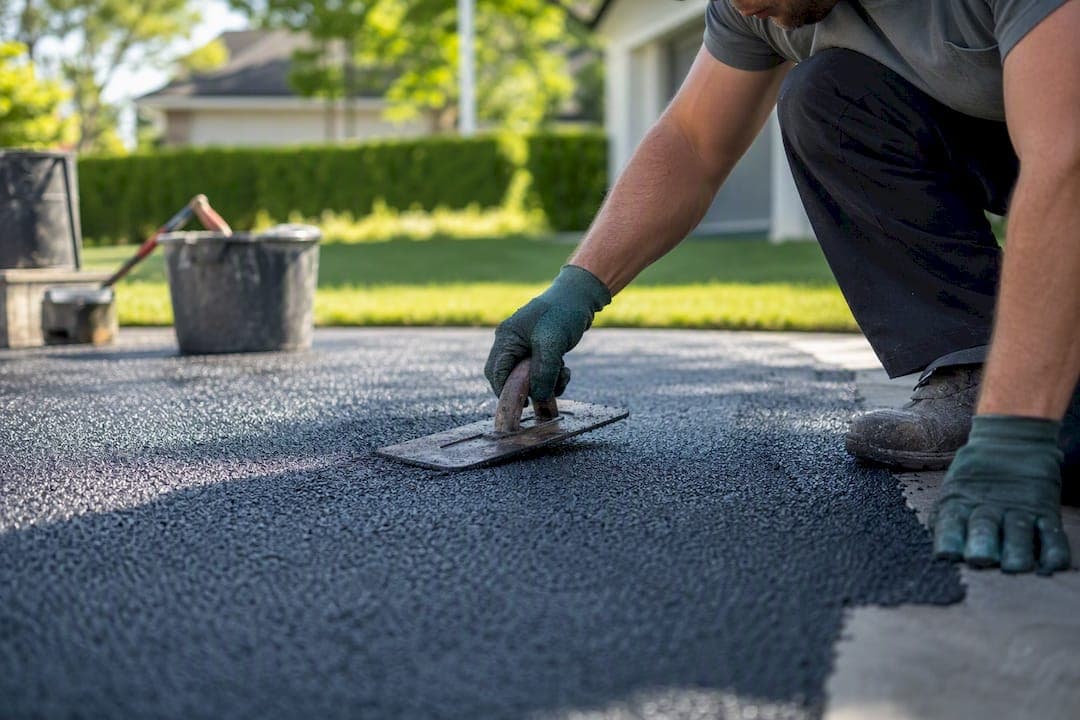
Rubber driveway cost typically falls between $8 and $25 per square foot installed, depending on whether the crew works over an existing slab or starts from bare ground. A standard two-car driveway lands somewhere between $3,000 and $9,000, while a single-car space often finishes for $1,600 to $4,000. Site prep, not the rubber itself, usually decides where you land in that range.
TL;DR:
- The cost of a rubber driveway depends heavily on site preparation, with full rebuilds costing up to $25 per square foot and overlays starting around $4 to $9.
- Major cost drivers include whether existing pavement is removed, drainage corrections, rubber material type, labor regional rates, and decorative details, all of which can significantly alter the final price.
- Rubber driveways typically cost between $8 and $18 per square foot, but estimates are highly variable based on site conditions and chosen finish options.
- Getting an accurate quote requires an on-site assessment and detailed itemization of work, including permits and disposal, to avoid hidden costs.
- Regular maintenance involves resealing every 5 to 7 years at about $2 to $4 per square foot, with proper surface prep reducing future repair and upkeep costs.
Table of Contents
- Rubber Driveway Cost Per Square Foot: Low, Average, and High Ranges
- What Drives the Cost of a Rubber Driveway Up or Down?
- Is Rubber Cheaper Than Concrete, Asphalt, or Pavers?
- How Do You Get an Accurate Rubber Driveway Quote?
- How Much Does Rubber Driveway Maintenance Cost Over Time?
- What Should You Expect From a Rubberway® Installation?
- The One Line Item That Predicts Whether You'll Overpay
- Get a Rubberway® Site Assessment From EcoTec Rubber Paving
- Sources
Rubber Driveway Cost Per Square Foot: Low, Average, and High Ranges
Three variables set the band you'll fall into: whether you're overlaying sound concrete or rebuilding from scratch, how much drainage correction the site needs, and which rubber blend you choose.

At the low end, overlays on solid, crack-free concrete run about $4 to $9 per square foot, according to CurrentCost's breakdown of rubber driveway components. This is the cheapest path because it skips demolition and hauling. Full installs, where a contractor pours a new base or rebuilds the subgrade, commonly run $6 to $14 per square foot by that same estimate, and HomeAdvisor puts the broader national range at $10 to $25 per square foot, with total project costs from $1,200 to $12,000 once you factor in size and site conditions. A separate cost breakdown from Rubber Resurfacing lands in a similar $8 to $18 per square foot window for a typical installed job.
Here's what that means in real dollars for common driveway footprints:
- Single-car (about 200 sq ft): typically costs several thousand dollars
- Two-car (400 to 600 sq ft): typically costs several thousand dollars
- Large or extended driveway (800 to 1,000 sq ft): can cost noticeably more, depending on size and conditions
Most advertised per-square-foot quotes cover materials, binder, and basic surface prep. Grading, drainage correction, disposal of an old slab, and permit fees are frequently billed as separate line items, so ask upfront whether they're baked into the number you're comparing.
What Drives the Cost of a Rubber Driveway Up or Down?
Every driveway quote is really a stack of individual decisions, and each one moves the total.
- Overlay vs. full removal. Tearing out an old driveway and rebuilding the subgrade routinely adds a real percentage to the bottom line compared with a simple overlay, since demolition, hauling, and new base material all cost money an overlay skips entirely.
- Subgrade, grading, and drainage work. Soft soil, poor slope, or standing water problems require correction before any rubber goes down. This is often the single biggest wildcard in a quote, and it's also the item most likely to get underestimated on a low bid.
- Material mix and thickness. Standard black recycled rubber costs less than EPDM color blends or UV-stable binders, which add a measurable per-square-foot premium but hold color and resist fading longer.
- Labor and regional rates. Labor costs vary by metro area and by how accessible the site is for equipment. A driveway with tight side-yard access costs more to finish than one a crew can reach straight from the street.
- Edging, borders, and decorative details. Curved edges, contrasting borders, or multi-color patterns add labor time beyond a plain rectangular pour.
- Permits and disposal. Many municipalities require a permit for driveway replacement, and disposal fees for old concrete or asphalt add to the invoice separately from installation.
Pro Tip: Ask your contractor to itemize subgrade and drainage work as its own line, separate from the rubber material and labor. That single request exposes more hidden cost than any other question you can ask. A surface prep guide is worth a read before your first quote call.
Is Rubber Cheaper Than Concrete, Asphalt, or Pavers?
Rubber sits in the middle of the pack on upfront price, but the comparison changes once you factor in lifespan and repair costs.
- Concrete: roughly $6 to $12 per sq ft installed, lasts 25 to 30 years, but cracks in freeze-thaw climates and is expensive to patch invisibly.
- Asphalt: roughly $3 to $7 per sq ft, cheaper upfront, but needs resealing every few years and softens in extreme heat. TrueSeal's comparison of concrete versus asphalt breaks down the tradeoffs in more detail.
- Pavers: roughly $10 to $20 per sq ft, attractive and repairable piece by piece, but individual pavers shift over time and need periodic re-leveling.
- Rubber: roughly $8 to $18 per sq ft for a full install, with the strongest case being resurfacing over an existing slab rather than a ground-up rebuild. U.S. News notes recycled rubber costs less than many decorative pavers while offering better slip resistance near pool decks and walkways.
Rubber tends to win on drainage and crack resistance in hot, humid, or freeze-thaw climates. Concrete still wins on raw longevity if a homeowner doesn't mind occasional cracking.
How Do You Get an Accurate Rubber Driveway Quote?
A phone estimate is a guess. An accurate number requires someone standing on your driveway.
- Request an on-site assessment, not a phone quote. A contractor needs to see your subgrade, slope, and drainage patterns before pricing anything accurately.
- Get an itemized quote that separates prep, materials, labor, edging, disposal, and permits into distinct lines.
- Verify license and insurance before signing anything, and ask to see proof rather than taking a verbal assurance.
- Ask about warranty terms, including what's covered, for how long, and whether it transfers if you sell the home.
- Confirm cure time and traffic restrictions so you know when the driveway is actually usable.
- Ask what's excluded. Vague scope is the top source of change orders and surprise invoices mid-project.
A licensed contractor guide walks through what proper credentials should look like before you sign.
How Much Does Rubber Driveway Maintenance Cost Over Time?
Rubber driveways need periodic resealing to maintain color and porosity, typically every 5 to 7 years depending on sun exposure and traffic.
- Reseal cost: roughly $2 to $4 per square foot for a refresh, according to CurrentCost's maintenance data.
- Cleaning: occasional rinsing keeps the porous surface draining properly; skipping this shortens the interval between reseals.
- Drainage upkeep: a driveway with proper slope and base prep needs refresh work less often than one installed with corners cut on grading.
- Warranty coverage: ask whether your warranty includes reseal labor or only material defects, since that changes your real cost of ownership.
Good prep up front is the cheapest maintenance strategy there is.
What Should You Expect From a Rubberway® Installation?
EcoTec Rubber Paving builds every project on the Rubberway® system, engineered specifically for porous drainage and crack resistance in hot, wet climates.
- Licensed and insured installation, with proof available before work begins.
- Recycled rubber materials that reduce landfill waste compared with virgin asphalt or concrete aggregate.
- ADA-compliant surfaces for residential ramps, walkways, and shared community paths.
- Drainage-first design, built to move water through the surface rather than letting it pool, a documented benefit of the Rubberway® product line.
- Warranty-backed workmanship, with scope and coverage spelled out before installation starts.
A proper EcoTec quote includes a site visit, itemized scope, projected timeline, and written warranty terms, not a ballpark number over the phone.
The One Line Item That Predicts Whether You'll Overpay
Every homeowner fixates on the per-square-foot number, but the line that actually predicts a budget overrun is subgrade prep. Skip it or lowball it, and the driveway that looked like a bargain ends up costing more in year three than the properly prepped one would have cost on day one. Measure your space, get two or three itemized quotes, verify license and insurance, and read the warranty before you compare a single dollar figure.
— Roger
Get a Rubberway® Site Assessment From EcoTec Rubber Paving
Rubber driveways carry a wider price range than asphalt or concrete because so much of the cost depends on your specific soil, slope, and drainage. EcoTec Rubber Paving removes the guesswork with an on-site visit and an itemized quote built around the Rubberway® system, engineered for exactly the drainage and heat-cracking problems that shorten the life of a standard driveway.
A typical EcoTec quote spells out prep, material thickness, color options, labor, and warranty terms before you sign anything, so you know exactly what you're paying for and why. The company is licensed and insured, and every installation is scoped around a clear surface-prep plan rather than a rushed overlay. If you're planning a residential driveway, pool deck, or walkway, start with the Rubberway® product details to see how the system handles drainage and crack resistance, then request a site assessment to get your itemized number.
Sources
- How Much Does It Cost to Pave a Driveway in 2025? - HomeAdvisor
- Rubber Driveway Paving Cost: Price Ranges, Components, and Savings 2026 – Current Cost
- Cost Breakdown: How Much Does Rubber Resurfacing Cost in 2025? - Rubber Resurfacing
- What Are the Best Driveway Materials? - U.S. News Real Estate