
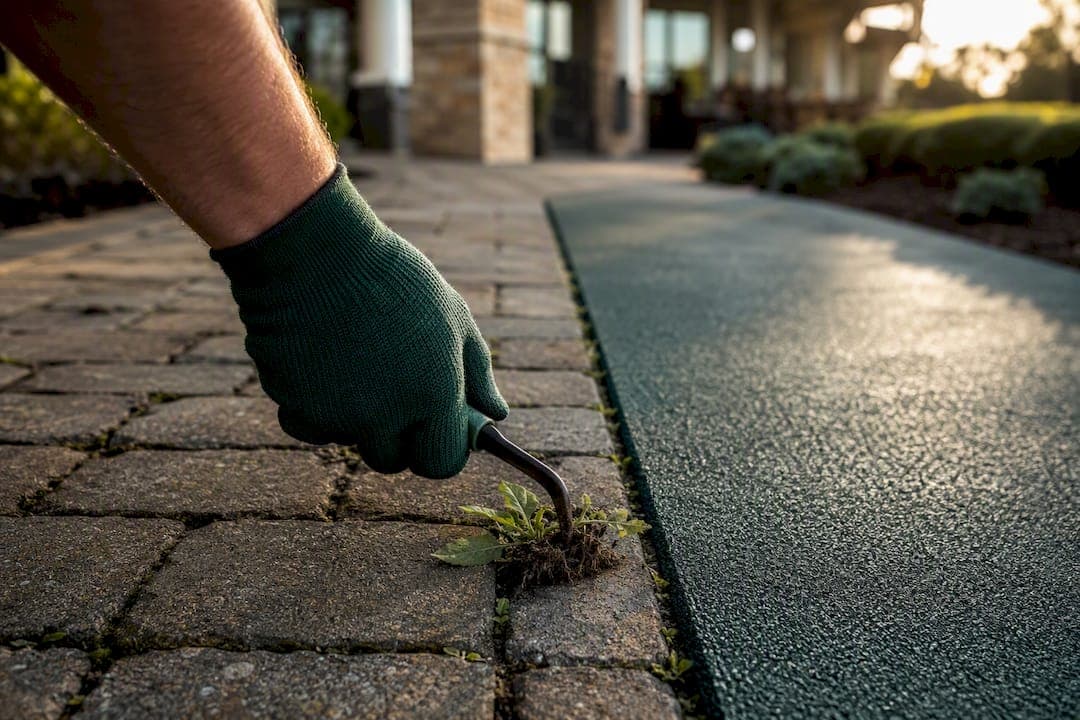
Replacing jointed pavers with continuous porous rubber paving, such as Rubberway®, stops recurring weeds at the source: there are no joints left for soil and seeds to collect in, and the material's built-in porosity drains water without creating the damp soil pockets weeds need to sprout. This article covers why that works, what the material actually is, what installation and cost look like, and how to vet a contractor before you sign anything.
TL;DR:
- Porous rubber paving eliminates joints where soil and weed seeds collect, significantly reducing weed growth and soil moisture retention.
- Installation involves site assessment, removal of old paving, base preparation, and a curing period, with longer timelines for municipal projects.
- Although initially more expensive, rubber surfaces drastically lower ongoing maintenance costs by preventing weed re-establishment and drainage issues.
- Common weeds like crabgrass and dandelions thrive in joints because they provide loose soil, moisture, and seed catchment; continuous surfaces remove these conditions.
- Repeated weed treatments and joint stabilization methods are less cost-effective over time than full replacement with porous rubber paving when weed problems persist.
Table of Contents
- Why weeds keep coming back in pavers, and how a continuous surface stops it
- What is Rubberway® porous rubber paving?
- How does the installation process work?
- Is porous rubber paving worth the cost compared to repairing pavers?
- How do you decide, and what should you ask a contractor?
- What kinds of weeds actually grow between pavers?
- What methods do people use to remove weeds between pavers?
- Can you prevent weeds from growing back in existing pavers?
- What is the step-by-step process for DIY weed removal in pavers?
- What safety precautions matter when treating weeds on pavers?
- Why EcoTec recommends full replacement over repeated weed treatments
- Get an Estimate for Rubberway® Paving
- Sources
Why weeds keep coming back in pavers, and how a continuous surface stops it
Every paver joint is a tiny planter box. Wind and foot traffic deposit dust, organic debris, and seeds into the gap between stones, and the sand or polymeric filler underneath holds just enough moisture to germinate them. Pull the weed, and you have not removed the growing medium. The joint refills with debris within a season, and the cycle restarts.
A continuous rubber surface removes that niche entirely. There is no gap between units because there are no units. The material is poured or laid as one bound layer, so there is nowhere for wind-blown seed to settle and take root.
Porosity does the rest of the work. Rubberway® pervious rubber pavement is engineered for rapid drainage, so water moves through the surface and into the base rather than pooling on top of it or sitting in a joint. That matters because standing water on rigid pavers is exactly what softens joint sand and invites germination.
Flexibility solves a second problem rigid pavers never handle well: root heave, a common issue addressed by Outdoor Patio Plant Services through durable hardscape plant integration. Rubberway rubber sidewalks are designed to flex with subsurface movement from tree roots and soil settling, instead of cracking. A cracked paver or a heaved slab is a fresh planting site for weeds. A flexible surface just moves and stays intact.
This shows up most in three high-traffic zones:
- Pool decks, where constant splashing keeps joint sand wet and weed-friendly.
- Sidewalks near mature trees, where root growth cracks concrete and rigid pavers within a few years.
- Driveways, where oil, dust, and tire debris accumulate in joints faster than most owners realize.
Pro Tip: If you're only seeing weeds along one edge of a paver patio, check the drainage grade first. A low spot that collects runoff will out-produce any weed killer you throw at it.
What is Rubberway® porous rubber paving?
Rubberway® is a poured-in-place, porous rubber pavement made from recycled rubber aggregate bound into a flexible, permeable surface. Instead of individual units set in sand, it is applied as one continuous layer directly over a prepared base, which is the structural reason it does not develop the joint gaps that let weeds establish.
The performance features that matter most for weed prevention and long-term maintenance include:
- High permeability, letting stormwater pass through rather than pool on the surface.
- Recycled rubber content, which reduces tire waste while giving the surface flexibility rigid materials lack.
- Slip resistance, a real safety upgrade around pool decks and wet walkways.
- ADA-compliant surfacing, with a consistent, stable walking surface that meets accessibility requirements municipalities and HOAs are required to document.
Because the surface is permeable, it also supports groundwater recharge, which can make low-impact development compliance easier for municipalities managing stormwater permits. That is a meaningful benefit beyond weeds. Properties pursuing sustainability certifications may find pervious paving contributes toward relevant credit categories, and public-works departments increasingly favor it for exactly that reason.
For the reader focused on maintenance, though, the practical payoff is simpler: fewer joints and better drainage mean fewer service calls. A surface that does not hold standing water and does not have gaps to weed is a surface your crew stops visiting every spring.
How does the installation process work?
Installing porous rubber paving is not a weekend project, but it is a well-defined sequence, and most delays come from skipping steps rather than from the material itself.
- Site assessment. A contractor evaluates existing drainage, tree root locations, slope, and any utility lines before touching a single paver.
- Removal of existing pavers or paving. Old units, sand base, and any weed-infested subgrade get pulled out.
- Base preparation. A compacted aggregate base is graded to the correct slope for drainage, often the single most important step for long-term performance.
- Rubber layer placement. The rubber aggregate and binder are mixed and poured or troweled to the specified thickness, commonly in the 1.5 to 2 inch range depending on the application and expected load.
- Curing. The surface needs time to set before it can bear traffic, and rushing this step is the most common cause of early surface failure.
- Inspection. A final check confirms drainage performance, slip resistance, and ADA slope compliance before handoff.
Timelines vary by scope. A residential patio or pool deck typically runs a matter of days once prep is complete. HOA common areas and larger commercial walkways take longer because of phasing around resident access. Municipal projects, such as sidewalks or park paths, usually carry the longest lead times, mostly due to permitting and utility coordination rather than the paving work itself.
Site constraints deserve early attention, not last-minute troubleshooting. Mature tree roots may require adjusted base depth rather than root removal, since flexible rubber surfacing is specifically designed to work around root systems instead of fighting them. Steep slopes need extra grading work for drainage. Existing utility lines should be marked before any excavation starts.
Pro Tip: Ask your contractor to confirm ADA slope and cross-slope measurements in writing before the pour, not after. It is far cheaper to fix a grading issue on paper than in cured rubber.
If you want the engineering detail behind drainage design, stormwater-focused installation guidance covers how porous surfaces are specified to handle site-specific runoff volumes.
Is porous rubber paving worth the cost compared to repairing pavers?
The upfront number for porous rubber paving usually runs higher than a simple paver reset, but that comparison misses the real cost driver: pavers do not stay fixed. Weeding, re-sanding, and replacing cracked units is a recurring line item, not a one-time expense.
Cost mainly depends on four factors:
- Project area. Larger footprints reduce the per-square-foot cost but raise the total project size.
- Site prep complexity. Removing old concrete, correcting drainage grades, or working around mature roots adds labor.
- Finish and thickness choices. Different Rubberway® product options carry different specifications and price points depending on color and thickness.
- Access constraints. Tight side yards or occupied commercial spaces slow the work and add cost.
On lifespan, a properly installed rubber surface is built to outlast the joint-maintenance cycle that jointed pavers require indefinitely. Municipal programs have adopted porous rubber for sidewalks, trails, and medians specifically because it holds up with less intervention than concrete or asphalt in the same conditions.
Ongoing maintenance is genuinely lighter. Occasional rinsing to clear surface debris and periodic inspection for wear are the main tasks, with none of the seasonal weeding, re-sanding, or joint-filler replacement that jointed surfaces demand.
The ROI case comes down to what you are actually paying for over time: a rubber surface, once installed, stops generating repeat maintenance calls. A paver surface keeps generating them for as long as you own the property.
How do you decide, and what should you ask a contractor?
Porous rubber paving fits best where recurring weed maintenance, drainage failures, or ADA compliance gaps are already a known headache: pool decks, HOA common areas, municipal sidewalks and trails, and commercial walkways with heavy foot traffic.
Before signing a contract, work through this checklist:
- Confirm licensing and insurance. Ask for current documentation, not a verbal assurance.
- Ask specifically about Rubberway® installation experience, not general paving experience. The mix ratios, base prep, and curing process differ from asphalt or concrete work.
- Request ADA compliance documentation for the finished surface, especially for public-facing municipal or HOA projects.
- Ask for references and photos of completed projects similar in scope to yours, ideally in a similar climate.
- Get the warranty in writing, including what specifically voids it.
- Ask about phasing options. A pilot area, such as one problem walkway or a single pool deck section, lets you evaluate performance before committing budget to a full property.
Red flags worth walking away from: a contractor who cannot explain porosity specs, no written warranty, or no willingness to phase a larger project. Boards and public-works departments managing tight budgets should treat a phased pilot as a legitimate strategy, not a compromise.
What kinds of weeds actually grow between pavers?
Most paver weeds fall into a small number of familiar culprits, and knowing which one you are dealing with helps explain why it keeps returning.
Crabgrass spreads low and wide, rooting at multiple points along each stem, which is why pulling the visible top growth rarely kills it. Dandelions send a single deep taproot straight down through joint sand, and breaking the stem without removing the root guarantees regrowth within weeks. Purslane and other low succulent weeds thrive in the compact, dry conditions of a joint and can regenerate from a small stem fragment left behind after weeding.
Moss and algae are not technically weeds, but they show up in the same shaded, damp joints, especially on pool decks and north-facing walkways, and they signal a drainage problem as much as a weed problem. Clover tends to colonize joints with slightly richer organic debris, often near turf edges where lawn soil migrates into the paving.
The identification pattern that matters most for prevention: nearly every one of these species needs the same three things to establish. Loose soil or organic debris, a gap to root in, and enough retained moisture to germinate. Jointed pavers supply all three by design. A continuous, well-drained surface supplies none of them, which is the real reason weed identification becomes far less relevant once the paving itself changes.
What methods do people use to remove weeds between pavers?
Manual removal is the most common starting point. Hand tools or a specialized joint knife pull weeds root and all, but it is labor-intensive and needs repeating every few weeks during growing season, since even a small remaining root fragment resprouts.
Chemical herbicides offer faster knockdown. Post-emergent sprays kill existing growth, while pre-emergent products aim to stop seeds from germinating in the first place. Both require careful application directly into joints to avoid runoff onto lawns or nearby plantings, and neither addresses the underlying issue: the joint itself remains, ready to collect the next round of seed and debris.
Natural remedies get used often, mostly because they feel lower risk around kids and pets. Boiling water scalds foliage on contact but rarely kills deep taproots like dandelion. Vinegar-based sprays work similarly, burning back visible growth without eliminating the root system in most cases. Baking soda applied directly into joints raises salinity enough to suppress some regrowth, though repeated use can affect surrounding soil and plants.
Pressure washing clears debris and dislodges small weeds but also blasts out joint sand, which then needs replacing and creates a fresh, loose surface primed for the next seed to land in. Every one of these methods treats the symptom. None of them changes the joint that keeps producing the problem.
Can you prevent weeds from growing back in existing pavers?
Joint stabilizing sand is the most common preventative step. Polymeric sand hardens when activated with water, filling joints tightly enough to resist most seed germination, though it is not permanent. Traffic, freeze-thaw cycles, and pressure washing gradually break it down, typically requiring reapplication every one to three years depending on climate and use.
Paver sealants add a second layer of defense. A quality sealant coats the joint surface and reduces the organic buildup weeds feed on, while also protecting against staining and efflorescence. Sealants need reapplication on their own schedule, generally every two to three years, and skipping a cycle often means weeds return within a season.
Some property managers install physical weed barrier fabric beneath the base layer during initial paver installation, which blocks upward growth from subsurface soil. It does nothing, however, to stop windborne seeds landing directly in the joint from above, which is the more common source of paver weeds in the first place.
Every one of these methods buys time. None of them is permanent, and all of them require a maintenance calendar the property owner has to actually keep. That is the tradeoff worth weighing honestly: repeated stabilization and resealing versus a surface that does not have joints to stabilize at all.
What is the step-by-step process for DIY weed removal in pavers?
For owners committed to maintaining a jointed paver surface, a consistent DIY routine limits how far weeds spread between bigger interventions.
Start by inspecting joints monthly during growing season, since catching seedlings early is far easier than removing established root systems later. Use a joint knife or a narrow hand tool to pull weeds by the root, working slowly enough to extract the full root rather than snapping the stem.

Follow removal with a joint-specific spot treatment, whether that is a natural option like vinegar or a targeted herbicide, applied directly into the cleared gap rather than broadcast across the surface. Let the treated area dry fully before replacing lost joint sand.
Refill the joint with fresh polymeric sand, sweeping it in and activating it with water per the product instructions. This step is the one most DIY routines skip, and skipping it is exactly why the same joint reweeds within weeks.
Finally, reseal the full surface on a two to three year cycle rather than waiting for visible weed growth to prompt action. Reactive maintenance is always more labor intensive than a scheduled reseal.
What safety precautions matter when treating weeds on pavers?
Herbicide labels exist for a reason, and reading the full label before application, not just the front panel, is the single most important safety step. Concentration, reentry time, and runoff warnings vary meaningfully between products.
Keep children and pets off treated areas until the label's specified reentry period has passed. Spot-check wind conditions before spraying: even a light breeze can carry herbicide drift onto nearby garden beds or turf you did not intend to treat.
Wear gloves and eye protection when handling concentrated chemical products, including some natural alternatives like concentrated vinegar solutions, which can irritate skin and eyes on contact. Boiling water carries its own obvious hazard: carrying a full pot across an uneven paver surface is a real scalding risk, and it deserves the same caution as any hot liquid task.
Store all weed control products away from children and out of original food or drink containers, and never mix chemical products together, since some combinations produce hazardous reactions. When pressure washing, wear closed-toe shoes and safety glasses, since dislodged joint sand and debris travel fast under high pressure.
Why EcoTec recommends full replacement over repeated weed treatments
Municipal and homeowner projects share a pattern: properties that keep treating weeds instead of removing the joints that grow them end up spending more over five years than a one-time replacement would have cost. That is the calculation Roger keeps coming back to when advising clients.
Full replacement makes the most sense when a property has already cycled through sealants, polymeric sand, and manual weeding more than once with the weeds returning each season. Targeted repair still has a place for small, isolated cracks. But once weed growth is a recurring line item on a maintenance budget, the math tends to favor a permanent, joint-free surface, and drainage improvements typically show up almost immediately after installation.
— Roger
Get an Estimate for Rubberway® Paving
If you have already tried resealing, restabilizing, and reweeding a paver surface more than once, a different starting point is a continuous rubber surface that removes the joints causing the problem, instead of another product to maintain around them.
The process starts with a site visit, where an installer evaluates drainage, existing surface condition, and any root or utility constraints before providing an estimate. Homeowners, HOA boards, and municipal decision-makers can request project references, completed-job photos, and ADA compliance documentation as part of that proposal, so approval committees have what they need without chasing paperwork later.
Boards and public-works departments managing tight budgets do not have to commit to a full property replacement at once. A single problem walkway, one pool deck section, or a shared common area works as a phased first step, with the rest of the property scheduled once performance is confirmed on site.
Explore Rubberway® paving options or start with the Ecotecrubber contact page to request a site visit and estimate.
Sources
For deeper technical background, Rubberway's pervious rubber pavement page details drainage engineering, and Ecotecrubber's guide on permeable paving benefits and cost covers material comparisons. Municipal readers should confirm local permitting requirements before scheduling any public-right-of-way work.
- Pervious Rubber Pavement | Rubberway