
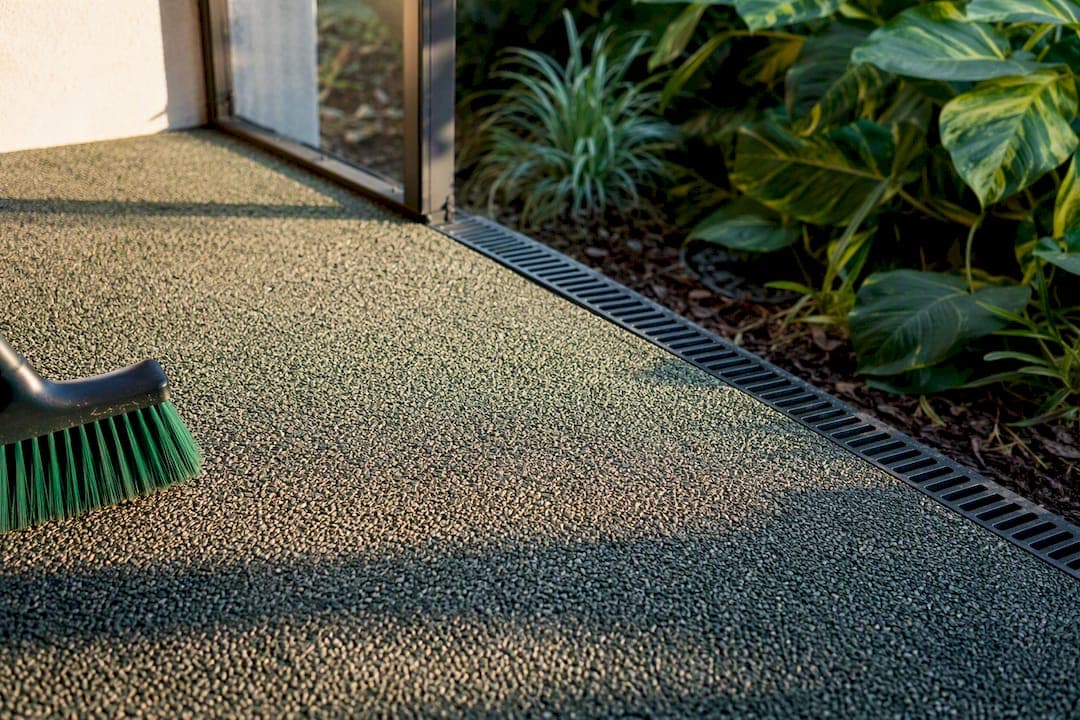
Expect rubber paving to last roughly 8 to 12 years in typical residential use, with premium EPDM-topped products and bonded rubber stone reaching 15 to 25 years under good conditions. Installation quality and base preparation drive that range more than any material spec sheet does. The single best move you can make is committing to a simple cleaning and resealing rhythm from year one rather than waiting for visible damage.
TL;DR:
- Proper base preparation and drainage significantly extend rubber paving lifespan and can add years beyond initial estimates, especially in high-traffic or exposed conditions.
- Installing rubber paving on a well-prepared, level base with adequate drainage reduces water pooling and undermining, which are primary causes of early failure.
- Regular maintenance, including resealing every 3 to 7 years and prompt patching of small issues, is essential to maximize the product’s lifespan.
- EPDM rubber performs better than SBR under UV and ozone exposure, justifying its higher initial cost for longer-lasting results.
- A comprehensive approach that considers environment, traffic, and installation quality is crucial, with professional input providing tailored longevity strategies.
Table of Contents
- What Is Rubber Paving, and Which Type Do You Have?
- How Long Does Rubber Paving Last by Application?
- What Factors Shorten or Extend Rubber Pavement Longevity?
- What Maintenance Keeps Rubber Paving Lasting Longer?
- Should You Patch, Resurface, or Replace Rubber Paving?
- What Does Rubber Paving Cost Over Its Lifetime?
- Rubber Paving vs. Concrete and Asphalt: Which Lasts Longer?
- What EcoTec Sees in the Field That Manufacturer Specs Miss
- A Realistic Take on Planning for Rubber Paving's Lifespan
- Get a Lifespan-Focused Quote From EcoTec Rubber Paving
- Sources
- FAQ
What Is Rubber Paving, and Which Type Do You Have?
Rubber paving isn't one product. Poured-in-place rubber is mixed on-site and troweled into a seamless surface, common on playgrounds and pool decks. Bonded rubber stone uses a binder to fuse rubber granules into a firmer, often more walkable surface. Rubber tiles are prefabricated units installed like pavers, easier to replace piece by piece.
The rubber compound matters as much as the format. EPDM (ethylene propylene diene monomer) resists UV and ozone damage better than SBR (styrene butadiene rubber), which is cheaper but fades and hardens faster in direct sun.
- Poured-in-place: playgrounds, pool surrounds, ADA-compliant walkways
- Bonded rubber stone: patios, driveways, walking paths
- Rubber tiles: patios, gym floors, modular commercial areas
- EPDM vs. SBR: EPDM costs more upfront but slows the fading and cracking that shortens SBR's usable life
How Long Does Rubber Paving Last by Application?
Lifespan swings hard depending on what's rolling, walking, or splashing across the surface every day. A backyard patio that sees foot traffic and the occasional lawn chair ages very differently from a municipal walking trail or a school playground handling hundreds of kids daily.
- Playgrounds: 8 to 12 years typical, less with heavy daily traffic and constant UV exposure
- Pool decks: 10 to 15 years, shortened by chemical splash-out and sun reflection off water
- Residential patios and pool surrounds: 12 to 20 years with routine care
- Driveways and vehicle areas: 8 to 15 years, since vehicle weight and oil drips add stress poured surfaces weren't originally built for
- Commercial walkways: 10 to 18 years, depending on foot volume and how often the property manager schedules cleaning
A private backyard installation almost always outlasts a public one carrying the same product, simply because a school playground gets orders of magnitude more foot traffic than a homeowner's patio. Manufacturer specs are a starting point, not a guarantee. Two identical products installed by different crews on different base preparations can land years apart in actual service life.
What Factors Shorten or Extend Rubber Pavement Longevity?
Installation and base preparation get flagged repeatedly as the biggest lever on service life, ahead of the rubber compound itself. A poorly compacted base lets water pool underneath, and that undermines the surface from below long before the top layer shows wear.
Climate plays a close second. Florida-style heat cycles, intense UV, and the occasional freeze-thaw swing further north all stress the binder over time.
- Traffic type: pedestrian-only surfaces last longer than driveways or loading areas
- Material quality: EPDM outperforms SBR under sun exposure; thicker pours generally outlast thin ones
- Drainage: standing water accelerates binder breakdown and encourages mold under the surface
- Chemical exposure: pool chemicals, deicing salt, and petroleum spills all shorten life
- Curing conditions: rushed cure time during installation can compromise strength before the surface ever sees a footstep
What Maintenance Keeps Rubber Paving Lasting Longer?
A maintenance schedule doesn't need to be complicated, but skipping it is the fastest way to burn through the shorter end of any lifespan range.
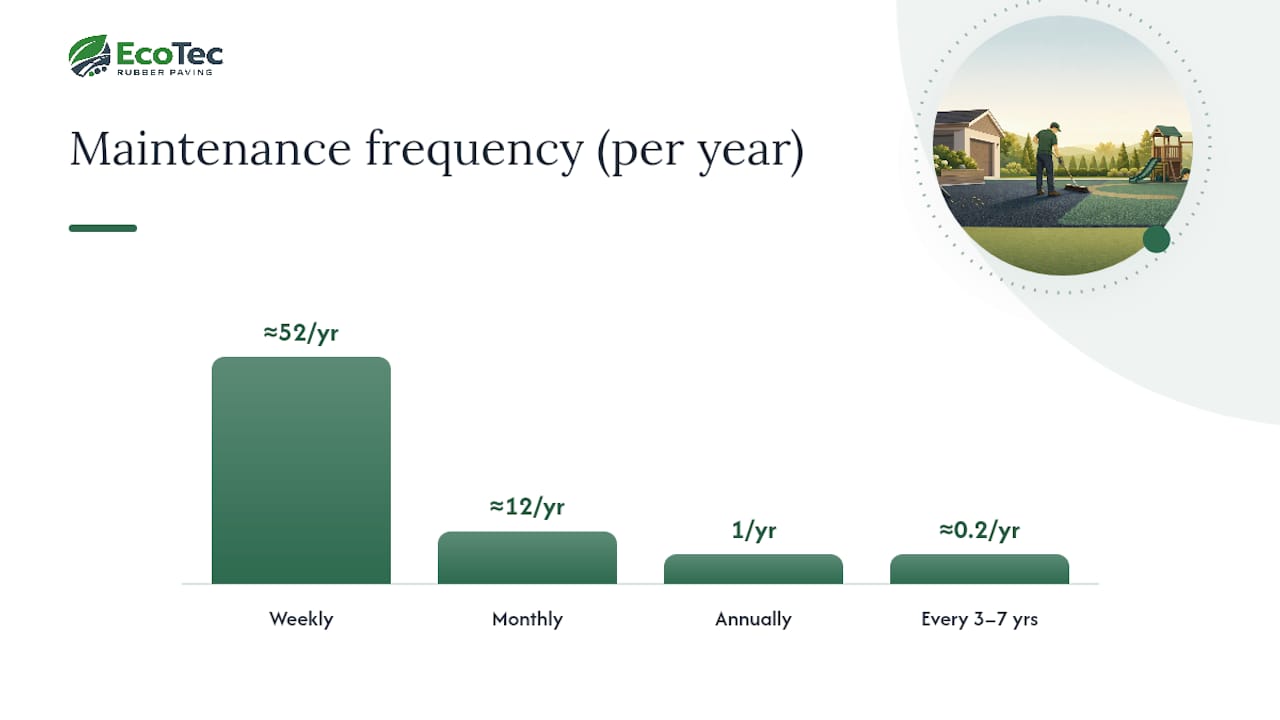
- Weekly: Sweep or blow off leaves, dirt, and debris that trap moisture against the surface.
- Monthly: Spot-clean stains (grease, algae, chemical residue) before they set into the rubber.
- Annually: Do a full inspection and deep pressure wash, checking edges, seams, and low spots where water collects.
- Every 3 to 7 years: Reseal or topcoat, with frequency depending on sun exposure and traffic volume — a shaded patio can stretch toward the 7 year mark, while a sun-blasted pool deck needs attention closer to every 3.
- As needed: Patch small worn spots immediately rather than letting them spread.
Pro Tip: Keep a simple log of when you clean, reseal, and patch. Facility managers especially benefit from this, since it turns "the surface looks tired" into a data point you can act on before a small problem becomes a full resurfacing job.
Avoid petroleum-based cleaners, harsh solvents, and pressure washer settings above what the manufacturer recommends. These can dry out the binder and cause the surface to crumble faster than normal aging ever would. For general upkeep guidance that applies across hard surfacing types, this block paving cleaning guide covers restoration techniques worth adapting.
Should You Patch, Resurface, or Replace Rubber Paving?
Cosmetic wear (fading, minor surface thinning, small cracks) responds well to patching or a topcoat. Structural failure (widespread delamination, a base that's shifted or washed out) doesn't.
- Patching: Fast and cheap, buys a few years on isolated trouble spots
- Resurfacing: Restores color and function across the whole surface, often adding 5 to 10 years without tearing anything out
- Replacement: Necessary when the base is contaminated, water has undermined large sections, or delamination covers more than isolated patches
Call in a professional once damage spreads past a few isolated spots. A contractor can tell you whether the base underneath is still sound, which changes the entire calculation.
What Does Rubber Paving Cost Over Its Lifetime?
Installation cost depends heavily on base prep, since a site that needs excavation or drainage correction costs more upfront but pays that back in years of added service life. Ballpark pricing varies widely by region, product thickness, and site condition, so treat any per-square-foot figure as a starting point for your own quote rather than a fixed number.
- Base preparation and drainage work typically drive the biggest cost swings between quotes
- Maintenance runs cheap year to year (cleaning supplies, occasional patch material) compared to a full resurfacing bill every several years
- Resealing every 3 to 7 years is a planned expense, not a surprise, if you budget for it upfront
- Compare total lifecycle cost, not just install price, against concrete or asphalt before deciding
Rubber Paving vs. Concrete and Asphalt: Which Lasts Longer?
Rigid materials like concrete can outlast rubber paving on paper, sometimes running 25 to 30 years. But that number ignores how they fail. Concrete cracks under freeze-thaw pressure and tree root movement, and once it cracks, the repair is visible forever. Asphalt needs overlays every several years to stay functional.
- Rubber's seamless, poured installations avoid the freeze-thaw cracking that undermines concrete
- Rubber absorbs impact, a real advantage for playgrounds and pool decks where falls happen
- Concrete and asphalt need different repair skills and equipment, while rubber patches and resurfaces without demolition
- Choose based on use-case: high-impact or ADA-focused areas favor rubber; heavy vehicle loads still often favor concrete
What EcoTec Sees in the Field That Manufacturer Specs Miss
Manufacturer spec sheets describe rubber under lab conditions. Real installations deal with Florida humidity, standing water after summer storms, and pool chemicals that never show up in a durability test. EcoTec Rubber Paving builds its Rubberway® installations around porous, ADA-compliant designs specifically because standing water and heat-induced cracking are the two failure modes that shorten lifespan fastest in this climate.
The gap between a manufacturer's advertised 15 year lifespan and what actually happens on the ground almost always comes down to drainage and base work done before the first pour ever hits the ground.
Author: Roger.
A Realistic Take on Planning for Rubber Paving's Lifespan
Plan conservatively. Budget for resealing on the shorter end of the 3 to 7 year window rather than the longer one, and you'll rarely be caught off guard. Track every maintenance event, even informally. Small, proactive repairs cost far less than the surprise of a full resurfacing bill after years of neglect.
— Roger
Get a Lifespan-Focused Quote From EcoTec Rubber Paving
Choosing a specialized rubber paving contractor can provide quotes that consider drainage design, base preparation, and ADA compliance details important to the longevity of an installation.
Professional installation matters because the base work and curing conditions you can't see are exactly what separates an 8 year surface from a 20 year one. EcoTec's Rubberway® product line, including Rubberway® Pervious Pavement, Rubberrock 6000, and Rubberway EVOLUTION, gives you options built around Florida's heat, storms, and standing water rather than a one-size-fits-all national spec. If your driveway, pool deck, patio, or community walkway is due for an upgrade, request a quote from EcoTec Rubber Paving and get a plan built around how long the surface should actually last, not just how it looks on installation day.
Sources
- How Long Does Poured Rubber Surfacing Last? Lifespan & Durability - Handyman Connection of Blue Ash
- Rubber Surfacing Maintenance Tips: How to Keep Your Rubber Stone Looking New
- Rubber paving slabs lifespan guide - Rubber Co
- Rubber Pavers Revealed: The Surprising Truth About Their Lifespan - LandscapingDuty
FAQ
How Long Will Rubber Pavers Last?
Most rubber pavers last 8 to 12 years under typical use, with premium EPDM-topped or bonded rubber stone products reaching 15 to 25 years when installed on a well-prepared base and maintained on schedule. Installation quality matters more than the product spec sheet.
What Are the Pros and Cons of Rubber Pavers?
Rubber pavers absorb impact, resist cracking better than concrete in freeze-thaw climates, and offer ADA-compliant, porous drainage. The tradeoffs are a higher upfront cost than asphalt in some cases and a need for scheduled resealing every 3 to 7 years to hit the longer end of their lifespan.
Is a Rubber Driveway Cheaper Than Concrete?
Upfront installation costs for rubber and concrete vary by region, thickness, and base condition, so there's no single fixed comparison. Rubber often costs more to install but can save money over time by avoiding the cracking and overlay repairs concrete and asphalt eventually need.
How Much Does Rubber Surfacing Cost Per Square Foot?
Pricing depends heavily on base preparation, drainage needs, and product type, so it's best treated as project-specific rather than a flat number. EcoTec Rubber Paving provides quotes directly through its website based on your site's actual conditions.
When Should You Resurface Instead of Replace Rubber Paving?
Resurface when wear is cosmetic, fading, thinning, or small cracks, since topcoating restores appearance and function without tearing out the base. Replace only when damage is structural, such as widespread delamination or a contaminated base layer.